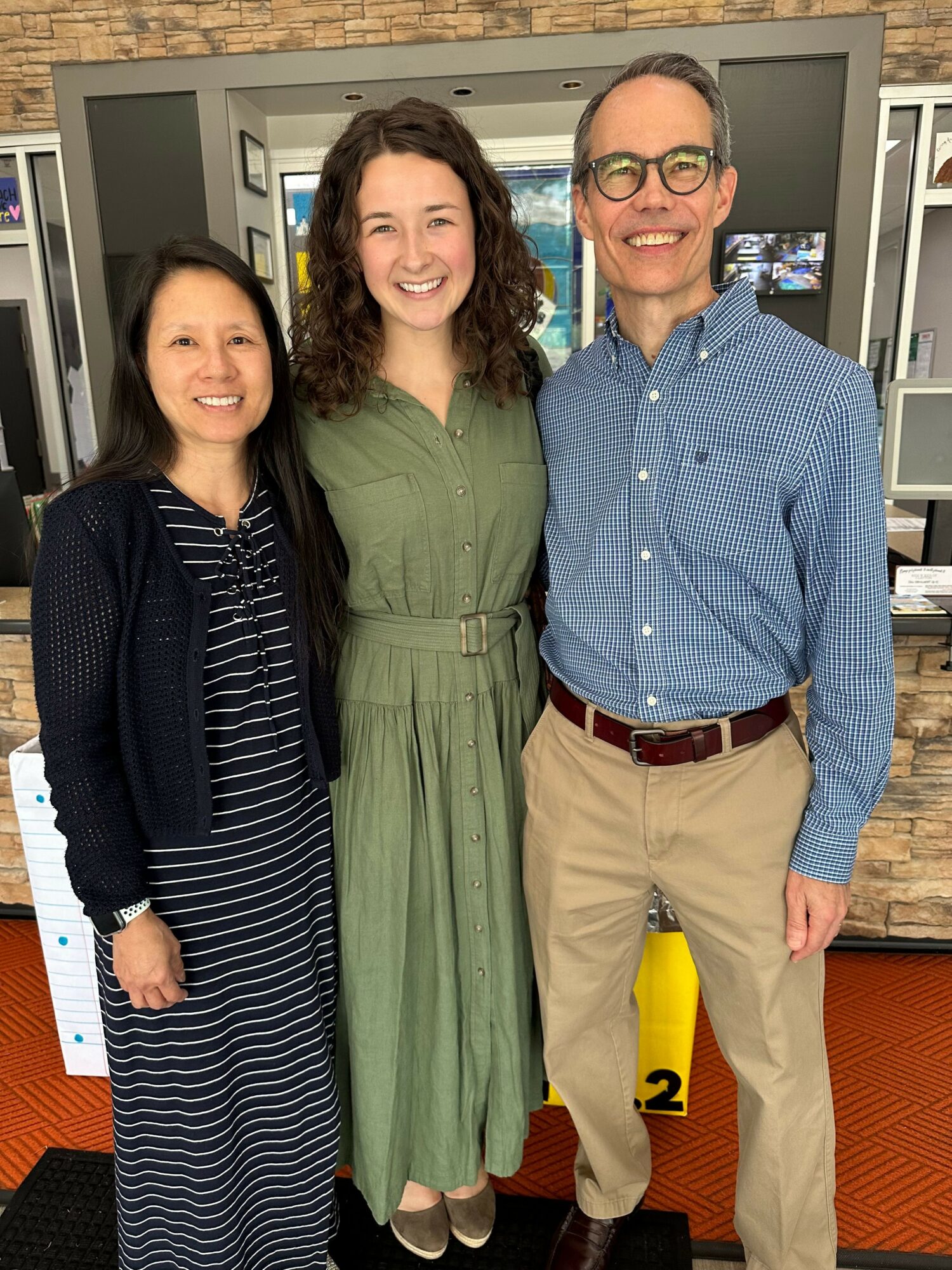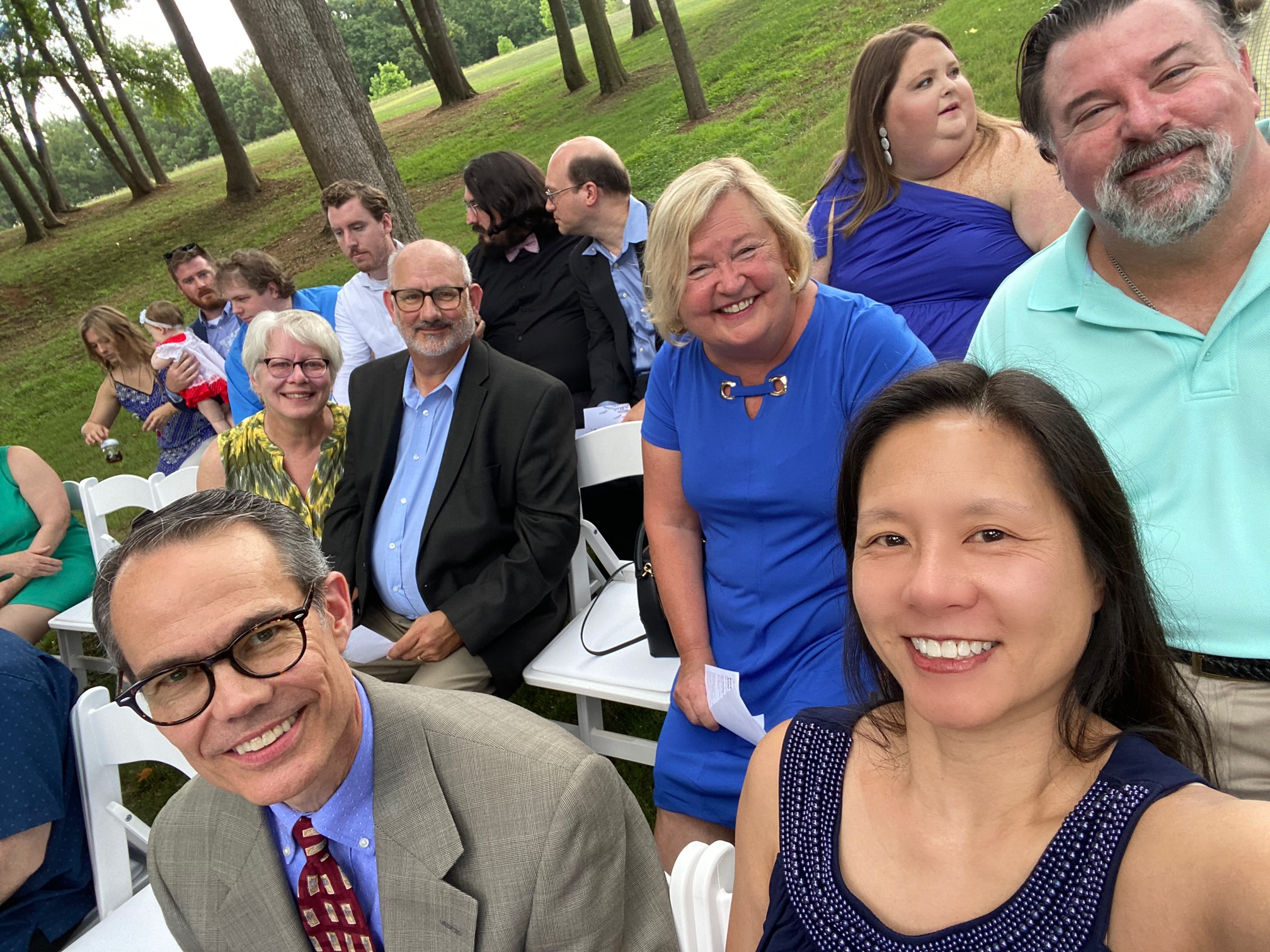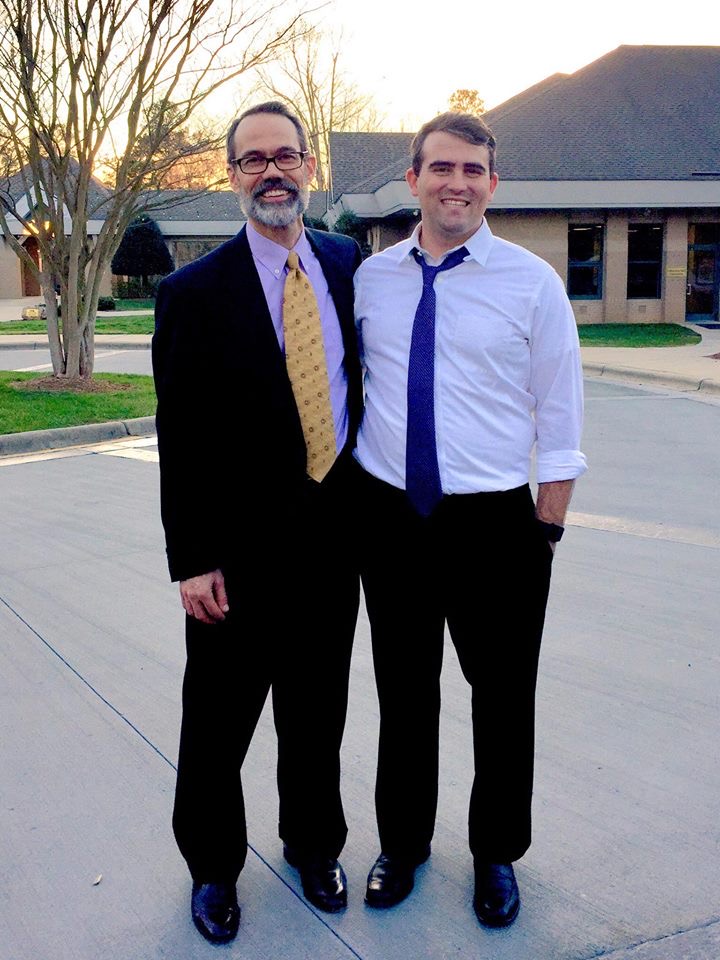






Today we’d like to introduce you to John Musgrave.
John, we appreciate you taking the time to share your story with us today. Where does your story begin?
My wife and I started in university campus ministry as staff members of Campus Crusade for Christ, now known as CRU. We ministered with CRU 10 years in all. As I worked with students at Indiana University in the early 1990s, I started to feel a pull to deepen my Biblical and Theological understanding by enrolling in seminary.
When I was finishing my Master of Divinity degree at Reformed Theological Seminary in Orlando Florida, I began to look for a call to pastor a church. I had also considered starting a new church (“church planting”). Following graduation, when I was still in Orlando, a pastor from Raleigh, Terry Traylor, was down at the seminary taking a continuing-education class. He asked the faculty there for a recommendation for a church planter for Clayton, and I was a name that was brought up. Terry and I almost literally bumped into each other the next day, and Terry talked to me about the opportunity. My wife, Betsy, and I were invited to come up to Raleigh to take a look. While looking at Clayton, I recognized that in many ways it was like the community in which I had grown up, a small town just outside of a larger city’s suburbia. Terry’s church, Redeemer Presbyterian (PCA), already had seven families traveling 25 to 30 minutes each Sunday to get up to North Raleigh to attend Worship, and it needed a pastor to start a new church in Clayton. My wife and I heard great things about Raleigh, and Clayton was a growing community, so it seemed like a great fit. We expressed excitement to do the work, and the Session (leadership) of Redeemer, along with the regional group of churches in eastern North Carolina (Eastern Carolina Presbytery), voted to call us to start the church. We moved here in November 1998. After working as an assistant pastor at Redeemer for about nine months, I began worship services in Clayton in September of 1999.
Can you talk to us a bit about the challenges and lessons you’ve learned along the way. Looking back would you say it’s been easy or smooth in retrospect?
“Church planting” can be difficult. Like entrepreneurs in business, church planters set up everything, and initially do all the work. We started with 19 people, which included my family of five. But, though the work required a lot, I enjoyed it, and God blessed us. We grew steadily from 1999 through 2007, reaching over 100 people at a worship service each Sunday. With some money saved up, we purchased land and built a building for our church. Prior to that, we had met in a bowling alley, an elementary school, a middle school, and then back in the bowling alley. The church building was completed in the fall of 2008. It was nice to have space of our own, in which, unlike with Sunday rental space, we could have functions any time during the week. We saw new people come in, attracted by the building.
But, the fall of 2008 was a tough time in our country— the banking crisis hit right when we moved in, people lost their jobs, and there began to be a cultural shift in America. We scaled back to about 110 people each Sunday, and things became financially difficult for us.
After years of fruitful ministry, an event happened that changed our course. In 2014, two of our leaders met secretly with a group of about 30, and decided to leave the church. The group’s leaving created collateral damage, too, and we lost about 50 people in total, when all was said and done. With the decreased membership, we could not meet our mortgage payments, and had to sell the building we had built and cared for. Of course, this was difficult for me and for those who were left in the church. I shepherded for a little over a year many who had actually sunk into clinical depression, seeing the church they loved so much endure such hard times, heartbreak, and setback. That was not a smooth road! Then I, for a time, went into depression myself. Christ sustained me through it, and buoyed me up by a truly loving congregation and by the encouragement of good Christian brothers and friends in the presbytery.
Since then, we’ve been in four different rental spaces, but all of the hardship has resulted in the church being a really sweet place to be. The core of the church today has been through much and, as a result, is truly beautiful of soul. Sufferings help the Christian become more like Christ, who suffered much. Jesus’ half-brother, James, wrote in his epistle, “Consider it pure joy, my brothers, whenever you face trials of many kinds, because you know that the testing of your faith develops perseverance. Perseverance must finish its work so that you may be mature and complete, not lacking anything” (James 1:2-4, NIV, 1984). I’ve seen that be true among our people. They have become more and more mature and like Christ in their character— loving, kind, gracious, and happy to help one another.
Beyond this, as a smaller church now, it’s become a better place for people to find and grow in their faith in Christ. For me as the pastor, the smaller size has given me a greater ability to shepherd the people Jesus has brought in here. Betsy and I love being here, and I have no intention ever to look for something else.
Thanks – so what else should our readers know about your work and what you’re currently focused on?
I pastor Christ Church in Clayton, NC, a congregation of the Presbyterian Church in America, a Bible-believing denomination that has roots back to the 1700s in the United States.
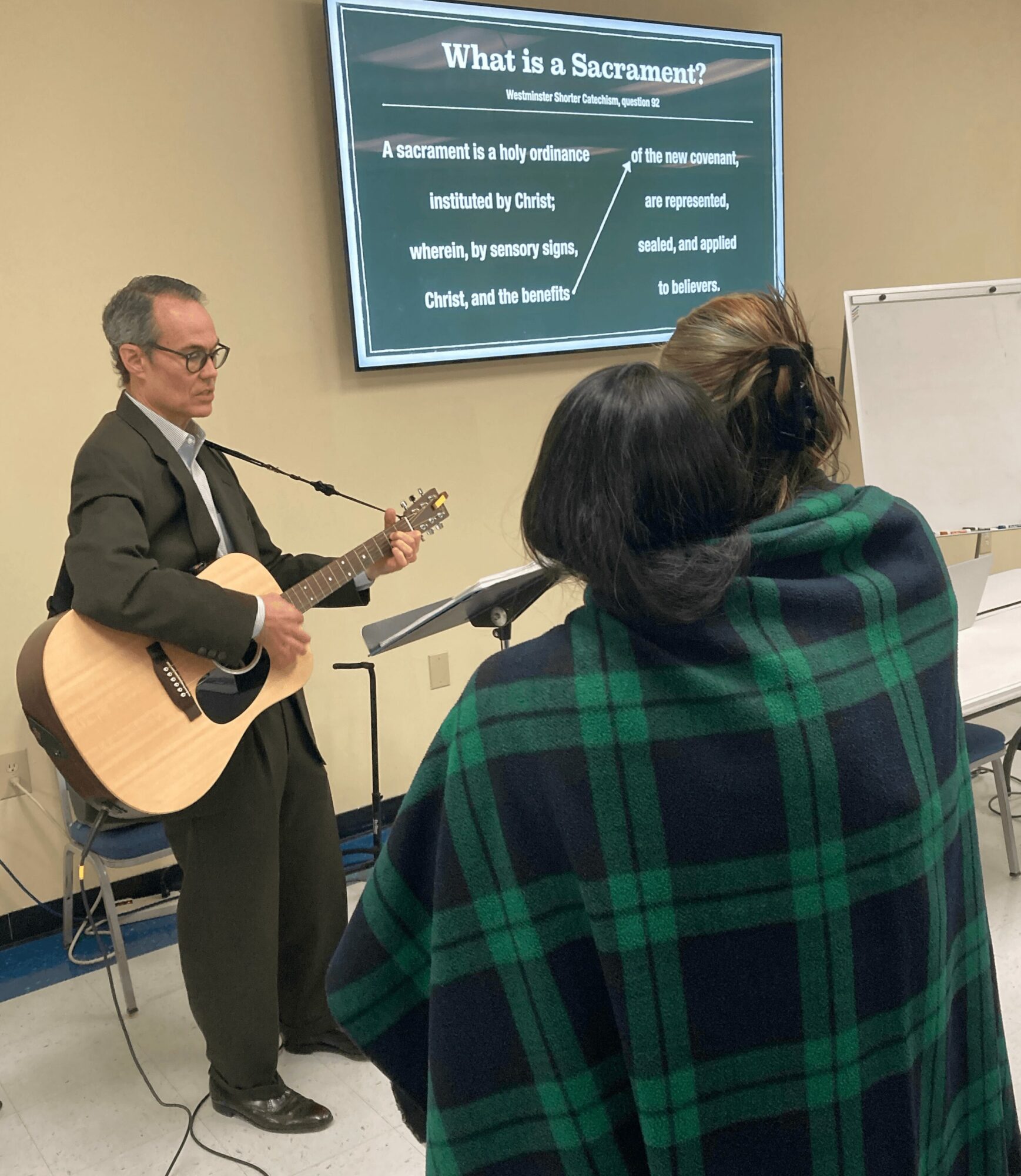
In some senses, I am a generalist. As a solo pastor with no associate pastor to help, nothing is subdivided among the pastoral responsibilities of the church. Each week I preach, teach Sunday school, counsel, create the worship service, create and print the worship guides, play guitar as part of the worship service’s music, and meet and email with the people of the church to fellowship and answer their questions about Christ and the Christian life. Occasionally, I carry out weddings and funerals. I love all of this!
Several things give me a lot of satisfaction regarding what Christ has used me for over the last 26 years. Three people from the church have gone into the pastoral ministry and are serving as pastors now. One of them has planted a new church in Dunn, NC. Many of our former officers (elders and deacons), who were trained as officers here, have moved away and provided great service to their new churches as officers there. Many in the church, both those here now and those who have moved away, talk to me about how deeply they grew or have grown in their understanding of God, Christ, life, and the Church because of the things they learned here. I’ve also been satisfied to be of help in many ways to my presbytery (my regional association of churches), serving in various capacities that others have found helpful. Lastly, I’ve found a lot of satisfaction in teaching in a local seminary, LAMP RDU, teaching classes to instruct future pastors and others in Bible and Theology. I would guess, to answer your question about “what I am known for,” I would say that I’m probably most known for being a helpful teacher of Scripture.
Where do you see things going in the next 5-10 years?
For the first 13 years of my ministry here, from 1999 to 2012, people just walked into the church, and some who hadn’t been to church since they were kids walked into the church, needing something deeper from life. New parents would come into the church with their infant child, knowing that in the church, their child would grow up and develop a moral base from which they would treat people with kindness and gratefulness, and live responsibly, for the rest of their lives.
From about 2012 on, though, that largely stopped. During that period, as popular culture began demonized the Church and Christianity, many things changed. For instance, it became much less common for new arrivals to Clayton to look for a new church when they moved in, even though they had been church attenders in their former towns. And those seeking a greater depth of understanding life and God have less frequently than before come into the Church to remedy that. This has been a real shame, and churches and society has suffered.
What I hope I’m correctly seeing, though, is that this has begun to change. There seem to be indicators that society as a whole is becoming more like the prodigal son, who, after trying to live life another way, is now seeing the results of it, and is “coming to its senses,” as it says in Luke 15, realizing “‘How many of my father’s hired men have food to spare, and here I am starving to death!’” (Luke 15:17, NIV, 1984).
Contact Info:
- Website: https://christchurchclayton.org
- Facebook: https://www.facebook.com/christchurch2017/
- Twitter: https://x.com/1christchurch
- Youtube: https://www.youtube.com/user/ClaytonChurchNC
- Yelp: https://www.yelp.com › biz › christ-church-clayton-2
- Soundcloud: Spotify Podcast: https://open.spotify.com/show/5qefFK8fVnqrsDujvAhn4p
- Other: Apple Podcasts: https://podcasts.apple.com/us/podcast/the-gospel-for-living-with-john-musgrave-m-div/id717990249