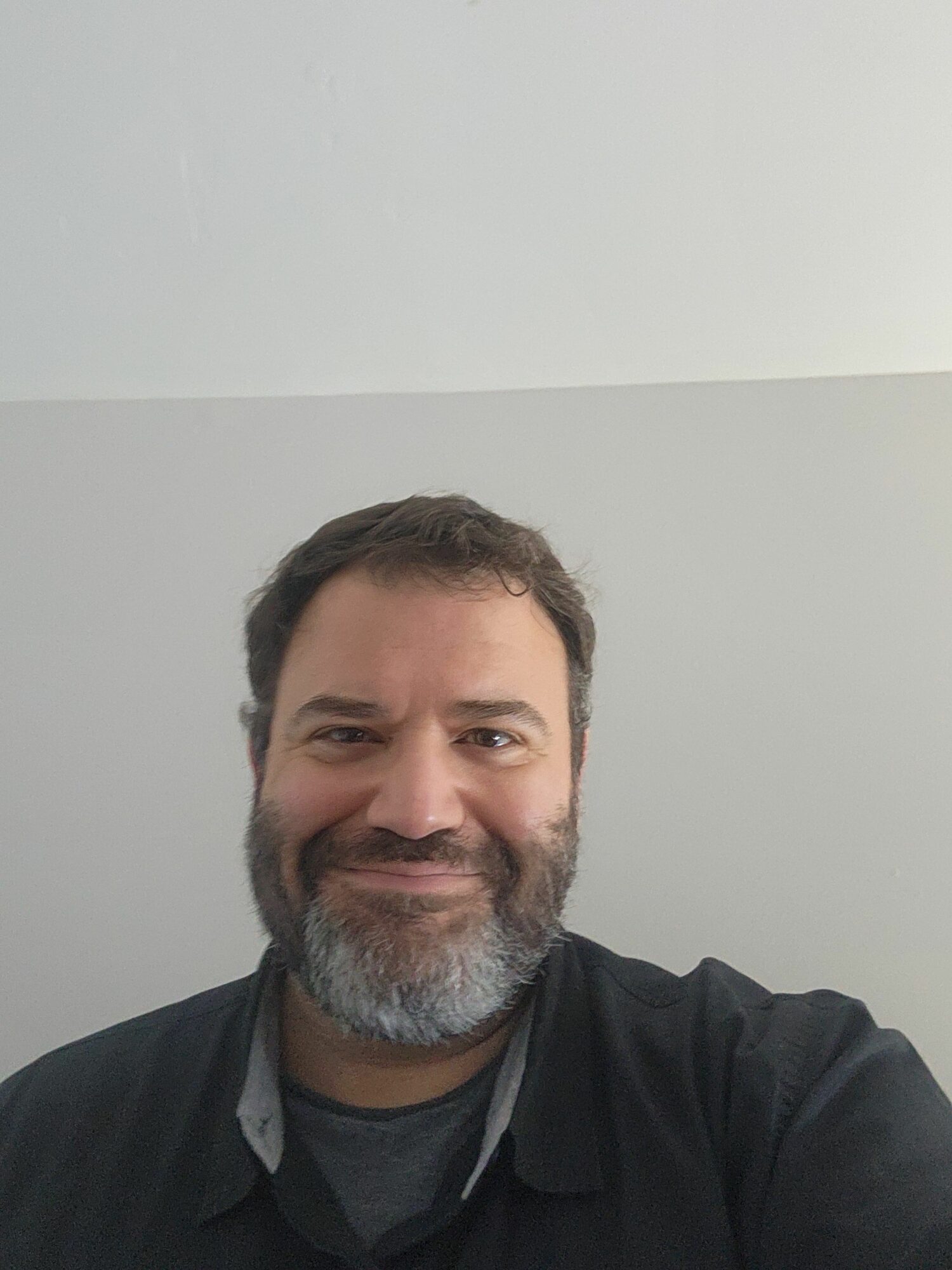





Today we’d like to introduce you to Christopher McDowell.
Hi Christopher, can you start by introducing yourself? We’d love to learn more about how you got to where you are today?
I feel that my career really started as a camp counselor and EMT. While working with children at a day camp for six summers, I quickly realized the importance of supporting children with trauma and trauma-related behaviors. Meanwhile, I spent two years as an emergency medical technician for the Bolton volunteer ambulance squad via my high school. This was a state-approved program designed to provide enough trained EMTs to the town of Bolton, MA during business hours. As a result, I had a privilege of running out of class when my pager went off for 911 calls, followed by a speedy race to the scene in our EMT car, an old donated police cruiser. We’d typically arrive first. These experiences taught me so much about the importance of emergency work, and how to coordinate it. I also experienced the realities of heavier trauma work after responding to car accidents.
I began learning direct treatment practices as a peer counselor in high school. I was a “big brother” to boys who needed a male figure in their lives. However, I was on my way to college, and both of my parents were therapists. To add to that, my sister was considering getting her masters in social work. I wanted to be different. So I prepared for law school, which involved a paid law firm internship I earned via scholarship, pre-law classes, and a paralegal certificate course following my college graduation.
But I couldn’t stay away from the helping fields. I remember feeling quite overwhelmed with my first full-time job after college. I was a history major in college, and didn’t take a single psychology course on purpose. But my history major led me to work in a group home for deliquent boys, as this was the most interesting job I could find in the Boston Globe that week. These boys could be dangerous, as most had committed serious crimes against people and children. This was my true moment of being “thrown in the fire,” as I had no formal training, and had to take care of 16- and 17-year-old boys who rarely replied with a “yes.” While this was more than challenging, I was later very surprised at how easily I could manage and treat these types of boys once I had the proper training.
The group home job chased me away from social services. This job made me realize the dangers of working in a group home. I began to learn that when it comes to caring for the most mentally ill people in our society, the greatest dangers are the clinicians and staff. Unfortunately, these jobs attract low functioning people. Scandals and abuse towards the children are common.
I then had my “Office Space” experience. If you want to know more, watch the move “Office Space.” I worked in a cubicle for two years processing insurance claims, feeling that the fax machine was out to get me when it kept stalling and resetting on page 13 of 14. I was more than bored, so I returned home. I started taking psychology classes at Harvard Extension School, paying only $600 for classes taught by amazing professors, two of whom were full-time Harvard professors. My Intro to Psychology professor even worked with the great B.F. Skinner. I also started volunteering for two social justice jobs, once of which provided emergency phone counseling to stressed out parents, as a means of reducing child abuse in the community.
I then found a job working with children in therapeutic foster care. I wanted to be a psychologist, and I had to learn more to prepare. These children were under state custody, living in foster homes that we’d assist as the primary social workers, but we were not licensed social workers. That would have been too expensive for the state. The work was intense, including on-call work, but became much easier over time as I gained skills via experience. Just before leaving for graduate school, I realized I had grown so much as a young clinician. I was told that, if I didn’t get into the school I had hoped for, I’d have a promotion waiting for me as an emergency-based clinical coordinator, assisting other coordinators on cases that require more emergency intervention. I was learning!
I only applied to doctoral programs because I only wanted to attend one: William James College. My dream of becoming a psychologist was in front of me. I couldn’t believe it. But I still had to get in. Would they take me? And was I willing to attend the other school if William James didn’t take me? A month a half before my accepting to William James, I was accepted by Antioch. Still, I planned to probably reapply in another year if turned down by William James. To increase my changes of getitn gin as much as possible, I took a course at William James as a non-matriculating studeing in their PsyD program. As I took the course, they were reviewing my application. It was quite intimidating, as I joined four other students for a small discussion course, yet I was the only non-doctoral student. I was there with a B.A. in History. I’ll never forget when a kind professor whispered to me: “Don’t tell anyone I told you, but you got in.” I think I had to leave class before it started. I felt ready cry. I had achieved the greatest dream of my life thus far. Prior, I remember thinking the goal was so vast, and beyond reach. It could only remain a dream.
I then spent five years working on my doctorate in professional psychology (PsyD) at William James College. This included two practicum placements and two doctoral internships, as our school focused on experiential learning. I spent my first year working at Lancaster public schools, the same schools I attended as a child. I remember working with Patty, our principal. Ironically, I would be sent to her as a child when I got into trouble, usually on the playground.
It was an amazing experience because of the trauma I experienced at these schools as a child. My years at Lancaster elementary and middle school were the hardest years of my life. Bullying was rampant, as we had, by coincidence, many traumatized boys in our class. Many of us would later learn what they went through as children, a painful lesson about the realities of life. The school ignored the bullying. After I left, it got far worse. It all came to a head once it was reported in the local newspaper that an 8th grade girl had been raped by one of the boys. My best friends filled me in: this boy had been groping girls, but no one said anything, so the problem continued. Once I left, I transferred to a school where bullying simply wasn’t allowed, so it didn’t occur. Simple as that. I often think about all the suffering I experienced, and witnessed, throughout those years. I feel this is another reason why I treat children. No one was there to truly help me, but now I’m the person that’s present for boys who may have no one else.
I then went on to a practicum at Tufts Medical Center, receiving the best training of my career. This included group training sessions, where I attended weekly, multi-hour trainings in ADHD and child assessment. I basically received the most fruitful training reserved for medical students, residents, and post-doctoral fellowships.
I then focused on learning about, and treating, adults who suffer from treatment-resistant psychosis within a state hospital. This included a year of forensic training, as I worked with many adults who had committed serious crimes, but were cared for long-term at the hospital due to incompetence to stand trial or being found not guilt by reason of insanity. I was again working with some of the most mentally ill people in society, and gain, I had to witness the abusive tendencies of staff, which was one of the most trying parts of the internship.
I then found myself working at the Home for Little Wanderers in Boston, MA, starting as a doctoral intern, and finishing up eight years later as a licensed psychologist. My work at The Home was quite intense, by choice. I often was running around like an ER doctor, going from one emergency to another. I tended to receive some of the most difficult cases right from the start due to my resume, including my prior internship. The work focused on treating children and families of color who were living in poverty in some of the most dangerous areas of Boston. It was not uncommon for one my clients to witness, or be in the vicinity of, a gunshot, shooting, or stabbing. I remember once treating a family in my office who, while driving to see me, had to run a red light when a person in a car next to them opened fire in the middle of the street.
I used my job at the Home to learn as much as possible. While most clinicians were too fearful of traveling in the community, I was typically on the road seeing clients at their homes and schools. I also would always visit clients to continue their therapy when they were confined in mental health hospitals or juvenile lockup. This allowed me to learn about and experience the entire system. I also took kids out into the community on a regular basis. I felt safe, as everyone assumed I was a defense lawyer, cop, or CPS worker.
After eight years at the home, I realized it was time to settle down so that I could actually pay off my loans and think about getting a house one day. After cold emailing psychologists on Psychology Today, I ran into a wonderful psychologist who asked me to consider joining their large group, Collaborations in Clinical Care in Canton, MA. I had the best of both worlds: I was in private practice, but surrounded by the most positive, wonderful group of clinicians I’ve ever worked with. I had no idea work could be so positive after all the conflict I witnessed in years of social services.
I currently work in private practice in Apex, NC. I specialize in treating children and adolescents, with a focus on boys, as I rarely receive referrals for girls given the lack of male providers in the field. I also see adult men. Some of my treatment specialties include: ADHD, anxiety, Autism Spectrum Disorder, Post-traumatic Stress Disorder, parent coaching, Oppositional Defiant Disorder, and Conduct Disorder.
Can you talk to us a bit about the challenges and lessons you’ve learned along the way. Looking back would you say it’s been easy or smooth in retrospect?
I specialize in treating children and adolescents, with a focus on boys. I initially expected to treat boys and girls throughout my career, but given the lack of male providers, I typically only receive referrals for boys. I also see adult men given my focus on male issues. Some treatment specialties include anxiety, depression, adhd, and Autism Spectrum Disorder.
I’m most proud of the sacrifices I’ve made to help the less fortunate via my social services work. I keep thinking about how little they all had, but I was at least able to give them more, and sometimes a lot more. This job ended up teaching me a lot about how equality and equity truly work in our society.
What sets you apart from others: I feel I have a unique talent with helping children and adolescents open up about what’s truly bothering them. Many clinicians struggle with treating boys, as they can be very quiet and avoidant. But if you truly understand them and the boundaries they need, they will let their guard down and let you into their world.
Alright, so let’s switch gears a bit and talk business. What should we know about your work?
I specialize in treating children and adolescents, with a focus on boys. I also treat adult men. I specialize in treating ADHD, Anxiety, Depression, Oppositional Defiant Disorder, and general struggles common to boys and men. I also provide parent coaching.
Any big plans?
I plan to expand my work into the forensics field over the next few years. Given my strengths in helping boys communicate, along with my past legal training, I hope to work with defense teams in the near future.
Pricing:
- I am not allowed to list my private fee.
- Accept Blue Cross Blue Shield Insurance.
Contact Info:
- Website: https://christophermcdowellpsyd.com