



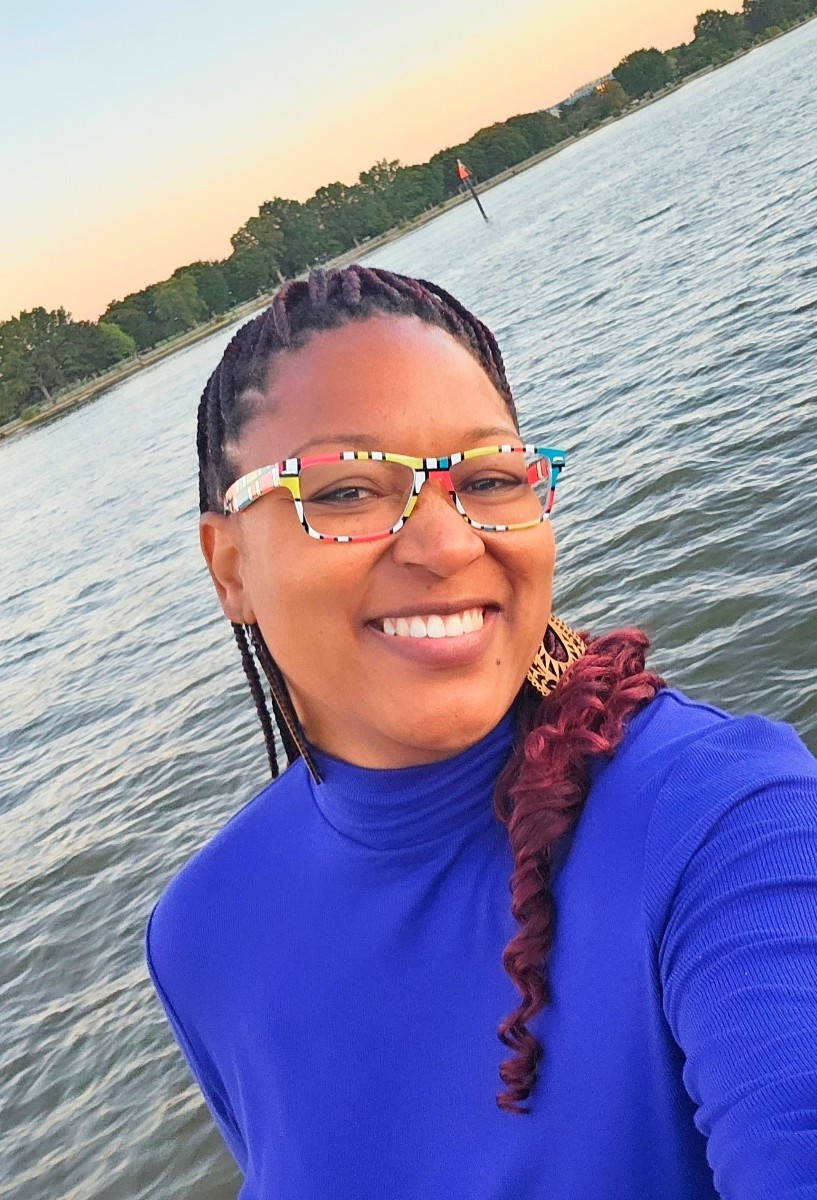
Today we’d like to introduce you to Trenita Childers.
Hi Trenita, please kick things off for us with an introduction to yourself and your story.
I am Dr. Trenita Childers, a family wellness coach based in Raleigh, North Carolina. My family business – Dr. Trenita Parent and Family Wellness, LLC – provides coaching, education, and inspiration for women and families navigating burnout or seeking deeper relationships as they become who they are called to be. My journey into wellness coaching came through an unexpected path—one that began in academia and research, studying some of the world’s most pressing social issues.
I was born in Chicago and lived there until middle school, then moved to Cincinnati where I graduated high school. I came to North Carolina to attend Davidson College, and honestly, North Carolina has been pulling me back ever since.
After Davidson, I taught 5th grade Spanish and Science in Charlotte for a few years, got married, then moved to the Dominican Republic for Peace Corps service with my husband, Darryl. That experience changed everything for me. I came back to North Carolina to pursue my PhD at Duke, then returned to the Dominican Republic for data collection to learn about Haitian immigrants’ first and second generation experiences living in the D.R. Eventually, I settled back in NC with our growing family—first Fayetteville, then Raleigh. By then, we had three children; the older two had been just 4 and 1 when we lived in the D.R. And to start my career, I took a position as a health equity researcher.
In 2020, I published my book, “In Someone Else’s Country”, about what I learned in the DR—specifically related to structural racism and inequality experienced by Haitian immigrants. That research was deeply important to me, but I began to see a pattern I couldn’t ignore: these structural inequalities don’t just affect communities at a policy level—they live in our minds, bodies, hearts, and spirits. They show up as burnout, chronic stress, fractured relationships, and a disconnection from ourselves.
Since then, I’ve been researching ways to support connections in Black families, and that work led me to where I am today. I realized that while policy change matters, people also need tools to heal now—in their everyday lives, in their homes, with their families. So I started my own business to do teaching and coaching about wellness in Black families.
Most of what I do is related to sensitivity. I was very much a sensitive child growing up—I cried easily, and sometimes it was framed as a problem. But as I matured, I learned that being sensitive is actually a strength. It can help build authentic relationships and deeper connections. That personal journey is now at the heart of my work, which I call “Sensitivity as Your Superpower.”
I’m sure it wasn’t obstacle-free, but would you say the journey has been fairly smooth so far?
It definitely hasn’t been a completely smooth road, and I think that’s part of what makes me effective in the work I do now. Transitioning from academic research to wellness coaching meant rebuilding my professional identity from the ground up. I had established credibility in one space and was essentially starting over in another—even though the through-line was always there for me, it wasn’t always obvious to others.
One of the biggest challenges has been helping people see the transformational benefits of life coaching. Personally, I have both a therapist and a life coach, and I’ve experienced firsthand how they serve different—but complementary—roles. Therapy often focuses on healing past wounds, processing trauma, and addressing mental health diagnoses. Coaching, on the other hand, is future-focused: it’s about active listening, asking powerful questions, reframing unhelpful narratives, setting intentions that align with who you are, and engaging in self-reflection and discovery. Both are valuable, and many people benefit from having both in their wellness toolkit.
Another challenge has been navigating the wellness industry itself, which can sometimes feel very disconnected from the realities of systemic inequality. A lot of mainstream wellness content assumes people have unlimited time, resources, and access—which just isn’t true for many of the families I work with. I’ve had to carve out my own approach, one that acknowledges real constraints while still empowering people to take meaningful steps forward.
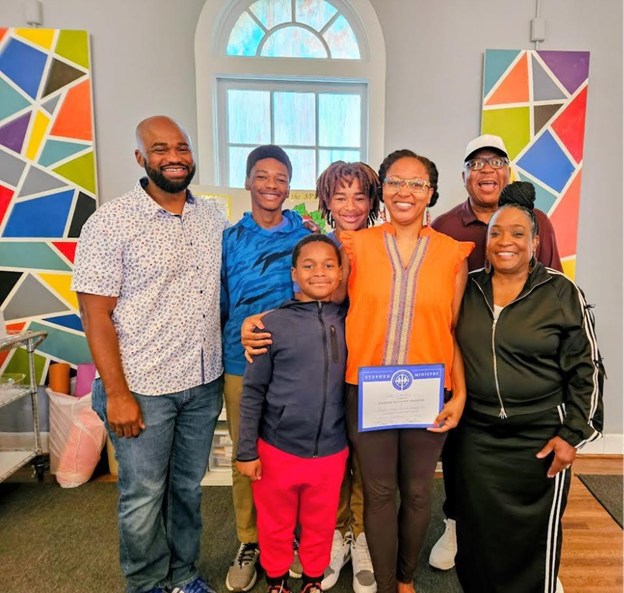
What’s helped me through this transition is that this is truly a family business. I’m the CEO and my husband, Darryl, is the CFO. Sometimes the kids have ideas and even listen in on our stakeholder meetings. Once my fourth grader was in the living room while my husband and I were meeting about the business, and he chimed in to tell us something he learned at school about supply and demand. So it’s truly a family affair, which keeps me grounded in what this work is really about—supporting families to thrive together.
It’s also been great that Raleigh feels like home now. After all the moves—Chicago, Cincinnati, North Carolina for college, the Dominican Republic twice, Fayetteville, and finally here—Raleigh is where we’ve put down roots. My grandmother grew up in Winston-Salem, so being in North Carolina feels like honoring her legacy while building my own.
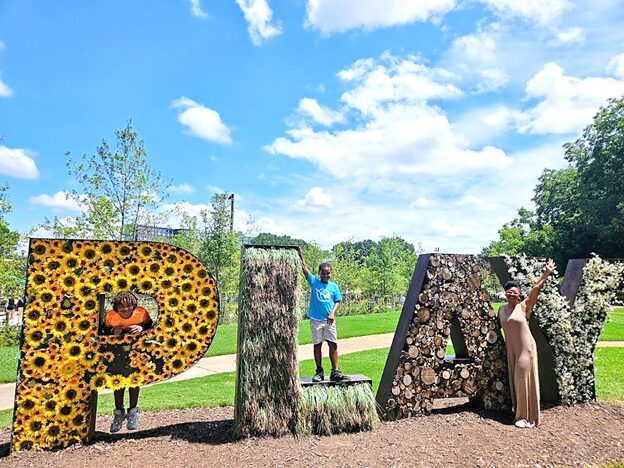
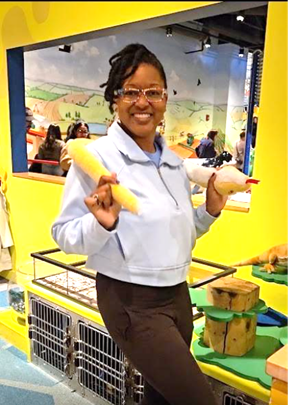
When life gets chaotic and stressful (as life tends to do), I try to pause and soak in the good. We’re frequent visitors at Wake County community centers for summer camps, sports, and open gym, and we make good use of the Raleigh library system and local museums—including Marbles Kids Museum, which has a 21+ night for adults that I absolutely love. Between the green spaces at NCMA, performances by the NC Symphony, cultural celebrations like the annual American Indian Heritage Celebration and the Raleigh African American Cultural Festival, and the thriving food and brewery scene, there’s always something meaningful to do to de-stress.
We’ve been impressed with Dr. Trenita Parent and Family Wellness, LLC , but for folks who might not be as familiar, what can you share with them about what you do and what sets you apart from others?
My coaching is rooted in a simple but powerful truth: burnout doesn’t just happen because you’re “doing too much.” It happens when the systems around you demand more than they give back, and when you’ve been conditioned to ignore your own needs in service of everyone else.
I offer both group coaching and 1:1 coaching, and I’m also developing local workshops here in Raleigh. Right now, all of my coaching services are virtual, which allows me to work with clients beyond just my immediate community, though my heart is very much rooted here in North Carolina.
Virtual Group Coaching happens most Saturdays at 11 AM EST—with exceptions for my kids’ soccer tournaments and basketball games, which come up every now and then. These sessions are $50 each, with pricing plans available. Each session explores a different theme—past topics have included Sensitivity as Your Superpower, Nature as Sanctuary, Food as Comfort and Culture, and Fashion as Creative Expression. Here’s what to expect during group coaching sessions:
~10 minutes: Arriving together—breathwork or meditation to settle in
~10 minutes: Who’s in the room and what brings us here?
~10 minutes: I offer grounding and reflection based on the session theme
~25 minutes: Open discussion—flowing wherever it needs to go
~5 minutes: Closing—breathwork or meditation to carry us into our day
You can come as you are—with your stories, your questions, your whole self. No need to prep anything, just bring your breath and your presence.
1:1 Coaching begins with a free assessment session that gives you space for self-reflection and helps us understand your needs. After that, you have flexibility: schedule single sessions as needed, or commit to a 3, 6, or 12-session package with coaching practices tailored to you. I offer a range of guided support including guided meditation, reflection questions, and systems thinking to reframe burnout using a lens that prioritizes recovery. My approach follows a three-phase healing framework (detailed in my article “Canaries in the Coal Mine: Understanding the Restorative Self-Care Needs of Highly Sensitive Black Women”):
• Phase 1 – Protect: This involves fierce boundary-setting, self-soothing practices, and pouring love into depleted systems.
It’s not selfish—it’s survival.
• Phase 2 – Reflect: This means honestly assessing what we need, not what we think we should need or what others
expect us to need.
• Phase 3 – Connect: This involves reaching out to get authentic needs met, even when it feels vulnerable or
countercultural.
What sets my approach apart is that I don’t just help people add another self-care task to their already overwhelming to-do list. We work together to understand what’s actually happening—both in their external circumstances and their internal experience. Also, my work is grounded in a Black feminist framework (explored in depth in my article “The Monster in the Room: What Highly Sensitive Black Women Need to Know About Our White Friendships”) that centers Black women’s knowledge as expertise – we know who we are and what we need. In our sessions, I’m not asking you to fix yourself. I’m asking you to see how the systems around you were never designed for your flourishing—and then we work together to create practices that honor your whole self anyway.
I also do a lot of work around scripting—helping clients find the actual words to ask for what they need and set boundaries in their relationships. When you’re burned out, your decision-making capacity shuts down. The “train is not on the tracks,” as I like to say. So we slow down, create scripts for common situations, and practice what it feels like to advocate for yourself.
What I’m most proud of is how this work bridges my academic background with deeply practical, embodied wisdom. I bring a cultural lens that honors different healing traditions and helps people see that wellness isn’t one-size-fits-all.
Where we are in life is often partly because of others. Who/what else deserves credit for how your story turned out?
Absolutely. This work doesn’t happen in isolation, and I’ve been blessed with people who’ve believed in me and this vision—sometimes before I fully believed in it myself.
My graduate school advisors at Duke laid critical groundwork for how I understand wellness, family, and systemic inequality. Dr. Eduardo Bonilla-Silva gave me a foundational understanding of systemic racism in the US and globally—a lens I carry into every coaching conversation. Dr. Linda K. George introduced me to medical sociology and life course stages, which taught me to examine wellness as something that evolves based on who you are in any given time and place. And Dr. Linda Burton centered the lived experiences of families holistically and provided ethnographic training that helps me see life from other people’s perspectives—an essential skill in coaching.
Dr. Zelda Lockhart was pivotal early on. I completed an expressive writing workshop with her that helped me identify sensitivity as the core of where I wanted to focus my work. She guided me toward understanding intergenerational connections across wounds, and that clarity became the foundation for everything I do now. Dr. Della Moseley’s Black women’s healing circle showed me firsthand the transformational power of being seen and offering support in community. That experience didn’t just inspire my group coaching model—it shaped my belief that healing happens best when we’re together, not isolated.
Rooted Healing Therapy, led by Alvely Alcantara, LCSW, gave me essential tools for reframing, deepening relationships, and healing from past trauma—all while acknowledging that we’re navigating inequitable systems we didn’t create. The emphasis on intuitive healing and connection to ancestral practices has deeply influenced how I approach wellness. Unshackled Academy, which I learned about through Kelley Palmer, opened up new ways of thinking about Black liberation that have shaped my coaching practices. These conversations helped me think more expansively about what is versus what is possible—a framework I now bring into every session. Yapriah Life & Healing, PLLC – led by Suzette Aiken – has been a model for showing up for people in person. Attending their community wellness events has been invaluable as I develop my own local workshops, even as I continue hosting virtual coaching sessions.
My husband, Darryl, deserves enormous credit. He’s not just the CFO of the business—he’s my thought partner, my grounding force, and the person who reminds me to practice what I preach when I forget. He believed in this shift into coaching even when it felt risky, and his support has made all the difference.
I also have to acknowledge my clients—the women who show up vulnerably, who trust me with their stories, and who do the hard work of healing. They teach me as much as I teach them, and their courage fuels this work every single day.
And finally, my children. They may not realize it yet, but they keep me honest. They’re watching, and that accountability—knowing I’m modeling something for them—pushes me to keep growing, keep resting, and keep showing up authentically.
Pricing:
- • Virtual Group Coaching (Most Saturdays at 11 AM EST) – $50/session with pricing plans available
- • 1:1 Coaching (Tailored, phased approach with assessment) – $150/session with pricing plans available
- • Local Workshops (In development)
Contact Info:
- Website: https://www.drtrenitachilders.com/
- Instagram: https://www.instagram.com/drtrenita
- Facebook: https://www.facebook.com/profile.php?id=61573615381254
- Twitter: @drtrenita
- Youtube: https://www.youtube.com/@trenitachilders7716
- Other: https://linktr.ee/drtrenita