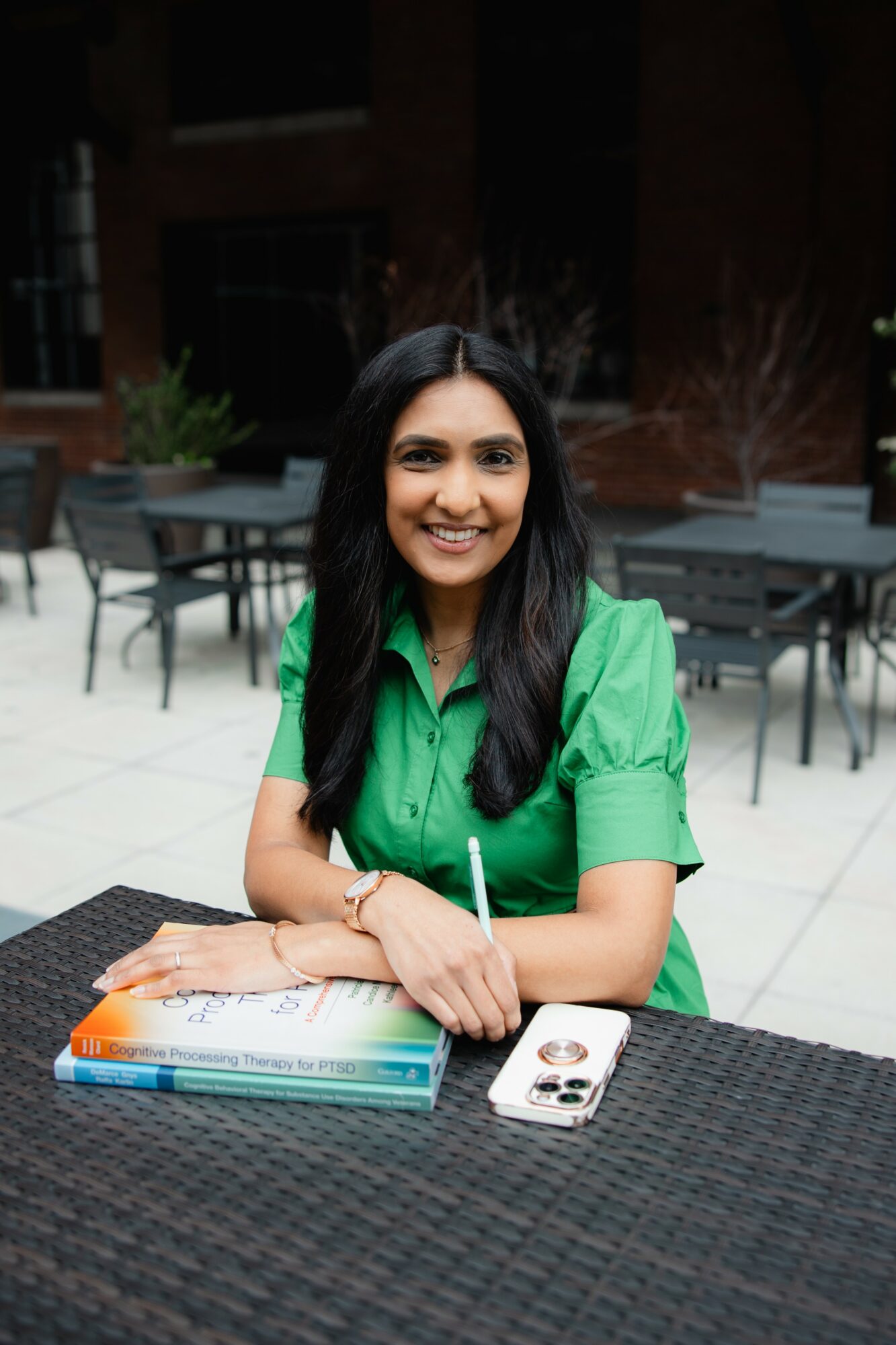






Today we’d like to introduce you to Kajal Patel.
Hi Kajal, can you start by introducing yourself? We’d love to learn more about how you got to where you are today?
I appreciate the opportunity to share parts of my life that inspired me to become a Licensed Clinical Social Worker and begin my own private practice!
It’s often said that many social workers are shaped by their lived experiences — that personal encounters with hardship, grief, or injustice guide them toward this field.
I lost my father at age nine. Growing up as an Asian American in GA school systems with minimal diversity, I navigated grief while also experiencing cultural judgment from both Western and Indian communities. While the “ABCDs” (American Born Confused Desi) have found some humor in it, when a person is younger it lands differently. At a young age, I became aware of responsibility earlier than most children and tried not to add additional burden to my mother during this difficult time (well as much a kid possibly can).
Yet even within hardship, there were beautiful experiences. Neighbors showed up the night my father passed. An aunt stayed with us for months afterward. Our Asian Indian community of friends and family gathered, prayed, brought meals, and continued to check in for years. My teachers supported me in small ways, like seating me near friends in class. That collective care left a lasting imprint: healthy communities and supportive family systems can be deeply protective.
One of the most pivotal influences in my childhood was my elementary school counselor. That early intervention did not erase my grief, but it gave me something equally powerful: a safe space to be vulnerable. A space where awkwardness became trust, where silence turned into words, and where emotional pain was acknowledged with care. I did not realize it at the time, but that experience would later guide my career path.
As I grew older, I noticed the duality within culture and family systems. While family and community are central to our culture, they can also come with high expectations, rigid roles, and subtle pressures that make it difficult to assert personal choice. Learning to honor one’s own needs while navigating these dynamics shaped my understanding of boundaries, the ideas around respect, and healthy relationship dynamics — lessons I carry into my work with clients today.
During my undergraduate years, I initially pursued a path that felt expected rather than aligned. Following what others valued felt heavy. Over time, I realized I needed to shift toward psychology and eventually pursued my MSW, as advocacy and meaningful field work were especially important to me.
My MSW program became one of the most meaningful chapters of my life. I was surrounded by an incredible and diverse group of women whose friendships I remain deeply grateful for. My first internship at a rape crisis center, while intense, gave me my first true advocacy voice. I worked with children, women, and men who had experienced sexual trauma, and we also provided education in school systems about a topic that is rarely discussed openly with young people, helping students understand risks and how to seek support if they ever needed it.
From the beginning of my career as an LCSW-A, I knew I wanted to eventually own a private practice. I did not want to rush it — I wanted depth, competence, and confidence that came from experience. Early challenging environments shaped my skills and prepared me for the next opportunities. I also took on supervisory roles, providing guidance and support to LCSW-As on their path to licensure.
I began in inpatient forensic settings within the state hospital system, developing an understanding of how mental illness intersects with legal systems, community safety, and systemic support. Later, I transitioned into substance use disorder treatment within state and federal government settings, supporting individuals rebuilding after addiction and military service. In those spaces, I saw how trauma, mood disorders, physical health challenges, and head injuries often intersect with substance use — and how, with the right support, recovery is possible. That work reinforced my belief that boundaries, education, and accountability are most transformative when paired with compassion.
Around 2017, I completed my 200-hour yoga teacher training certification. What began as a personal commitment to physical health sparked a deeper interest in mindfulness and the mind–body connection. The certification helped me integrate mindful movement and breath work into therapy.
In 2020, during the COVID pandemic, I transitioned into a group private practice to pursue broader mental health work. That period required patience and faith but also gave me the freedom to integrate mindful movement while balancing family needs. In 2024, while isolating due to COVID, I was forced to slow down and it created a rare pause from daily responsibilities. That stillness gave me the space to focus on planning and completing the steps to officially launch my own private practice.
As my work expanded beyond addiction treatment into broader mental health care — including individual, family, and couples therapy — it deepened my appreciation for helping people recognize their resilience and strengthen inner resources to navigate external stressors. It also highlighted how often relationship dynamics that strain families and partnerships are minimized or overlooked, even though they profoundly affect wellbeing.
My journey has shaped not only the clinician I am today, but also the kind of space I strive to create — one where individuals and families feel seen, supported, and empowered to grow.
If there is one message I hope people take away from my story, it’s that therapy is not something to be ashamed of. Seeking support does not mean you are weak. In many ways, it reflects strength — the willingness to understand yourself, face life’s challenges, and grow from them. Therapy can help people gain insight, build resilience, and navigate life’s difficulties in healthier ways so they can show up more fully in the spaces they walk into. It can also give individuals the courage and awareness needed to break unhealthy generational patterns and create healthier dynamics for themselves and the families that come after them.
If sharing my story encourages even one person to feel more open to seeking support when they need it, then it has served a meaningful purpose.
Alright, so let’s dig a little deeper into the story – has it been an easy path overall and if not, what were the challenges you’ve had to overcome?
Like many careers, the road hasn’t been entirely smooth, but not too bad either.
There’s often a big difference between having a vision for meaningful work and having the space to actually build it. Creating that space — financially, emotionally, and logistically — takes intention and sacrifice. When I decided to open my private practice, I had to learn aspects of the profession that graduate school doesn’t always prepare you for: navigating state regulations, licensing board requirements, business structures, and business ethical considerations. Those challenges were manageable, but they required patience, discipline, and a willingness to step into the role of both clinician and business owner.
Some of the more nuanced struggles have been around sustainability. In mental health, particularly when working with insurance companies, there can be a tension between providing high-quality, attentive care and navigating reimbursement structures that don’t always reflect the time, emotional energy, and complexity involved in certain cases. Some clients require deeper clinical work, more coordination, and additional preparation, yet reimbursement models don’t always account for that intensity. Moments like that can feel discouraging to work with insurance companies, but they’ve also pushed me to think more critically about how to maintain both integrity and sustainability in the work I do. I want to keep my practice local and independent, building direct relationships with my community rather than going through larger, corporate platforms. Balancing mission and margin while staying true to that local, personal approach is a real challenge.
Another reality of private practice is consistency. Life happens — and as a therapist, I genuinely understand that. I try to create a space that acknowledges real-world challenges and meets clients with compassion. At the same time, when clients aren’t able to consistently attend sessions, it can affect both their therapeutic progress and my own financial stability. Policies like no-show fees exist for a reason, but navigating those boundaries while still holding empathy for clients is a balance I’m always mindful of.
I deeply value being able to provide services such as sliding-scale options and working with charities to provide free sessions for individuals who may not otherwise have access to care. However, when reimbursement rates are low in some seasons, or there is an influx of cancelations/no shows, it can be difficult to provide these types of services. Balancing these priorities — sustaining the practice, meeting personal financial responsibilities for my family, and maintaining accessibility for clients — is an ongoing challenge that many clinicians quietly navigate.
And lastly, the balance between growing my practice to its full potential and being genuinely present with my family, especially my children. As a business owner, I can clearly see the vision and mission for the work I want to build, but motherhood has also required me to pause and recognize what season of life I am in. There have been moments where I’ve had to practice patience and shift my perspective toward gratitude — gratitude for the ability to support my children, be present in their lives, and offer them the stability and care they deserve, while still creating space to pursue my professional ambitions. Learning to hold both of those priorities at once continues to be an important part of my journey.
I will mention one more really important lesson along the way has been the necessity of self-care. In a profession where we hold space for others’ trauma, grief, and stress, burnout is a very real risk. Over time, I’ve learned that caring for my own mental and emotional wellbeing cannot be a luxury. When I give myself the space to recharge, I’m able to show up more present, grounded, and effective for my clients, my family, and my community.
Looking back, the journey hasn’t been perfectly smooth, however each challenge has helped shape how I think about ethics, accessibility, boundaries, and sustainability. In many ways, those experiences have helped me grow not only as a clinician, but also as a business owner and a person.
Thanks – so what else should our readers know about Sahas Counseling, PLLC?
My private practice, “Sahas” Counseling, is named from a Sanskrit word, essentially representing inner fortitude, courage, and the capacity to face life with bravery. I remember hearing it at a point when I was deepening my practice in yoga many years ago.
My private practice is built on helping individuals navigate life with clarity, resilience, and personal agency with autonomy. I work with clients experiencing anxiety, depression, trauma, life transitions, and cultural stress, guiding them to better understand what they can control and how to respond effectively to what they cannot. I draw from evidence-based approaches such as Acceptance and Commitment Therapy (ACT), Cognitive Behavioral Therapy (CBT), Cognitive Processing Therapy (CPT), mindfulness, and mindful movement practices. And I generally work with individuals who are 18 and up, but have also been blessed to work with a few younger teens. My hopes are to continue evolving with other models in the future. Sessions may also incorporate breathing exercises and gentle stretches that help manage anxiety, reduce stress, and rebuild trust in one’s body and inner responses.
In addition to clinical work, I provide supervision for LCSW-As, supporting the next generation of social workers as they develop clinical competence, ethical awareness, and confidence in their professional voice.
What sets Sahas Counseling, PLLC apart is the combination of clinical depth and cultural understanding. While I work with individuals from many backgrounds, a significant portion of my clients come from Asian communities who appreciate having a space where cultural values, family dynamics, and expectations are already understood without needing to be explained.
Ultimately, having one place in your life where someone offers steady support, thoughtful guidance, and genuine understanding — something that may not always be available in your everyday environment — can be incredibly powerful in creating meaningful change.
What do you like and dislike about the city?
I love how much the city has grown. When I moved here in 2009 from GA, it felt like a big change. While I didn’t live in Atlanta after graduate school, I was always there during the weekends. Atlanta was so busy and lively! But the Triangle area has really evolved, and I’ve come to love it here. I’ve noticed more diversity moving into the area from around the world and up north. The foodie scene is blossoming, comedy clubs and performing arts centers are thriving, and there’s an abundance of parks for hiking and playing with the kids. Plus, being so close to beaches, vineyards, and the mountains makes for easy weekend getaways, which I really appreciate.
If I have to name a dislike, I guess while Raleigh’s growth brings new energy, the rising real estate costs and redevelopment are displacing lower-income residents. As a social worker, I worry about how these changes affect housing stability, community ties, and access to resources for those who need them most.
Contact Info:
- Website: https://www.sahascounseling.com
- Instagram: @sahascounseling