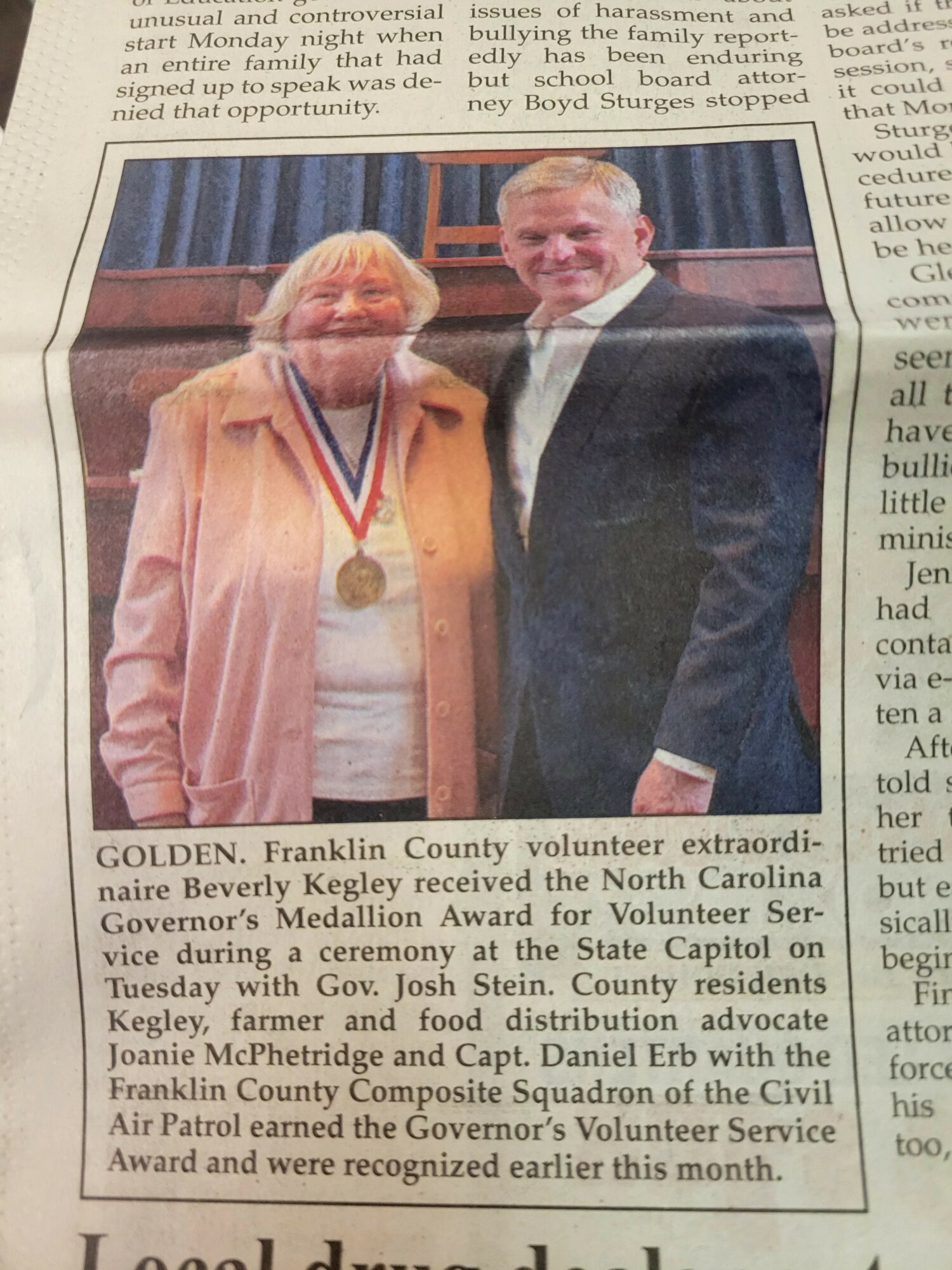





Today we’d like to introduce you to Beverly Kegley.
Hi Beverly, thanks for joining us today. We’d love for you to start by introducing yourself.
Born in the hills of eastern Kentucky, Beverly’s story began in a close-knit mountain community where family, faith, and hard work shaped everyday life. Her parents later moved the family to Ohio before returning to Kentucky when they became home missionaries. The mountains remained home throughout her childhood and school years, grounding her in values that would guide her for decades to come.
Life in the Kentucky mountains was simple, demanding, and deeply connected to the land. Beverly remembers a childhood filled with cousins, grandparents, and neighbors living side by side along the mountain ridges. Her grandmother lived at the top of the mountain, with family gathered all around below. Farming was done the old-fashioned way—plowing with a mule, setting tobacco by hand, and hauling water from the creek. It was hard work, but it was also rich with togetherness, resilience, and joy.
After finishing school, Beverly moved to Washington, D.C. to work with the Federal Bureau of Investigation. It was there that she married and eventually moved to North Carolina, beginning a lifelong journey of service to children, families, and underserved communities.
In 1975, Beverly went to work for Methodist Home for Children. A few years later, after moving to Franklin County, she learned of a newly opening group home for court-involved girls. She initially called simply to volunteer, but was instead offered a job. When the group home eventually closed, Beverly did something extraordinary—she brought three of the girls into her own home and became a specialized foster parent.
That decision, made in 1979, became one of the defining chapters of her life. Decades later, many of those young women remain part of her life, and several still lovingly refer to her as “Mom.” What began as foster care grew into lifelong relationships rooted in trust, consistency, and love.
Over the years, Beverly also worked in businesses in Raleigh before stepping into another major role in community service. In 2004, she became Executive Director of Franklin County Volunteers in Medicine, a free clinic dedicated to serving uninsured and underserved patients. For fifteen years, she helped guide the organization’s mission of compassionate healthcare.
Even retirement did not slow her commitment to helping others. After moving back to Kentucky, she volunteered at a local arts center, worked in a community garden, and eventually found herself serving at another free clinic. Fourteen months later, however, North Carolina called her back home.
Today, Beverly continues volunteering with what is now known as Franklin County Partners in Health. Nearly a decade after returning, she remains part of a clinic that has maintained remarkable continuity in care, still serving patients with much of the same dedicated medical team that began the mission years ago.
Beyond healthcare and food ministries, Beverly’s volunteer work has reached into many areas of community life. She has supported youth education programs through local library Quiz Bowl activities and helped establish food pantries inside two county libraries—an innovative effort connecting literacy, learning, and food access in welcoming public spaces.
Her commitment to the arts has also played an important role in her community service. Beverly served as chair of the local arts council and as a board member of Art De Jour, helping support programs that encouraged creativity and cultural engagement throughout the community.
She also serves on the board of a documentary film production company focused primarily on community-centered storytelling. Through a partnership between the film company and the Franklin County Interfaith Council, a documentary titled Gimme Shelter was produced to raise awareness about homelessness in Franklin County and the realities faced by vulnerable residents in rural communities.
One of Beverly’s most far-reaching efforts began in 2018 when she became co-founder of the Franklin County Interfaith Council.
What started as a gathering place for people from different religious traditions quickly became something much larger. The council was intentionally created as an interfaith organization so individuals from many faith backgrounds could come together to learn from one another, explore both similarities and differences in belief and practice, and build meaningful relationships through understanding and service.
When the COVID-19 pandemic struck, the Interfaith Council shifted from dialogue to direct action. Recognizing urgent community needs, the organization first coordinated mask-making efforts when protective supplies were scarce. Soon after, it turned its focus toward food insecurity.
Working alongside St. Paul Presbyterian Church and many other congregations and community partners, the council helped support outdoor food distribution efforts when traditional soup kitchens could no longer operate safely. What began as emergency response evolved into a broad network of food ministries serving communities across Franklin County.
Today, the Interfaith Council partners with eleven food ministries, including mobile food units and outreach programs serving unhoused individuals. The organization also supports emergency food distribution through collaborations with local social services, healthcare providers, libraries, and community organizations.
At the center of Beverly’s current work is the Oasis Project—a rural service model designed to help churches, nonprofits, and community groups build sustainable networks of support for underserved populations throughout the rural South. The project combines food access, healthcare collaboration, faith-based partnership, and community engagement into a practical framework that other communities can adapt and replicate.
For Beverly, however, the work has never been about recognition. It has always been about people.
Whether caring for vulnerable children, supporting struggling families, helping provide healthcare, strengthening the arts, creating partnerships across faith traditions, or building networks to address hunger and homelessness, Beverly Kegley has spent a lifetime quietly creating places of refuge, dignity, and hope.
From a mountaintop in Kentucky to the communities of rural North Carolina, her life’s work stands as a reminder that service is not simply something you do—it is something you live.
I’m sure it wasn’t obstacle-free, but would you say the journey has been fairly smooth so far?
Personal
Divorce, loss of my parents,
Non-profits
The struggles are what most small non-profits go through. Funding, volunteers, staying on message
Realizing that I have aged-out of many things I used to do. Lifting boxes of food, driving distance, stamina, technology
How can people work with you, collaborate with you or support you?
Volunteers, we need dedicated volunteers.
If someone/group has a skill or service, I.E. hair stylist, dog groomer, carpenter, electrician, we would love to partner with them. Many of the people we serve need home repairs, could use a hair cut, have pets that need care.
People could always do Food. Supplies, toy, gift card drives for us.
Contact Info: