




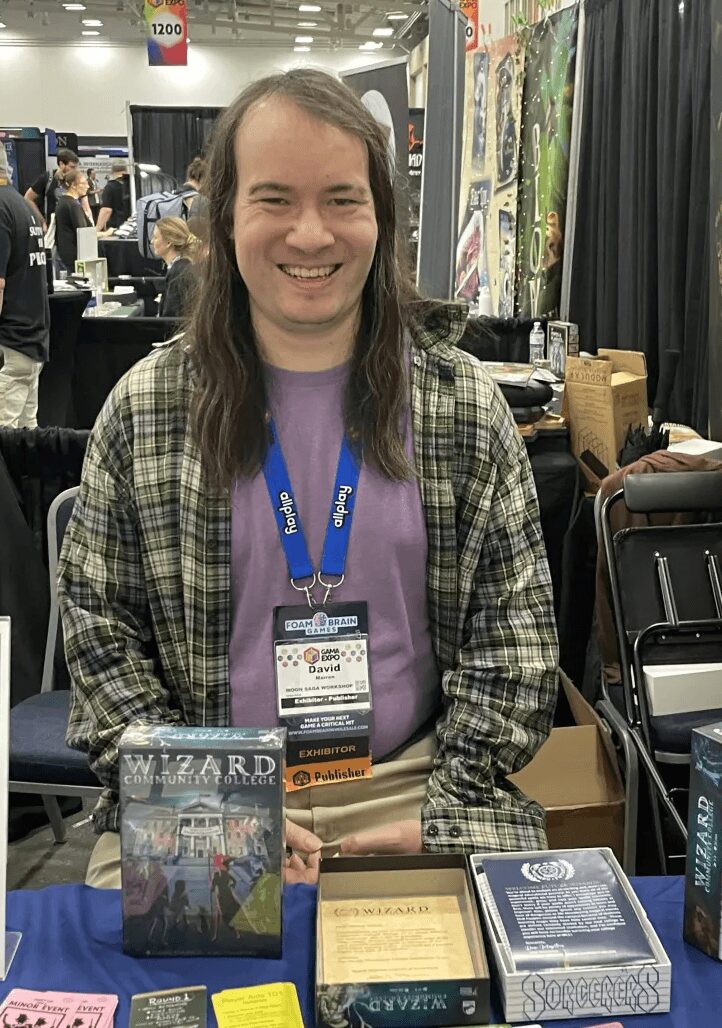
Today we’d like to introduce you to David Marron.
Alright, so thank you so much for sharing your story and insight with our readers. To kick things off, can you tell us a bit about how you got started?
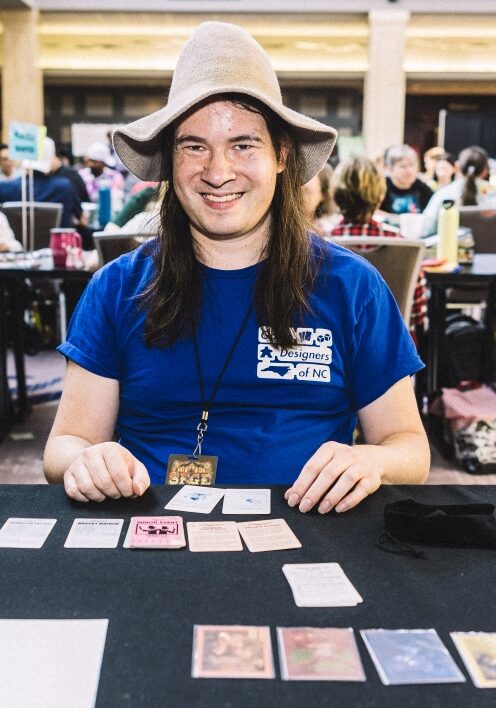
My story of creating Magical Meerkat Games started with falling in love with tabletop board games. I had always enjoyed classic board games such as Scrabble, Clue, and Risk when I was younger. When I became an adult and discovered modern board games like Splendor, Azul, and Wingspan I was really hooked, and I started going to board game meetups around North Carolina. I loved the variety of experiences you could get from board games spanning from making jokes with friends when playing party games, all the way up to epic strategic games where you pull off elaborate and brilliant turns trying to get the most points and win. I also found that playing board games was one of the best ways to meet people and make close friends over time. I was so impressed by the clever designs and fun experiences that I had when playing all these games, and I made it my personal goal to try as many new board games as I possibly could. Eventually I had played so many different games that I started coming up with ideas for my own games, and I was filled with the creative desire to make my own games with ideas and game mechanics that I had never seen before. I made my first board game prototype by writing on index cards to represent the cards in the game, and drawing on a blank piece of poster board with a ruler to make a mock game board. I had heard of this group of game designers that are all local to North Carolina called the Game Designers of NC, so I took my prototype to one of their design meetings. The design meetings are basically a group of game designers playing each others’ game prototypes and giving constructive feedback on them, so I was able to get some great feedback on my first game, which led me to improve it and bring the new version to the next meeting. This lead to me designing games a hobby for over ten years, where I would regularly create and improve my games, go to designer meetings, and sometimes bring my designs to board game meetups to get feedback from the other players there. Eventually, I designed a game called Wizard Community College over the pandemic for a design contest. Though the game didn’t win the contest, I worked on improving it over the next several years and I realized that I liked it so much that it had become my favorite game to play, out of the hundreds of board games I have tried so far. I thought that it was the best game that I had designed yet, and I decided that I wanted to publish the game and turn it from a prototype into a fully complete game that would one day be sold in board game stores. Over the next year, I started Magical Meerkat Games as a board game publishing company, hired an artist to make the game art, found a manufacturer that would mass produce the game, built an audience, and created a crowdfunding campaign to raise the money necessary for production. The campaign ended up exceeding my expectations and I was able to produce Wizard Community College and start getting it in game stores! I hope to keep going and publish more of the fun games that I’ve designed in the future!
Can you talk to us a bit about the challenges and lessons you’ve learned along the way. Looking back would you say it’s been easy or smooth in retrospect?
I think that starting Magical Meerkat Games has been a smoother road than I expected, mostly because I metaphorically paved it in advance with a large amount of effort, research, and planning. Before even considering publishing Wizard Community College and starting the company, I did extensive playtesting to make sure the game was the best that it could be and that feedback from players was extremely positive. I then pre-planned a budget for art, marketing, going to conventions to build an audience, production costs, and game previews. I researched how to run an effective crowdfunding campaign for a board game and talked with several experts about it. I also received a lot of help and support from other designers and publishers in the board game industry. I made a plan for completing the game and promoting it over the span of a year, and then following the plan went pretty smoothly.
Alright, so let’s switch gears a bit and talk business. What should we know?
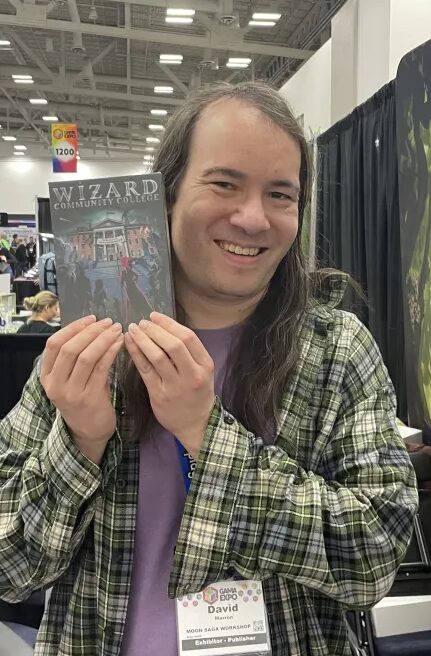
My business is Magical Meerkat Games, and it is a small tabletop board game publishing company. I just published my first game, Wizard Community College, which is an accessible roleplaying card game that you can play in 20 minutes. In the game, you roleplay as wizard students working together to cast spells to solve their college problems. However, your spells won’t work how you expect them to most of the time, and the other players at the table will say how they go hilariously wrong. I think this game is great both for fans of TTRPGs (Tabletop Roleplaying Games) as well as people who are interested in roleplaying or storytelling games and are looking for a game that is both fun and extremely easy to learn and play. I’m hoping to have a wide reach with Wizard Community College, which would allow me to publish more of the games I’ve designed over the last ten years under Magical Meerkat Games.
Can you talk to us about how you think about risk?
My view on risk taking is that it is almost inevitable when doing something like starting a business. When I started Magical Meerkat Games, I funded it with my own limited savings, which was a financial risk. However, I always made contingency plans and made sure that I could recover even in the worst case scenario. For example, in the worst case scenario that my crowdfunding campaign had failed to fund, I would have lost a decent amount of money on marketing and probably would not have been able to make my game or start the business, but since I did not take on any debt I would have been able to eventually recover from this loss. So I never ended up risking more than I could reasonably afford to lose.
Contact Info:
- Website: https://magicalmeerkatgames.com
- Instagram: https://www.instagram.com/magicalmeerkatgames