



Today we’d like to introduce you to Molly McKinley.
Hi Molly, so excited to have you on the platform. So before we get into questions about your work-life, maybe you can bring our readers up to speed on your story and how you got to where you are today?
I was the kid selling lemonade, then starting the next thing before the pitcher was empty. Owning a business was never a question of if.
I studied art history and fine art at Kent State and went straight into art dealing in Chicago at a family-owned gallery. That was my business school. You see every moving part at that scale, and nobody hides the numbers from you.
California was always the plan. I landed in San Francisco and fell for the city, the golden hills, the oak trees. My work turned there, from art into technology and public relations. The gallery skills carried over better than I expected. I stayed the better part of a decade and started to learn what leadership actually asks of a person.
The entrepreneurial itch never left. Builders see openings everywhere, and eventually you have to go find out.
Luckybug came first, making The Crafty Girls Keepsake Kits. My first real bet on myself, and my education in what not to do. Press I could get. PR was my skill and it worked, we found early traction. Margins I could not get. We were years ahead of the everything-in-one-box concept, so we were proving the category and finding our fit at the same time. Print on demand didn’t exist yet. Packaging alone demanded a volume I didn’t have to bring cost of goods anywhere near profitable. I was also a new mother, and I hit the wall where effort outruns energy. I closed the business and rested.
Happikins came next, with three kids in preschool. Kid-sized reusable cloth napkins, part of the early waste-free lunch movement. We launched into 2007, which is a hard moment to ask anyone to buy a sustainable version of something they already own. We sold plenty of product. I still get photos from customers using them today. Momentum never came.
But that business is where my thinking turned circular, and I’ve never gone back. We built a waste-free product life cycle and turned fabric scrap into baskets, placemats, and more. Business could be regenerative rather than extractive. I believed it then and I’ve built on it since.
Consulting ran quietly underneath all of this. In 2015 I made it the main event and launched Redtail Creative. A service business carries far less downside than inventory and shipping logistics. I’ve been at it ever since, helping bring businesses to market with the advantage of having sat in the founder’s chair myself, including the parts that didn’t work.
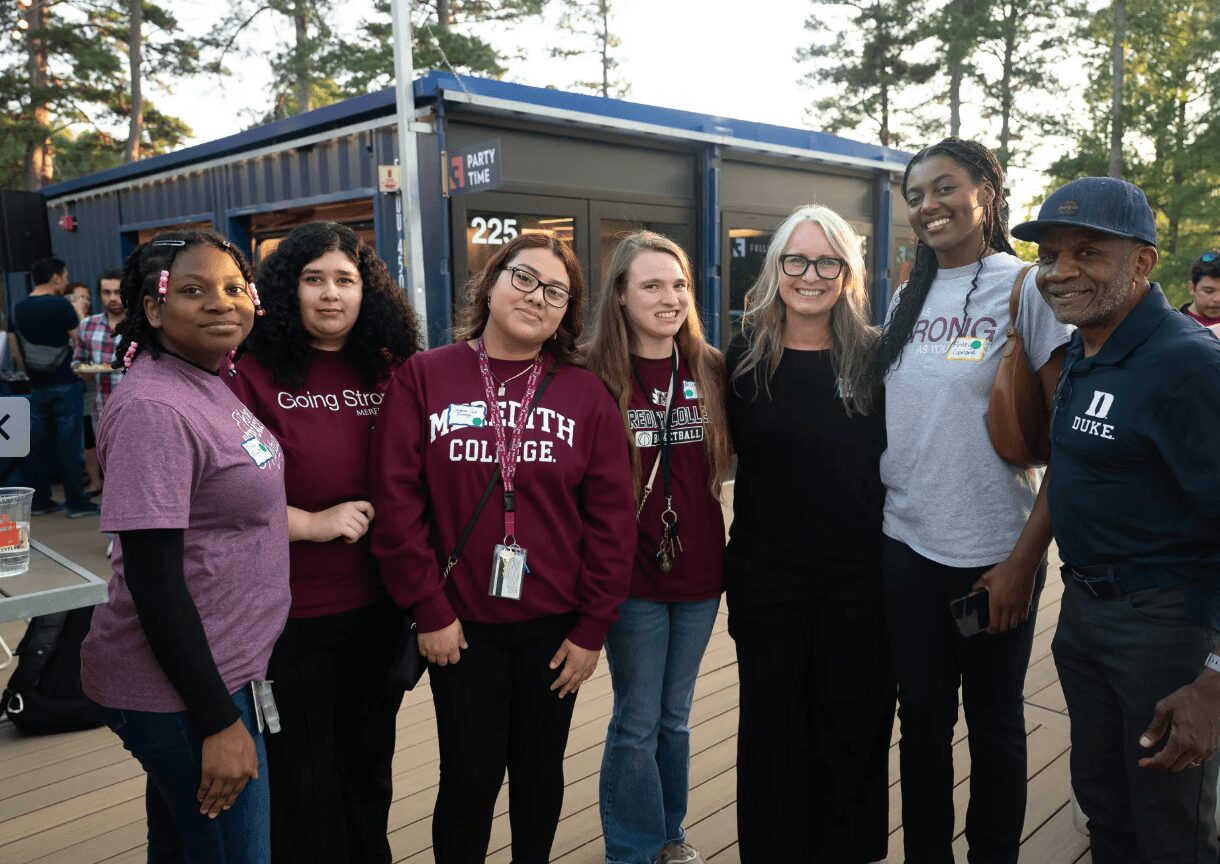
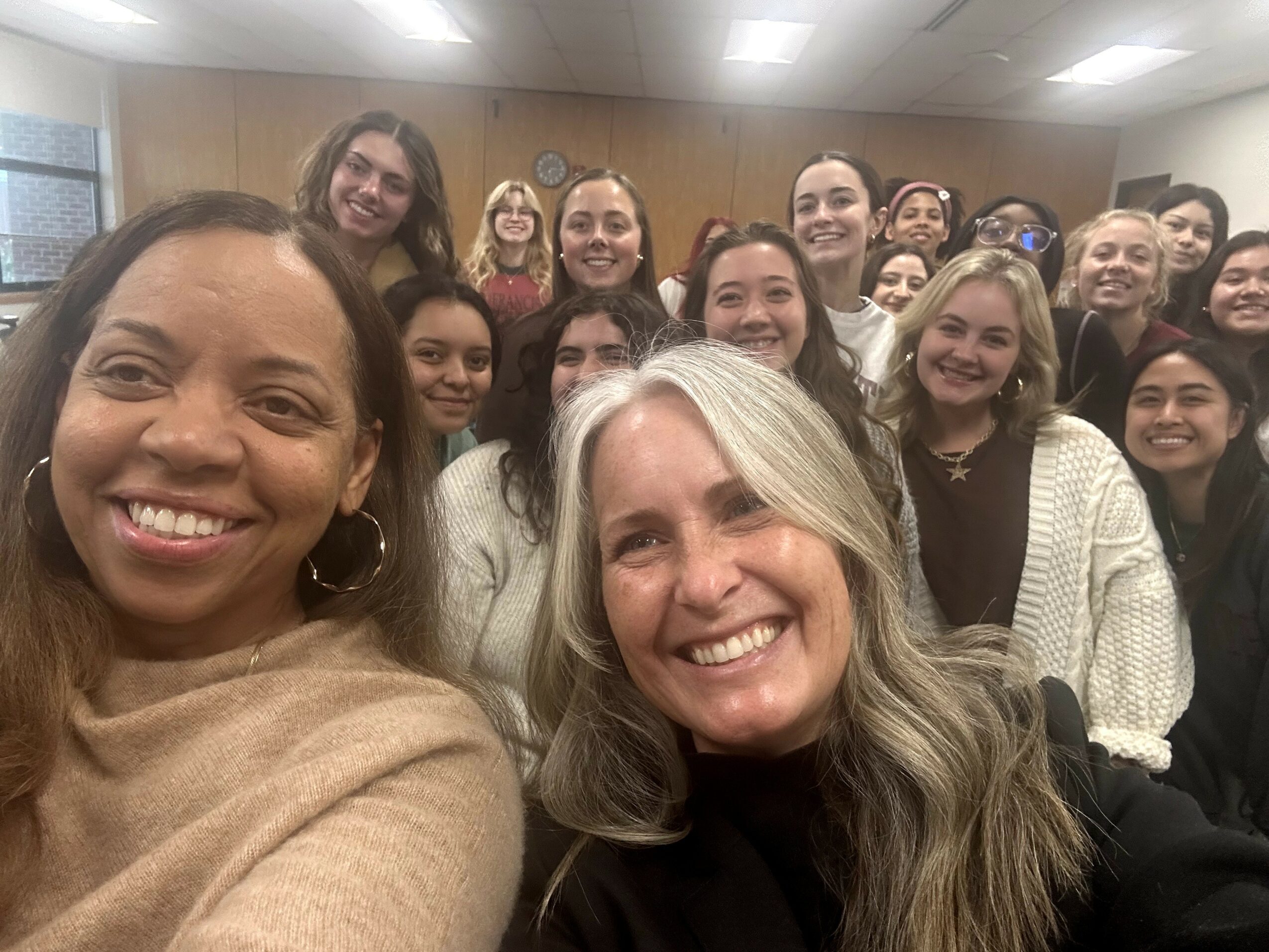
Two years ago I started teaching entrepreneurship at Meredith College as entrepreneur in residence. I’ve always jumped at the chance to teach. Building the curriculum and lighting sparks for the next generation of women founders fills my soul cup in a way nothing else has.
Now I’ve been charged with creating a center of entrepreneurship and impact at Meredith as its first founding director. I’ll be going out into the community to build for the gaps in our local ecosystem: hands-on learning, practical frameworks, funding and investment partners, continuing education for the women of North Carolina.
In an AI world, the skills we filed under “soft” are the ones that hold. Emotional intelligence. Intuition. Discernment. Clear communication. Creativity that isn’t derivative. I’m building for the next generation of conscious business leaders, and I think they’ll need those more than another framework.
Can you talk to us a bit about the challenges and lessons you’ve learned along the way. Looking back would you say it’s been easy or smooth in retrospect?
Ha. If a founder tells you the road was smooth, my instinct is to not believe them.
At the time, I didn’t know a single other woman who was starting a business. They were out there. I just didn’t know them, and there was no feed to scroll through to find them. That kind of alone does something to your judgment. You have no one to check your thinking against, so every hard call feels like it might be the one that proves you shouldn’t have tried.
I was also chasing fit while raising three small children. Always juggling, and things dropped. Some of them mattered.
The mechanics were harder then too. In the early 2000s, making things was expensive, and the risk sat entirely on you. Print on demand didn’t exist. You found your audience at retail shows, the gift fairs in Atlanta and New York, standing in a booth hoping the right buyer walked by. Social media wasn’t what it is now. And the math was brutal: to get margins that worked, I needed production runs in the thousands, sometimes hundreds of thousands of units. That’s a bet you place before you know the answer, with money you may not get back. The pressure was constant.
Most of that has been resolved in the maker’s favor, which I’m glad about. Small runs, distributed marketplaces, real ways to test before you commit. If you’re bringing an original product to market today, you have tools I would have traded a year for. My advice is to actually use them. Stay small until the customer tells you to get bigger.
Appreciate you sharing that. What should we know about Redtail Creative & Meredith College?
I get to do two things I love, and one feeds the other.
When I joined Meredith two years ago, I went back to solo consulting. No team to manage, no revenue obligation forcing me to say yes to work I didn’t believe in. That was the point. I can choose clients now based on whether the work matters to me, which is a freedom most consultants spend a career trying to buy back.
Redtail Creative helps clients build trust and authority online. Earned media, clear signals of real expertise, consistency of voice over time. It pulls on everything I’ve done: public relations, branding, content, SEO. What makes it interesting right now is that the ground is moving. AI and generative engine optimization are rewriting how people find and verify who’s credible, and nobody has this figured out yet. I like that. I like being in the uncharted part with mission-driven founders who are trying to build something worth finding.
At Meredith, we’re building the Center for Entrepreneurship and Impact, and here’s what I want people to know.
The World Inequality Report 2026 found that women have nearly closed the education gap worldwide, and it hasn’t been enough. Women still capture about a third of global labor income. Employed women in North America earn roughly 75 cents for every dollar employed men earn, and no region on earth has reached a 50-50 split. Schooling was supposed to be the equalizer. It moved the needle, and then the needle stopped.
Which tells me exactly what this center has to be. Teaching women well is the floor. What we’re adding is the part that travels: how to spot an opportunity, how to test it before you bet on it, how to ask for money, how to read a room and still trust your own read. Those skills belong to the nursing major and the chemistry major and the painter as much as to the student who already knows she wants to start a company. We’re preparing them for a future none of us can picture clearly yet, and I want them able to build inside it.
The same is true off campus. Through certificates and continuing education, we’re building for the woman who’s been sitting on an idea for six years with no one to ask about it. Meredith has been educating women for a long time. This extends that work past graduation and past our own students.
There is enormous good happening for women founders across North Carolina, and most of it is happening separately. We want to connect it.
What sets me apart is the loop between the two roles. Being a professor of practice means my students learn from experience that actually cost me something, the wins and the failures both. And they sharpen me. The students ask questions I’ve stopped asking myself. Meanwhile, the center has a pull I didn’t anticipate. Founders and leaders across the state keep offering their time and talent, and I’ve gotten to link arms with some of the brightest minds in North Carolina because of it.
What would you say have been one of the most important lessons you’ve learned?
I fall in love with problems now. It took two companies to teach me the difference.
An idea is a solution wearing a costume. You get attached to the name, the packaging, the way it will look on a shelf, and then you spend two years defending it to a market that never asked. Both times I did that, the product was good. Good wasn’t the issue. I had built an answer before I understood the question well enough to know who was asking it.
A problem behaves differently. You can sit with one for a long time without committing to any single solution. You can talk to fifty people about it and let every conversation change your mind. When you finally build, the thing has a shape the problem gave it rather than one you carried in.
Teaching is what made me name this. You can’t hand students your instincts. They need something they can use, so I had to articulate the frameworks I’d been running on feel for years. Customer discovery before production. Small tests before big bets. Asking what would have to be true for this to work, then going to find out whether it is. I used to believe that if you build it, they will come. Some frameworks mitigate that risk, and I’d rather my students use them than learn the way I did.
I’m handing Intentionaliteas, my herbal tea company, over to my class. They’ll run it as a live business, with real inventory, real margins, and customers who will or won’t buy. I can teach the framework at a whiteboard. I’d rather give them something they can break. Falling in love is still allowed. Just fall for the problem first. Run and jump if you want, but pack the parachute.
Contact Info:
- Website: https://www.redtailcreative.com
- LinkedIn: https://www.linkedin.com/in/molly-mckinley-456760/