




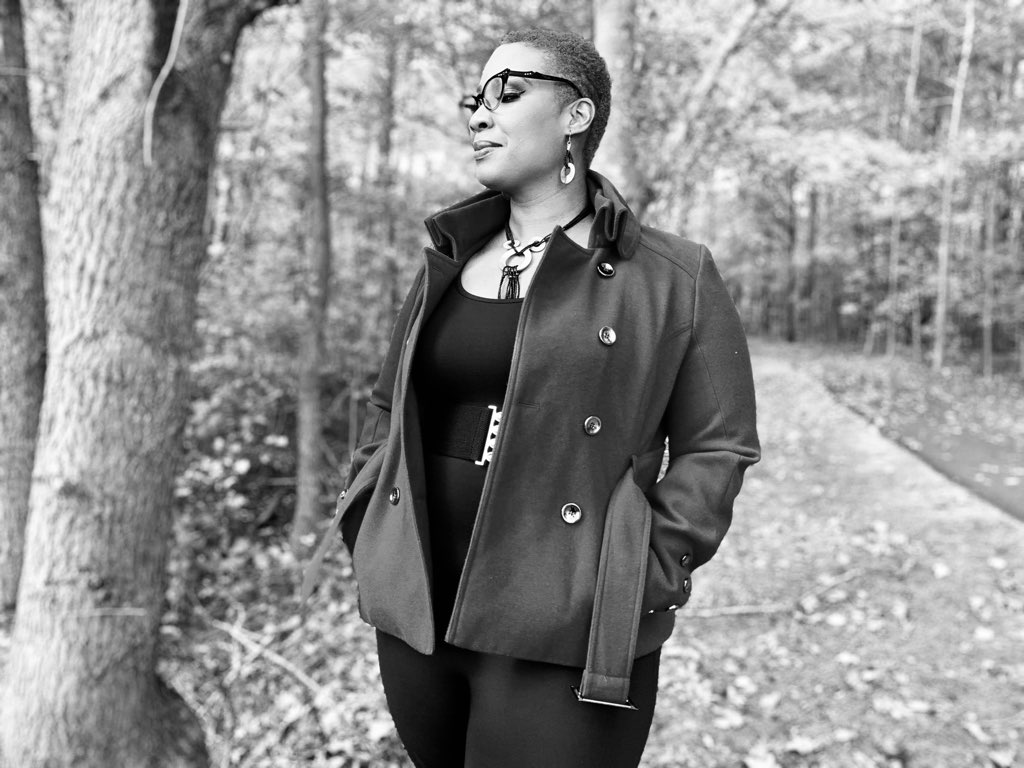
Today we’d like to introduce you to Monica Daye Williams.
Hi Monica, so excited to have you on the platform. So before we get into questions about your work-life, maybe you can bring our readers up to speed on your story and how you got to where you are today?
I did not begin with a building, a grant, or a professional title. I began with a pen.
Poetry was one of the first places where I could tell the truth about what I had experienced. Before I had professional language for trauma, healing, advocacy, or trauma informed care, I had my words. Writing gave me a way to process what I had survived, understand myself more fully, and begin reclaiming a voice that trauma had tried to silence.
I am a survivor of domestic violence and sexual trauma. Many of my earliest lessons about healing came from rebuilding my own life and trying to create a different future for myself and my family. As I moved through my own healing journey, I became increasingly aware of the gaps survivors encounter when they seek help. I saw how often Black and Brown survivors were overlooked, misunderstood, or offered services that did not reflect their culture, their full humanity, or the complexity of their lives.
I knew survivors needed more than crisis intervention. They needed places where they could be heard without judgment, supported beyond the immediate emergency, and reminded that they were still creative, capable, worthy, and whole. They needed opportunities not only to talk about what happened to them, but also to rediscover who they were beyond what happened.
That understanding became the foundation for StandUp-SpeakOut of North Carolina.
Our grassroots work began in 2004 through mentoring and community based programming. For years, the work grew through relationships, volunteer support, faith, creativity, and a deep commitment to the people we served. In 2015, StandUp-SpeakOut officially filed to become a 501(c)(3) nonprofit organization.
Becoming a nonprofit did not mean that funding suddenly appeared. We had a mission, but we did not yet have the financial resources required to fully support it. I had to ask myself what I already possessed that could help us build something sustainable.
I was a poet, writer, storyteller, and creative visionary, so I returned to the arts.
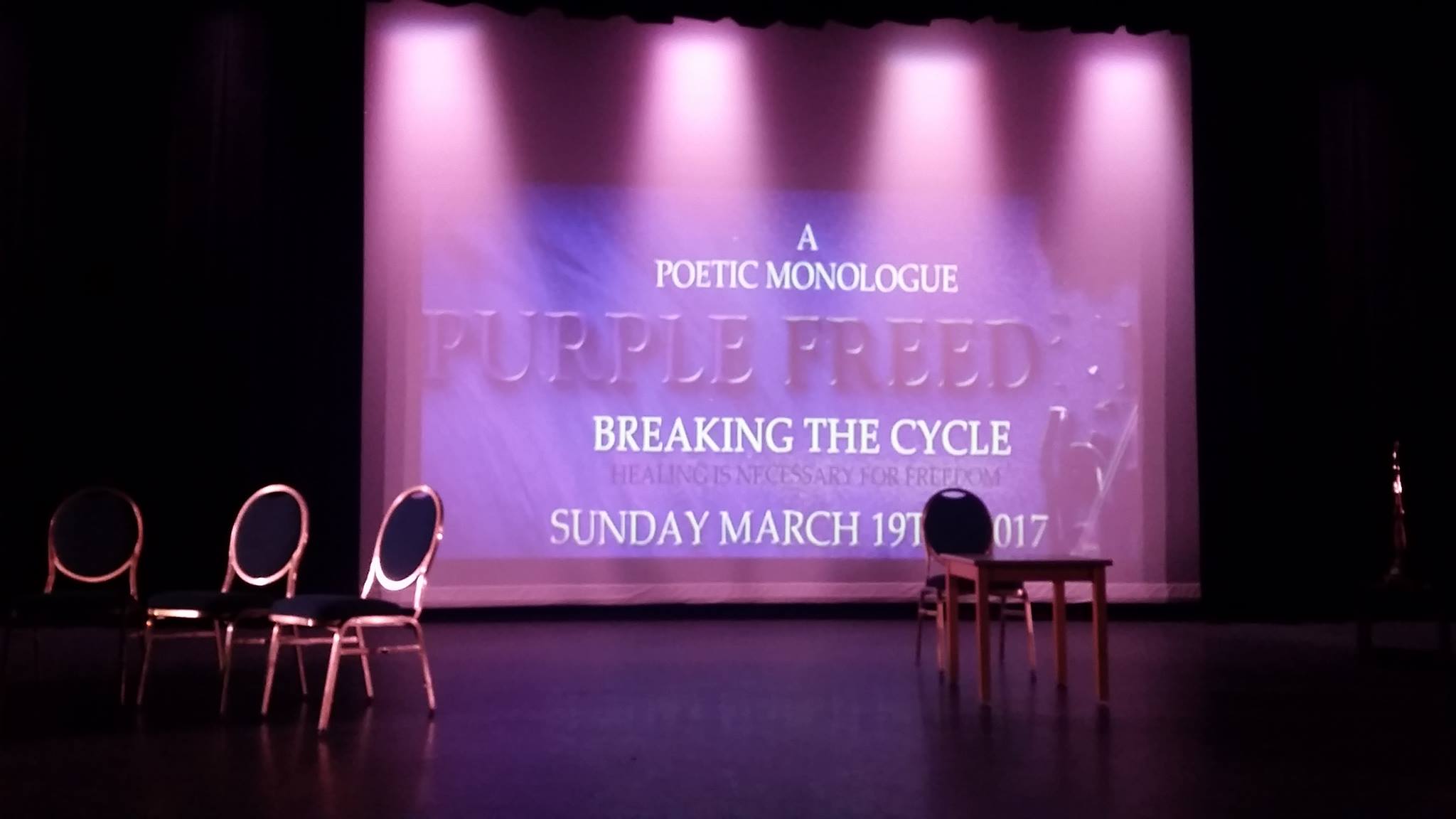
I wrote, produced, and marketed an original stage production titled Purple Freedom. The production brought together poets, dancers, actors, visual artists, and other creatives to tell stories about trauma, survival, healing, and freedom. We did not have a production budget or major sponsors. We had faith, creativity, community support, and a group of gifted people who believed that these stories deserved to be told.
Purple Freedom debuted before a sold out audience at the Durham Arts Council in March 2017. The community response was so powerful that we presented the production again in November of that year. Together, the two shows raised more than $10,500 and helped establish one of SUSO’s first operating budgets.
That experience showed me that the arts could do more than entertain. They could create language for difficult experiences, bring people together, generate resources, and open pathways to both individual and collective healing. That intersection of art, storytelling, advocacy, and community engagement eventually became one of SUSO’s defining strengths.
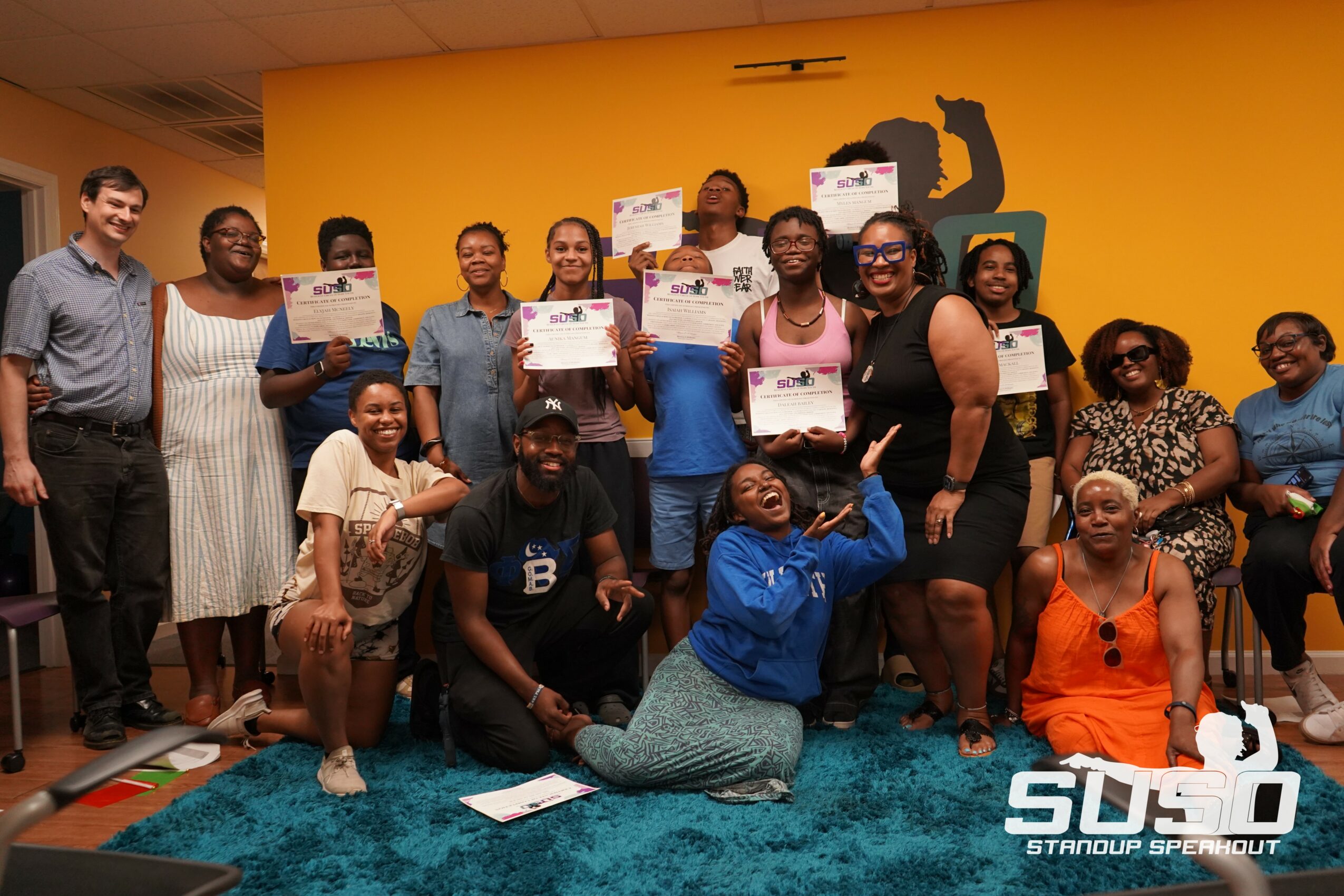
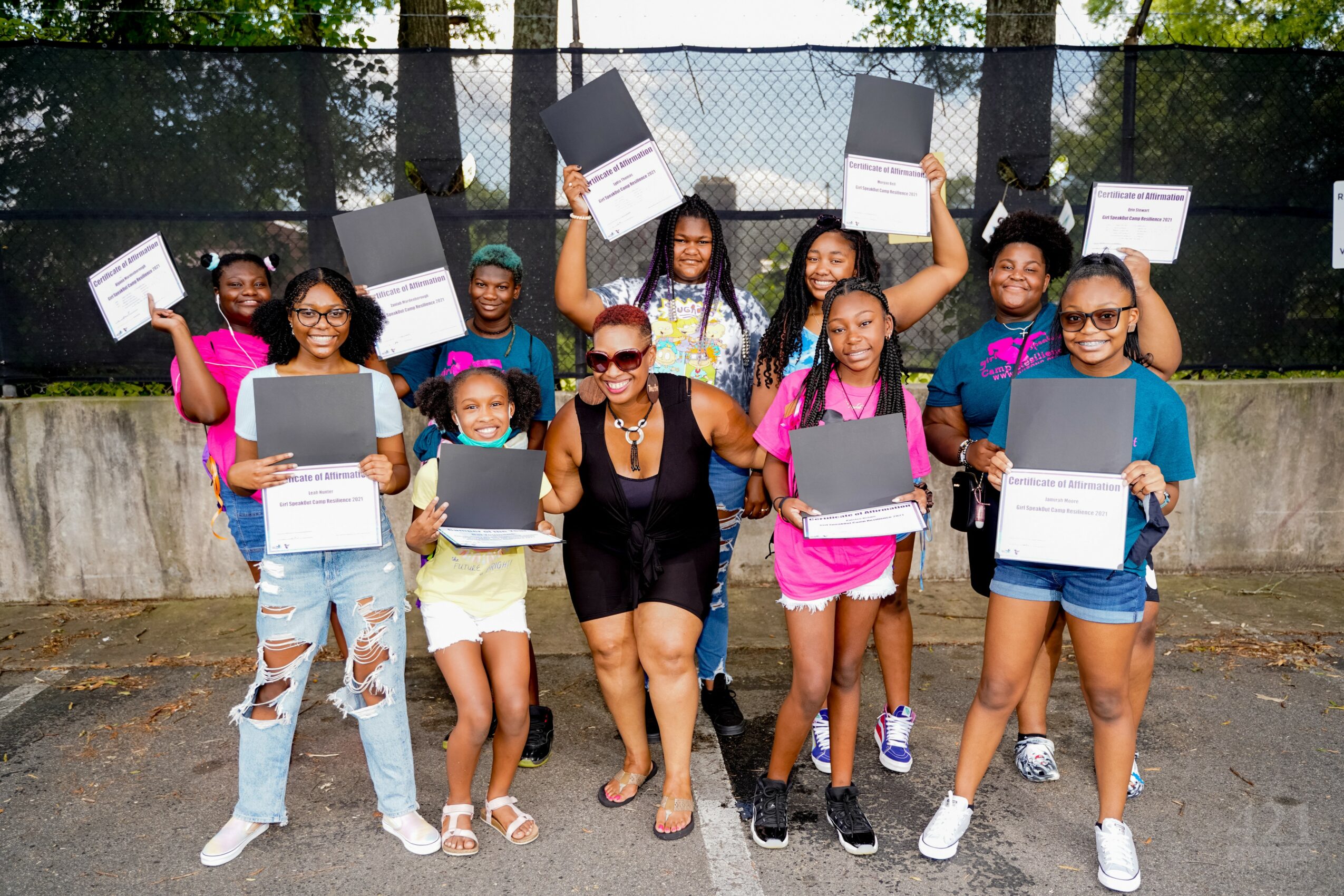
Also in 2017, we launched Girl SpeakOut, a summer camp and mentoring experience for girls ages 10 through 17. Girl SpeakOut created a space where girls could build confidence, develop healthy relationships, express themselves, connect with mentors, and discover the power of their own voices.
When the pandemic arrived in 2020, we refused to allow isolation to separate our girls from their community. We transformed Girl SpeakOut into a virtual summer camp filled with interactive activities, creative expression, honest conversations, and meaningful opportunities for connection. That experience reminded us that the method may have to change, but the mission does not.
What began with my personal story, a poem, and a commitment to advocacy has grown into an organization providing culturally specific, trauma informed services for survivors, children, youth, and families.
Today, I serve as an executive director, healing arts practitioner, poet, author, speaker, program developer, and advocate. I have also developed Breathe Life Wellness Center as an extension of my work through speaking, training, consulting, leadership development, and healing centered experiences.
Although the work has evolved, its heart remains the same. Everything I do is connected by a desire to help people transform pain into power, reclaim their voices, and move beyond surviving into lives where they can breathe, heal, create, and thrive.
Would you say it’s been a smooth road, and if not what are some of the biggest challenges you’ve faced along the way?
It has not been smooth, but there is the saying… a smooth sea never made a skilled sailor.
We started with zero dollars and zero cents. One of our first fundraisers was a cookie dough sale that raised approximately $200. That money allowed us to open the organization’s first bank account.
For many years, we built programs with little to no funding and without consistent grant support. We relied on volunteers, community relationships, creativity, faith, and a shared belief that the work mattered. When traditional funding opportunities were unavailable, we created our own. Purple Freedom was one example of that resourcefulness. We used what we had to build what the community needed.
One of our most persistent challenges was trying to build and retain a team without the financial resources to compensate people at the level they deserved. The needs of survivors, children, and families were real and urgent, but the funding did not always reflect the seriousness of those needs.
We were developing programs, supporting families, building organizational systems, pursuing funding, demonstrating our impact, and trying to sustain the people doing the work, often all at the same time.
The year 2020 became a pivotal moment for SUSO. The pandemic created tremendous fear, disruption, grief, and isolation. Within one week of schools, businesses, and community spaces closing, we began providing virtual sessions for youth and families. We knew that people needed meaningful connection, perhaps more than ever.
That same year, we increased our revenue by 30 percent. This allowed us to hire our first part time therapist and our first part time outreach coordinator. It marked the beginning of SUSO’s transition from a primarily volunteer led organization into one with paid staff and, eventually, full time employees.
In 2021, SUSO received a $200,000 Live Well Wake grant. That investment helped us begin the journey toward securing a permanent space of our own, a place we now affectionately call the Home for Healing.
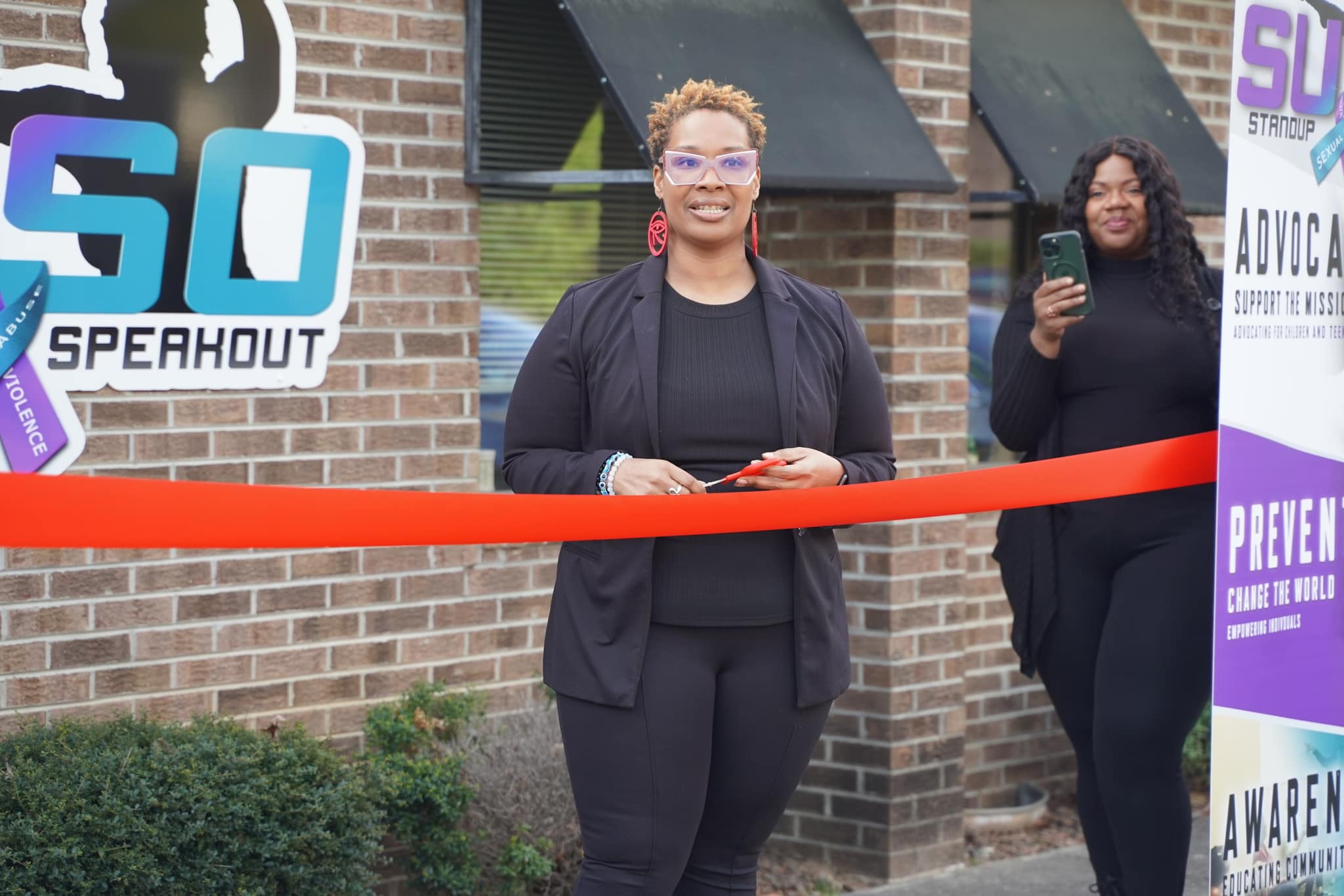
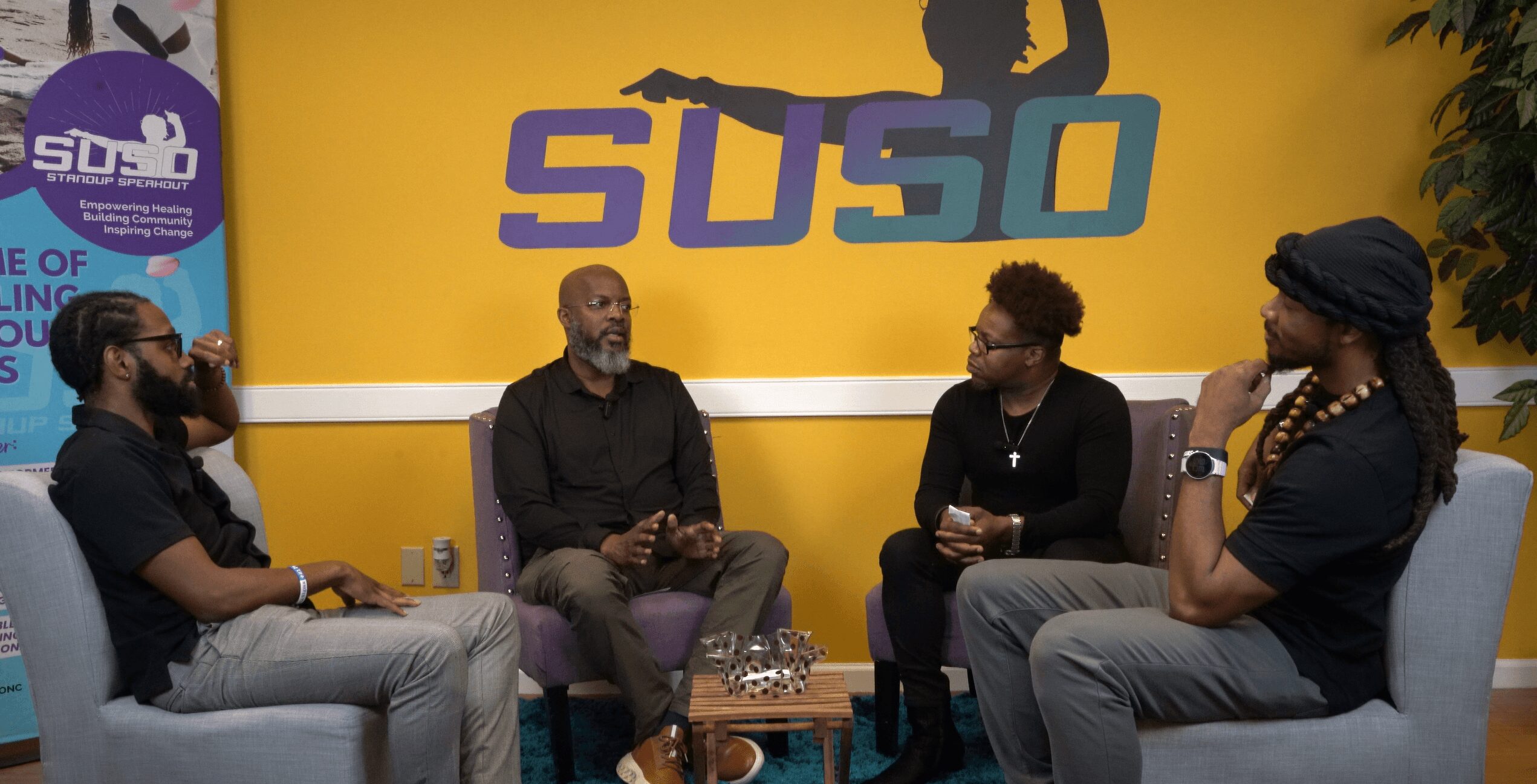
In 2024, we celebrated the official opening of the Home for Healing. The space was intentionally created to feel peaceful, creative, sacred, and connected to the community. It includes artwork from local artists, a meditation room, a healing through art room, a music and podcast room, and other spaces where survivors, young people, families, and community members can create, reflect, reset, and restore their minds, bodies, and spirits.
Opening that space was one of our greatest accomplishments. It also happened during one of our most difficult organizational seasons.
During the same year that we celebrated opening our doors, we lost more than half of our contracted team members. As executive director, I found myself carrying even more responsibilities to keep the organization moving and to protect a resource that was deeply needed by Black and Brown communities.
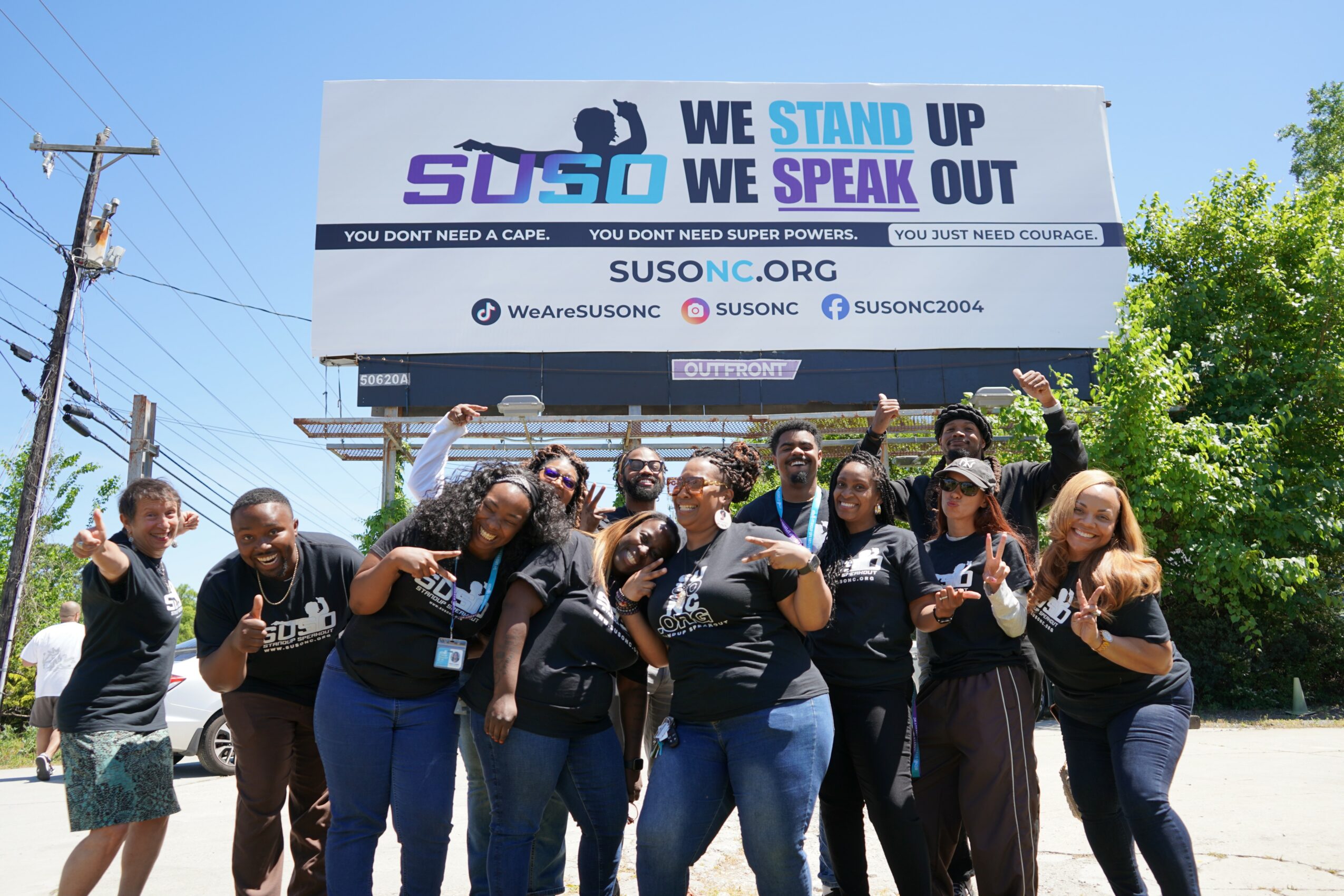
Remarkably, 2024 was also the year SUSO generated more than $1 million in revenue. That growth allowed us to strengthen our infrastructure and invest in clinical leadership, client services, outreach, prevention, administration, marketing, and data management. Today, SUSO has a team of 19 extraordinary people helping make this work possible.
The journey has included financial uncertainty, staffing challenges, health concerns, burnout, leadership transitions, and the pressure of responding to overwhelming needs with limited capacity. There were many times when I believed that my willingness to sacrifice could compensate for what the organization lacked.
I have since learned that passion cannot replace infrastructure, and personal sacrifice is not a sustainable organizational strategy.
Those lessons have changed me as a leader. I still believe deeply in compassion, vision, creativity, and service. But I now understand that healing centered leadership also requires accountability, boundaries, structure, rest, shared responsibility, and the courage to evolve.
As you know, we’re big fans of StandUp-SpeakOut of North Carolina. For our readers who might not be as familiar what can you tell them about the brand?
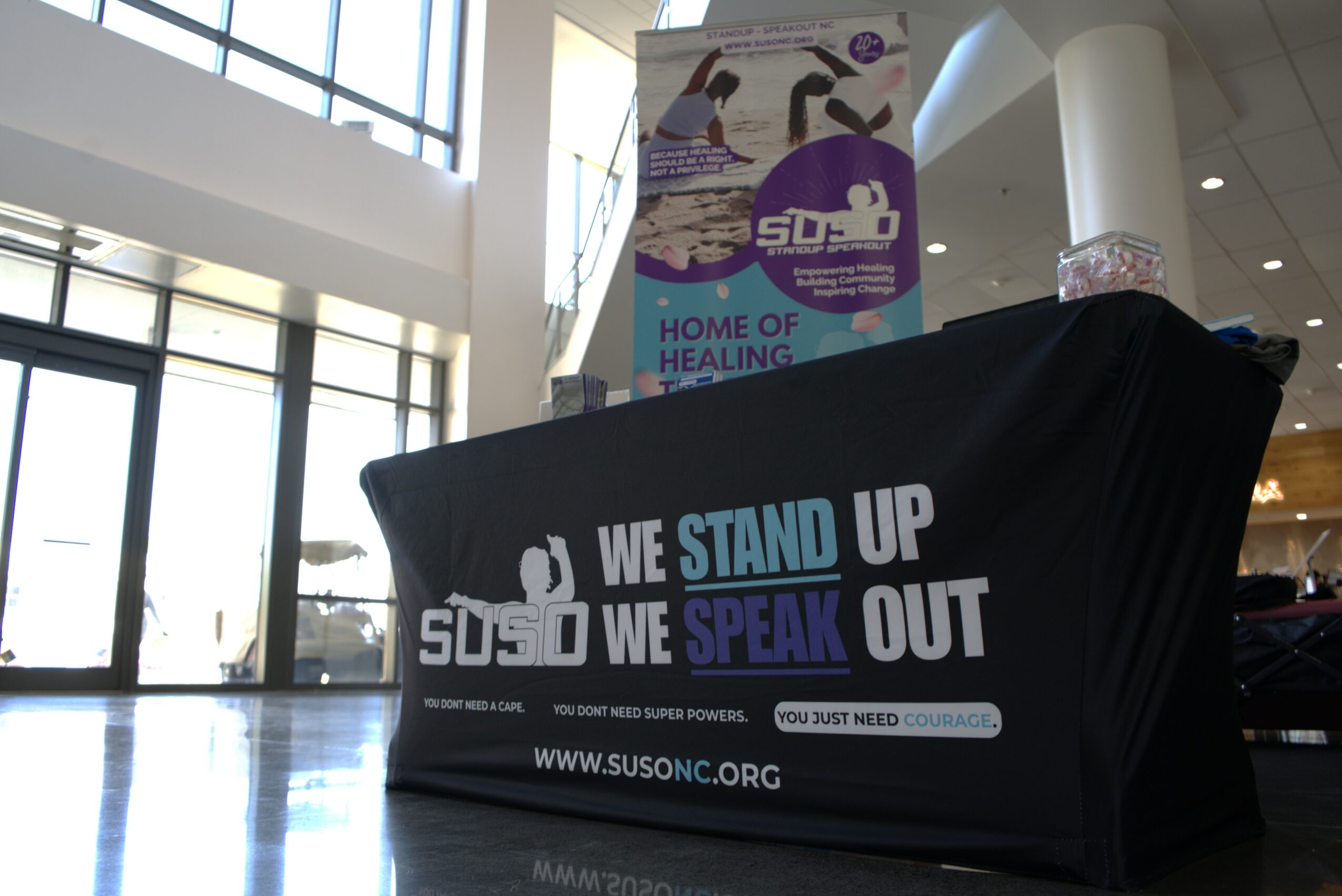
The organization is StandUp-SpeakOut of North Carolina, commonly known as SUSO NC.
We provide culturally specific, trauma informed services for individuals and families impacted by domestic violence, sexual violence, and other forms of trauma. Our goal is to help survivors move beyond immediate crisis response and toward long term healing, stability, self determination, and a renewed sense of possibility.
Our services include individual therapy provided by licensed therapists, therapeutic and educational groups, case management, expressive arts, youth and family programming, prevention education, economic advocacy, and community based healing experiences.
What makes SUSO different is our integrated approach.
We understand that healing rarely happens through one service or according to a predetermined timeline. A survivor may need emotional support, financial advocacy, practical resources, parenting support, creative expression, therapy, and a community that genuinely sees them. We intentionally bring those elements together rather than asking people to separate their lives into disconnected pieces.
The arts are central to our identity because art was central to my own healing.
We use writing, music, visual art, storytelling, movement, podcasting, mindfulness, and other creative practices to help people process their experiences and reconnect with their identities. We do not want someone’s entire life to become defined by what happened to them. We help people remember who they were, recognize who they are becoming, and imagine what may still be possible.
One of the accomplishments I am most proud of is creating the Home for Healing. It is more than an office. It is a physical expression of what we believe people deserve.
Every part of the space was created with intention, from the artwork by local artists to the meditation room, healing through art room, and music and podcast room. We wanted to create an environment where people could enter and feel that they had permission to breathe. It is a place to create, reflect, receive support, restore, and experience community without being reduced to a diagnosis, a crisis, or a traumatic event.
I am also proud that our programs have been shaped by lived experience, community feedback, and more than two decades of grassroots service. We do not enter communities believing that we possess every answer. We listen. We build relationships. We learn from the strengths, cultures, needs, and voices of the people we serve.
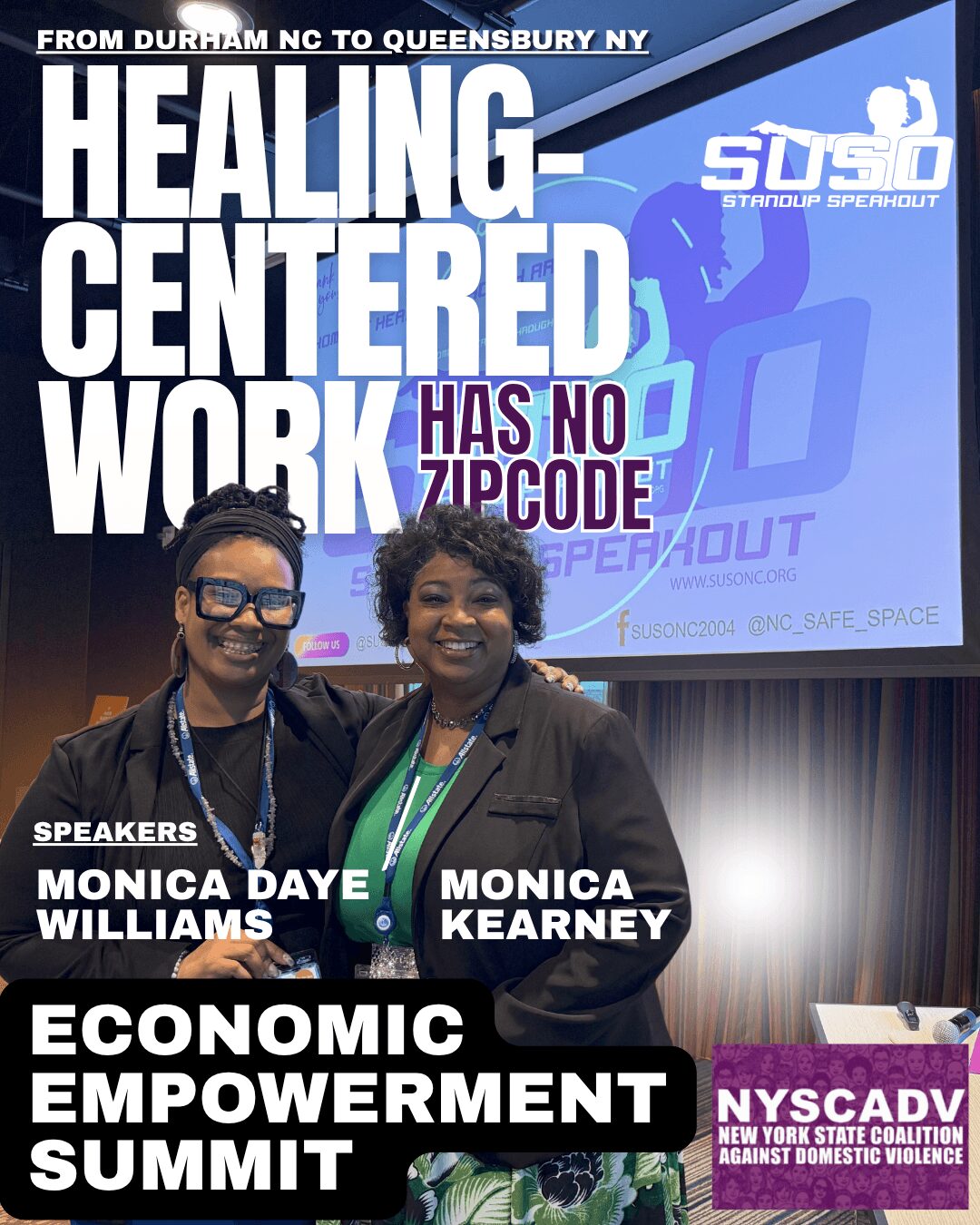
Through Breathe Life Wellness Center, I am expanding this philosophy through speaking, consulting, integrated arts workshops, original curricula, and healing centered leadership development. I want individuals and organizations to understand that trauma informed work must move beyond terminology. It should be visible in how we lead, design programs, create physical environments, build systems, respond to conflict, and care for the people carrying the mission.
I want readers to understand that SUSO is more than an organization. It is a community built on the belief that survivors and families are more than what happened to them.
Their voices matter. Their stories matter. Their creativity matters. Their futures matter. Healing is possible, and no one should have to pursue it alone.
Risk taking is a topic that people have widely differing views on – we’d love to hear your thoughts.
## Can you talk to us about your view on risk taking? Have you taken any major risks?
I do not take risks simply for the excitement of doing something uncertain. I take risks when I believe the purpose is greater than the fear and when remaining still may carry greater consequences than moving forward.
In a nutshell, my entire journey has been a faith walk. It has been a series of moves, decisions, and hours of work invested without knowing the outcome, but believing in the possibility of something better.
To me, risk and faith are closely connected. Risk is taking action without certainty. Faith is the belief that what you are working toward is worth stepping into that uncertainty. Faith does not mean ignoring reality, acting carelessly, or assuming that everything will work exactly as planned. It means believing enough in the purpose, in yourself, and in the people around you to move forward while continuing to prepare, learn, and adjust.
Building SUSO NC was one of the greatest risks of my life. I did not begin with financial backing, institutional support, or an established team. I began with lived experience, poetry, a vision, and the belief that survivors needed something different from what was available.
The organization began with zero dollars. One of our earliest fundraisers was a cookie dough sale that raised approximately $200 and allowed us to open our first bank account. Continuing after such a modest beginning required more than optimism. It required creativity, discipline, sacrifice, and faith that the community would recognize the value of what we were building.
One of the most significant risks I took was creating Purple Freedom. SUSO needed funding, but traditional financial support was not readily available. Rather than wait for someone else to validate the work, I decided to use the gifts and relationships we already had.
I wrote, produced, and marketed an original stage production about trauma, survival, healing, and freedom. I had never written a play or led a production of that size. We had no production budget, major sponsors, or guarantee that people would attend. We had artists, community members, shared purpose, and a story that needed to be told.
Purple Freedom debuted before a sold out audience at the Durham Arts Council. We presented it again later that year, and the two productions raised more than $10,500. That money helped create one of SUSO’s first operating budgets.
That experience taught me that taking a risk is sometimes recognizing the value of what is already within you and trusting it before the rest of the world can see its potential.
We took another major risk during the pandemic. Within one week of schools, businesses, and community spaces closing, SUSO began offering virtual sessions for youth and families. We did not have time to wait until every system was perfect. We knew that physical isolation could deepen emotional isolation, so we responded to what the community needed.
That year, SUSO increased its revenue by 30 percent and hired its first part time therapist and first part time outreach coordinator. A period that could have stopped our progress became a turning point in our growth.
Securing and opening the Home for Healing was another enormous risk. A permanent space offered stability and possibility, but it also brought significant financial and operational responsibility. We were committing to more than an office. We were creating a place where survivors, children, families, and community members could feel safe, breathe, create, reflect, and heal.
The Home for Healing opened during one of the most challenging periods in our history. That same year, we lost more than half of our contracted team members. I had to decide whether to retreat from the vision or continue protecting what we had worked so hard to build.
Continuing carried risk, but allowing a deeply needed resource for Black and Brown communities to disappear carried an even greater one.
There have also been personal risks. Sharing my experience as a survivor requires vulnerability. I have had to learn what belongs to the mission, what I am willing to share publicly, and what still belongs only to me. My story is part of why SUSO exists, but I should not have to repeatedly expose my wounds to prove the importance of the work.
My relationship with risk has evolved as the organization has grown. In the beginning, I often carried the risks personally. I gave my time, used my own resources and gifts, covered gaps, and accepted sacrifices because I believed the mission could not wait. That helped SUSO survive its earliest years, but it is not a sustainable way to lead a growing organization.
Today, I consider capacity, infrastructure, financial responsibility, staff wellbeing, community impact, and whether we can sustain what we begin. Faith remains central, but I have learned that faith should work alongside wisdom, preparation, accountability, and shared responsibility.
When considering whether a risk is worth taking, I ask whether it aligns with the mission and whether I genuinely believe in the people involved. I consider who may benefit, what could be lost, what will be required, and what may happen if we choose to do nothing.
In work involving domestic violence, sexual violence, childhood trauma, and generational harm, silence carries risk. Delayed support carries risk. Allowing harmful patterns to continue unchallenged carries risk. Sometimes we must move before we feel completely ready because the need is already present.
Not every risk produces the outcome we imagined. Some decisions become victories, while others become lessons that strengthen the next decision. Faith does not promise that there will be no disappointment. It gives us the strength to learn from disappointment without allowing it to end the journey.
For me, risk taking is not about being fearless. It is about refusing to let fear make every decision.
It is trusting that a poem can become a production, that a $200 fundraiser can become an organization, that volunteers can become a professional team, and that an idea for a safe and creative space can become a Home for Healing.
The greatest risks I have taken were possible because I believed in the vision, believed in myself, and believed that the community would help carry what was never meant for one person to build alone.
Pricing:
- We provide free services, incuding therapy from licensed clinicians.
Contact Info:
- Website: https://www.susonc.org
- Instagram: SUSONC
- Facebook: SUSONC2004
- LinkedIn: standup-speakout-nc
- Youtube: https://www.youtube.com/@shairispoetry