



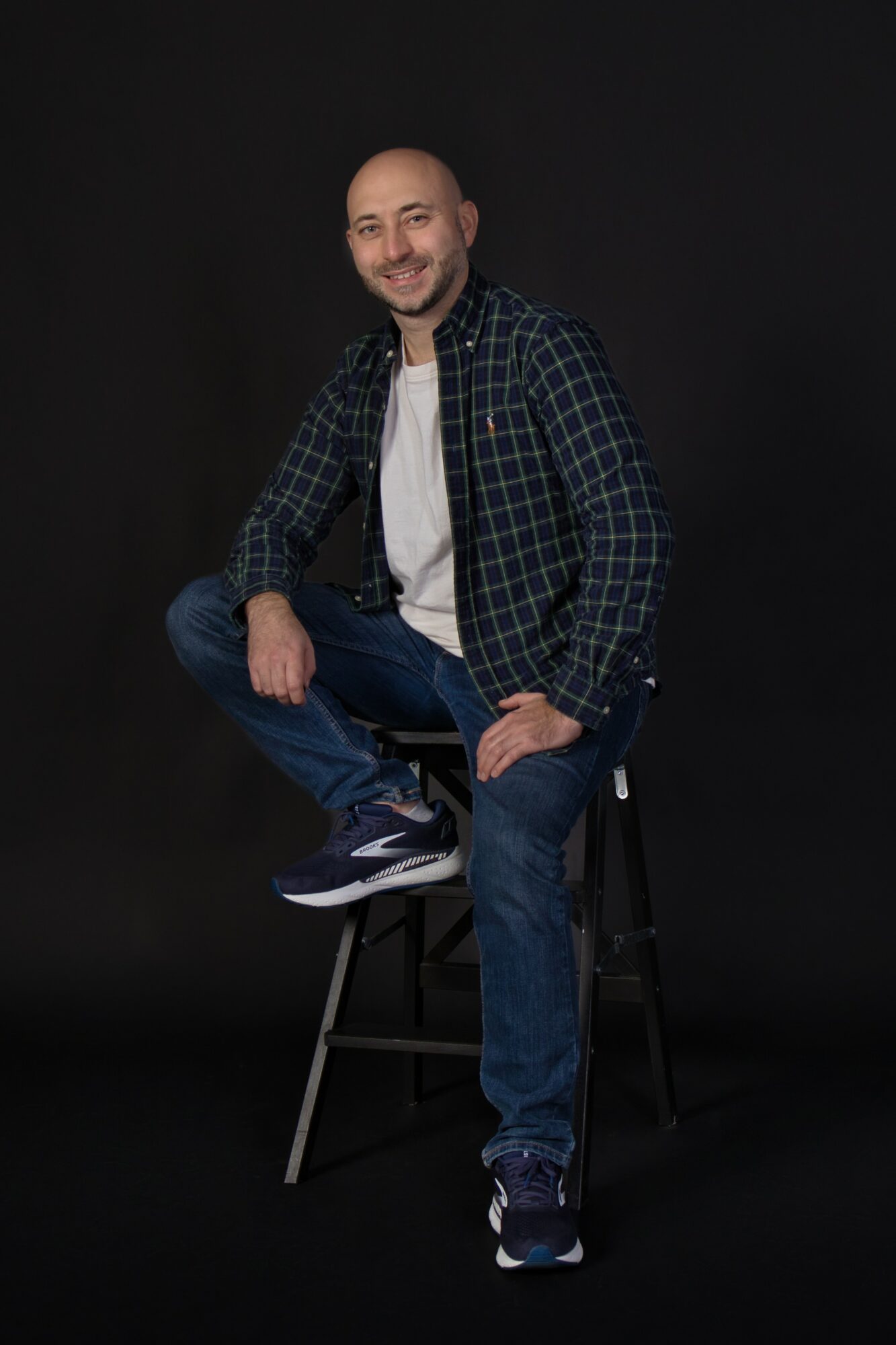
Today we’d like to introduce you to Leonid Gladilin.
Hi Leonid, can you start by introducing yourself? We’d love to learn more about how you got to where you are today?
For many years, I knew exactly how to introduce myself.
I could say the name of the company I worked for and describe my position, and people immediately understood who I was. To put the scale into an American context, my role was somewhat comparable to leading all online sales for a company the size of Costco or Sam’s Club.
That professional identity became more than a job title. It became the way I understood myself.
I was the person who could take something complex and chaotic and turn it into a working system. I built new divisions inside large companies, introduced automation, launched projects that had not existed before, and helped change how entire markets operated.
Then, within the space of several years, my family and I went through two emigrations.
When you move to another country, your previous experience does not disappear, but many of the things that once gave it meaning do. The company name is no longer familiar. Your professional network is gone. Your reputation does not travel with you in the same way. The position that once explained who you were no longer explains anything.
It felt as though the ground had disappeared beneath my feet.
I had spent so much of my life living through a professional avatar that, once it was removed, I had to confront a difficult question: Who am I without the title, the company, and the status that used to define me?
That was not a quick or comfortable process. In many ways, I am still answering that question.
I began looking back at the parts of my work that had always made me feel most alive. I realized that what I truly loved was not simply e-commerce or corporate management. I loved creating something that had not existed before. I loved finding order inside chaos, combining creativity with engineering, automating complicated processes, and changing rules that everyone else had accepted as permanent.
One project from my earlier career kept returning to me.
I had worked for one of the largest e-commerce companies in my home market, a platform often compared to Amazon. I was responsible for creating its content department from the ground up, including building five photography studios to produce images for the enormous number of products sold online.
It was a creative project, but it was also an engineering and operational challenge. We had to build a repeatable system where photography could happen quickly, consistently, and at scale. At the time, there was very little in the local market to copy. We had to invent much of the process ourselves.
I remember how much I loved that work.
Years later, after moving to the United States, photography returned to my life for a much more personal reason.
My parents remained in Russia, while geopolitical events and growing restrictions made communication between countries increasingly difficult. Even ordinary video calls became unreliable. My sister took our parents to a self-portrait studio, where they were able to create photographs together.
Those images meant much more to me than ordinary family pictures. They gave me a feeling of closeness at a time when distance felt especially painful.
I wanted to create something similar with my own family, so I started searching for a self-portrait studio in Charlotte. I could not find the kind of experience I had in mind.
At first, I was simply disappointed. Then I became curious.
I began researching the format and realized that it brought together many parts of my life: photography, automation, process design, technology, creativity, and my instinct to build something where a gap existed.
I came to the United States through an extraordinary ability visa based on my work in innovation and business transformation. Starting again in a new country made me think seriously about what contribution I wanted to make here. I did not want to recreate my old career in a smaller form. I wanted to use the abilities that had brought me here to create something new for the community I was becoming part of.
So, inspired by the classic American stories of ideas beginning in garages, I built the first experimental version of HQ Portraits in my own garage.
It was not glamorous. It was a prototype.
I tested the camera placement, lighting, remote controls, mirrors, backgrounds, and the entire customer journey. I was trying to understand whether a professional photography experience could be redesigned so that the person in front of the camera had full control.
Then I began inviting people to try it.
Watching those first sessions changed my understanding of what I was building.
At the beginning, people often repeated the same things many of us say about photography: “I’m not photogenic,” “I don’t know how to pose,” or “I always look awkward in pictures.”
But once they were alone in the room, something began to change.
They experimented. They moved differently. They made expressions they might have been too embarrassed to try in front of a photographer. They stopped waiting for someone else to approve the way they looked.
I began to realize that many people are not actually afraid of the camera. They are afraid of being watched, evaluated, corrected, or asked to perform someone else’s version of them.
That discovery made the project much deeper than I had expected.
At first, I thought I was creating a more automated photography studio. In reality, I was creating a place where people could regain authorship over their own image.
That idea resonated with my own experience.
After losing the professional identity that had defined me for years, I had been searching for a way to see myself differently and decide who I wanted to become next. HQ Portraits grew out of that same question.
Most of our lives, other people help define how we are supposed to look and who we are supposed to be. Employers, titles, photographers, social media, friends, family, and cultural expectations all contribute to the image we present to the world.
At HQ Portraits, those outside voices become quieter for a while.
There is no photographer standing in front of you, deciding the correct expression or the perfect moment. The professional camera, lighting, and studio are already prepared, but you control the process. You choose when the photograph is taken and which version of yourself you want to explore.
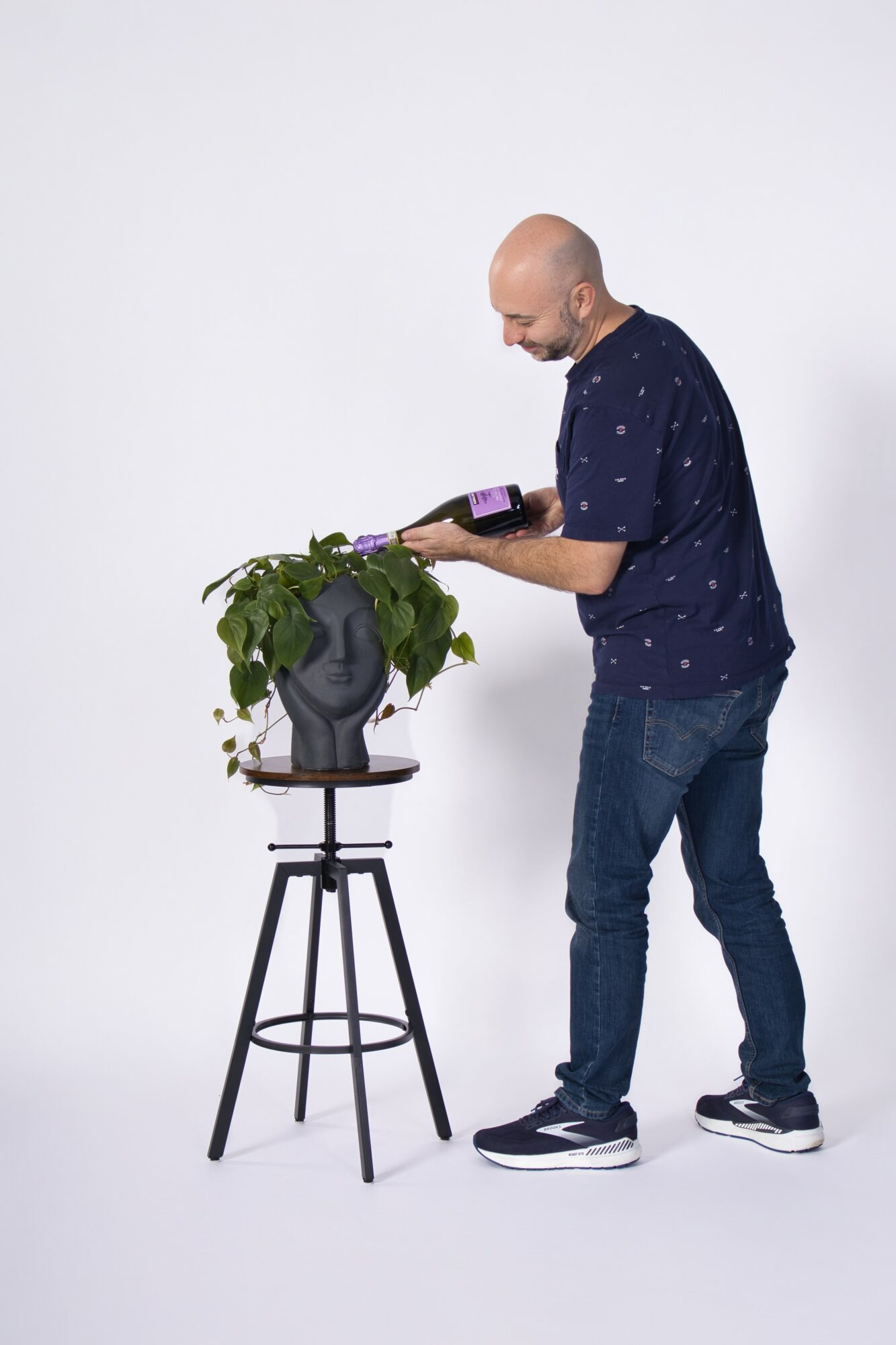
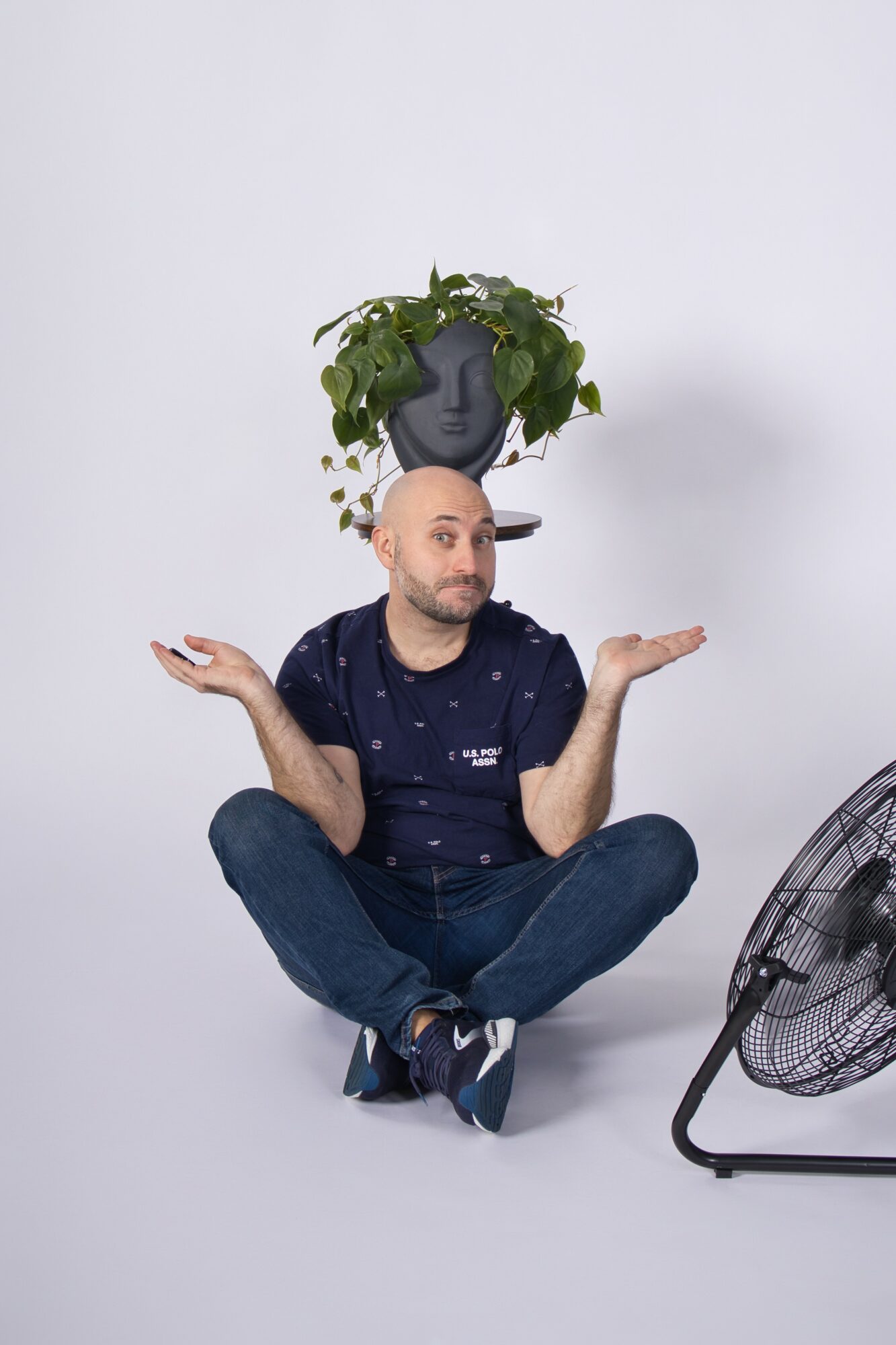
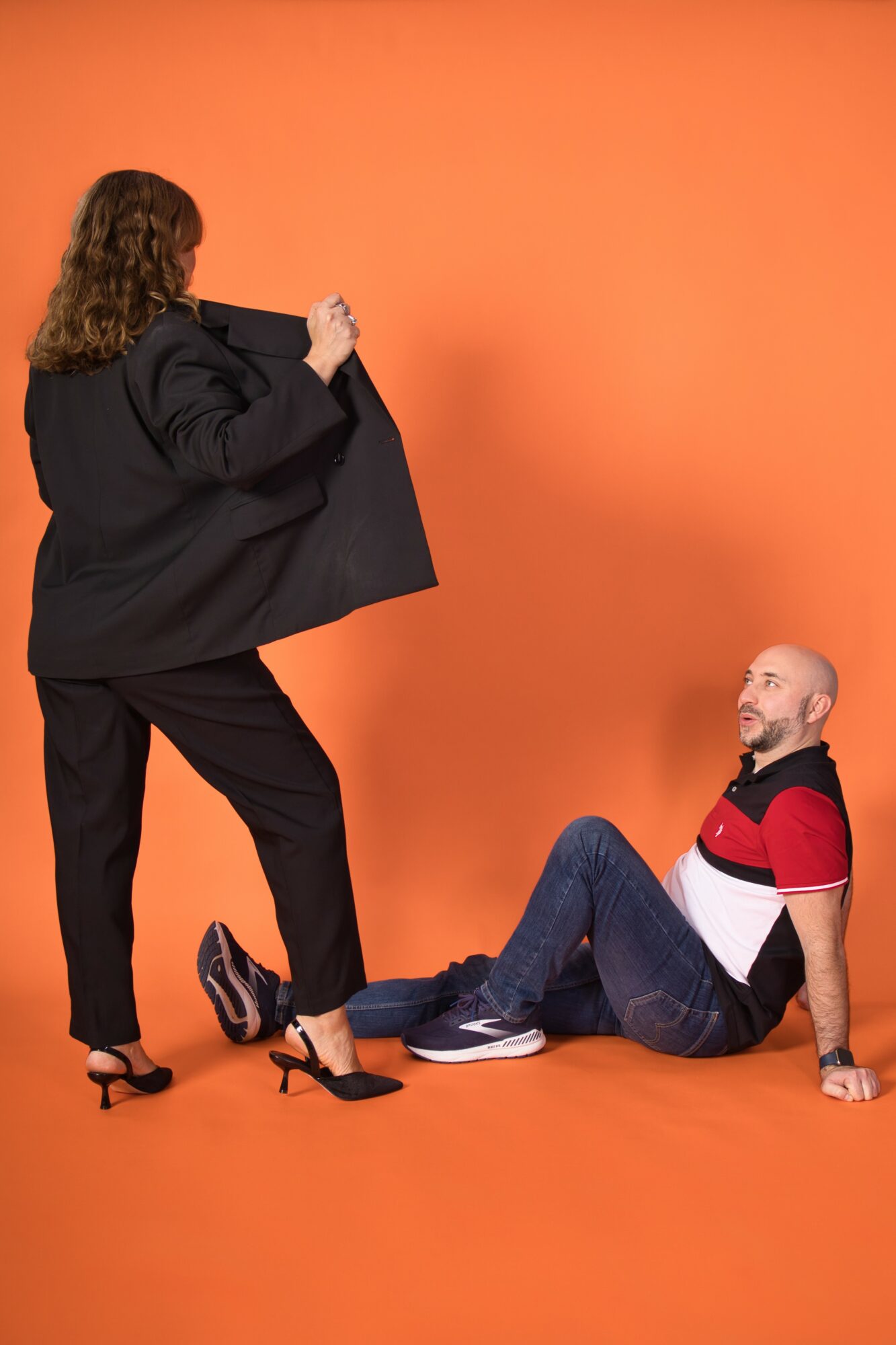
Today, my wife Olga and I are building HQ Portraits in Charlotte as both a photography studio and a new kind of creative experience.
It has also become part of my new identity.
I am no longer trying to replace the corporate title I once had. I am using the same strengths in a different way: building systems, combining technology and creativity, challenging an established industry, and creating something that did not previously exist in our community.
In the process, I found that helping other people explore how they want to be seen has also helped me understand who I am becoming.
Alright, so let’s dig a little deeper into the story – has it been an easy path overall and if not, what were the challenges you’ve had to overcome?
Almost everything about building HQ Portraits has involved learning something new.
When we arrived in Charlotte, we were not only starting a business. We were learning a new city, a new market, a different business culture, a different legal and financial environment, and often a completely different way of approaching things that had once seemed familiar.
Even finding a location felt like searching for a needle in a haystack.
When you have lived in a city for years, you develop an instinct for neighborhoods. You understand where people go, how traffic moves, which areas are changing, where your customers might feel comfortable, and what a particular address communicates about a business.
We had none of that intuition yet.
We had to learn Charlotte almost from the beginning while simultaneously trying to choose a location that could support a concept most landlords had never heard of.
Then came leases, zoning, permits, insurance, contractors, utilities, build-out requirements, and dozens of small details that are invisible to a customer but essential to opening a physical business.
The financial side was another reminder that we were starting over.
I had spent years in senior corporate positions, but American banks did not know that history. What mattered here was our American credit history and credit score, which naturally take time to build.
At one point, we approached a bank about a $25,000 business credit line. Their solution was that we could receive the credit line if we first deposited approximately the same amount as collateral.
There was something almost philosophical about that moment: the institution was willing to lend us money once we could demonstrate that we did not really need to borrow it.
So we learned to build carefully, prioritize investments, and solve as many problems ourselves as possible.
There was another challenge that turned out to be even more important: explaining what HQ Portraits actually is.
Self-portrait studios are still a relatively unfamiliar category in the United States, and particularly in our market. People naturally try to connect a new idea to something they already understand.
Some imagine a photo booth. Others assume it is studio rental. Some think they need to know photography. Others expect a photographer to eventually walk into the room.
The experience only really becomes obvious after you try it.
The camera, professional lighting, backgrounds, and technical environment are already prepared. You see yourself, hold a small remote in your hand, and decide when the photograph happens.
There is no photography knowledge required.
Building the physical studio was an engineering problem. Building awareness of a new category has been a communication problem.
And behind both of those is the larger challenge of being an immigrant entrepreneur: almost every week brings something you are encountering for the first time.
Sometimes it is a major decision. Sometimes it is a tiny cultural difference that you did not even realize existed.
It can be exhausting, but it is also one of the things I value about this chapter of my life. When everything familiar disappears, you are forced to examine your assumptions. You stop doing things simply because “that is how they have always been done.”
For someone who has spent much of his career questioning existing systems, there is something strangely appropriate about having to rebuild my own life the same way.
Thanks – so what else should our readers know about HQ Portraits?
HQ Portraits is a self-portrait studio built around a simple idea: professional photography does not have to require a photographer standing in front of you.
When a client enters the studio, the technical part of photography has already been solved for them.
The camera is positioned behind a large mirror. Professional lighting is prepared. The studio environment is ready. Clients see themselves in real time and use a small remote to take the photograph whenever they choose.
That sounds like a relatively small change to the traditional photography process, but it changes the psychology of the experience quite dramatically.
A conventional photo session involves another person observing you.
Even an excellent photographer is still watching, reacting, directing, selecting moments, and making decisions about how you should be photographed.
For many people, that relationship works beautifully.
For others, the awareness of being watched creates pressure.
We hear versions of the same sentences constantly:
“I’m not photogenic.”
“I don’t know how to pose.”
“I always look awkward.”
“I hate pictures of myself.”
But when people are given privacy and control, many of those beliefs begin to disappear.
They try something and immediately see the result. Then they adjust. They move. They experiment. They make a strange face. They laugh at themselves. They discover an angle or expression they did not know they had.
There is no one standing there waiting for them to get it right.
That freedom is one of the most important parts of the experience.
From my perspective, our job is to remove as much technical friction as possible so that the person can focus on the only part we cannot automate: who they are and what they want to express.
That is why I think about HQ Portraits less as camera equipment and more as an environment.
We create the canvas.
The client creates what appears on it.
This works for very different reasons depending on the person.
Someone may come because they need professional images. An actor may want to explore several characters or expressions. A couple may simply want an experience together without a stranger observing an intimate moment. Someone celebrating a birthday may want to experiment with clothes and ideas. Another person may have avoided professional photography for years because they never felt comfortable in front of photographers.
The common denominator is control.
You decide when the image is made.
You decide what to try.
You decide which version of yourself you want to explore.
The most interesting thing for me has been discovering that photography is only part of what is happening.
The deeper subject is self-perception.
A photograph is normally an image of you created through someone else’s eye. A self-portrait adds another layer: you become both the subject and the person making decisions about how the subject should be seen.
That difference has become central to how we think about HQ Portraits.
Is there something surprising that you feel even people who know you might not know about?
One thing that may surprise people is how little of HQ Portraits is actually visible.
Clients see a camera, a mirror, lights, and a clean studio.
Behind that experience is a fairly large system.
My professional background is in building and automating processes, so I approached photography in much the same way.
I began taking the traditional photography process apart almost molecule by molecule.
What does the photographer actually do?
Which decisions require creative human judgment?
Which decisions can be standardized?
Which technical problems can be solved before the client ever enters the room?
Which parts can software handle?
Which parts should disappear completely from the client’s experience?
The goal was never to automate creativity.
It was to automate everything surrounding creativity.
Today, a single session is supported by a 53-step operational checklist that we repeat consistently. Behind the studio is a software system I develop myself, which has grown to more than 300,000 lines of code.
Every month I add new features, automations, checks, and small improvements.
Some changes are significant. Others are tiny details a customer would probably never consciously notice.
But those details accumulate.
There is a concept in expertise that people often associate with the idea of 10,000 hours: a professional becomes better through repeated experience.
I think systems can learn in a similar way.
Every customer interaction reveals something. A confusing instruction can become clearer. A manual step can become automatic. A potential failure can gain another safeguard. Something that takes five minutes can eventually take five seconds.
The system becomes more experienced.
That consistency matters to me because a traditional creative service naturally depends on human variables. People get tired. Chemistry between two people can be excellent or nonexistent. Someone can have an unusually good day or a bad one.
Our system is designed to carry as much of that variability as possible so the client does not have to think about it.
Paradoxically, there is a tremendous amount of very boring work behind making the experience feel effortless and playful.
That may be the part I enjoy most.
The more invisible the system becomes, the more visible the person can become.
Over time, however, conversations with clients made me realize that there was another layer I had not expected.
After sessions, I often ask people what they experienced. Some give a simple answer. Others open up and tell remarkably personal stories about confidence, aging, body image, relationships, identity, or why they had avoided cameras for years.
I started reading and thinking much more seriously about the psychology of self-portraiture.
Eventually that exploration became a book I wrote called Be Seen As You Are.
So the surprising thing may be that HQ Portraits began for me as an engineering and photography problem, but it has gradually become an exploration of something much more human:
What changes when, for a moment, nobody else is deciding how you should be seen?
Contact Info:
- Website: https://hqportraits.com
- Instagram: https://www.instagram.com/hq_portraits