



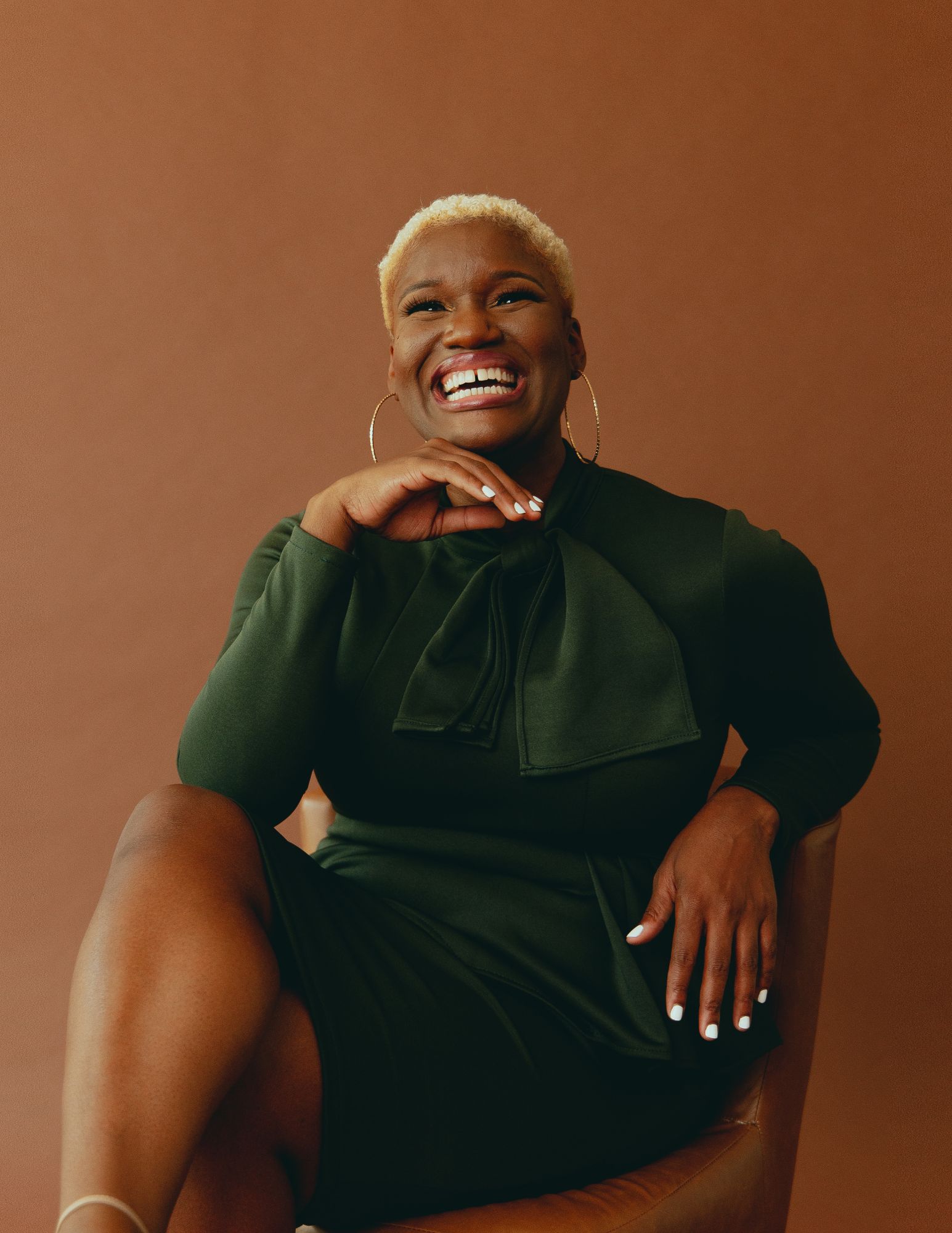
Today we’d like to introduce you to Charlotte Louis.
Hi Charlotte, it’s an honor to have you on the platform. Thanks for taking the time to share your story with us – to start maybe you can share some of your backstory with our readers?
I am the founder and CEO of SenterME, a North Carolina healthcare technology company building Structural Health Intelligence™ for health systems.
Before SenterME, I spent nearly 20 years working across sales, corporate training, financial services, and entrepreneurship. I trained more than 200 employees, managed investment relationships, and built my previous company, Queen’s Magic Hair, from a self-funded kitchen concept into a beauty brand with national retail, wholesale, and international distribution partnerships. Each experience taught me something different about people, systems, trust, and how leaders make decisions.
The idea behind SenterME began with lived experience. I worked inside an organization that could not see the strain it was creating or what it was asking employees to carry sustainably. I initially understood that as an individual wellness problem, so SenterME began by helping people recognize and respond to their own stress, needs, and recovery patterns.
As we built and learned, the problem became much larger. Over 20 months of customer discovery, I completed more than 160 conversations with executives, managers, and frontline workers. I consistently heard that leaders cared deeply about workforce stability and were investing in retention, engagement, onboarding, and other solutions. What they lacked was timely visibility. Their data was fragmented, their tools were largely retrospective, and the middle layer where organizational pressure often accumulates first remained difficult to see.
That insight changed the direction of the company. We moved from solving only at the individual level to building a system-level decision-support platform for healthcare. We defined Structural Health Intelligence as a governed way to interpret aggregated human, operational, workflow, and structural signals together so health system leaders can identify early precursors of turnover, workforce instability, and care disruption.
Today, SenterME includes Sage, our protected participant experience, and Santi™, our enterprise intelligence engine. Santi v1 shipped in March 2026, and we are advancing commercial relationships with healthcare organizations through product demonstrations, internal reviews, and conversations around our paid 90-Day Diagnostic. We have also been selected for Conscious Venture Lab Cohort 15 and Blueprint Tulsa’s 2026 cohort.
What started as a question about helping individuals better understand what they were carrying has become a broader mission: giving healthcare leaders the visibility to guide workforce stability before they are left responding to its breakdown.
We all face challenges, but looking back would you describe it as a relatively smooth road?
It has not been a smooth road, but I would not change it because it has been educational at every turn, through every valley and every peak.
One of the hardest parts was accepting that our first understanding of the problem was incomplete. SenterME began at the individual wellness level, but our customer discovery showed us that workforce strain could not be solved by asking individuals to become more resilient inside systems that could not see what they were carrying. Following that evidence required us to reposition the company, redefine the problem, and rebuild the product around a system-level opportunity.
We are also creating a category that does not fit neatly within the tools health systems already purchase. Structural Health Intelligence™ sits between workforce intelligence, employee engagement, and operational decision support. That means we are not only building the product. We are also developing the language, evidence, and commercial model that help healthcare leaders understand where it belongs and why it matters.
Building an enterprise healthcare company as a solo founder with limited capital has required patience and discipline. Healthcare sales cycles are long, procurement follows budget cycles, and the product must meet a high standard for privacy, governance, and trust before a health system can adopt it. We have had to be thoughtful about where we spend, whom we bring onto the team, and which milestones truly move the company forward.
Still, every conversation with health system leaders and healthcare workers gives us more optimism. We continue to hear the same need for earlier visibility into workforce conditions, especially within the middle layer. Each conversation sharpens the product and brings us closer to solving the invisibility of workforce strain in a way that is useful to both the people experiencing it and the leaders responsible for addressing it.
As you know, we’re big fans of SenterME Inc.. For our readers who might not be as familiar what can you tell them about the brand?
SenterME is a North Carolina healthcare technology company defining Structural Health Intelligence™, a new layer of healthcare workforce intelligence. We help Chief Nursing Officers and other health system leaders identify early precursors of turnover, workforce instability, and care disruption before those conditions become visible in traditional reports.
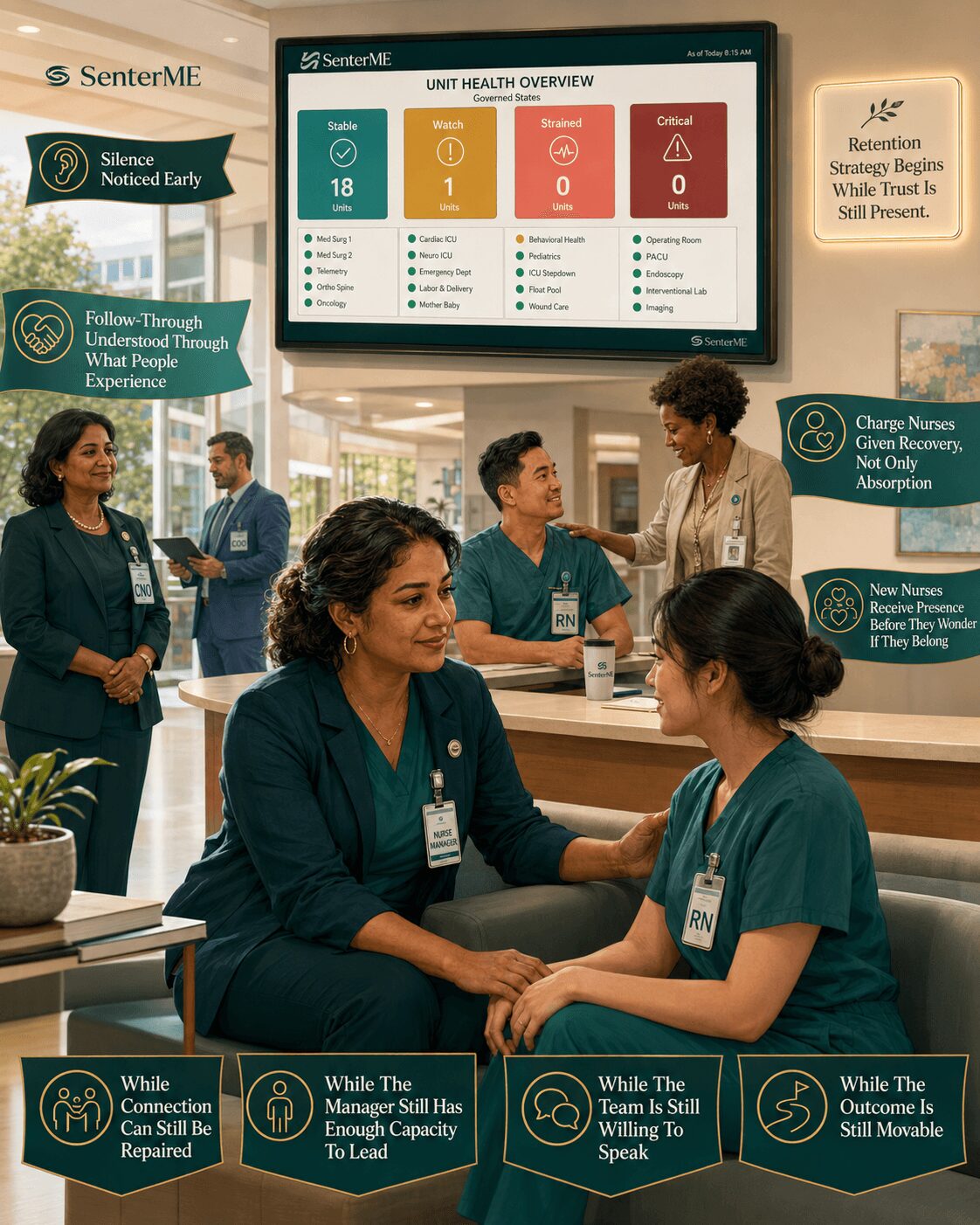
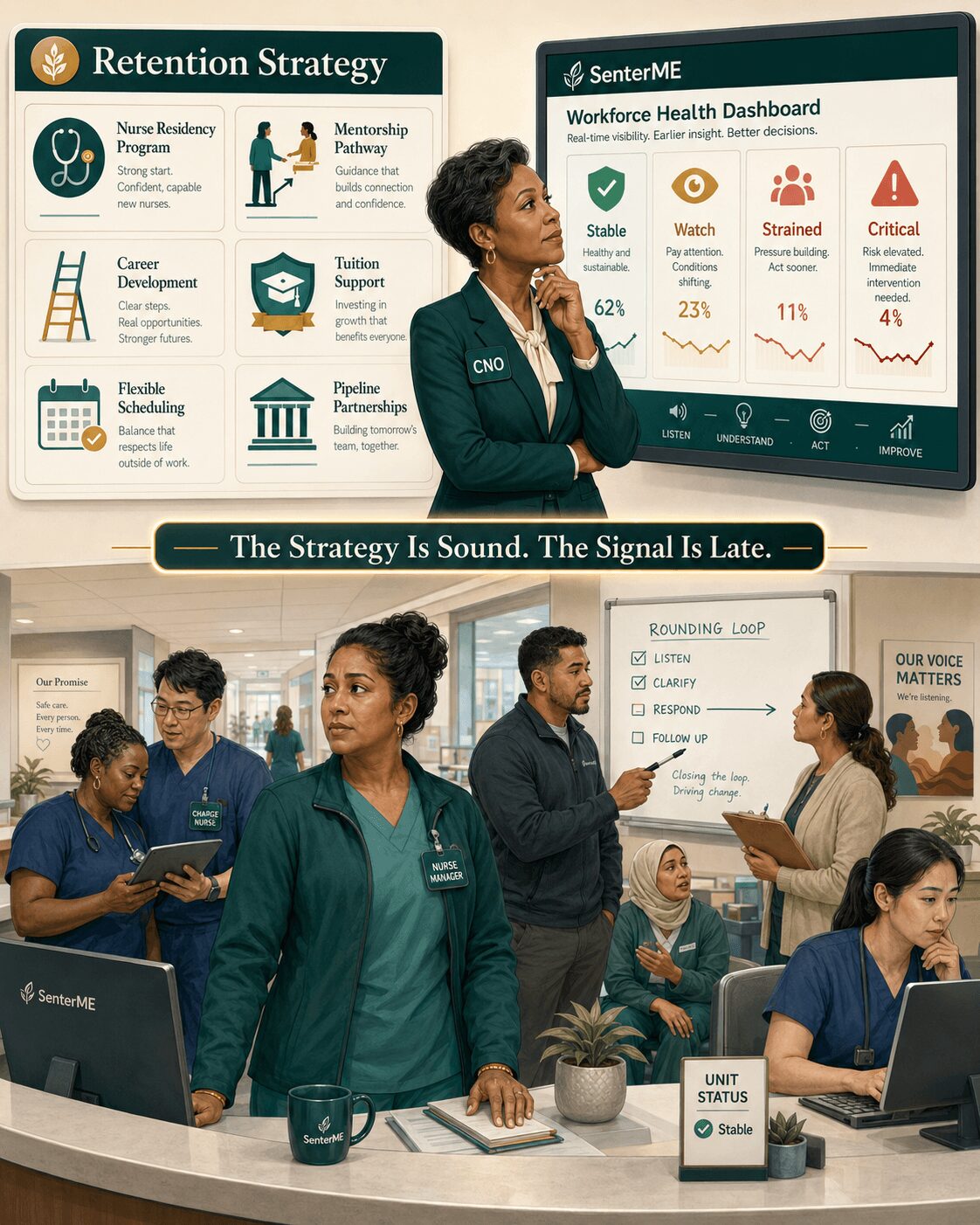
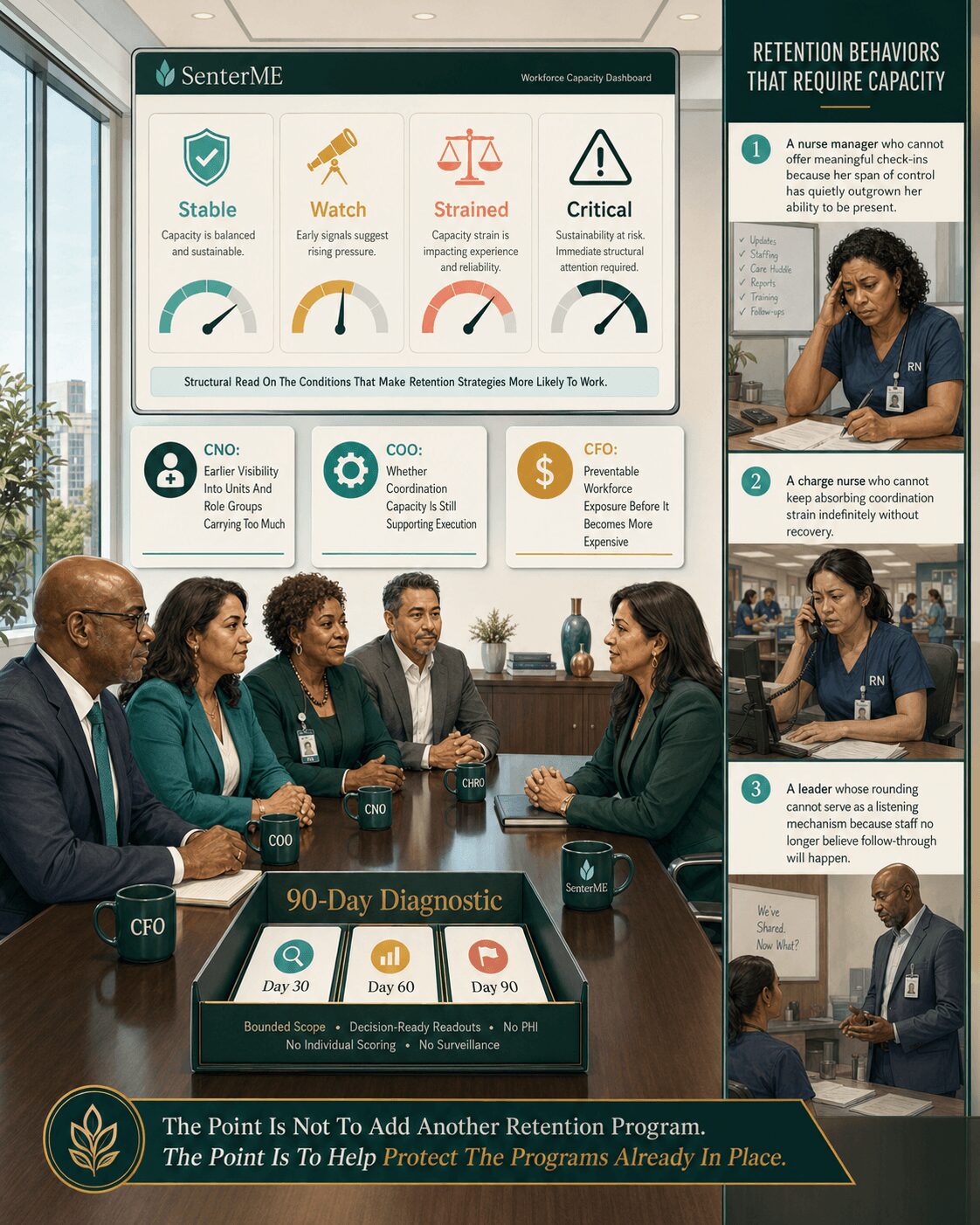
We specialize in making the middle layer of healthcare organizations more visible. Nurse managers, charge nurses, and frontline supervisors often absorb pressure from executives, operational demands, and care teams at the same time. When that layer becomes strained, the effects can spread throughout the organization, but most workforce tools do not reveal the pattern until turnover, premium pay, staffing shortages, or care metrics have already moved.
Our platform includes two connected products. Sage provides employees with a protected experience that supports self-regulation and voluntary participation. Santi™ interprets those aggregated human signals alongside operational, workflow, and structural information. It shows leaders how workforce conditions differ across systems, facilities, and units, how those conditions are changing, and whether there is still an opportunity to intervene.
Health systems can begin with our paid 90-Day Structural Health Intelligence Diagnostic. The Diagnostic establishes a system-specific baseline and gives executives a clearer view of where pressure is forming, how it is moving, and which areas may require closer leadership attention. It is designed to complement the health system’s existing retention, engagement, workforce management, and operational strategies rather than prescribe one universal solution.
What sets SenterME apart is our ability to interpret signals together instead of reporting each one separately. Our governed methodology classifies workforce conditions, identifies middle-layer pressure, tracks directional change, and evaluates intervention timing. As the platform observes additional facilities, organizational changes, and interventions, it develops intelligence specific to how that health system operates and recovers.
Brand-wise, I am most proud that SenterME was designed around dignity and decision support rather than surveillance. We do not collect protected health information or score individual employees. Small groups are suppressed, and consequential interpretations remain subject to human review. We believe healthcare leaders care deeply about their people. Our role is to give them earlier, clearer visibility so they can lead with better information while there is still time to make a difference.
What has been the most important lesson you’ve learned along your journey?
The most important lesson I have learned is never to be afraid to pivot when the pivot brings you closer to solving the problem you set out to solve. I have learned to remain committed to the problem without becoming overly attached to one version of the solution.
SenterME began by addressing workforce strain at the individual level. Following the evidence toward a systemic solution required me to reconsider what we were building, redefine the company, and enter the healthcare market with an entirely new category. That was not an easy decision, but it was the right one.
I also learned that if you are afraid, you can still do it scared. Some of the things we are meant to do in this life are going to scare the hell out of us. Fear does not necessarily mean we are moving in the wrong direction. Sometimes it means the work matters enough to challenge who we have been.
Eventually, I realized there is not much difference between doing something scared and doing it without fear because, either way, you are doing it. The action is what creates the learning, the clarity, and the opportunity to make an impact.
Contact Info:
- Website: https://www.senterme.com/
- LinkedIn: https://www.linkedin.com/in/charlotte-c-louis/