



Today we’d like to introduce you to Harvest Ganong.
Hi Harvest, thanks for sharing your story with us. To start, maybe you can tell our readers some of your backstory.
I remember learning about “trash artists” and eco-artists while I was in college, and I was always fascinated by the idea of taking something that had been discarded and giving it an entirely new purpose.
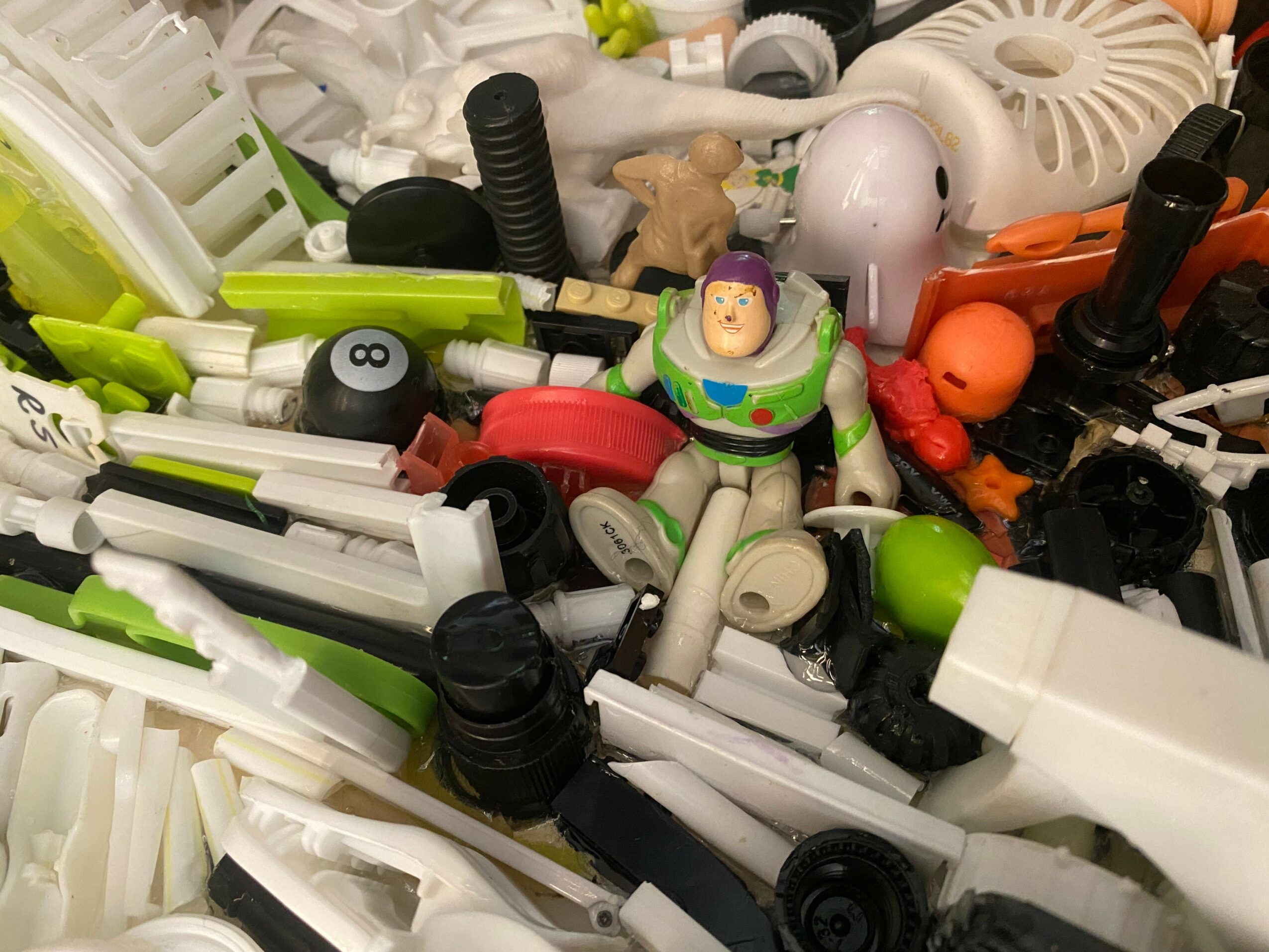
Years later, when I became a mom, that idea came back to me in a very different way. Suddenly my house was overflowing with plastic—Fisher-Price toys, tiny toys from the dentist’s office, birthday party favors, Easter eggs, broken toys, and all of those little plastic things that seem to multiply when you have children. Most of it couldn’t be recycled, and even thrift stores didn’t want it. As someone who has always cared deeply about the environment, I found it harder and harder to simply throw it away. I kept thinking, There has to be something I can do with all of this.
When COVID happened and the world slowed down, I finally had the time to explore an idea that had been sitting in the back of my mind for years. I started small, putting a post on Facebook asking my mom friends to save their unwanted plastic toys and household plastic for me when they cleaned out their kids’ playrooms.
It was a slow process at first, so I decided to make a post on Facebook Marketplace explaining what I wanted to create and sharing examples of the type of art that inspired me. That one post changed everything. I started receiving hundreds of messages from parents who wanted to give me their plastic. So many of them told me the same thing: “I hate throwing this stuff away, too.”
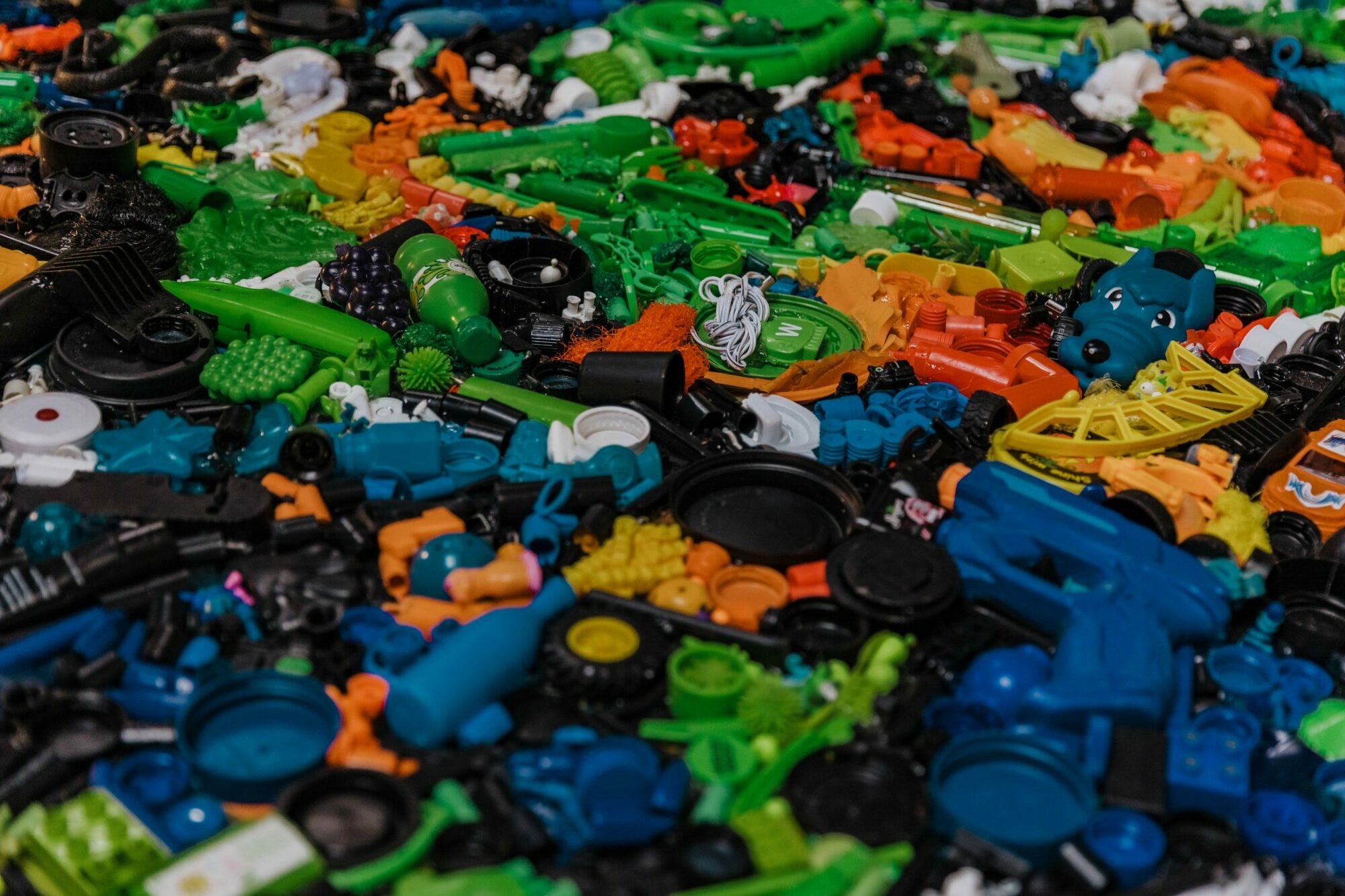
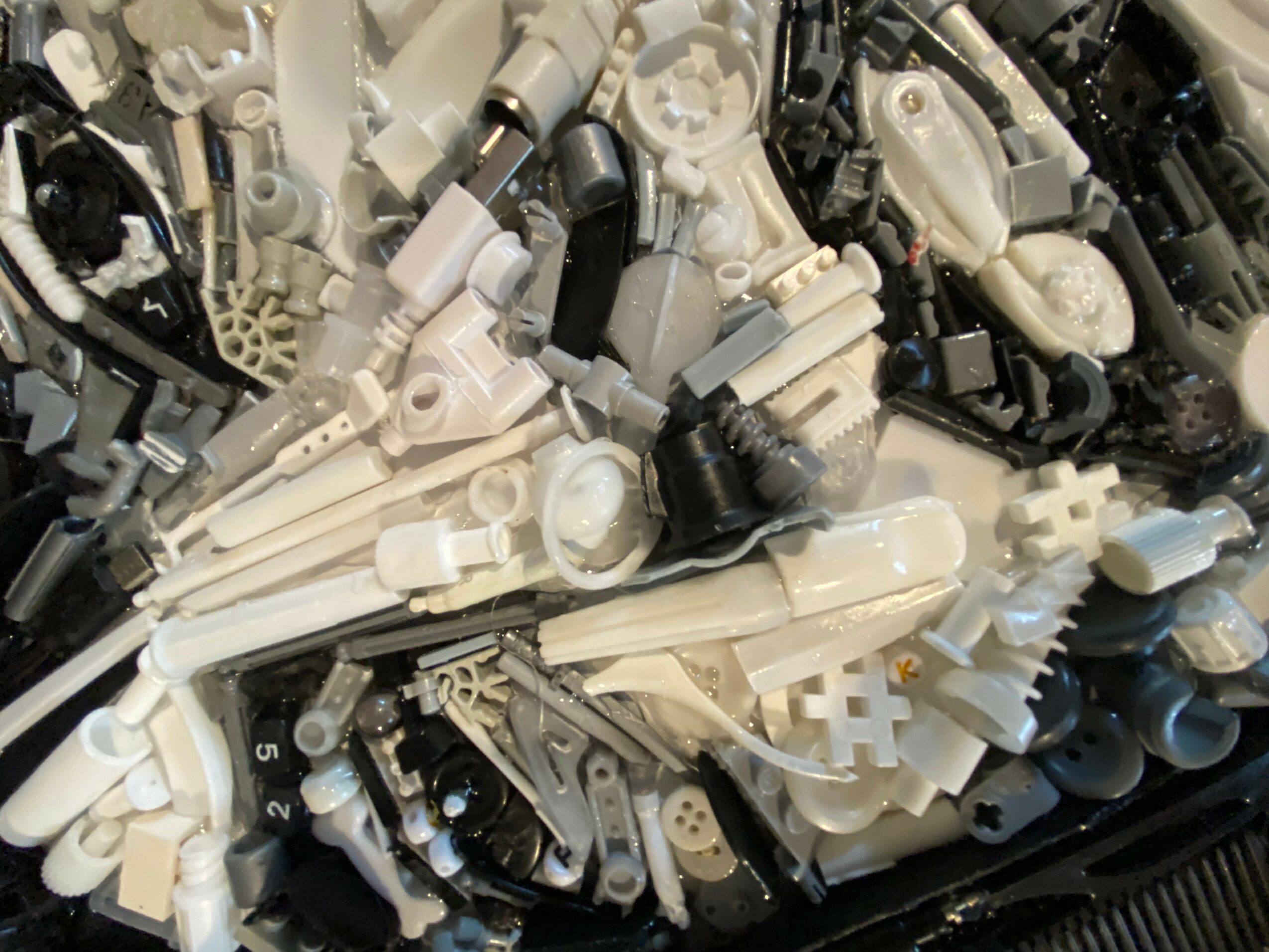
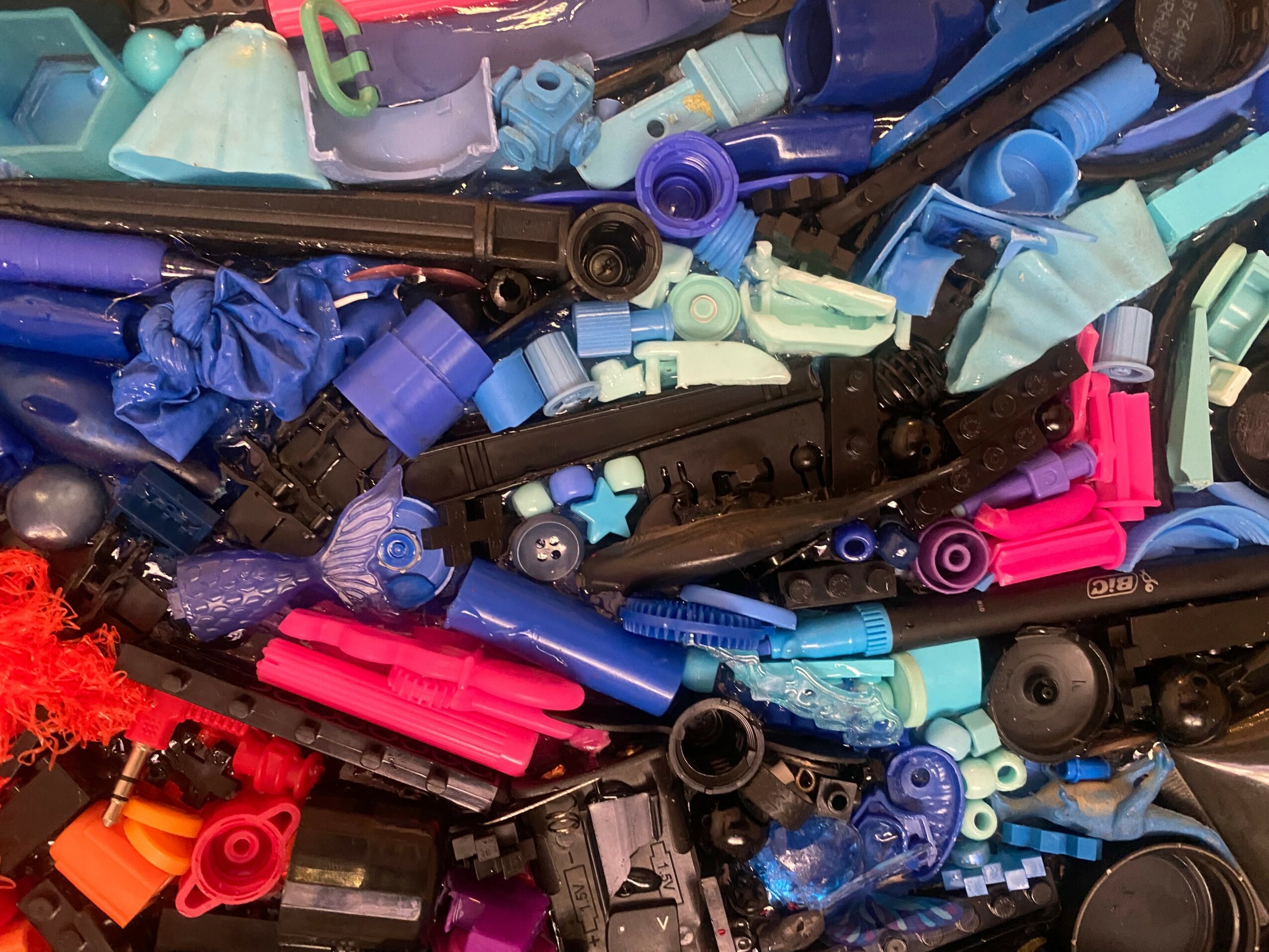
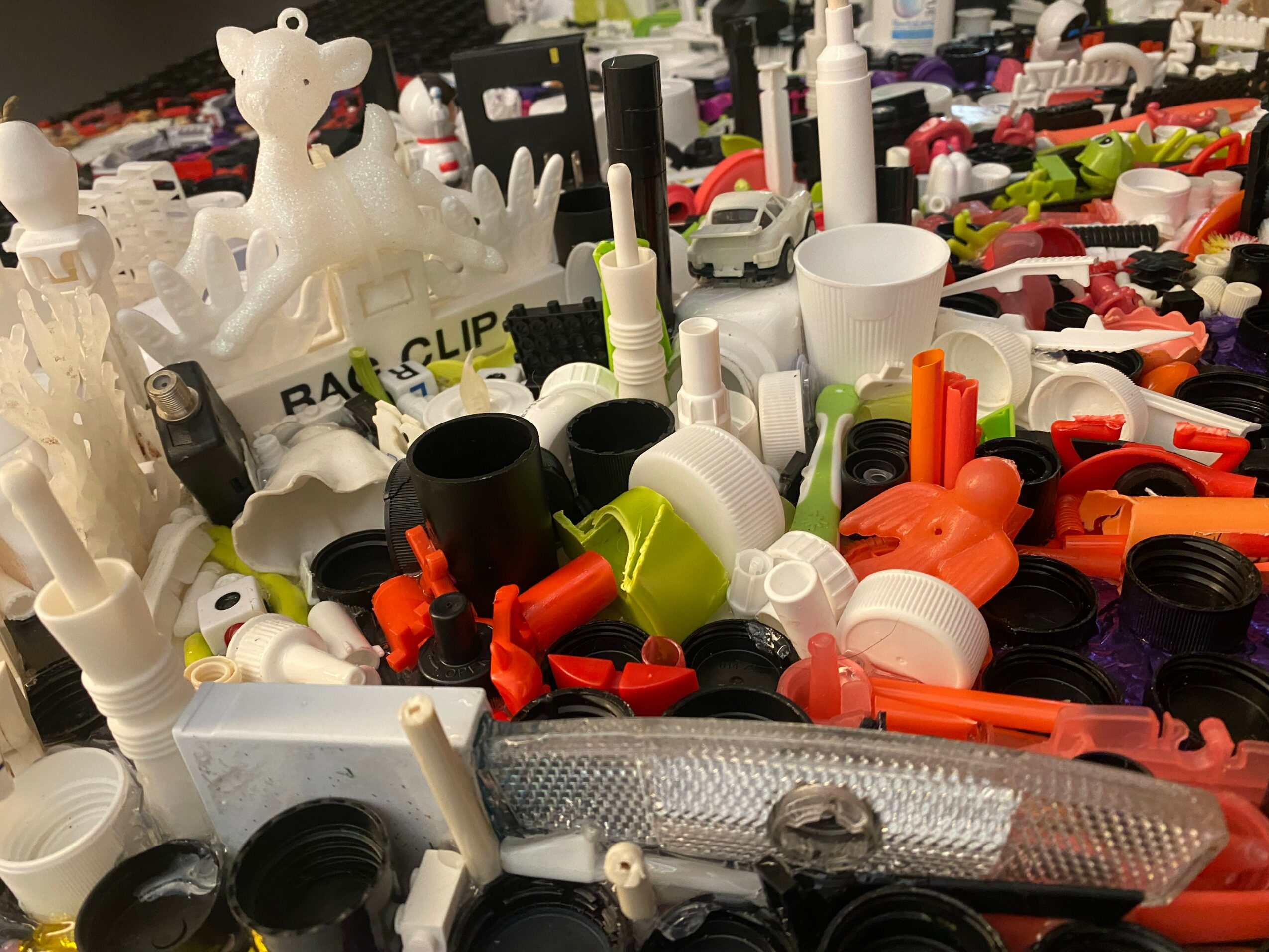
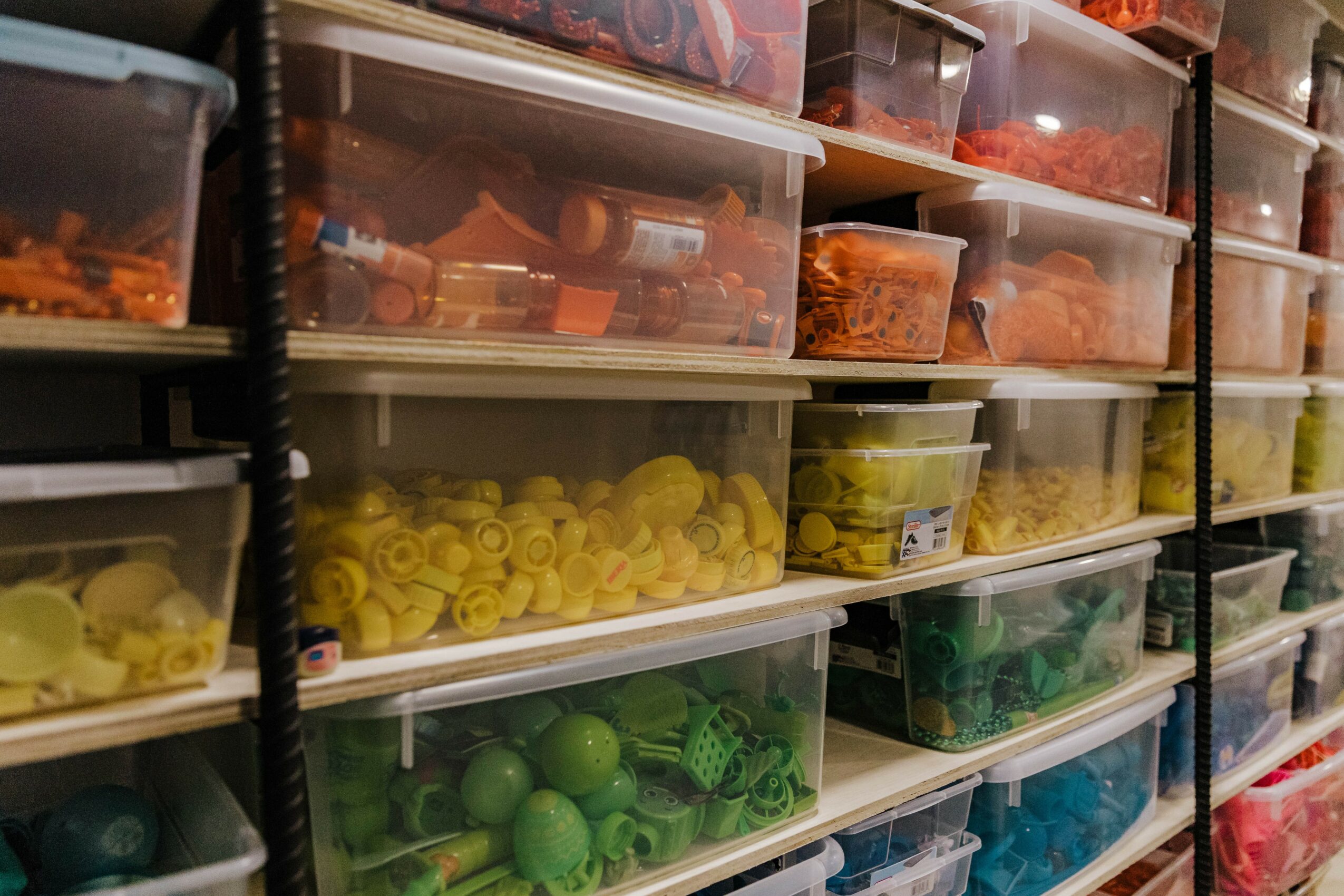
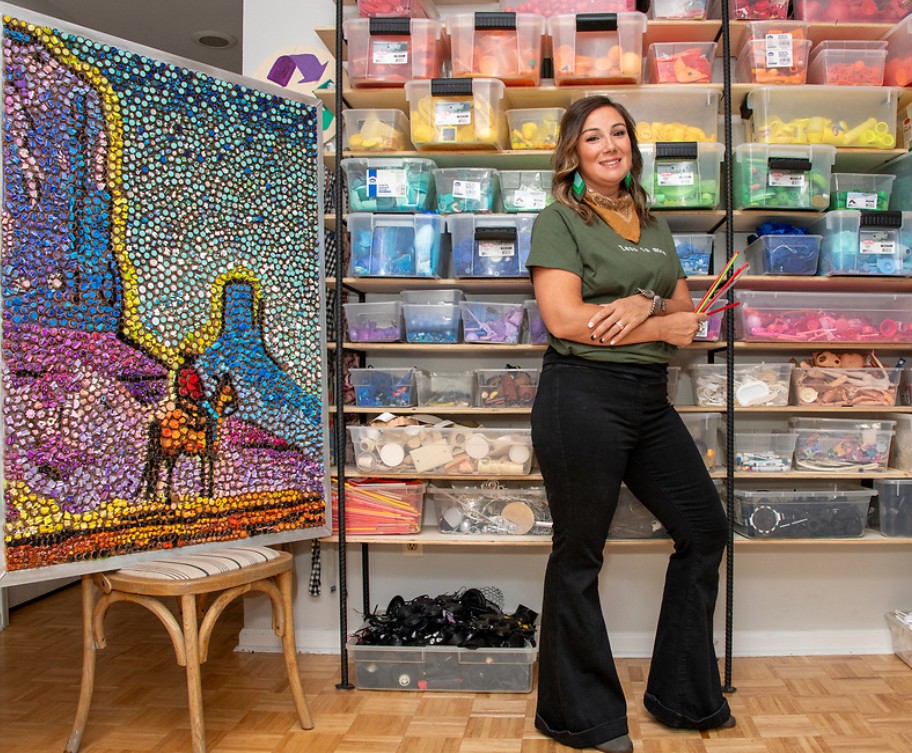
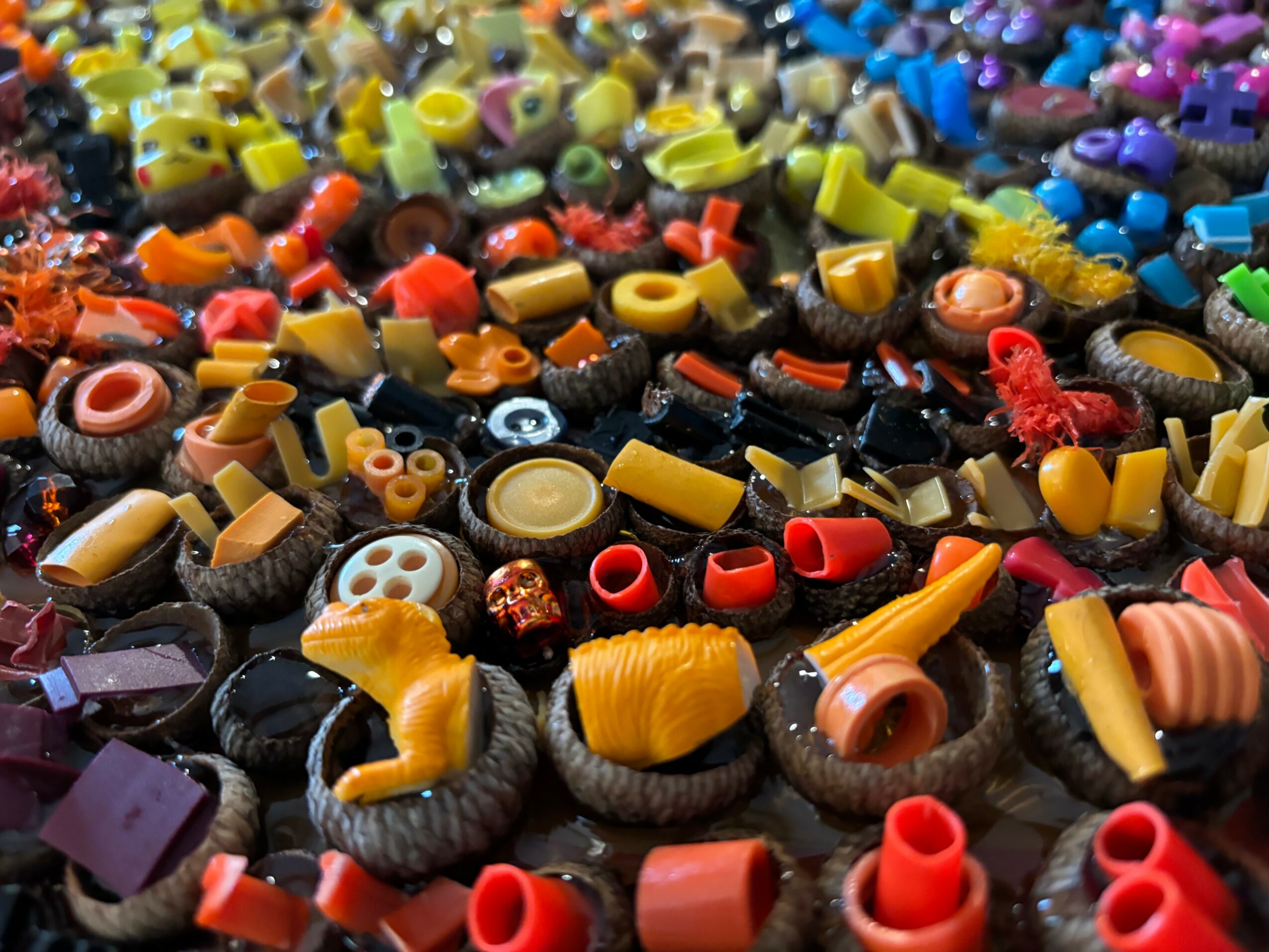
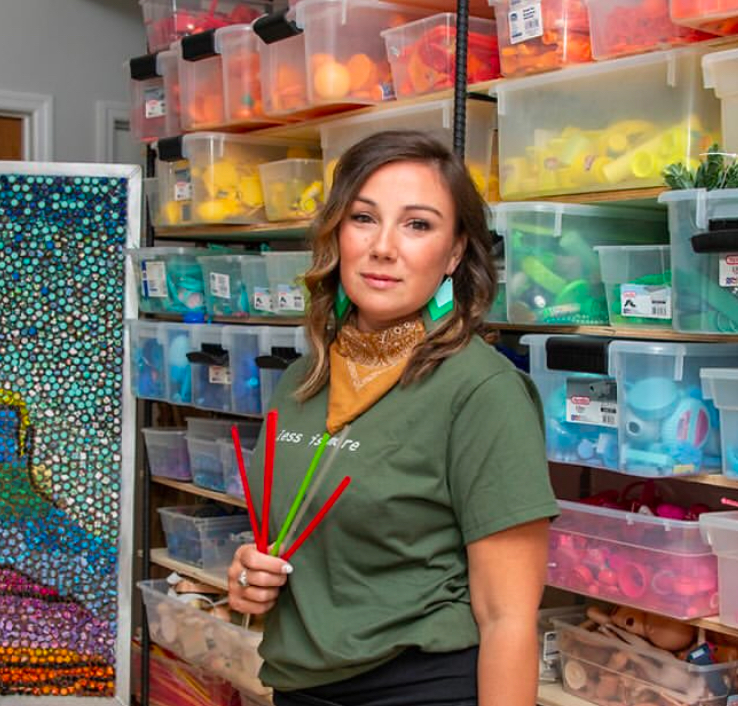
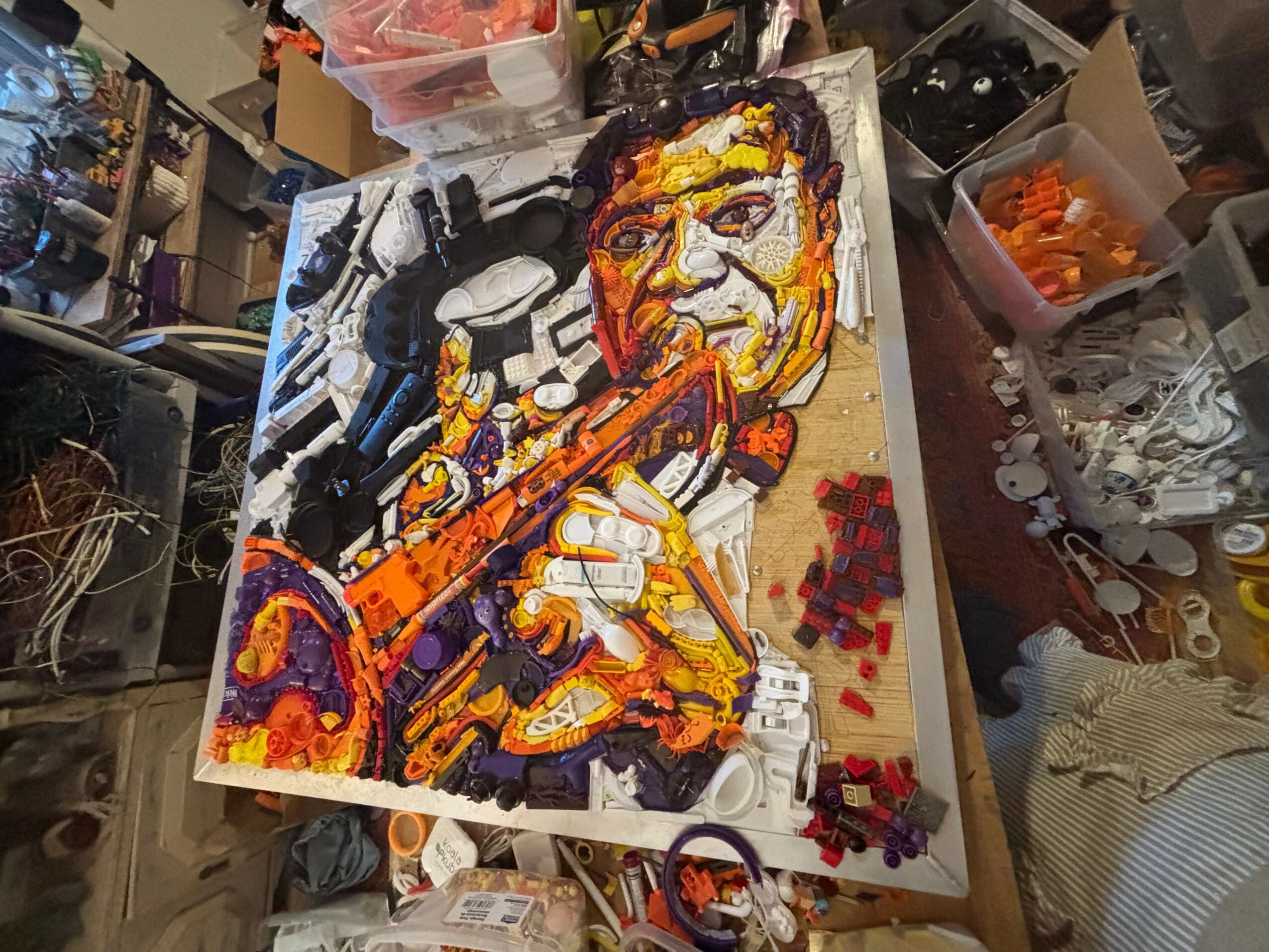
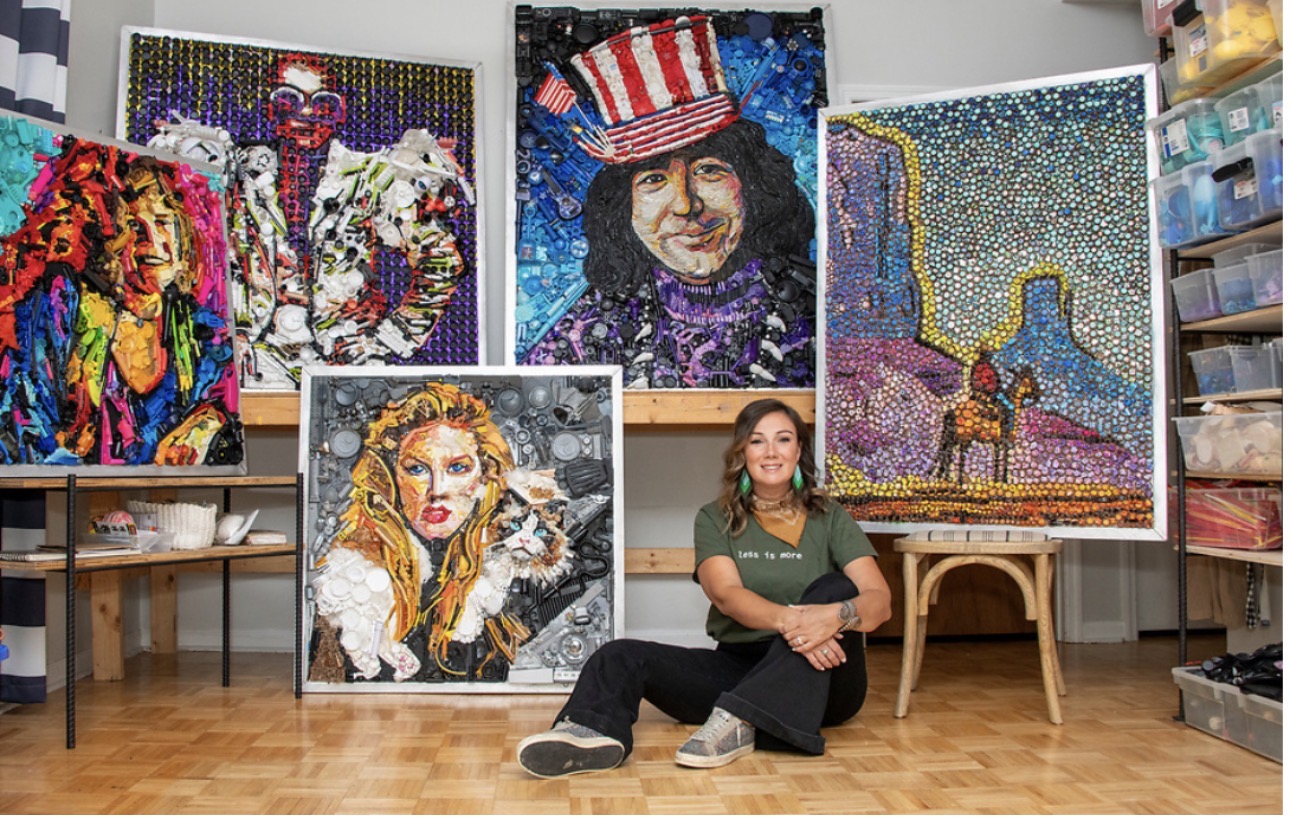
As my collection grew, so did the possibilities. I began sorting everything by color, shade, shape, and size, almost like another artist might organize tubes of paint. Except I don’t paint the plastic—the colors you see in my work are the actual colors of the discarded objects themselves.
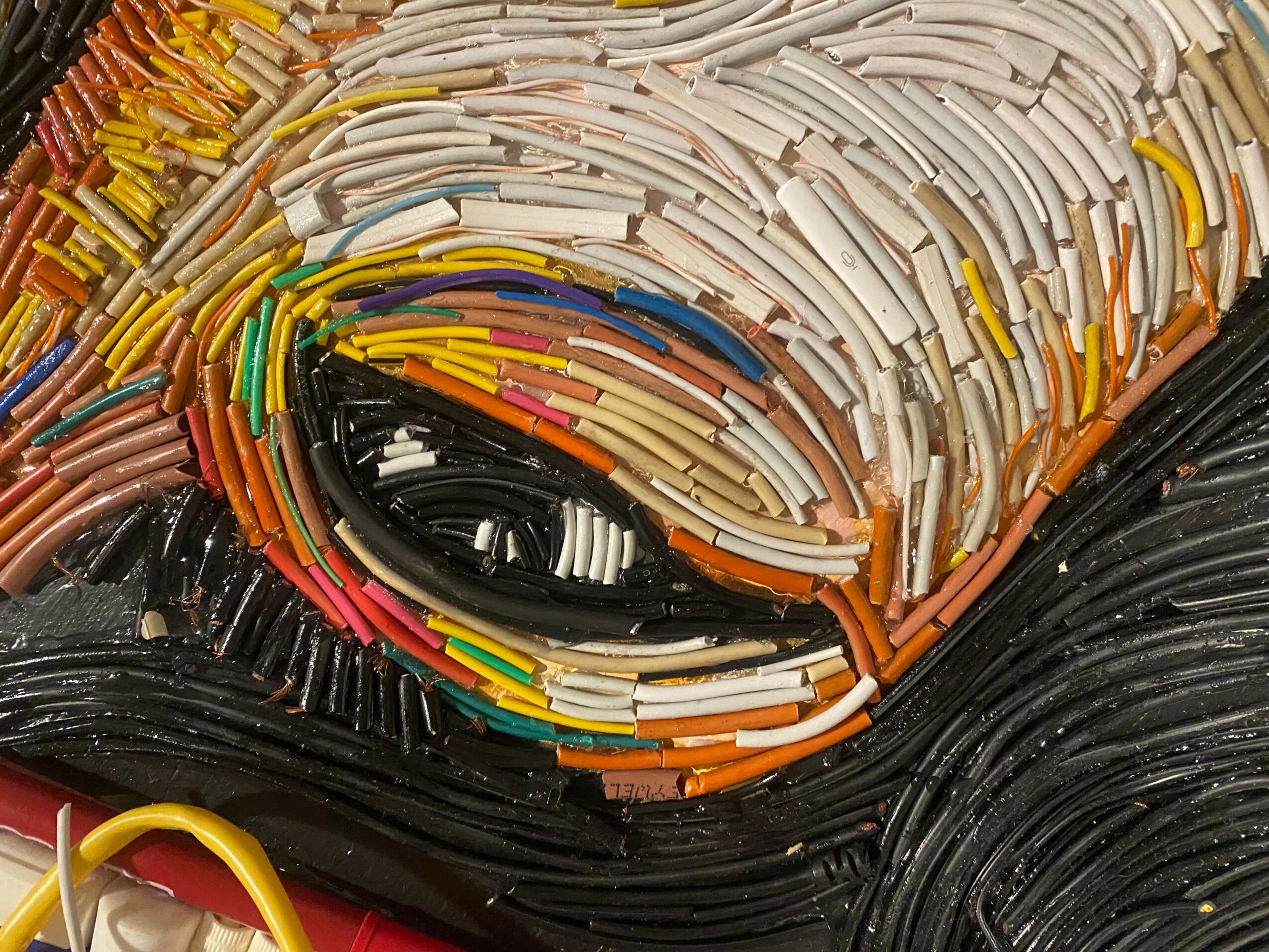
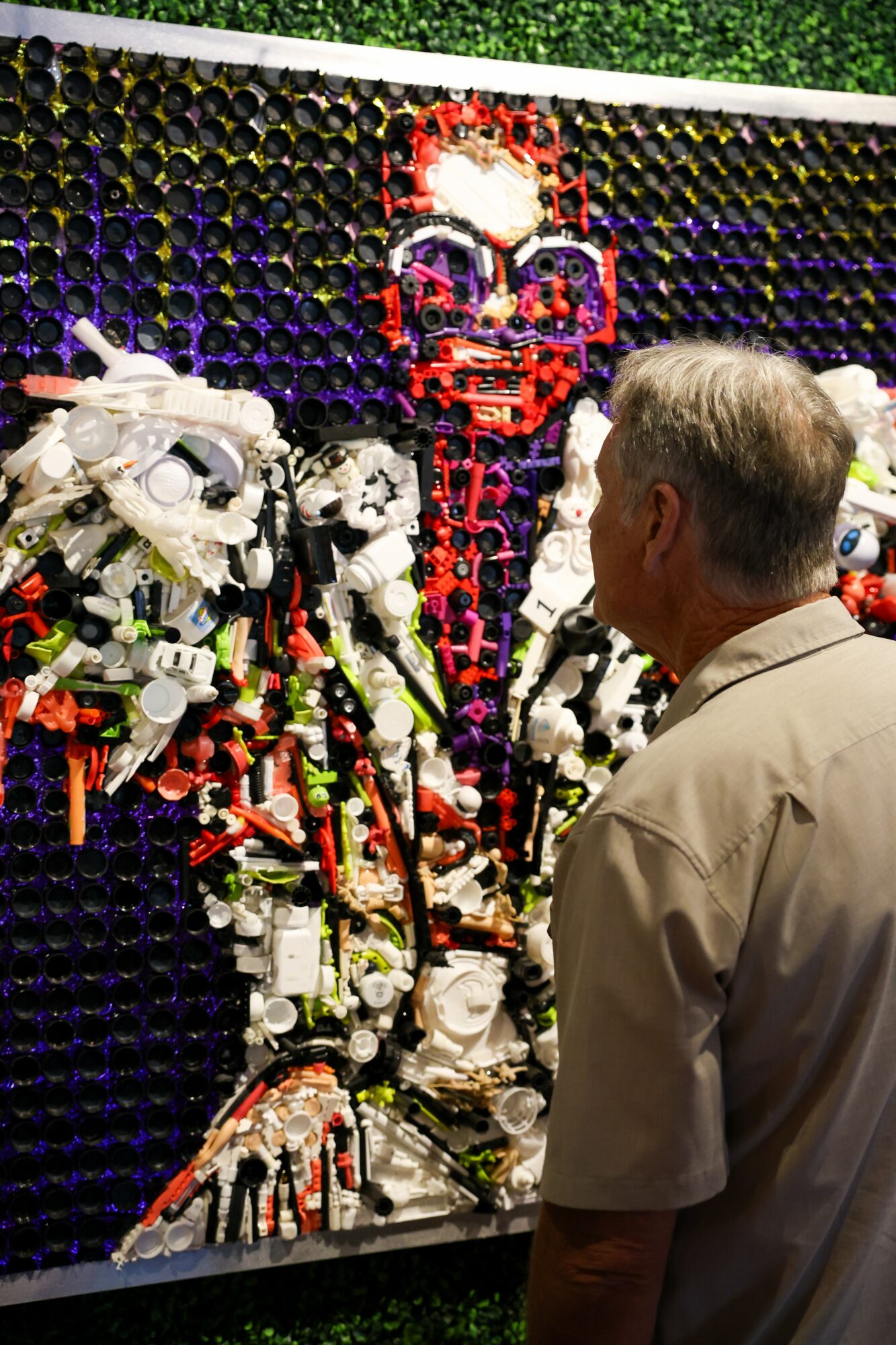
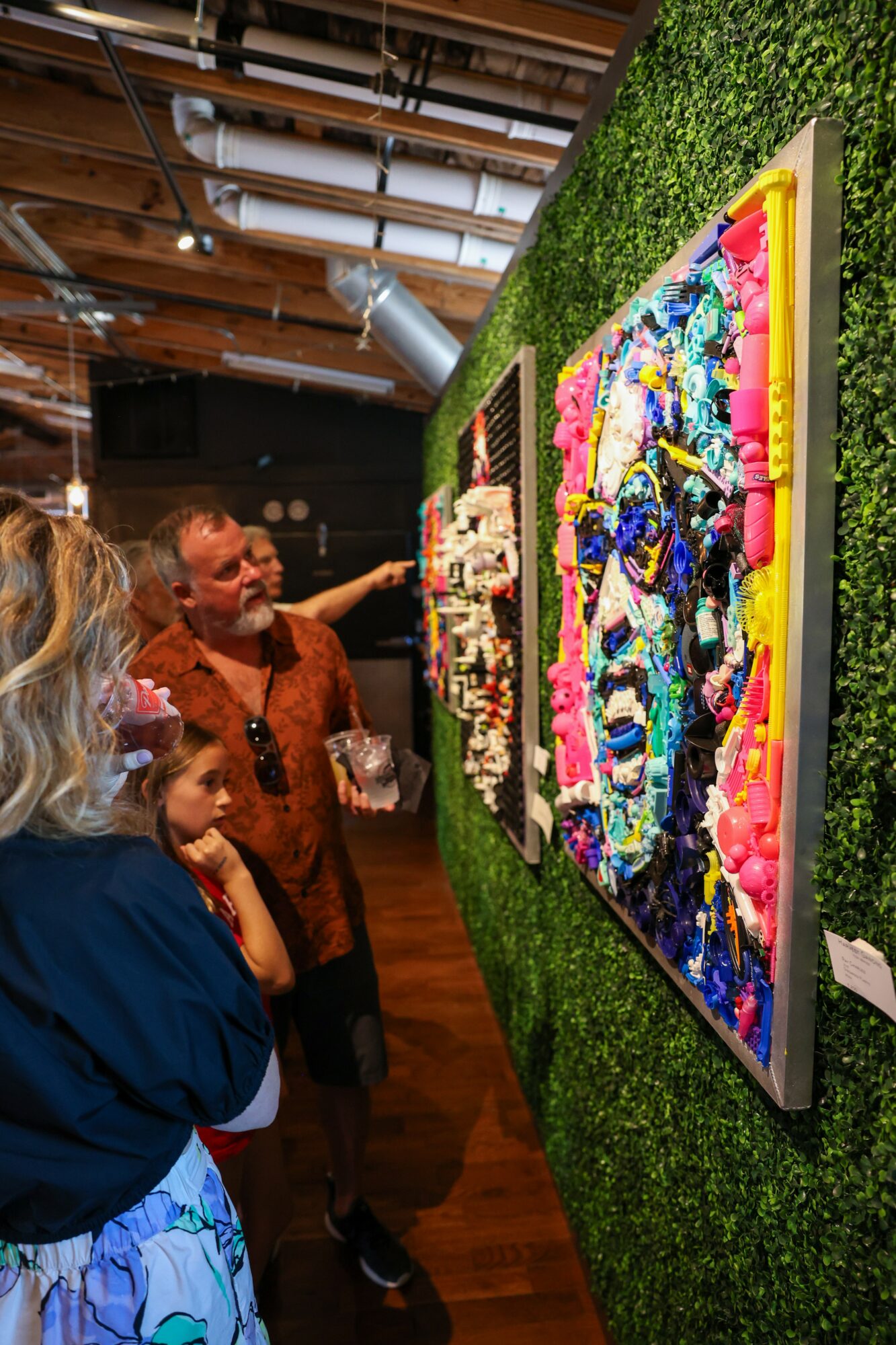
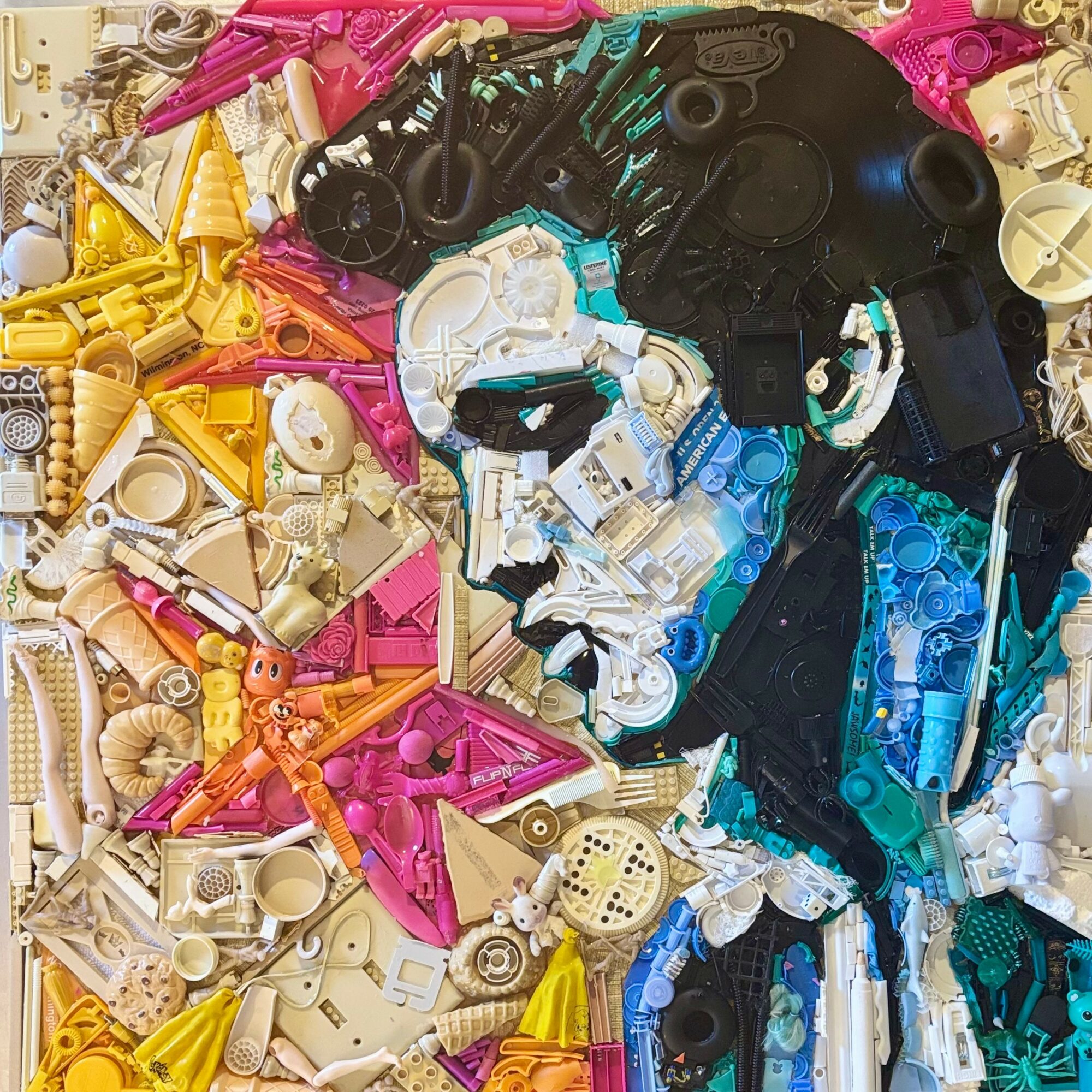
Eventually, those tiny pieces of unwanted plastic began becoming large-scale portraits and landscapes. What started as a way to keep a few toys out of the landfill grew into my art practice and a way for me to start conversations about our relationship with plastic, overconsumption, and the enormous amount of “stuff” we bring into our lives without thinking about where it eventually goes.
I love that something once considered worthless—a broken toy, a bottle cap, a plastic fork—can become part of something people stop and look at. In many ways, each piece becomes a time capsule of our consumption, and I hope the beauty draws people in long enough to make them think about the materials they’re looking at a little differently.
I’m sure it wasn’t obstacle-free, but would you say the journey has been fairly smooth so far?
Has it been a smooth road? Absolutely not! There have been many, many struggles along the way.
Some of the first challenges were simply figuring out how to make this kind of art. My pieces are large, and in the beginning I built everything on wood—gluing, nailing, and screwing thousands of pieces of plastic onto wooden panels and frames. Some of those finished pieces weighed close to 100 pounds! Eventually, I found a welder who could fabricate lightweight aluminum frames for me with a thin wooden backing to attach the plastic to. That dramatically reduced the weight and made the work much easier to transport and install. A lot of my process has been learning through trial and error and constantly figuring out a better way to do things.
Then there is the business side of being an artist, which has been an entirely different learning experience. Social media, making reels, marketing myself, talking on camera—it has all pushed me far outside my comfort zone. I’ve struggled with imposter syndrome and that little voice that asks, “Am I really good enough to be doing this?” There can be something strangely uncomfortable about constantly promoting yourself and your work, especially when you are someone who would much rather just be in the studio creating.
I’ve also had to learn how to balance being an artist with being a mother, wife, friend, and all of the everyday responsibilities that come with family life. Between school, errands, traveling for my children’s sports, maintaining friendships and family responsibilities, there are definitely days when finding uninterrupted time to create feels nearly impossible.
My greatest personal setback, though, has been losing both of my parents unexpectedly and very close together. Grief changed everything for me for a while, including my desire and ability to create. People talk about the “tortured artist,” and I understand that phrase differently now. Sometimes difficult experiences fuel creativity, but sometimes they simply stop you in your tracks. I’ve had to give myself the space to grieve and slowly find my way back to creating again.
And then, of course, there are the struggles almost every working artist faces—pricing your work, finding the right galleries, learning the business side, and most importantly, believing that your work has value.
But I also think this is an incredibly exciting time to be an artist. There are more avenues than ever for artists to reach people and make a living outside of the traditional gallery model. Social media, online sales, commissions, prints, collaborations, and direct relationships with collectors have opened doors that didn’t exist in the same way before. I’m still learning how to navigate all of it, but I think that’s part of being an artist too—constantly evolving, experimenting, and figuring it out as you go.
Thanks for sharing that. So, maybe next you can tell us a bit more about your work?
One of the things I love most about my work is that it truly cannot exist without my community. My materials come from families, neighborhoods, schools, churches, hospitals, and even strangers who find me online and send me items because they want to see their plastic become something meaningful rather than end up in a landfill or our oceans.
I specialize in large-scale portraits and landscapes made from discarded plastic. I don’t paint any of the plastic, so finding just the right colors, shapes, and objects is a huge part of my process. I also hide little “Easter eggs” throughout each piece—references to the musician I’m creating or personal details about the person commissioning the work. I once needed a tiny pair of sunglasses to turn a plastic pig into Elton John, and someone in my community found exactly what I needed!
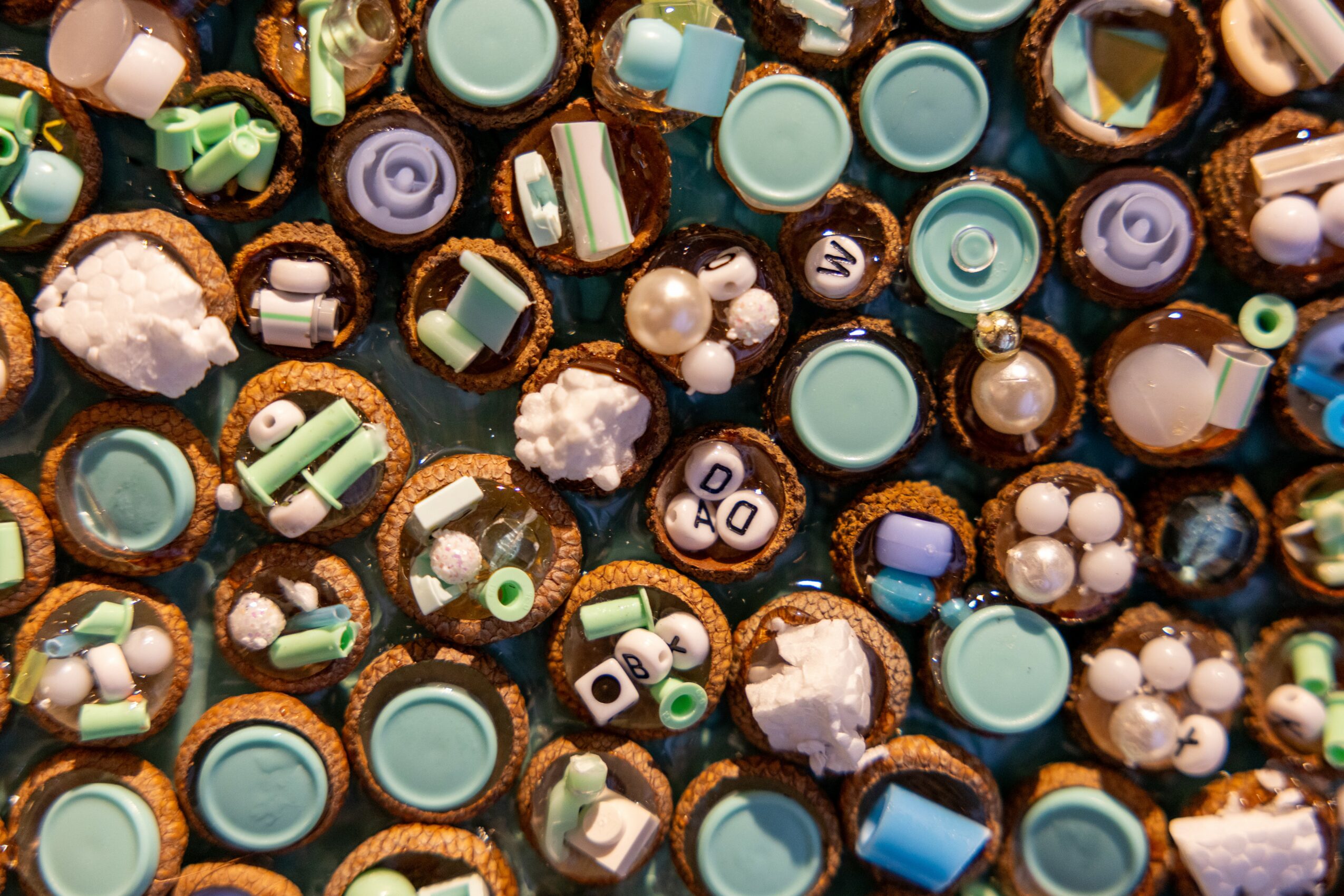
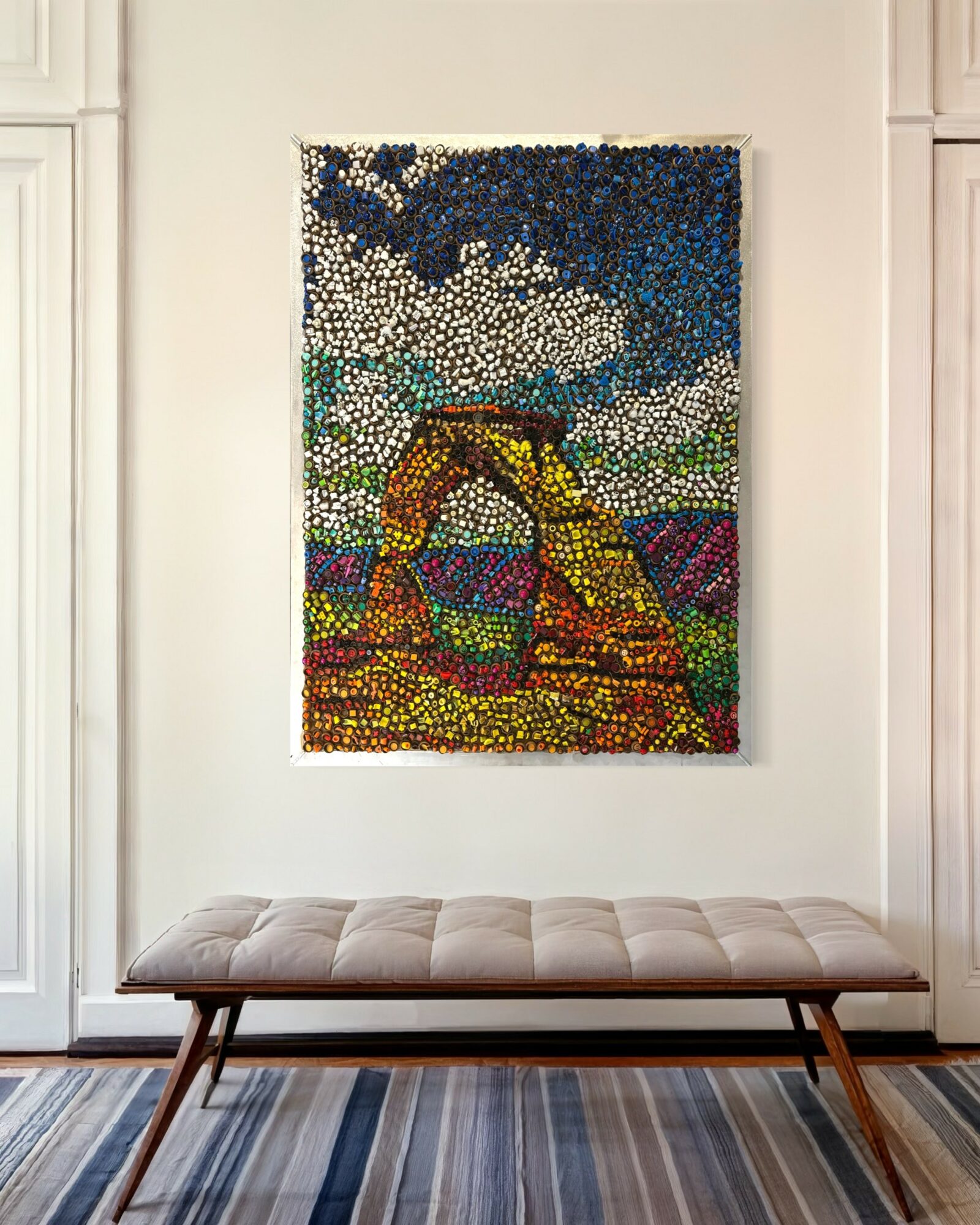
More recently, I’ve created a National Parks series using acorn caps filled individually with microplastics. The acorn caps essentially become pixels that I use to build large-scale landscapes. I haven’t found another artist working with acorn caps and microplastics in this way, so I’m incredibly proud to be pioneering a process that feels uniquely my own.
Ultimately, I want my work to be beautiful from a distance, surprising up close, and hopefully make people think differently about the things we throw away.
Where do you see things going in the next 5-10 years?
Over the next 5–10 years, I hope to embrace that by continuing to create original work while offering signed limited-edition prints and products at more accessible price points. I’m also developing a monthly art letter club where subscribers can receive a small collection of prints, stickers, magnets, bookmarks, and other pieces of my work for around $10 a month.
Creatively, I’m excited about what’s next as well. My father was an archaeologist and was involved with Native American ceremonials during the 1960s and ‘70s. I recently discovered a collection of his old slides that I’m hoping to incorporate into a future series, possibly combining painting with my plastic work.
I think the future for artists is about finding new ways to evolve, connect with people, and make art accessible to a wider audience.
Pricing:
- Signed limited edition prints $100-$200
- Original 3’ × 3’ artwork — starting at $5,200
- Original 3’ × 4’ artwork — starting at $7,200
- Prints on metal/glass/ canvas $200-$1,000
Contact Info:
- Website: https://harvest-ganong-studios.myshopify.com
- Instagram: https://www.instagram.com/harvestganong
- Facebook: https://www.facebook.com/harvestganong
- Other: https://www.tiktok.com/@harvestganong