




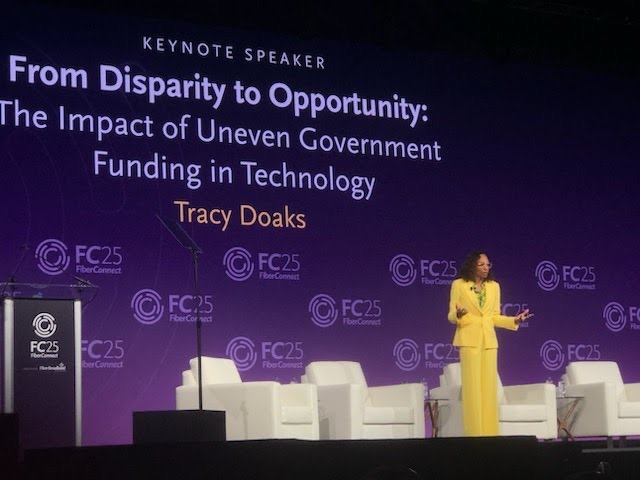
Today we’d like to introduce you to Tracy Doaks.
Hi Tracy, can you start by introducing yourself? We’d love to learn more about how you got to where you are today?
I grew up in Front Royal, Virginia, a Shenandoah Valley town where a single manufacturing plant could make or break the whole community. Watching what happens when that one industry falters — and whole families feel it — planted a lesson that would later steer my career toward infrastructure: the unglamorous systems that keep communities standing.
A geek, a nerd, and a bookworm by my own description, I rode a full academic scholarship to North Carolina State University, graduating in 1990 with a degree in industrial engineering, one of relatively few African American women in a field then dominated by white men.
Public service was never the plan. I started as a consultant at Accenture, building a software program for the North Carolina Department of Revenue (NC DOR), after a brief, unsuccessful detour into manufacturing. When NC DOR offered me an in-house version of that same work, I took it — mostly because I was married with a small child and tired of consulting travel, not because of any calling. That practical decision turned into two decades moving in and out of state government and private industry, including a stretch as CIO for NC DOR and a service-delivery leadership role at Duke University Health System.
After a couple of promotions at NC DOR, I saw a ceiling clearly, so I left for a clinical informatics role at Blue Cross Blue Shield of North Carolina. Barely a year in, the state called with a brand-new title: Deputy CIO. I joined the North Carolina Department of Information Technology (NCDIT) as chief deputy state CIO and chief services officer in November 2015 (Terrapinn). That’s where I learned the real weight of risk and accountability. My boss at the time, State CIO Eric Boyette, became a mentor who kept setting the bar higher than I would have set it myself — work that helped save the state more than $25 million and earned me NC TECH’s 2018 Public Sector CIO of the Year award (NCDIT).
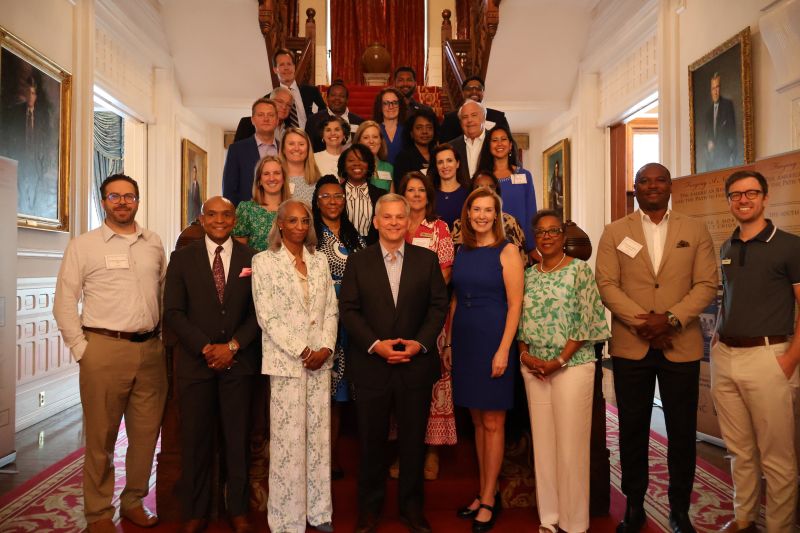
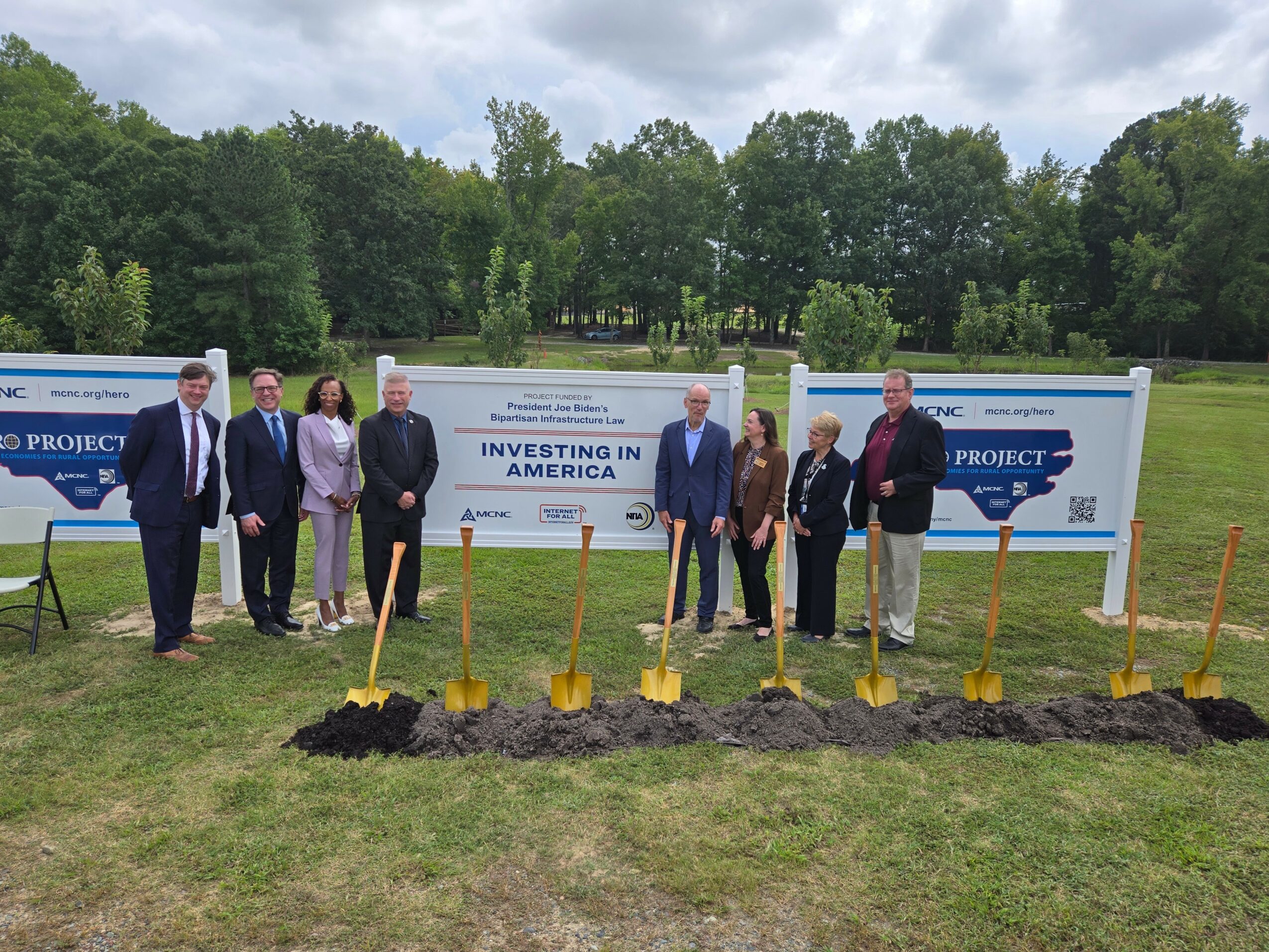
In February 2020, Governor Roy Cooper named me State CIO and Secretary of Information Technology, leading roughly 2,100 employees across cybersecurity, broadband, and IT procurement. Weeks later, COVID-19 hit, and I helped steer the state’s technology response to a crisis no one had planned for. Five months in, MCNC — the nonprofit behind North Carolina’s research and education fiber network, NCREN — came calling. In August 2020, I became MCNC’s ninth President and CEO.
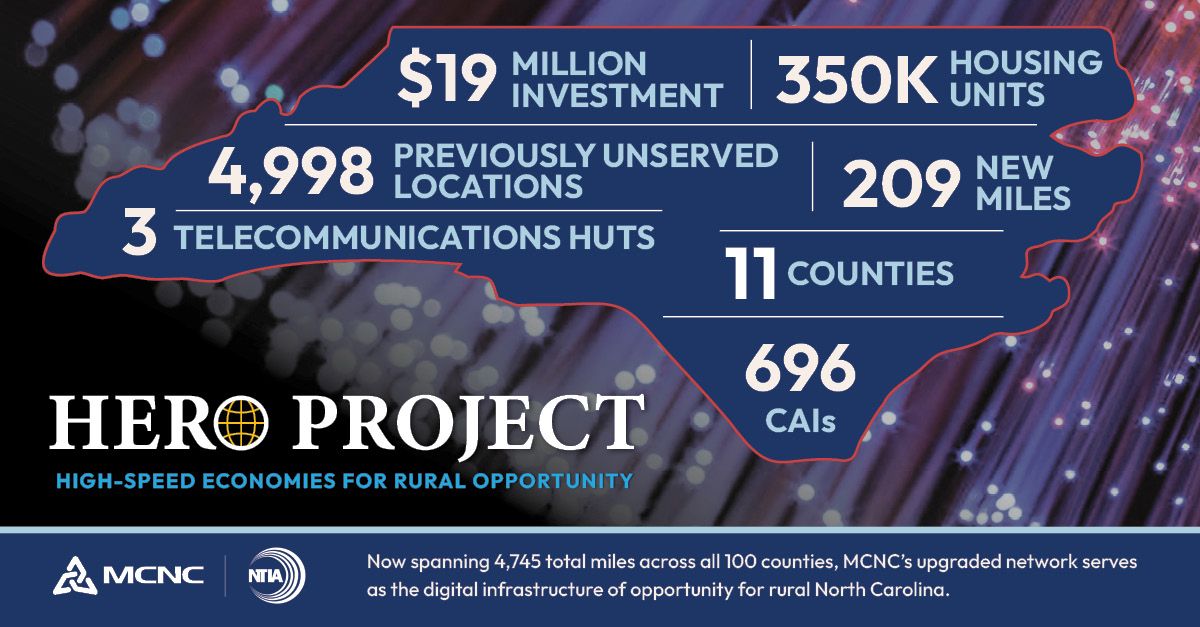
Every earlier chapter — the engineer, the consultant, the crisis-tested CIO — converged in a job about infrastructure at scale: nearly 5,000 miles of fiber connecting more than 900 institutions in all 100 North Carolina counties. Today that same instinct drives NCShare, our partnership giving universities of every size shared access to AI computing resources (NCShare) — the same belief I learned growing up in a one-industry town, now applied at scale: opportunity shouldn’t depend on how much capital you already have.
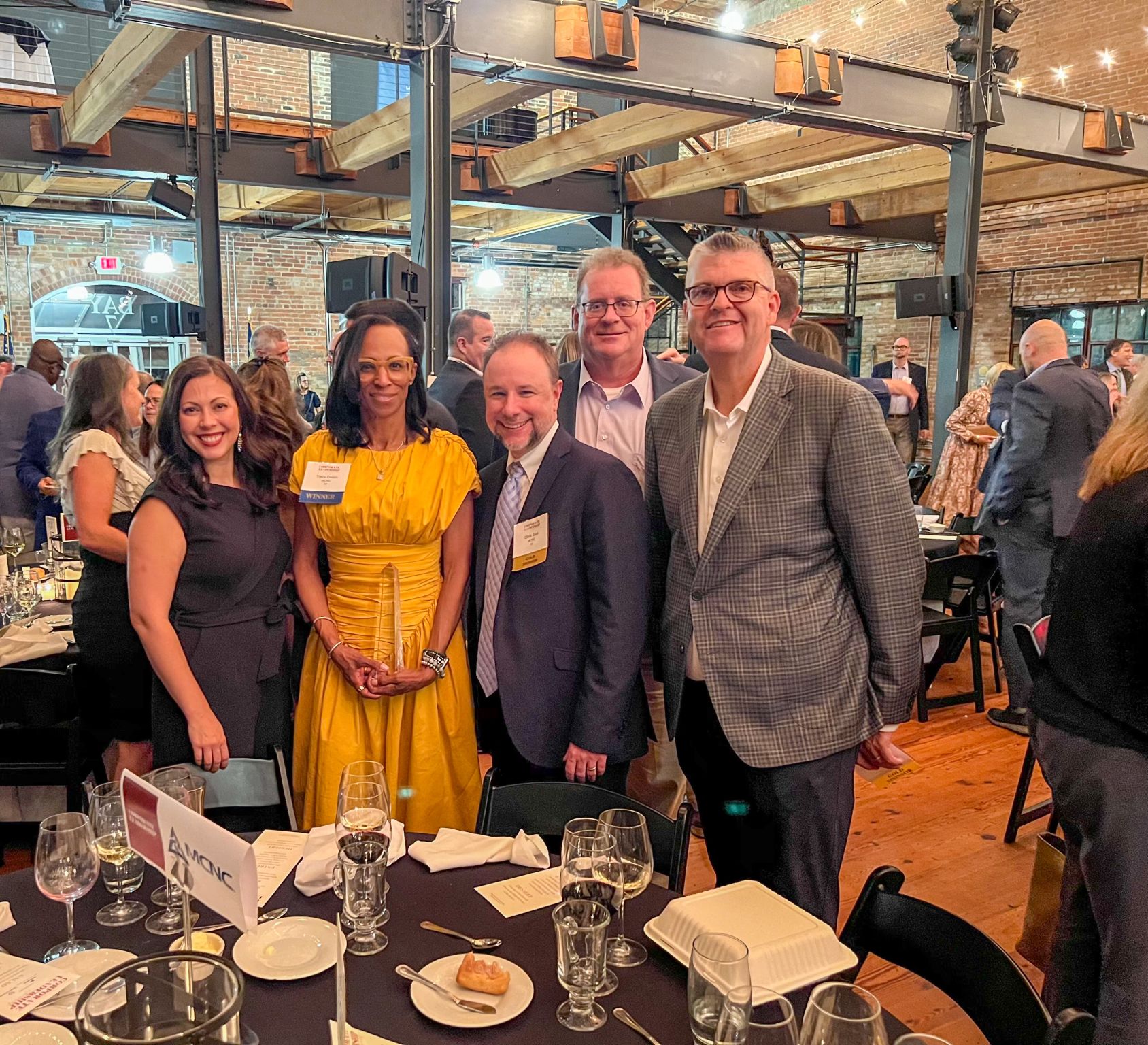
That work has earned recognition — Triangle Business Journal’s 2022 Women in Business Award, NC State’s 2024 Distinguished Engineering Alumni Award, and TBJ’s 2025 Corporate Leadership Award among them (Terrapinn) — but vision and strategic leadership have never been about having all the answers. They’re about recognizing, at every ceiling, that the next room is worth walking into.
Would you say it’s been a smooth road, and if not what are some of the biggest challenges you’ve faced along the way?
There were certainly struggles along the way. From periodic existential crises, being a mother while climbing the ladder, becoming a state CIO at the beginning of Covid, and then moving to a new role during Covid. Besides being a mom to two incredible adults, Covid was a big challenge. The whole world shut down but my priorities were ensuring citizens had the services they needed. I worked so closely with my fellow secretaries in Governor Cooper’s cabinet to appeal to vendors and partners for help. I remember calling partners in the telecommunications space to help get connectivity to places so children could still continue their education. Other partners were called upon to help with expansion of call centers to help citizens obtain their employment benefits. I remember thinking how frenetic it all seemed at the time. All the while, I kept telling my staff to go home and couldn’t figure out why they wouldn’t. Finally, someone said, “the staff won’t go home until you do.” The statement stopped me in my tracks. I needed everyone to go home to their families and stay healthy, but I wasn’t modeling that due to all the chaos. I learned several lessons about partnership, compassion, leadership and probably a whole host of others. In my many years of public service, it is not uncommon to behave selflessly. I learned over the years that this is not a model that sustains you over time.
We’ve been impressed with MCNC, but for folks who might not be as familiar, what can you share with them about what you do and what sets you apart from others?
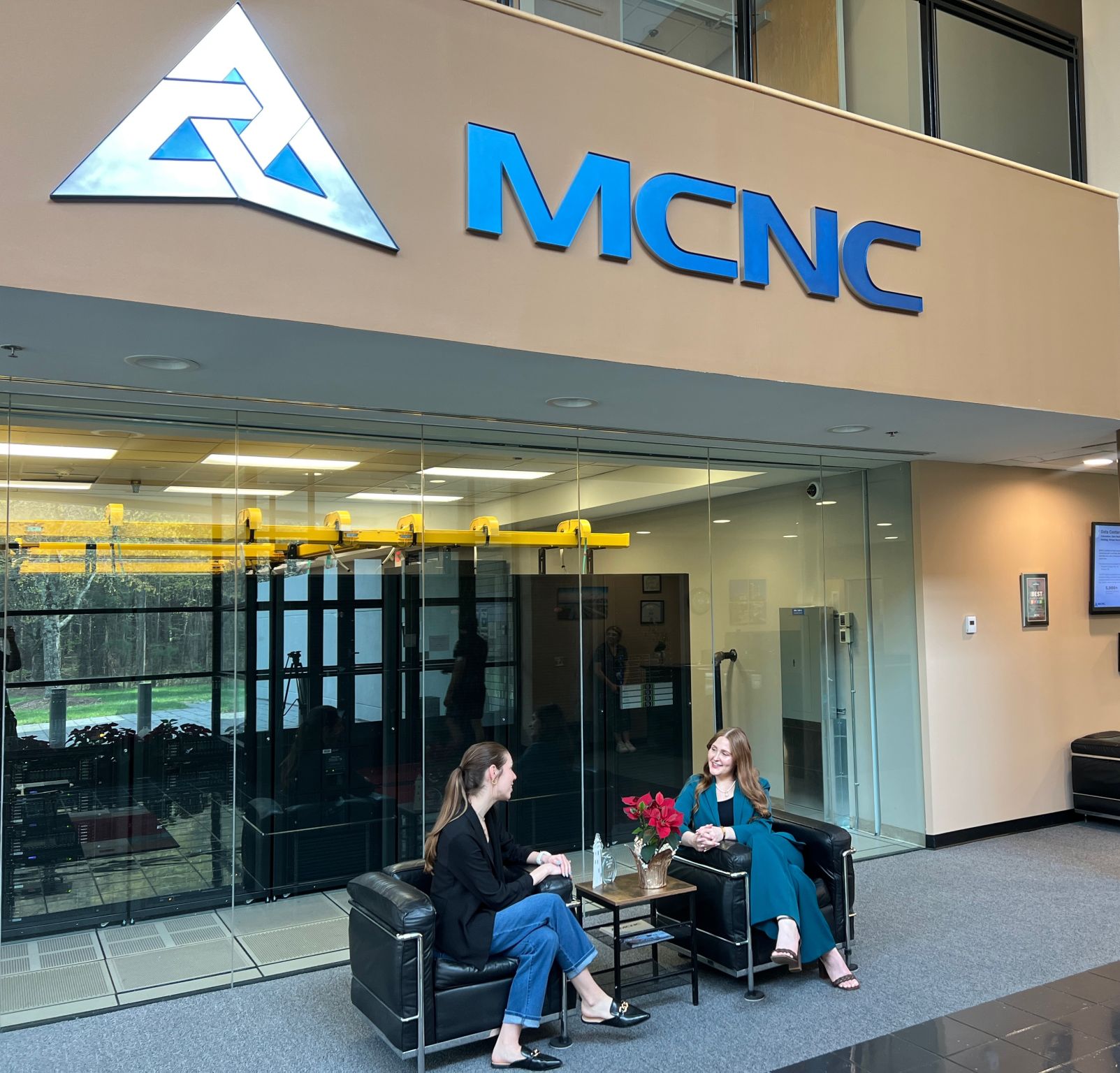
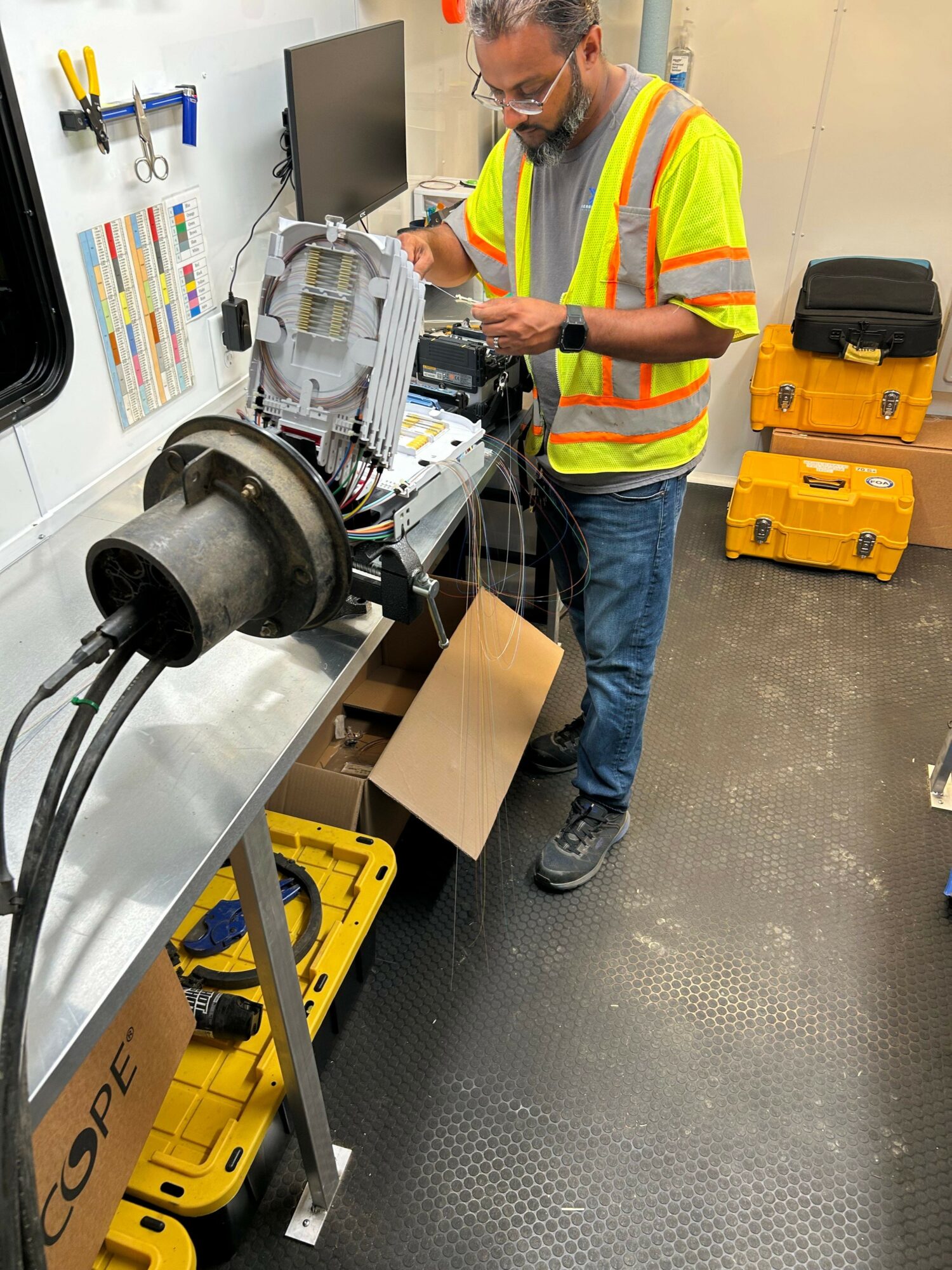
MCNC is a 45-year-old, 501(c)(3) nonprofit technology organization based in Research Triangle Park, North Carolina. We own and operate the North Carolina Research and Education Network (NCREN), a fiber-optic backbone spanning more than 4,500 miles that reaches all 100 North Carolina counties. We were founded in 1980 and were among the first organizations in the country to build a statewide, nonprofit research and education network. Today NCREN is the fundamental broadband infrastructure for all public K-20 education in North Carolina. Our infrastructure is used by every K-12 district, every community college, every UNC System campus plus hospitals, libraries, museums, public safety agencies, local governments, and nonprofits across the state.
What do you do? What do you specialize in / what are you known for?
We’re best known as North Carolina’s “middle-mile” network. the big highway that other providers, schools, and institutions connect to, rather than a retail internet company. Our work breaks down into three core areas.
– Connectivity: fiber, cloud connectivity, and transport services built on that 4,500-mile backbone.
– Cybersecurity: our Vital Cyber practice runs a North Carolina-based Security Operations Center monitoring roughly 300,000 endpoints, offering Managed Endpoint Protection (with CrowdStrike), Managed Firewall, DNS Security Filtering (with Akamai), Web Security (with Zscaler), and consulting for institutions that can’t afford in-house security teams.
– Consulting: hands-on technical advising for everyone from one-room rural schools to major research universities.
What sets you apart from others?
The single biggest differentiator is that we’re a nonprofit, not a shareholder-driven company so every decision is measured against “what’s best for North Carolinians,” not a bottom line.
That shows up in a few concrete ways:
– We’re an open-access network. Our fiber can be leased by commercial ISPs, cable operators, and wireless carriers, which is unusual for infrastructure of this scale and helps extend connectivity to places private companies won’t build on their own.
– We go where others won’t. We serve rural, underserved, and often-overlooked communities as a matter of mission, not as an afterthought.
– We’re a partner, not a vendor. We invest in relationships, stay vendor-neutral, and build only what communities tell us they actually need.
– Real people answer the phone. Our Network Operations Center in Research Triangle Park runs 24x7x365 with no phone tree.
We hold ourselves to the same security bar we set for our clients. MCNC completes an independent SOC 2 Type II audit of our own organizational security controls every year.
What are you most proud of, brand-wise?
A few things stand out:
– Longevity with relevance. Forty-five years in, we’re not a legacy network coasting on infrastructure built decades ago. We’re actively building for quantum networking, AI-ready infrastructure, and next-generation cybersecurity.
– A 99%+ client satisfaction rate and industry recognition to match, including NC TECH’s 2023 Use of Technology Award for Vital Cyber and a national finalist nod at the U.S. Broadband Summit for connecting unconnected communities.
– Being first. First statewide nonprofit research and education network in the country, first and only InCommon Steward Program, and one of the first regional networks piloting GPU-as-a-Service for AI research at scale.
What it means for the state? Whatever the technology, the through-line is the same: opportunity in North Carolina shouldn’t depend on your zip code, and we exist to make sure it doesn’t.
Can you share something surprising about yourself?
I am a motorcyclist and a photographer. If I ride my motorcycle, I like to stop in rural towns to photograph old, distressed barns and buildings. I travel the world to get photos of architecture, nature, and culture. These hobbies allow me to express my creative side in ways I do not normally. Lastly, I am a philanthropist who is very thoughtful about the causes I donate to. Most align with the work I do to advance broadband, education, and women in tech.
Contact Info:
- Website: https://www.mcnc.org
- Instagram: tsdoaks
- LinkedIn: https://www.linkedin.com/in/tracy-doaks and https://www.linkedin.com/company/mcnc