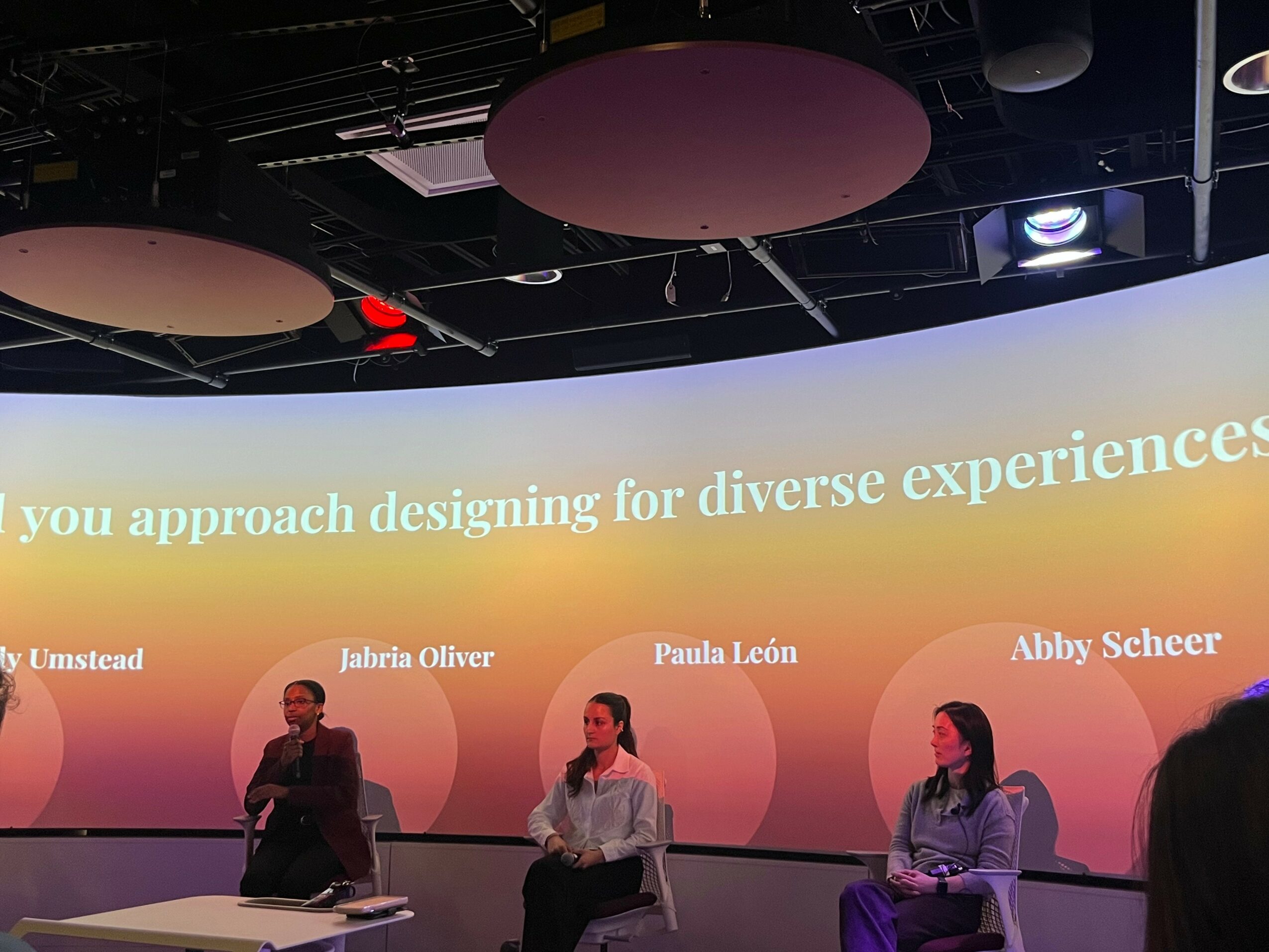





Today we’d like to introduce you to Paula Leon.
Alright, so thank you so much for sharing your story and insight with our readers. To kick things off, can you tell us a bit about how you got started?
I was born and raised in Bogotá, Colombia, where creativity and entrepreneurship were part of my life from an early age. I was always drawing, building, and imagining ways to improve the objects around me, which eventually led me to study Industrial Design. I also grew up watching my parents build and run their transportation company. Although I did not initially picture myself becoming an entrepreneur, their determination became an important source of inspiration for me.
In 2019, I moved to the United States to learn English and pursue new opportunities. I initially worked as a nanny while adapting to a new country and culture. When the pandemic began, I found myself far from home and uncertain about what the future would hold. I worked multiple jobs to support myself and went more than four years without being able to hug my family. Despite those challenges, I never lost my desire to return to design and use it to improve people’s lives.
In 2022, I was accepted into the Master of Industrial Design program at NC State University. That opportunity helped me reclaim my identity as a designer and introduced me to Raleigh’s incredibly supportive design and entrepreneurship community. It was also where Blean began.
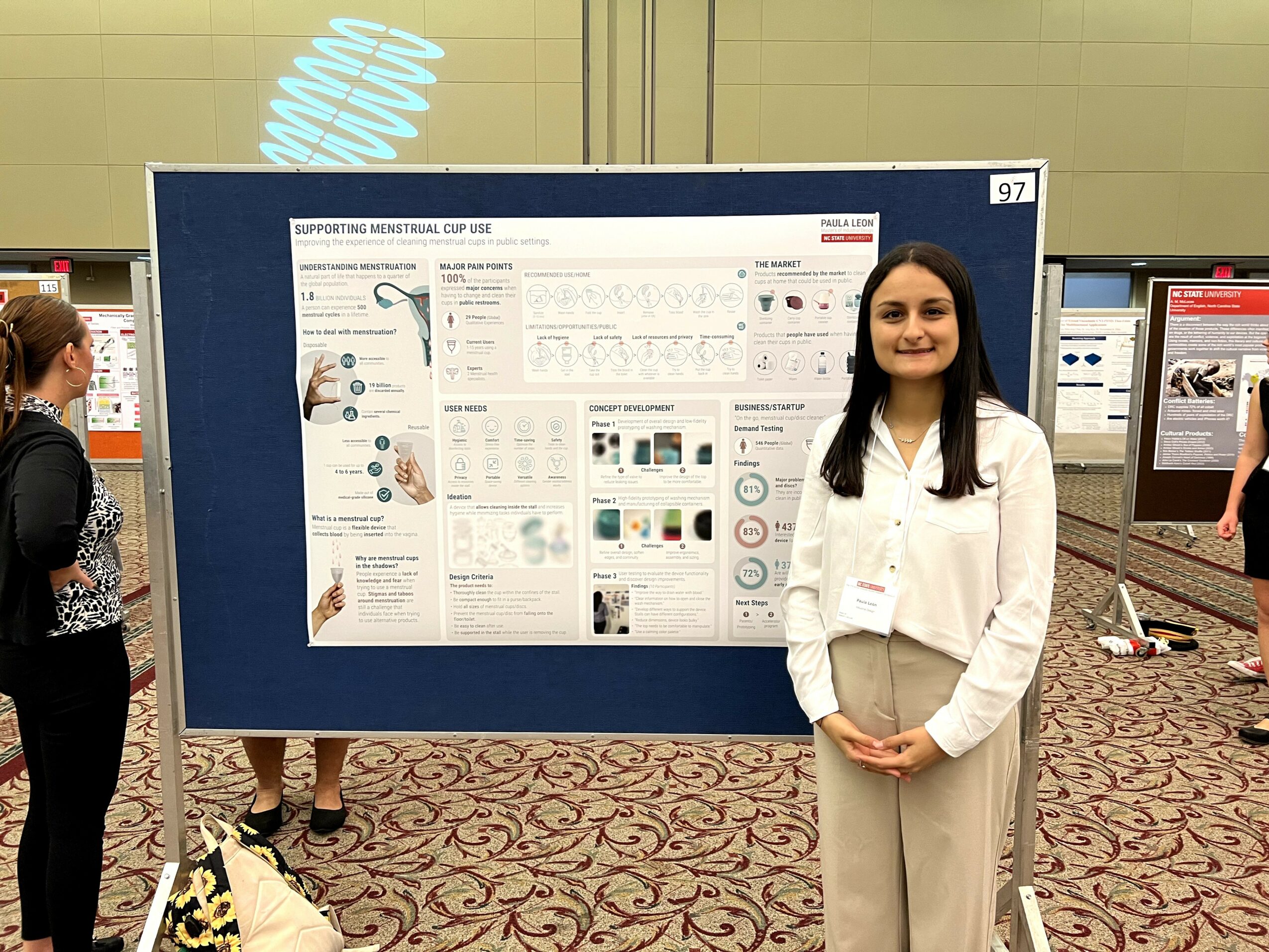
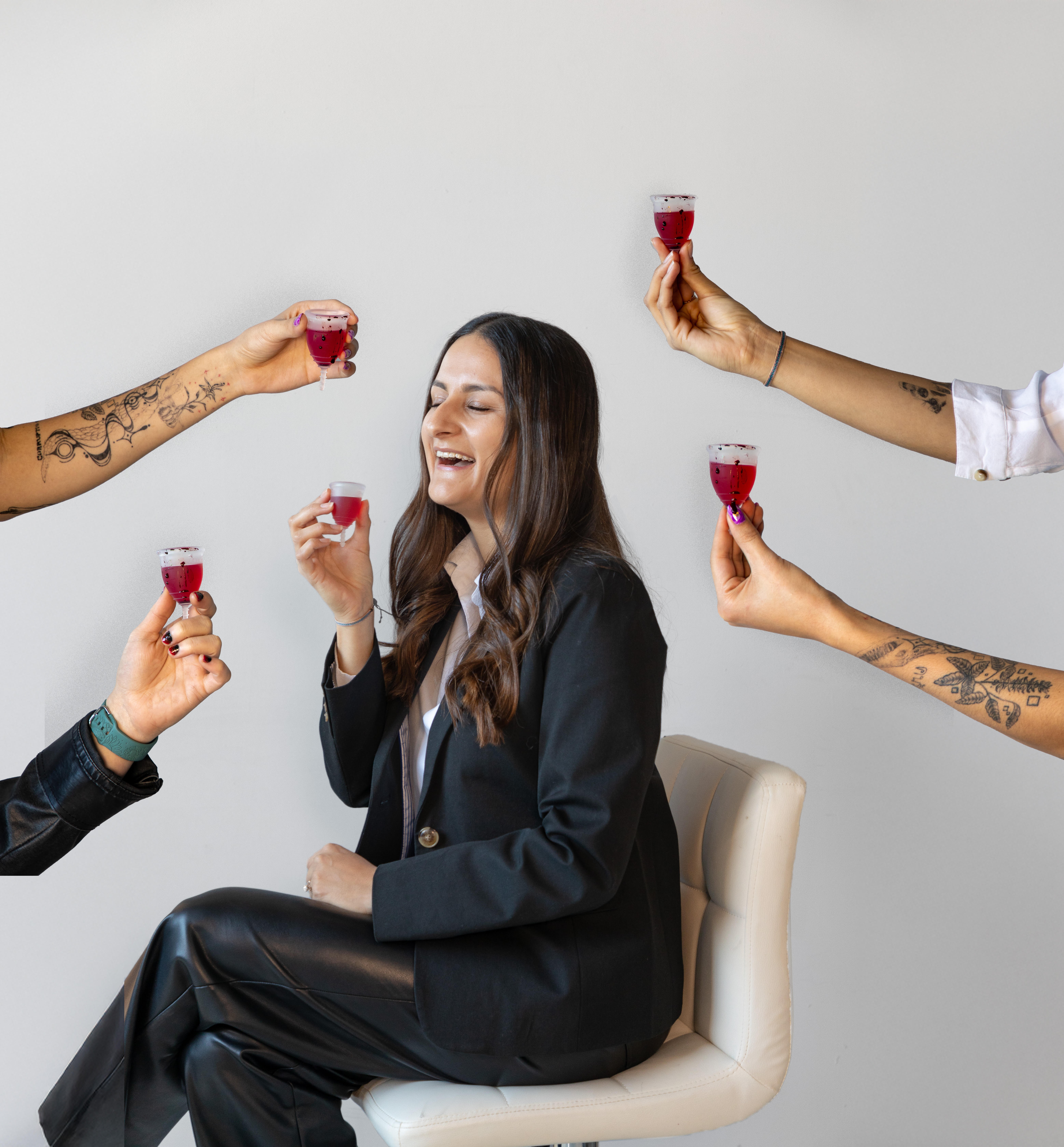
For one of my classes, I was challenged to explore a problem I genuinely cared about. I had been using a menstrual cup since 2019 and appreciated its environmental, financial, and personal health benefits. However, I kept returning to one overlooked question: How are you supposed to clean a menstrual cup in a public restroom?
For many users, the available options involve carrying a water bottle into the stall, using wipes or toilet paper, or leaving the stall while bleeding to reach a communal sink. The experience can be stressful, uncomfortable, and unhygienic; and it causes some people to stop using reusable menstrual products altogether.
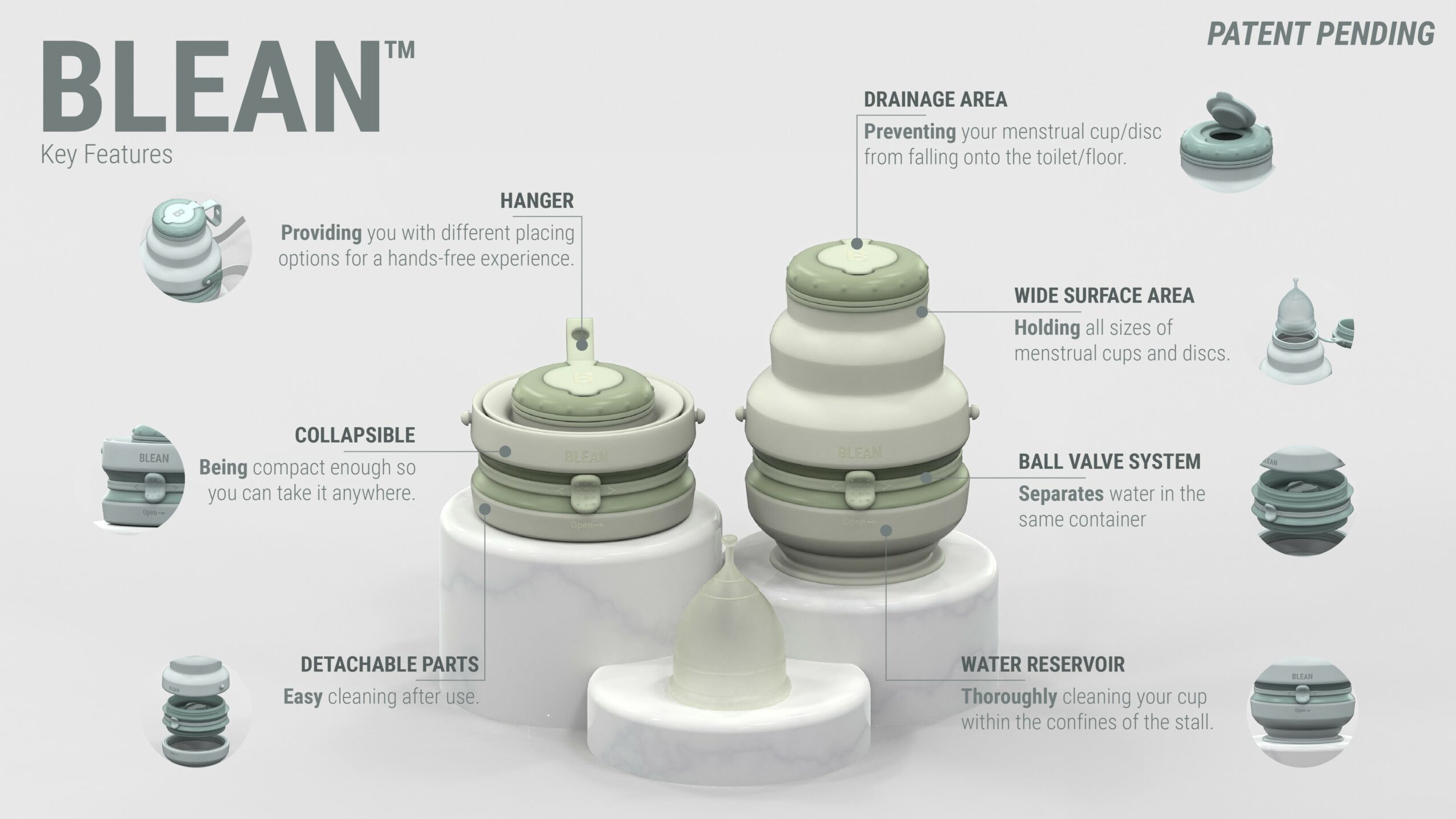
I began interviewing menstrual cup users and collecting survey responses to understand whether others shared this experience. The response confirmed that this was not just a personal inconvenience but a widespread barrier involving privacy, hygiene, safety, and dignity. Those insights led me to develop Blean: a compact, portable cleaning system that allows people to rinse menstrual cups and discs privately inside a restroom stall.
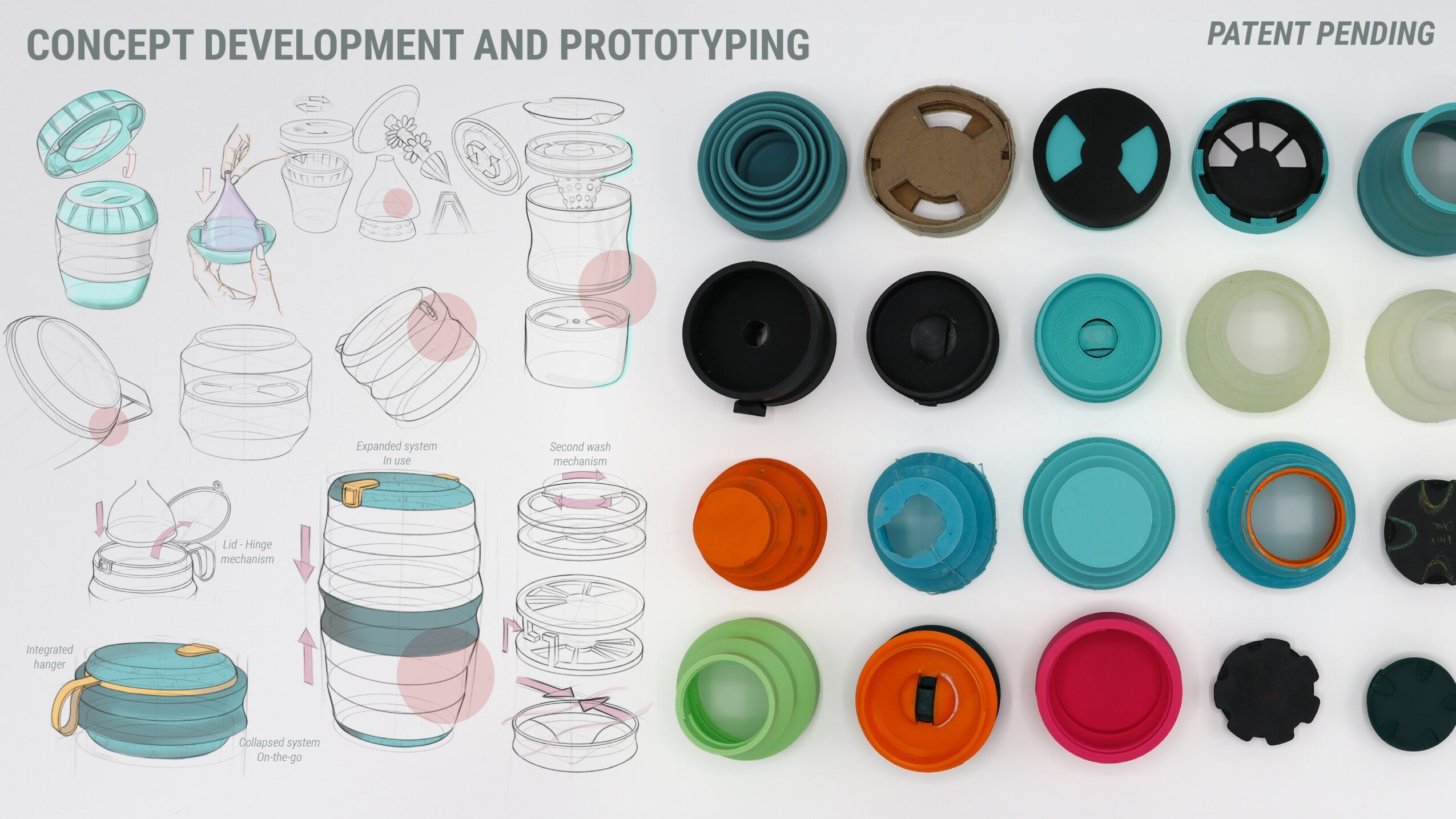
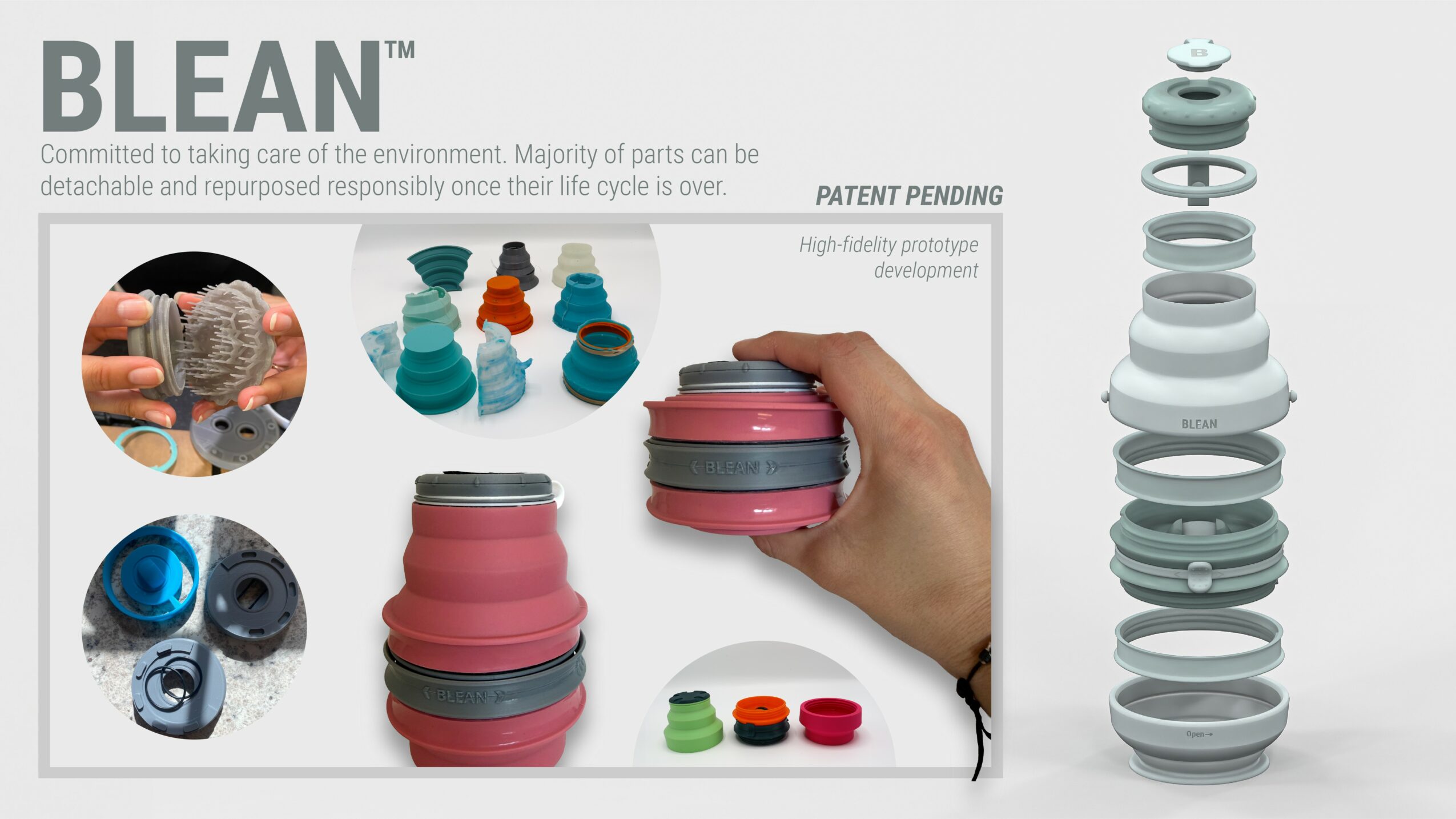
Since then, Blean has grown from a classroom concept into a patent-pending women’s health startup. We have conducted research with users across several countries, developed and tested multiple prototypes, and received $16,000 in non-dilutive funding through the NC State Miller Fellowship and NC IDEA MICRO. Along the way, programs such as the NC State Entrepreneurship Clinic and the support of mentors, engineers, women’s health advocates, and the Triangle entrepreneurial community have helped me turn an idea into a growing venture.
Today, I continue developing Blean while working as an industrial and medical device designer at UNC–Chapel Hill. Blean has also become more than a product. We are building a community that encourages open conversations about menstruation, provides menstrual health education, and helps make sustainable period care more practical and accessible.
My journey (from Bogotá to Raleigh, from working as a nanny to becoming a medical device designer and founder) has taught me that progress rarely happens in a straight line. Blean is still evolving, but every prototype, conversation, and challenge brings us closer to giving people greater freedom, confidence, and dignity in managing their periods wherever they are.
Alright, so let’s dig a little deeper into the story – has it been an easy path overall and if not, what were the challenges you’ve had to overcome?
One of Blean’s earliest challenges was navigating intellectual property protection. I had to learn about different types of patents, invention disclosures, legal processes, and funding options for patent-related expenses. Fortunately, I was connected with Neo IP, an intellectual property law firm that has supported us throughout the process. I am incredibly grateful for its guidance, patience, and understanding as Blean has continued to grow.
Product development has also been an ongoing learning experience. We have completed many iterations, and we still have work ahead of us. I have learned that bringing a physical product to market requires knowledge that extends far beyond industrial design. It involves manufacturing, materials, business strategy, human factors, intellectual property, and regulatory considerations, among many other areas.
Perhaps the biggest lesson has been persistence. Entrepreneurship can feel lonely and frustrating, especially when you are trying to build something you care deeply about while also needing financial stability. I am fortunate to have a full-time career that I love, but balancing both paths still requires patience and commitment.
I have learned to keep moving forward even when progress feels slow, funding is limited, or the early-adopter community is still small. You have to continue knocking on doors, building relationships, asking questions, and creating opportunities. You never know which conversation or connection may become a turning point.
Thanks for sharing that. So, maybe next you can tell us a bit more about your business?
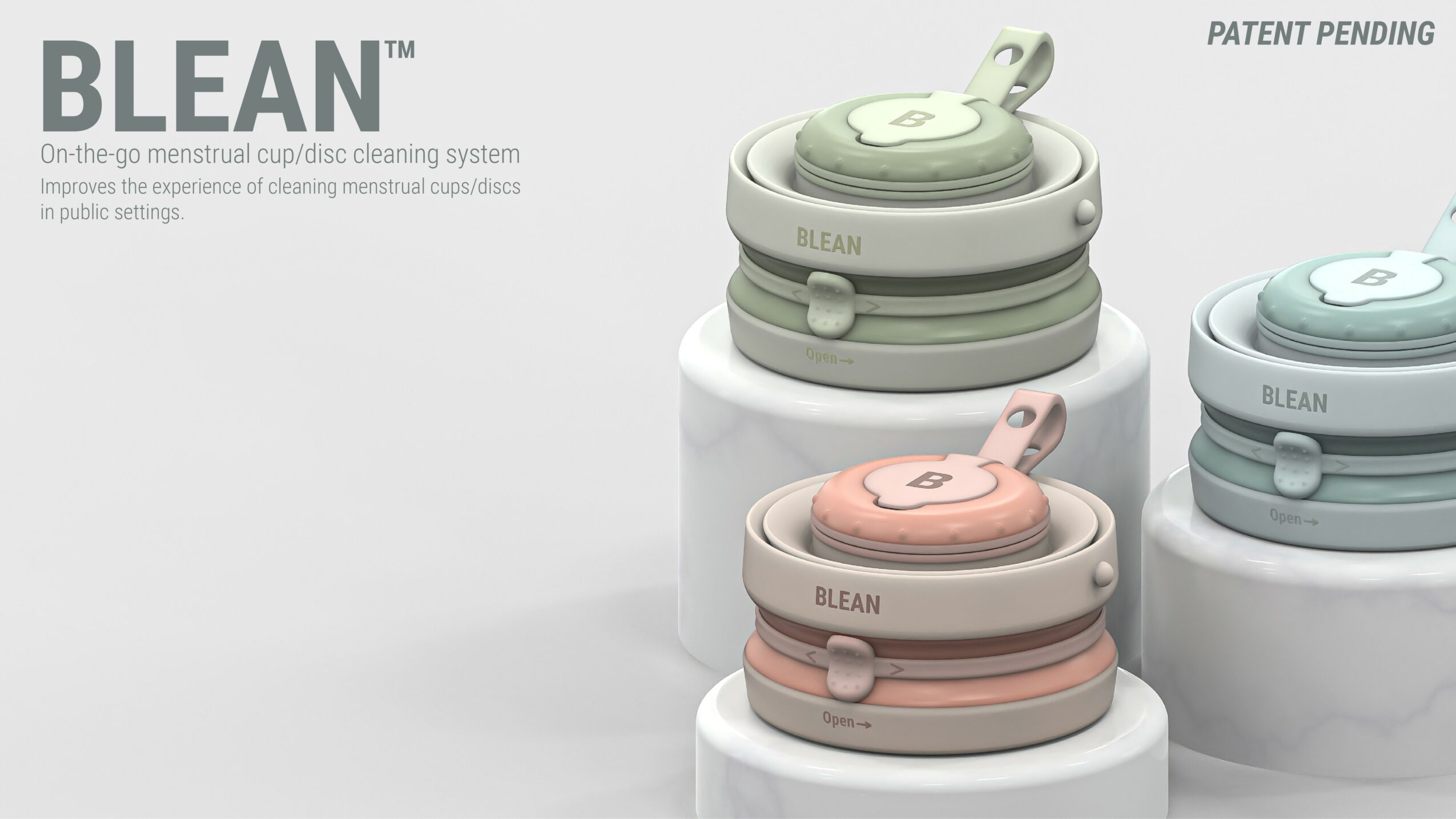
Blean is a women’s health startup developing a compact, portable cleaning system for menstrual cups and discs. Our device is designed to help people rinse their reusable menstrual products privately and hygienically inside a public restroom stall, without relying on water bottles, wipes, toilet paper, or having to leave the stall to reach a communal sink.
What sets Blean apart is our focus on an overlooked part of the menstrual cup experience. Many existing products support cleaning at home, but few address the challenges people face while working, traveling, attending school, or simply spending a long day away from home. Blean is being developed through a human-centered design process grounded in interviews, surveys, prototyping, and feedback from menstrual cup and disc users. As an industrial and medical device designer, I bring experience in product development, human factors, and usability to ensure the solution is not only innovative but also intuitive, practical, and responsive to people’s real needs.
Blean is also about more than a physical product. We are building a community that helps normalize conversations about menstruation and empowers people through menstrual health education. Through workshops, partnerships, and community engagement, we want to reduce stigma and help individuals better understand their bodies and the sustainable period-care options available to them.
I am most proud that Blean has stayed rooted in dignity. Every design decision begins with the belief that menstrual care should not be embarrassing, inconvenient, or treated as an afterthought. What began as a personal observation during my graduate studies at NC State has grown into a patent-pending venture supported by user research, multiple prototype iterations, and $16,000 in non-dilutive funding.
Blean is currently in the product-development stage as we continue refining the device, expanding testing, and preparing for manufacturing. Our long-term vision is to work with menstrual cup and disc companies, health organizations, and community partners to make reusable menstrual care more practical and accessible.
I want readers to know that Blean represents both innovation and advocacy. We are designing a solution for a real, everyday challenge while helping create a future in which people can manage their periods confidently, sustainably, and with dignity, wherever they are.
If you had to, what characteristic of yours would you give the most credit to?
Persistence has been the most important quality behind my success. Building a physical product in the women’s health space requires patience, adaptability, and the willingness to keep moving forward even when progress feels slow.
Blean has gone through many prototypes, challenges, and moments of uncertainty. Each one has taught me to listen, learn, and try again. As an immigrant, designer, and first-time founder, I have also had to navigate unfamiliar systems and develop skills beyond design, from intellectual property and manufacturing to fundraising and business strategy.
I have learned that success is not about having every answer from the beginning. It is about remaining connected to your purpose, asking for help, and continuing to knock on doors. My commitment to improving menstrual care and creating a product grounded in dignity keeps me moving forward, even when the path is difficult.
Contact Info:
- Website: https://www.bleanhealth.com/
- Instagram: https://www.instagram.com/blean.health/
- LinkedIn: https://www.linkedin.com/company/bleanhealth/
- Youtube: https://www.youtube.com/@BleanHealth
- Other: https://www.tiktok.com/@bleanhealth