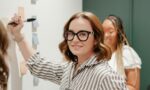





Today we’d like to introduce you to Jane Steelman.
Thank you for sharing your story and insight with our readers. To kick things off, can you tell us how you got started?
I have drawn and painted since I was in junior high school. I began taking art classes in junior high and high school and was recommended for a special art summer camp in my hometown of Winston-Salem, NC. I was fortunate that at that time, The Winston-Salem Forsyth County Schools had an excellent art program for students with annual student art exhibitions in Old Salem among the oaks.
In high school, I was the art club president and continued to be involved in art activities such as exhibitions, decoration committees for the proms, etc. Even though art was my passion, I was advised that a career in this field would not be advisable. In the 1960s and 70s in the south, many women had three career options: teacher, nurse, or secretary. I had not been a successful typist and was not drawn to the medical profession, so I was guided toward becoming a teacher. I attended Appalachian State University, which was considered to be an excellent teacher college. I worked on a double major; early childhood education and art. The art was for my benefit and enjoyment. My focus at ASU was pottery and drawing. After graduation, I got married, moved to Raleigh, and went to work as a teacher. I continued to draw and won second place in the state Junior Women’s club competition in the early 70s.
I bought a kiln and potter’s wheel, built a shop, and planned to become a potter. At about the same time, I became interested in computers and programming. So my life took a different direction for a while. I worked in technology and education until retirement. I had a beautiful daughter and focused on family rather than artistic endeavors. When my daughter was 16, I decided to revisit my desire to draw and took a class in charcoal powder painting. After that, I took a class in stained glass art and began creating stained glass panels. That was a new beginning. Since then, I became immersed in art, started a business, i.e., Steelman Studios, and focused on art full time in 2018.
I have experimented with every medium I can think of and am presently focused on pastels and oils. From 2018 until 2021, I was president of the Pastel Society of NC and am currently a board member as well as a member of the Piedmont Pastel Society, the Appalachian Pastel Society, the Franklin County Art Council, and the Wake Forest Guild of Artists. Every day I am not with my grandchildren, I paint, frame, prepare for exhibits, etc. I also teach private lessons in my studio and group classes through the Wake Forest Renaissance Center and will soon teach at Art at 123 Gallery/Gifts in Wilson and Bel Air Art Center in Rocky Mount.
Can you talk to us about the challenges and lessons you’ve learned along the way? Would you say it’s been easy or smooth in retrospect?
If it were an easy road, then there could not be the sense of accomplishment one feels when others appreciate their art. It has not been a smooth road, as I suspect it never is with artists. Life got in the way of my passion for art, but I believe that anything we do in life adds to what we create. I believe that everything I have done up to this point has impacted the art I now create.
Struggles have been finding the time to devote to art practice. Malcolm Gladwell, the author of “Outliers,” wrote that it takes 10,000 hours to become an expert in anything. He said 10,000 hours of “deliberate practice” are needed to become world-class in any field. One must devote time to practice if one’s goal is to become the best s/he can be at painting. Time is one of the things people lament about not having enough of, but it is important to becoming successful.
The business of art is very time-consuming. While other artists and I wish to focus on creating artwork, the necessary business activities often take time away from that focus. Some of the necessary drains on time are marketing, taking photos of all paintings, organizing and maintaining a database inventory of paintings, preparing for exhibits, entering juried shows, framing, transportation to and from exhibits, creation, and maintenance of websites, social media and the list continues.
I also think that experimentation is a blessing and a hindrance. I love to experiment and use different media. It has been fun but has taken me down several “rabbit holes” where I spend time on new projects that eventually go nowhere. In a recent workshop I took, Albert Handell said artists should experiment to find what they want to paint and the media they want to use and then STOP experimenting. Then paint and paint and paint or practice, practice, practice the thing you want to paint. This is sage advice and some that I have taken to heart. So now I am focusing on painting portraits in pastel and working in oil or acrylics on large canvases/panels.
Can you tell our readers more about what you do and what you think sets you apart from others?
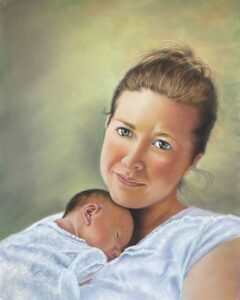
I believe I am presently most known for my pastel paintings, even though I also work in other media. I have experimented with various media and genres but believe my best work has been done in realistic portraits in pastel. Not only do I enjoy painting portraits of children but also those of beloved pets. Pastels lend themselves to the softness of these types of portraits. It gives me great pleasure when I present a client with a completed portrait that brings tears to their eyes and an exclamation of how I captured their spirit. I am usually most proud of the last painting I have done. I hope that is always the case since it means I am improving my craft. What sets me apart from others is an interesting question. I remember in art school that each student strove to be different, unique, and even shocking. This sets them apart from others and gains attention for their work. I think that what may set me apart is that while I would hope to have a unique style of painting, I do not wish to create for sales or go down a path of creation only to win awards. I wish to paint for myself; paint what I love, and the rest will follow.
How do you define success?
I define success as finding what you love to do and working toward becoming better at it. You should be your own benchmark and not continually compare your skills with those of others. Success is improving upon each subsequent creation, i.e., painting. Success is contributing to the world’s beauty through my art, donating to worthy causes, and finding peace each day through creative endeavors.
Pricing:
- It takes more work than non-artists realize to create a work of art
- Each work of art has a piece of the artist in it
- If I don’t like it I don’t expect anyone else to like it
- I price artwork consistently even if some speak to me more than others
- There is much more than creating art that has to be done behind the scenes; inventory, labels, framing, creating images of the art, websites, social media, marketing, and the list goes on
Contact Info:
- Email: jds@steelmanstudios.com
- Website: https://www.steelmanstudios.com/
- Instagram: https://www.instagram.com/steelman_studios/
- Facebook: https://www.facebook.com/janesteelmanart/
- Twitter: https://twitter.com/JdSteelman


Image Credits
For the portrait of “Caroline”: Megan Averette/Averette Photography