





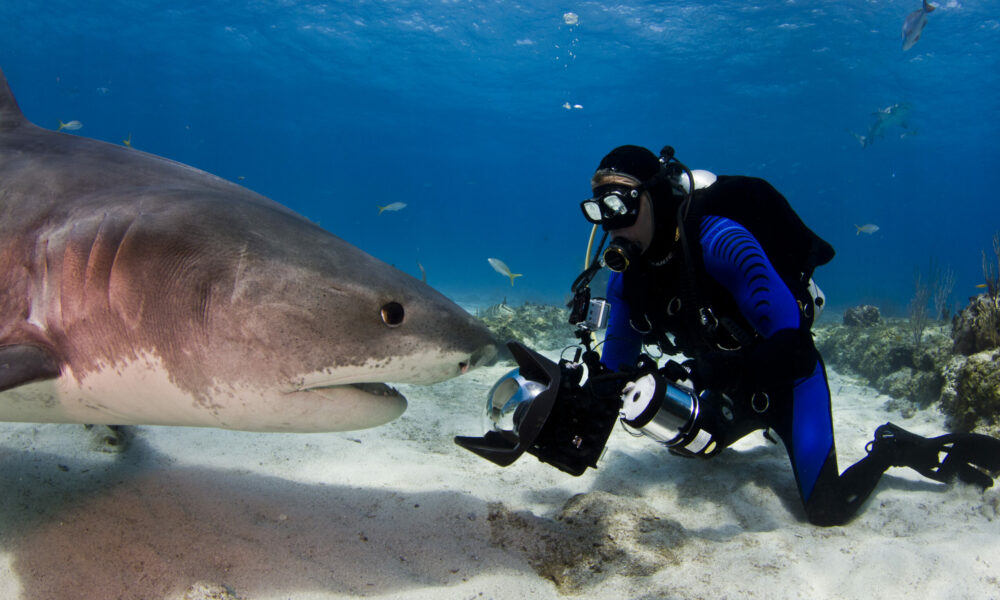
Today we’d like to introduce you to Zach Ransom.
Hi Zach, please kick things off for us with an introduction to yourself and your story.
My journey into the world of underwater photography and marine biology is a tale of passion, curiosity, and a deep connection to the ocean. As a child growing up in the Midwest, my connection to the ocean was lived vicariously through films, specifically Jaws, as well as countless trips to my local aquarium.
As I entered my teenage years, I became an avid scuba diver. The first time I descended beneath the waves, I felt like I had entered an entirely different universe. The vibrant colors, diverse marine life, and the sense of weightlessness became addicting. I knew then that I wanted to dedicate my life to understanding and preserving this incredible ecosystem.
I pursued a degree in Biology and Psychology at Purdue University, which provided me with a solid scientific foundation. During my studies, I had the opportunity to conduct research on coral reefs, study marine biodiversity, and even work on conservation projects. It was an eye-opening experience that deepened my appreciation for the delicate balance of life beneath the surface.
Simultaneously, I began experimenting with underwater photography. Armed with a waterproof camera and a passion for capturing the beauty of the ocean, I started documenting my dives. It was challenging at first, but I was determined to improve. Over the years, I honed my skills learned about underwater lighting, composition, and the behavior of marine creatures. My photography became a powerful tool to communicate the wonders of the ocean to a broader audience.
As I continued my studies and photography, I had the privilege of working alongside leading marine biologists and photographers in the field. These mentors provided invaluable guidance, inspiring me to push the boundaries of both my scientific knowledge and my photographic artistry.
Today, I find myself at the intersection of science and art, where my dual passions for marine biology and underwater photography have converged. I travel the world, exploring diverse marine ecosystems, conducting research, and capturing breathtaking images that tell the stories of our oceans. My work not only inspires a deeper connection to the underwater world but also raises awareness about the critical need for marine conservation.
We all face challenges, but looking back, would you describe it as a relatively smooth road?
My journey has been incredibly rewarding, but it hasn’t always been a smooth road. Like any career, there have been challenges along the way that have tested my dedication and perseverance.
One of the most significant struggles I encountered was the initial financial hurdle of acquiring the necessary equipment for underwater photography. High-quality cameras, lenses, housings, and strobes are quite expensive, and as a budding photographer, I had to save up for years to invest in the gear I needed.
Another challenge I faced was the physical demands of the work. Spending long hours underwater, often in challenging conditions, can be physically exhausting. It requires a high level of fitness and stamina to handle the cold, currents, and heavy equipment while still capturing the perfect shot or conducting research.
Additionally, building a reputation in this field and gaining recognition for my work was not, and is still not easy. The competition is fierce, and it took time to establish myself as a credible professional. Networking, attending conferences, and collaborating with experienced colleagues were crucial steps in overcoming this hurdle. There are so many incredible underwater photographers out there today who push me to continuously improve my skills and creativity just to keep up.
Moreover, the unpredictable nature of the marine environment itself posed challenges. Weather conditions, water visibility, and the behavior of marine creatures can all impact the success of a photography or research expedition. It required adaptability and the ability to work under sometimes less-than-ideal circumstances.
Occasionally, balancing my roles as both an underwater photographer and a marine biologist also posed its own set of challenges. It required me to constantly juggle between artistic creativity and scientific rigor. Finding the right balance between capturing stunning visuals and conducting meaningful research was a constant struggle.
Thanks – so, what else should our readers know about your work and what you’re currently focused on?
I’m an underwater photographer and biologist with a passion for capturing the beauty and mystique of sharks. My specialty lies in documenting these magnificent creatures in their natural habitat, showcasing their grace, power, and importance in marine ecosystems. Sharks often face unfair stigmatization, and their populations are threatened by overfishing and habitat destruction. By sharing my images and stories, I hope to foster a greater understanding of these animals and the vital role they play in maintaining the health of our oceans.
One of my proudest achievements in my career as an underwater photographer is being recognized for my conservation efforts. I’ve been fortunate to work with various marine conservation organizations, documenting their initiatives and raising awareness about the critical importance of preserving our oceans. This work allows me to combine my love for photography with a sense of purpose and environmental advocacy.
What sets me apart from others in my field is my deep connection with the underwater world. I’ve spent countless hours studying marine life behavior and ecosystems, which enables me to anticipate and capture unique moments that others might miss. I’m also dedicated to minimizing my environmental impact during my shoots, using eco-friendly equipment and practices to ensure I leave no trace behind.
Networking and finding a mentor can have such a positive impact on one’s life and career. Any advice?
Dive shops and underwater photography clubs can be excellent places to meet mentors or fellow photographers. Attend meetings, join dive trips, and get involved in the local underwater photography scene. It is also crucial to continuously work on improving your photography skills and building a strong portfolio. When seeking a mentor, having a solid body of work demonstrates your commitment and potential, making you more appealing to experienced photographers. Finally, don’t be afraid to reach out to photographers whose work you admire. Send them a polite and concise message expressing your admiration for their work and your desire to learn. Be respectful of their time and commitment, but many photographers are willing to offer guidance to enthusiastic newcomers. For me, those people were giants like Stephen Frink and Brian Skerry, among the best photographers in the business, but still are never too busy to give me advice or encouragement.
Pricing:
- HD Aluminum Fine Art Prints as low as $69.99
Contact Info:
- Website: www.zransom.com
- Instagram: @zransom
- Facebook: https://www.facebook.com/zachransomphotography
- Linkedin: https://www.linkedin.com/in/zach-ransom-2115545b


Image Credits
Zach Ransom