

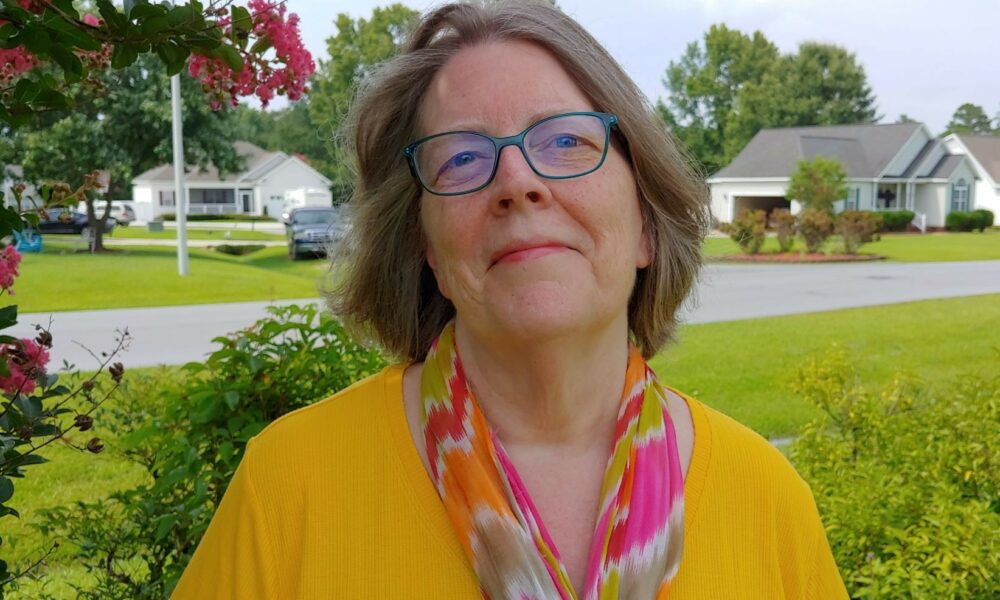
Today we’d like to introduce you to Cindy Brookshire.
Hi Cindy, so excited to have you on the platform. So, before we get into questions about your work life, maybe you can bring our readers up to speed on your story and how you got to where you are today.
I am a writer working in a small town 33 miles southeast of Raleigh called Selma, North Carolina.
I like to say I am “weaving community in the age of disruption” because I am using storytelling to help revitalize Selma and draw regional visitors to Triangle East. I do that by gathering people together once a week for face-to-face dialogues called Activate Selma. The participants are business owners, nonprofit leaders, volunteers, and residents. Our focus is, “We don’t complain; we take action.” Each person has a few minutes to share what they are currently working on to make themselves better and, in the process, make Selma better. We also do grassroots projects, like organizing street concerts, painting murals, or putting out luminaries for the holidays. We move our meetings to a different location each week to get people out of their silos of thinking. One week, we were at the new My Kid’s Club SECU facility, which took seven years to build after their old place was devastated by Hurricane Matthew. Another week, we met at Wilma Pridgen’s Pixie Dust Lunch Box & Bakery Shoppe, which serves weekday specials like meatloaf and hearty soups to Selma first responders and other loyal customers. We connect, and we share information about local resources like the JCC Small Business Center offers no-cost business counseling. But most of all, we leave encouraged to keep moving past the naysayers and the obstacles inside our own heads.
As a volunteer writer, I produce Activate Selma’s weekly e-news, which has a 70 percent open rate, with even more engagement when I share it on social media. I facilitate weekly sessions of “Telling Our Stories” at the Harrison Center for Active Aging, which I hope to grow into a resident writer program, and I publicize monthly Selma Open Mics at Old Fashioned Ice Cream downtown. I am an advisor to Triangle East Writers and a regional representative for the North Carolina Writers Network. I have published two books, “A Heart for Selma: 12 Stories of Activate Selma” and “Little Towns.” Last year, I helped produce a commemorative arts council book, “Johnston County Creates: 50 Years of Creativity,” with author Evelyn Wool. My short stories and poems have appeared in various publications.
Can you talk to us a bit about the challenges and lessons you’ve learned along the way? Looking back, would you say it’s been easy or smooth in retrospect?
When I first moved to North Carolina nine years ago, downtown Selma had many vacant, unmaintained buildings. Even the visitor’s center was always closed. So, I volunteered and on my first day, came to understand why. Most of the people on the volunteer list had died. Brochures and posters were sun-faded and out of date. The bathrooms and hall floors were filthy. The furnishings included an old TV and a desk with a broken leg.
I cleaned, mopped, and vacuumed. I asked the Selma town staff to remove the furniture and secured a donation of red rocking chairs from Pine Level Hardware & Furniture. Staff from the Johnston County Visitors Bureau brought me fresh brochures and posters, and I stocked small bottles of water to give out. I waited, but hardly anyone came in except for locals who wanted to sit and complain, people returning for high school reunions who were angry about how Selma had gone downhill, or tourists looking for a place to eat when the last two restaurants, Short’s Grill and Hula Girl Cafe, had permanently closed.
I obtained an arts grant to offer storytelling at the museum, to build a musical bench with youth, to open an art popup at the visitor’s center, and host a writers’ workshop at the Selma Lions Club. The projects, once over, didn’t spur the new action I hoped for. But one thing did result: Jeffery Hamilton with The Rudy Theatre would stop in with Rudy brochures and say, “We’ve got to stop complaining. We’ve got to do something!” We started meeting every Wednesday at 9 am with Melissa Dooley, who was then the event coordinator with the Town of Selma, who said, “You’ve got to get out of this visitor center and start meeting the store owners!”
Donna Reid, who at that time owned Reid’s Country Sampler, joined us and took action by creating a selfie wall inside her shop to engage visitors to take a photo. I brainstormed writing a book about Selma. With Melissa’s encouragement, I went and talked to Sergio Benitez at Sola Creations Boutique, the local Quinceanera shop. Before I knew it, I was applying for another arts grant and received it to write 12 stories about Selma.
The Covid 19 pandemic was a time when people either hibernated or accelerated. The people who accelerated were the ones who activated Selma: Jeffery Hamilton and his sister, Zena Hamilton-Rose, started Coffee on Raiford. Michael Sneed of Appliance Boot Camp opened Old Fashioned Ice Cream. The Jentes family – Dr. Kayla Jentes-Sagester and Dr. Mindi Miller-Jentes, her mother, started Brio Wellness Center. Ron Hester of Barbetta LLC and his wife Heidi Hester, a CPA, planned art murals, along with Coldwell Banker Advantage real estate agent Allyson Caison, and Ron has since created Art Out Loud Park from a vacant lot. Kristina Whitten turned 6,000 square feet of vacant buildings into The Southern Bostonian, a home décor emporium with 20 local vendors and a do-it-yourself studio for chalk painting and laser wood designs. Barbara and Steve Eason came out of retirement to open the Downtown Selma General Store, saving the iconic Creech Drug neon sign that graces its exterior. Chandler Pernell moved his Call Pernell Heating & Air Conditioning headquarters to an abandoned building by the railroad tracks and began renovating it. Another family business, Selma Jewelry, refreshed its three-generation exterior, and the owner, Kim Wooten, became president of Activate Selma. She has made the adjacent Town Hall into Selma’s Front Porch and works with others to beautify the downtown area and make visitors feel like they are walking in a Hallmark movie. I’m not saying Activate Selma did everything that has revived Selma, but we have done many grassroots actions that have helped build community and encourage each other to raise up the town that we love. Since then, Sergio Benitez has founded the nonprofit Latinos Activate JOCO, and several other grassroots groups have sprung up nearby, coordinating in tandem with our efforts in Smithfield (Celebrate Smithfield) and Princeton (Princeton Community Action NC).
Alright, so let’s switch gears a bit and talk business. What should we know about your work?
I write accounts of real people. One of my favorites is about Jacqueline Lacy, the first and only Black woman to serve on Selma’s town council. She graduated from college and built a career as an educator despite racial incidents, like in 1969 when she was working at the Harrison School. She says: “I went with another teacher to a PTA meeting at a private home in a white neighborhood. Before we could reach the woman’s house, someone had called the police about us Blacks driving on Dixie Drive. The railroad tracks out there? That was the dividing point. We could go uptown to buy things. But we better make sure we’re back on this side before the sun goes down.” At the time of her retirement, Ms. Lacy was mayor pro tem. One of her satisfying moments was seeing Byron McAllister move to Selma with his family and witnessing his fast-track rise from commission member to council member to Selma’s first elected Black mayor.
Another of my favorite stories is “Eula B. Ivey Runs Her Mouth,” about one of the first women auctioneers in the state of North Carolina and the many people she encountered, including Carlie C. McLamb, Sr., Carbine Williams, Hoover Adams, and, when she did catering on the side, the Raleigh matron who ate 13 ham biscuits. “It was a very prominent lady. I won’t mention her name,” said Ivey. “It was her nephew’s wedding. But honey, she piled her plate up. I always made sure there was plenty left after everybody’s been served.”
In terms of your work and the industry, what are some of the changes you are expecting to see over the next five to ten years?
There are several resources I use for storytelling and community building. One is Charles Marohn’s Strong Towns (www.strongtowns.org). In his book, “Strong Towns: A Bottom-Up Revolution to Rebuild American Prosperity,” Marohn talks about a four-step process before investing in any kind of solution to a town’s challenges:
1. Humbly observe where people in the community struggle.
2. Ask the question: What is the next smallest thing we can do right now to address that struggle?
3. Do that thing. Do it now.
4. Repeat.
That’s what Activate Selma is doing. It takes patience, but incremental changes are the longest-lasting ones. Selma even competed for “Strongest Town” in 2023 and made it to the “Elite Eight.”
We follow Roger Brooks’ advice through the Destination Development Association (www.destinationdevelopment.org). Brooks says a big event like a festival takes months to plan and lasts just a day or two. “What if you spent the same time and money creating more than 200 days of activity in your downtown, providing a far better return on investment for downtown retailers, restaurants, and other local businesses?” We create small activities like Rockin’ on Raiford street concerts or Sunday afternoon trivia competitions at Coffee on Raiford.
We also follow advice from the North Carolina Main Street & Rural Planning Center. The Main Street approach is that any transformation needs to be organized around four points: economic vitality, design, promotion, and organization. The next NC Main Street Conference will be held March 12-14 in Goldsboro, North Carolina, and we hope to send someone from Activate Selma to attend.
Pricing:
- Activate Selma is now a non-profit. The cost to go through that process can be over 700 dollars.
- We started out raising money by raffling baskets of goods or doing 50-50 raffles at our street concerts.
- Now that we are a nonprofit, we plan to apply for grants in 2024-25.
- Grants for artists through the North Carolina Arts Council (www.ncarts.org/grants-resources/grants/grants-artists) and the United Arts Council (https://unitedarts.org/grants/artist-support-grants/) are listed on their websites.
Contact Info:
- Website: www.activateselmanc.com
- Instagram: https://www.instagram.com/activateselma/
- Facebook: https://www.facebook.com/ActivateSelmaNC
- Youtube: https://www.youtube.com/watch?v=A0LmnA-jcjs
- Other: https://business.triangleeastchamber.com/list/member/activate-selma-13552
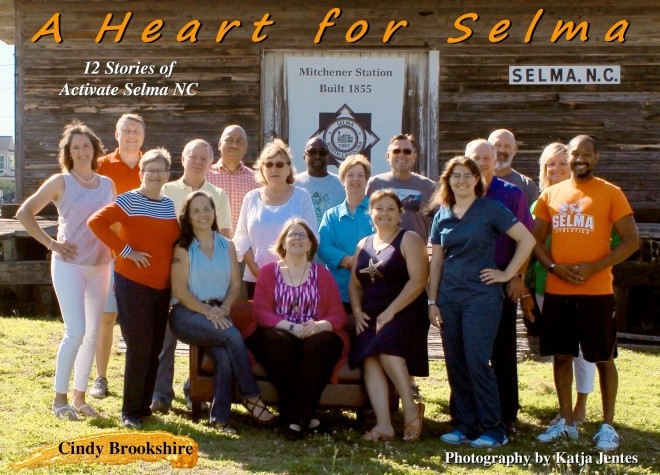
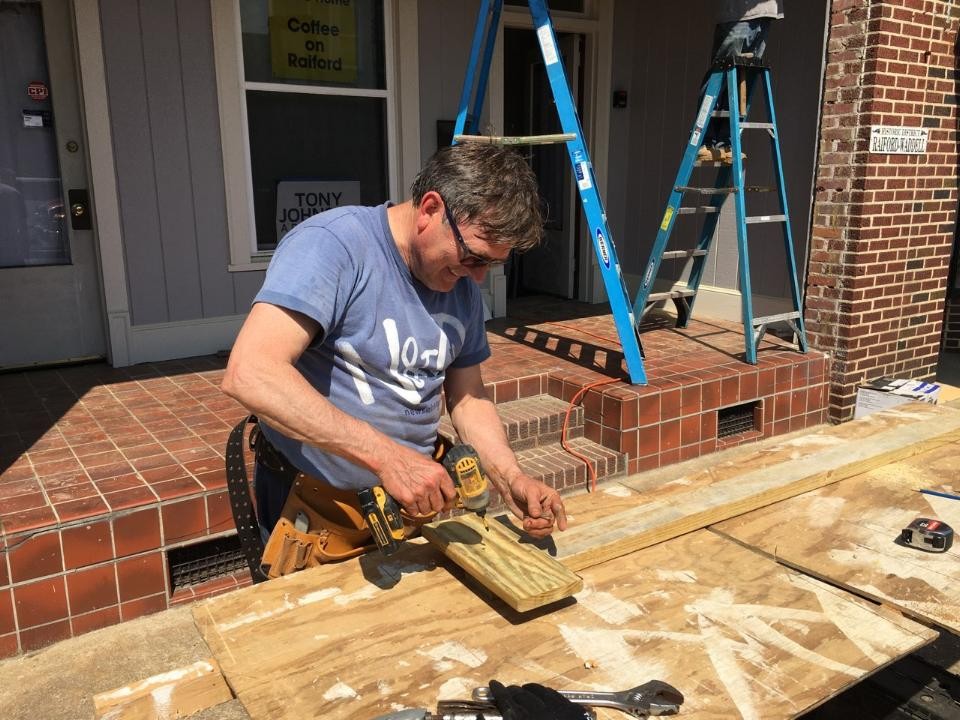
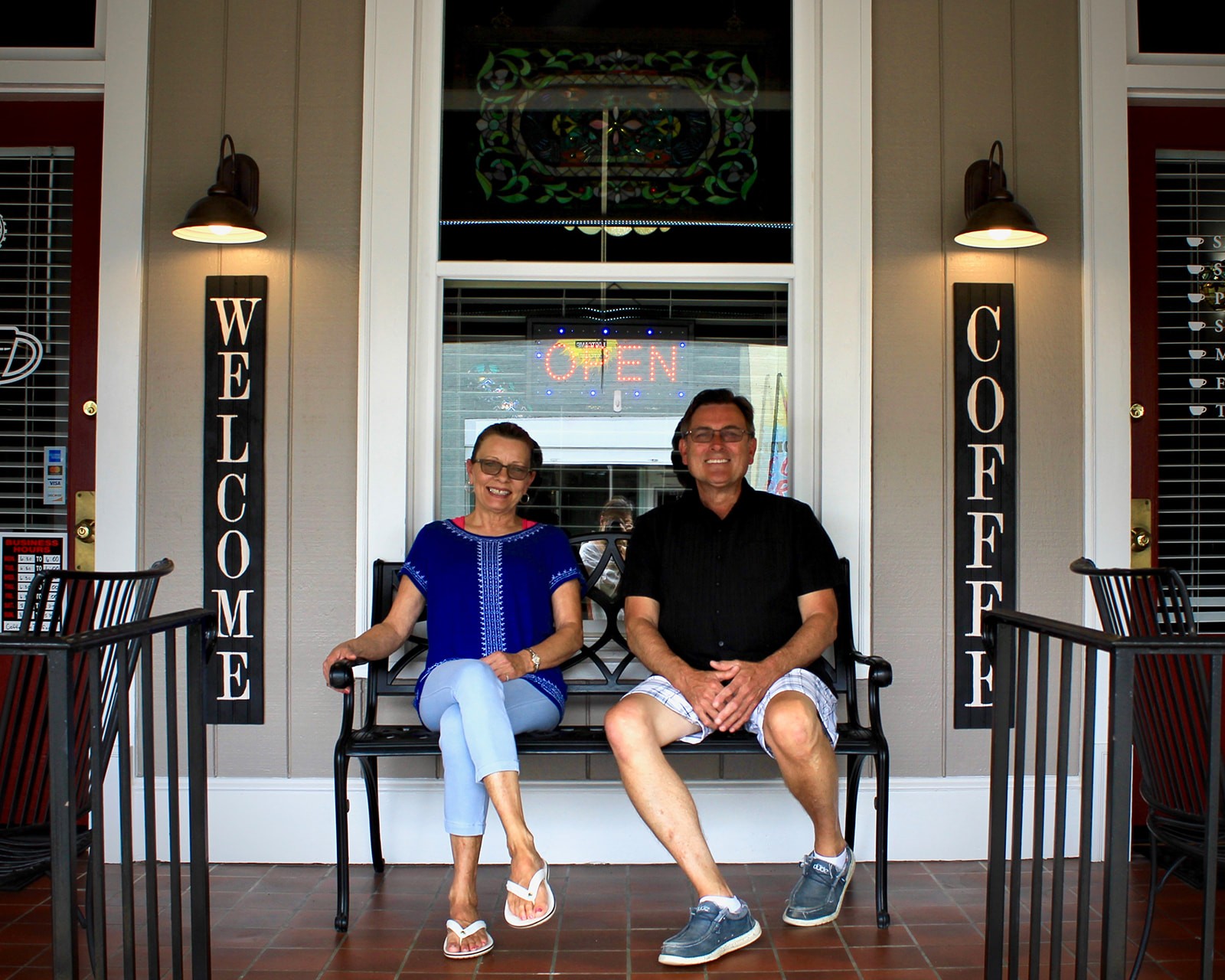

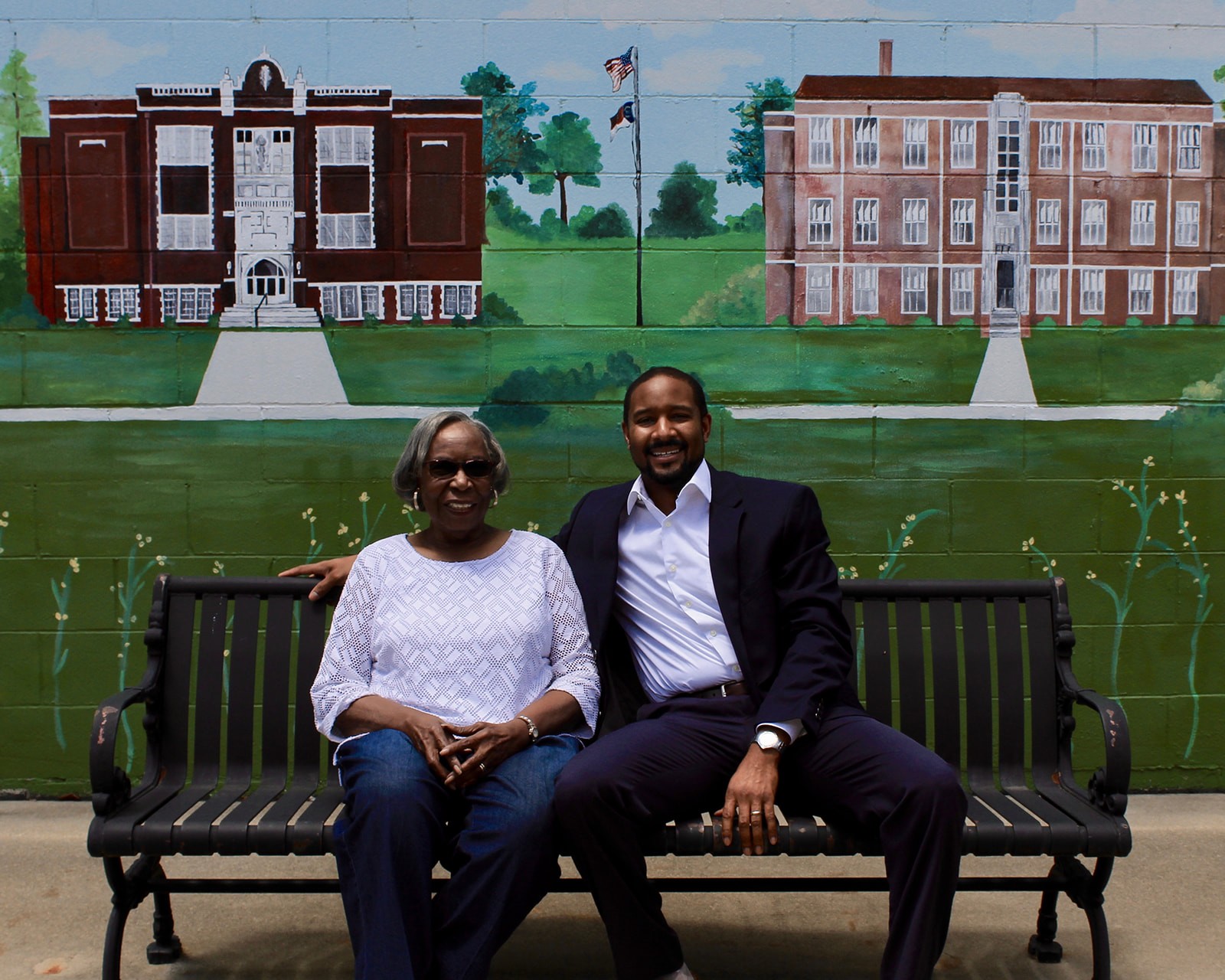
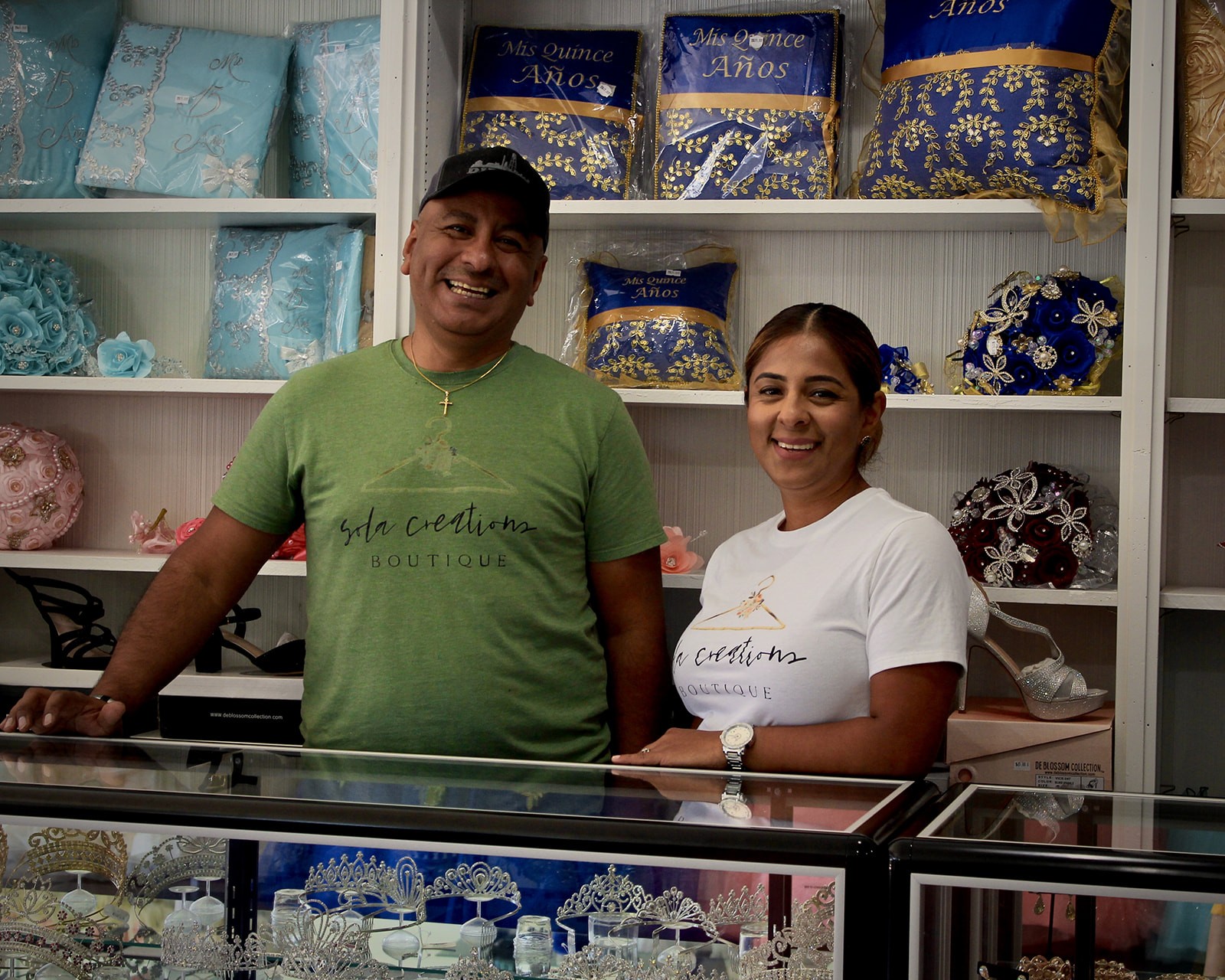
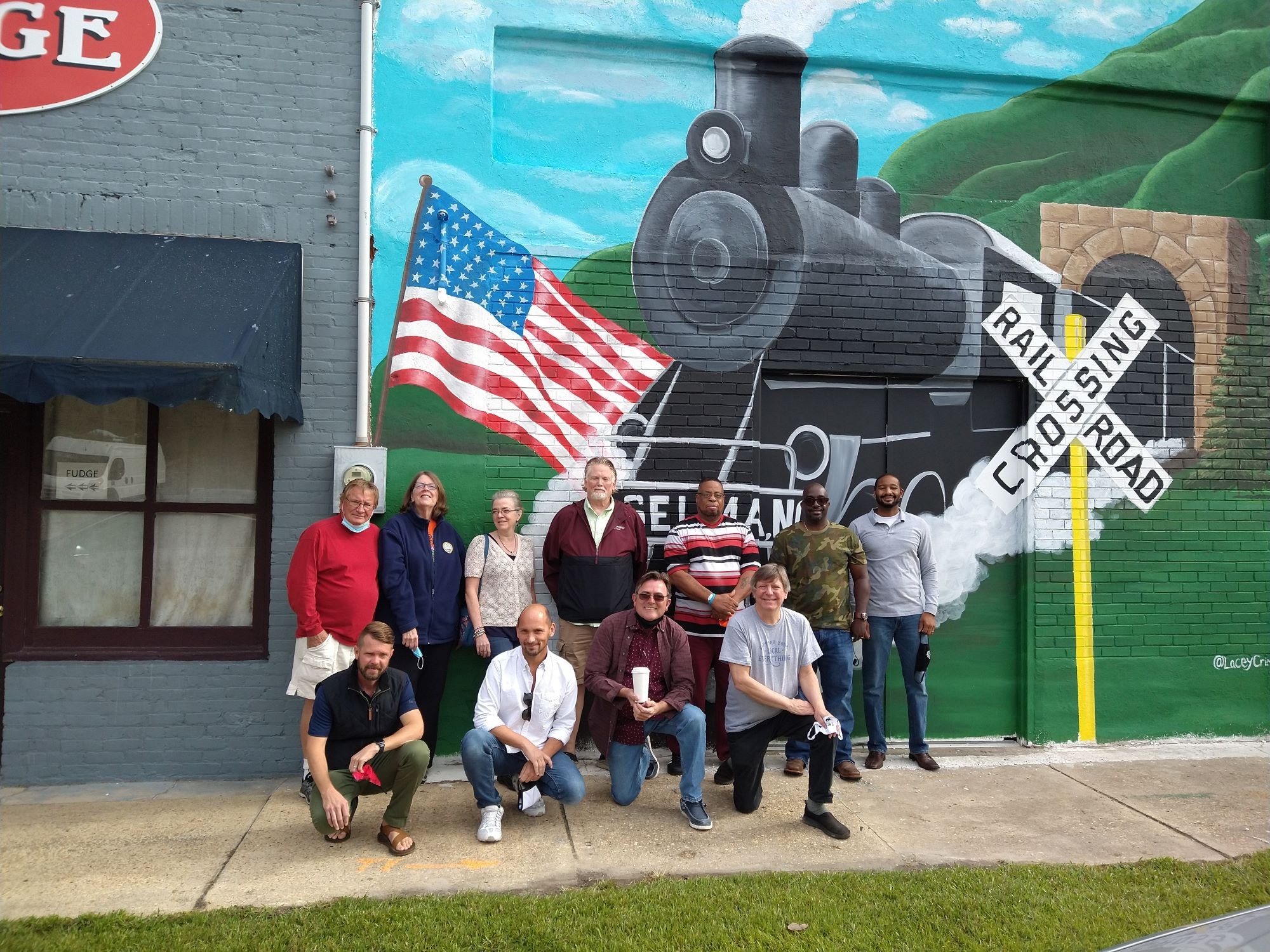

Image Credits
Jeffery Hamilton
Zena Hamilton-Rose
Jacqueline Lacy
Byron McAllister
Sergio and Oralia Benitez
Katja Jentes
Proverbs Photography