





Today we’d like to introduce you to Maximilian Shafir.
Hi Maximilian , so excited to have you on the platform. So before we get into questions about your work-life, maybe you can bring our readers up to speed on your story and how you got to where you are today?
I started my career while I was still in school, volunteering in Chapel Hill with adults living with severe and persistent mental illness. Once a week, I would take clients out into the community — for coffee, for walks, for connection. Those conversations changed me. They gave me a real understanding of dignity, isolation, resilience, and what happens when systems don’t fully support people.
From there, I began working in group homes with individuals who had dual diagnoses — intellectual and developmental disabilities and schizophrenia. Those were some of my favorite clients. We built real relationships. After I graduated, I became a group home manager, working three days on and four days off, then switching. The clients and I became a small family. That experience solidified my love for mental health work and showed me how stability, consistency, and compassion can change lives.
My next step was joining a pilot program called NC START — a state-funded initiative focused on high “frequent flyer” users of hospital emergency departments and law enforcement services. We worked with adults who had co-occurring IDD and mental health diagnoses and were cycling repeatedly through ERs and crisis systems. The goal was to reduce hospitalizations and police involvement by building better coordinated, preventative care systems.
What began as a pilot has since been funded by the General Assembly and expanded nationally. After 2009, we began to see real, measurable success. It was my first experience seeing how system-level intervention could change outcomes on a broad scale.
After that, I transitioned into Intensive In-Home Services, working with at-risk youth and families — many of whom were coming out of psychiatric hospitalizations for suicidality, therapeutic foster care placements, or residential treatment facilities. We worked with families who felt like they had given up, and kids who had lost parts of themselves through trauma. We rebuilt attachment, structure, and hope. We brought families back together.
I did this while finishing my master’s degree and raising two small children with my wife — which made the work even more meaningful.
From there, I continued to grow into leadership roles — team lead, supervisor, and eventually Director of Enhanced Children’s Mental Health Services at Easterseals PORT Health. I wrote grants and secured $250,000 in funding for juvenile crime prevention programming. I helped expand co-located mental health services into school systems across Wake and Johnston counties. My work began shifting from direct service to systems-building, policy collaboration, and macro-level change.
When COVID hit, I made the decision to forge my own path. I stepped into private practice, consulting, and training.
Today, I consult with DHHS and the UNC Chapel Hill School of Social Work. I provide trainings for universities and community providers such as The Wright School and Avance Primary Care. I lead a therapy practice serving over 150 clients with a team of 10 clinicians.
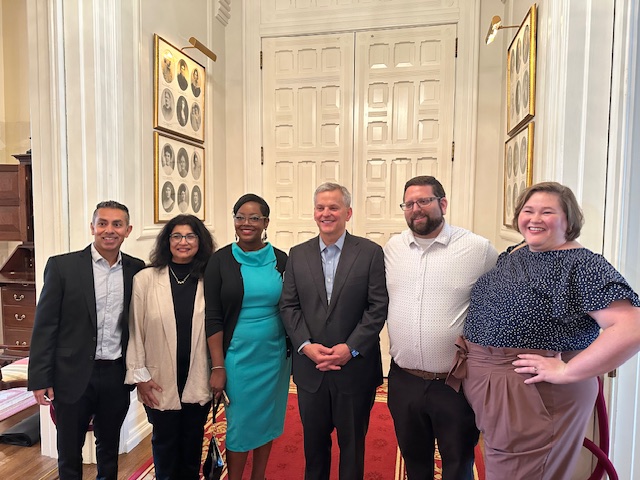
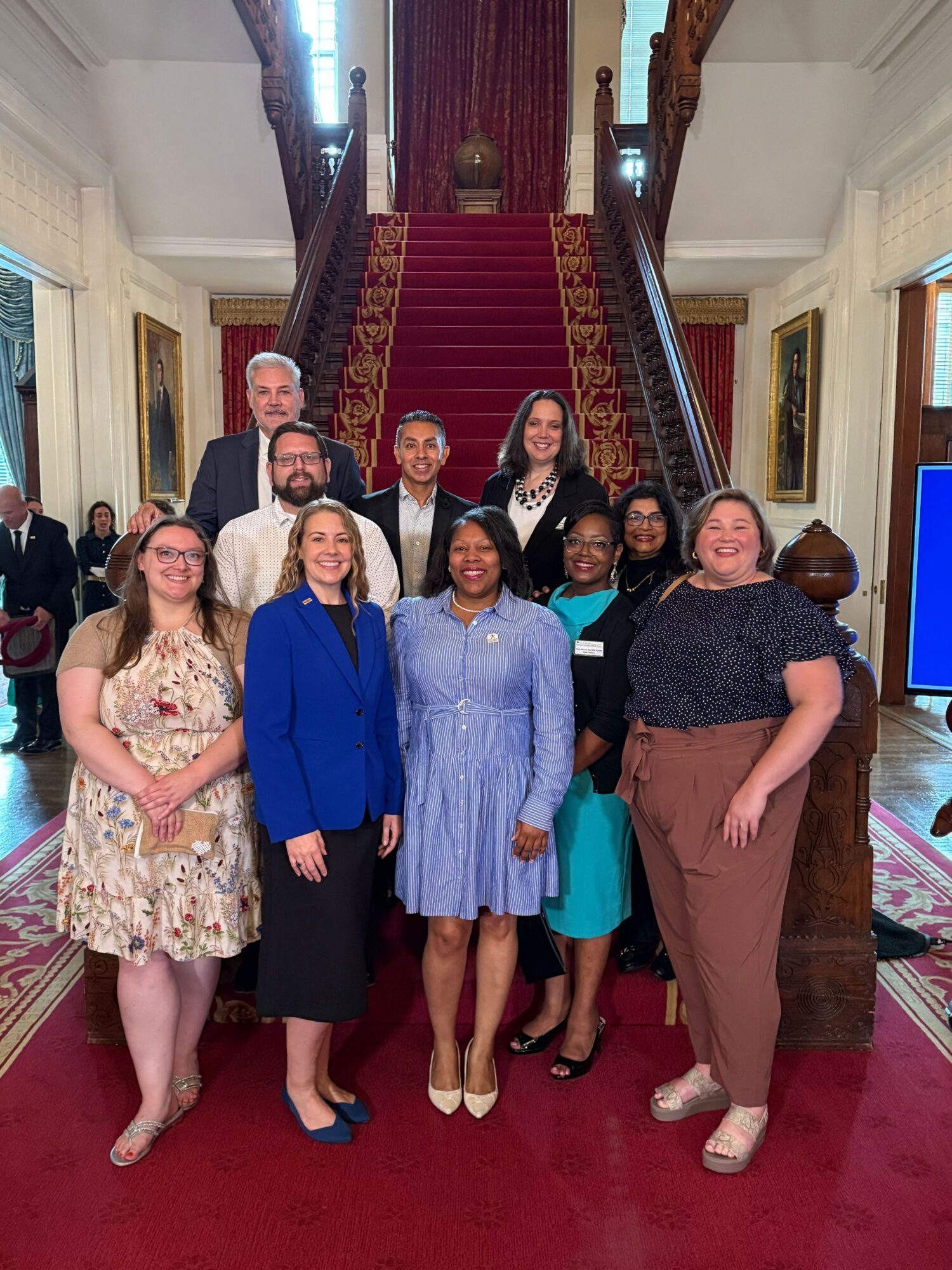
Outside of my practice, I chair the Legislative Breakfast on Mental Health — one of the largest and longest-running mental health conferences in North Carolina, now in its 48th year — and serve as Vice Chair for Juvenile Crime Prevention in Wake County.
At every stage — from volunteering outings with adults in Chapel Hill to shaping statewide conversations — my work has centered on the same belief: when we build stronger systems, support families, and treat people with dignity, we don’t just reduce crisis — we change trajectories.
Would you say it’s been a smooth road, and if not what are some of the biggest challenges you’ve faced along the way?
One of the most defining challenges in my journey was balancing graduate school, full-time work, and raising young children. There were many moments during my master’s program when I didn’t think I could continue. The demands felt overwhelming. What carried me through were strong friendships, supportive colleagues, and a commitment to take it one step at a time. That season built endurance and discipline.
During COVID, I faced another profound chapter of hardship. My father passed away, and my marriage ended in divorce. It was a period of deep personal transition and loss.
Instead of allowing those moments to derail me, I used them to sharpen my focus. I leaned into growth, created new opportunities, and built a company and practice that reflect resilience and intentional leadership. Hardship became a catalyst rather than a barrier.
Additionally, my volunteer leadership roles — particularly chairing the Legislative Breakfast and serving in juvenile crime prevention — have exposed me to the bureaucratic complexities of mental health policy. Navigating those systems has strengthened my consulting work at the state level and deepened my understanding of how policy decisions affect real people.
I’ve learned that adversity doesn’t define you — how you respond to it does.
Thanks – so what else should our readers know about Keep Counsel PLLC?
Keep Counsel was built on one core belief: high-quality mental health care should be both clinically excellent and systemically informed.
We provide comprehensive outpatient therapy services for children, adolescents, adults, and families across North Carolina. Our team specializes in complex presentations — trauma, high-conflict family systems, severe mood disorders, dual diagnoses, attachment disruption, and youth stepping down from higher levels of care. Many of the families we serve have already tried multiple services before finding us.
What sets Keep Counsel apart is our systems-based lens. We don’t just treat symptoms — we look at the entire ecosystem surrounding the individual: family dynamics, school systems, court involvement, community supports, and policy barriers. That perspective comes from years of experience in intensive in-home services, crisis stabilization, state-level program development, and macro mental health leadership.
In addition to direct clinical services, we provide consulting and training at the state and university level. We work with DHHS, academic institutions, schools, and community providers to strengthen programming, improve implementation, and ensure services are outcome-driven and sustainable. Our consulting work is grounded in real-world implementation — not just theory.
Brand-wise, what I’m most proud of is the culture we’ve built. Keep Counsel is a practice rooted in clinical rigor, ethical care, strong supervision, and intentional growth. We serve over 150 clients with a team of 10 clinicians, and we have grown thoughtfully — prioritizing quality, integrity, and impact over rapid expansion.
We are known for:
• Working effectively with high-acuity and complex cases
• Strengthening fractured family systems
• Building collaborative partnerships with schools and community stakeholders
• Delivering practical, applicable training that bridges clinical practice and policy realities
• Leading conversations at the intersection of direct care and systems reform
What we want readers to know is this: Keep Counsel is designed to be synonymous with mental healthcare for North Carolinians. Whether a family needs outpatient therapy, complex case coordination, systems navigation, school collaboration, consulting support, or high-level training — we aim to be a trusted, one-stop resource.
We understand crisis. We understand bureaucracy. And we understand how to navigate both.
Keep Counsel is not a volume-based practice — it is a values-based organization focused on outcomes, accessibility, and long-term impact. Our goal is simple but ambitious: to build stronger individuals, stronger families, and stronger systems so fewer North Carolinians fall through the cracks.
If we knew you growing up, how would we have described you?
I’m a first-generation American. My family immigrated from Soviet Russia — Riga, Latvia to be exact — arriving in the United States with just $34 to their name aboard a shipping freighter. Everything we had was built from scratch.
I grew up in Los Angeles before moving to North Carolina for high school. I’m culturally Jewish, and that identity — along with my family’s immigration story — shaped my values early on. My parents worked constantly when I was young, so they weren’t around much. My older brother played a significant role in raising me, and that bond remains strong to this day.
We didn’t come from comfort — we came from hardship. My parents taught me not to take anything for granted. They instilled in me a simple but powerful belief: you can’t control everything, but you can control how hard you work. If you’re willing to outwork what others are willing to do, you always have leverage.
Despite the challenges, we were a tight-knit family. We supported one another fully — through setbacks, transitions, and growth. That sense of loyalty and resilience is something I carry into my work and leadership today.
As a kid, I was rambunctious and outgoing. I played sports, pushed myself academically, and always aimed for high marks. I was competitive, energetic, and deeply connected to my friends and family — and I still am.
Looking back, I think what defined me most was drive. I didn’t want to waste opportunity. I understood early that being in this country was a privilege my parents fought for — and I’ve tried to honor that ever since.
Contact Info:
- Website: https://www.keepcounsel.com/
- LinkedIn: https://linkedin.com/company/keep-counsel-pllc