




Today we’d like to introduce you to Mikel Frank.
Hi Mikel, thanks for sharing your story with us. To start, maybe you can tell our readers some of your backstory.
When I was 10 years old my mother’s painting teacher asked me to model for her evening painting class. I was amazed at how each artist painted a very different version of
me. Witnessing the creative process firsthand convinced me that this was something I
wanted to learn. From that day on, I wanted to be an artist. When I got to high school I spent
most of my time in the art room drawing and making things. After 2 years at a liberal arts college,
I was accepted by and transferred to Maryland Institute College of Art (MICA) in Baltimore. After
graduating with a B.F.A. in Fine Arts, I went cross country to live in San Francisco, which was a dream
of mine. While there I took part time classes at the San Francisco Art Institute. I studied with Hassel Smith,
Tom Holland and Peter Plagens. I drove back east and applied and was accepted to Pratt Institute in Brooklyn, NY
and earned my M.F.A. in painting.
At Pratt I studied with Phoebe Hellman and Kent Floeter. After graduating from Pratt I established
a studio on Washington Street in Brooklyn and invited 9 other artists to join me. That lasted a couple of years. I then
decided I wanted to get a job and have more security and make some money because I was not making enough money
with my art. I accepted a position at The Metropolitan Museum of Art and became Production Stage Manager in the Concerts
and Lectures Department. It was a great place to go to work each day being surrounded and inspired by some of the greatest
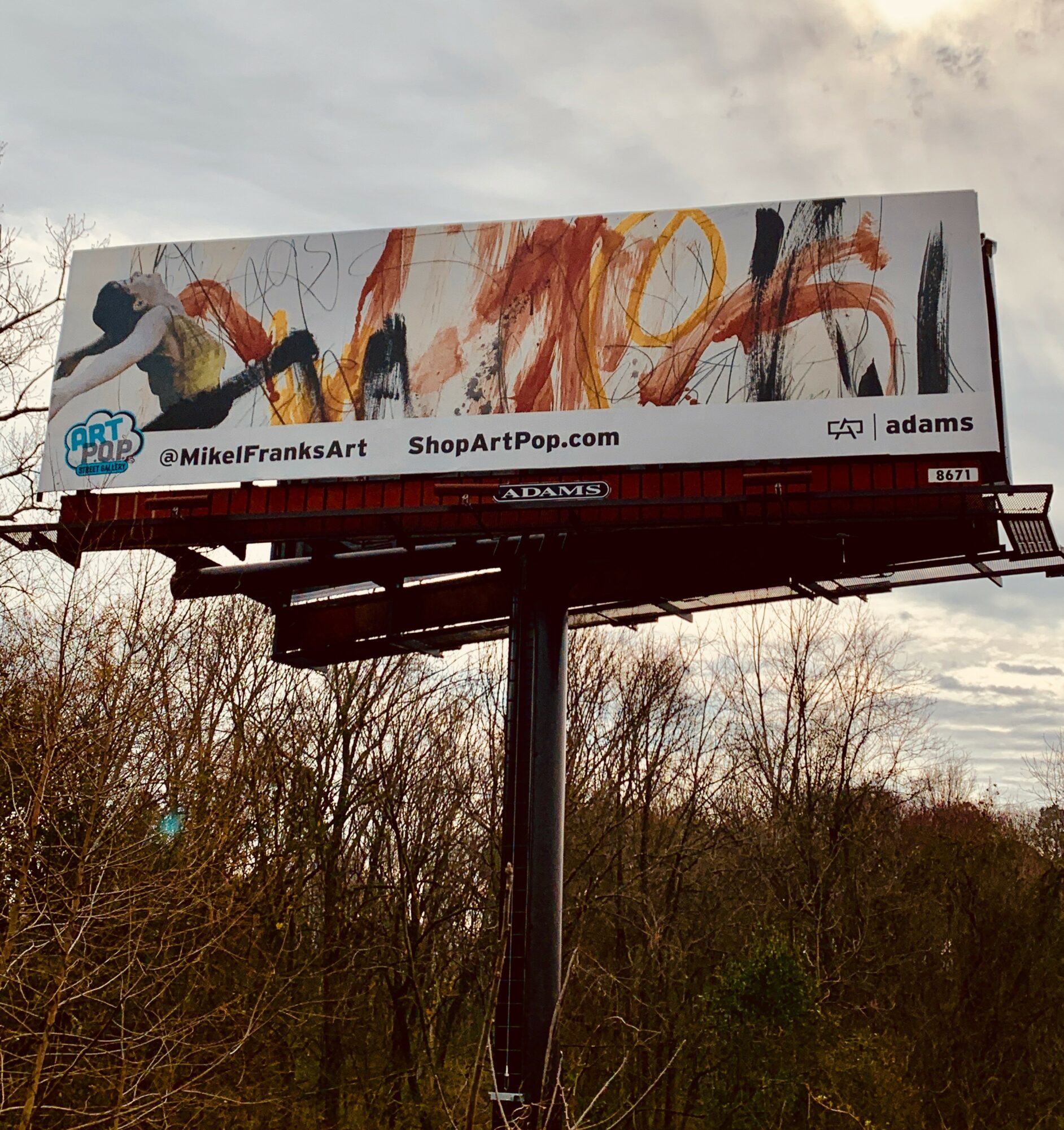
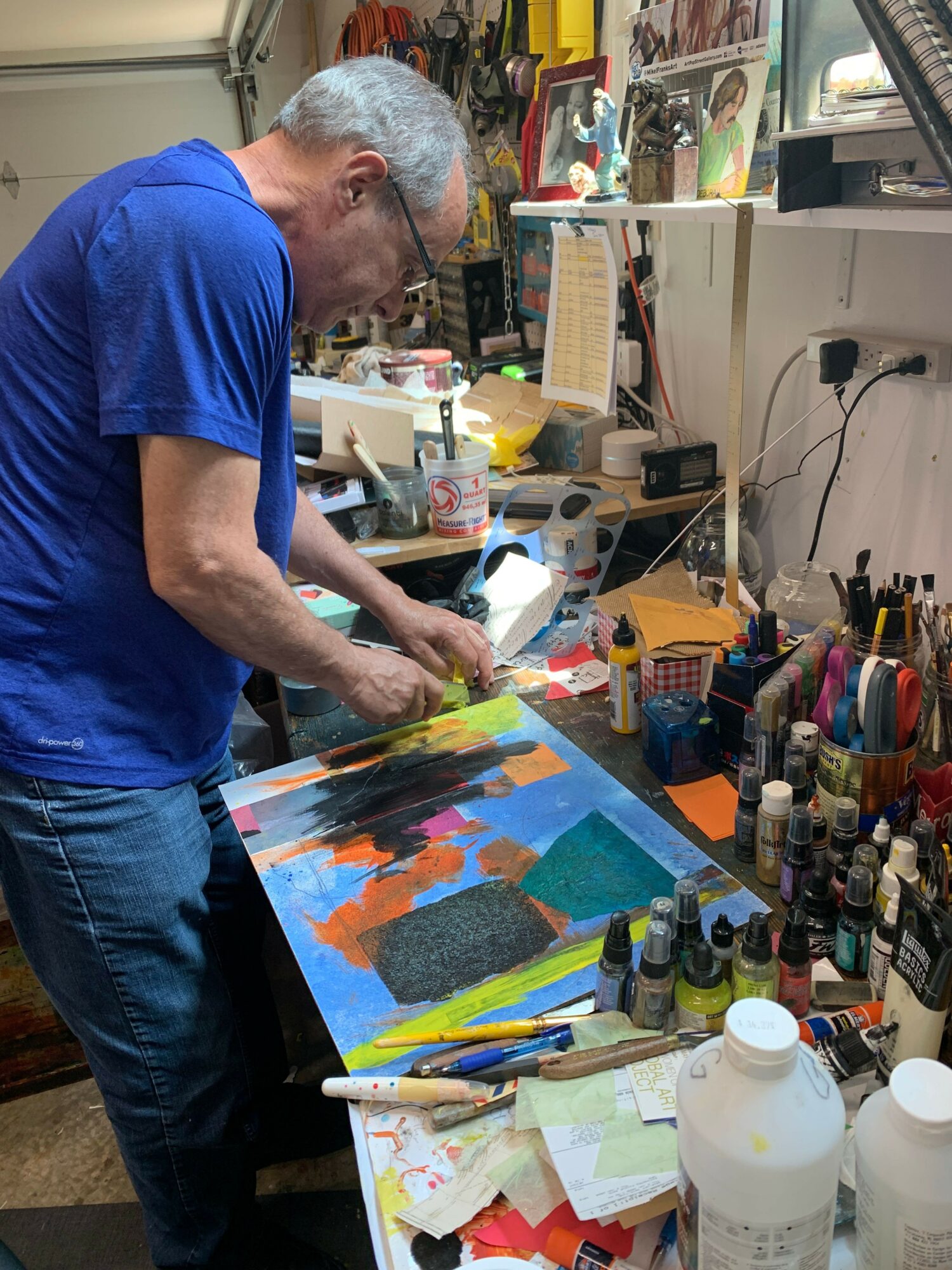
art works in history. I also met and worked with many creative and talented national and international artists, scholars, curators, and musicians. I worked at The Met for 29 years and continued to paint and be active in my local community in Maplewood, NJ. In 2005 I worked with Christo and Jeane-Claude on a crew that built 100 gates as part of the Gates in Central Park: 1979-2005. That was my first really exciting and important collaborative project. It inspired me to be open to collaborating with other artists. Five years later I teamed up with a French artist, Gerard Amsellem and we painted together until I moved to Charlotte, NC after I retired from the Met in 2014. My goal was to break into the art scene in Charlotte and show my work and get involved with the art community. I was offered a docent position at the Mint Museum and then got work teaching at two colleges in the area. I taught Drawing I & II, Art & Design, Watercolor, Art Appreciation and Art History. I left teaching due to the Pandemic and did most of my work at home in my garage, which I converted to an art studio. In 2018, I joined Global Art Project (GAP), an international multi-media collaborative collective with 90 artist members from 20 countries. My first curatorial project in Charlotte was called Visual Strategies: A Collaborative Project. I curated this exhibition from a selection of GAP artists with the help of Carl Heyward, the leader of GAP. In Charlotte in 2021 I was awarded inclusion in Art Pop Street Gallery. This is a wonderful program where 20 artists are selected to have their submission blown up and mounted on a 14′ x 48″ billboard in the Charlotte Metro area. This introduced me to new artists and catapulted me into the Charlotte art scene on a higher level. I was exhibiting more and getting more traction. In 2021, I had the good fortune to rent a studio at Visual and Performing Arts Center (VAPA). This brought me into a large, 360 member, art community in downtown Charlotte. It also introduced me to another important collaboration with artist, Barbara Ellis. We painted 15 large scale canvases together. This project culminated in an exhibition at Nine Eighteen Nine Studio Gallery owned by Joanne Rogers. The name of the show that Joanne came up with was “The Big Ass Canvas Show.” We hung the un-stretched canvases from the ceiling. It was a big success. As for my extra curricular activities in Charlotte, I joined the board of Guild of Charlotte Artists in 2022 and in 2024 was made President of the board. I have an exhibition up at the time of this writing at The Catalyst in Uptown Charlotte. I am co-curating a collaborative exhibition at the newly re-branded Queen City Art Gallery. This is a joint venture between Queen City Art and Guild of Charlotte Artists. Last year I co-curated an important and timely exhibition with Joanne Rogers and Carl Heyward and Akiko Suzuki of Global Art Project called “CrossingBorders: We Are All Immigrants.” We exhibited in two venues. The show was made up of members of GAP and selected Charlotte artists. It’s first stop was New York City at Westbeth Gallery and then in Charlotte at Nine Eighteen Nine Studio Gallery.
We all face challenges, but looking back would you describe it as a relatively smooth road?
One major struggle along my life journey in art was a back injury that happened while I was in San Francisco many years ago. This set me back quite a bit. After my second semester at Pratt Institute, I had back surgery, causing me to miss a semester. However, the surgery was successful and when I realized I did not have back pain any longer, a new adventure began. Moving from Maplewood, NJ to Charlotte, NC was a big step. It took me a couple of years to get myself active in the art community. I am thankful for all my new friends and I appreciate the support of my wife and family.
Can you tell our readers more about what you do and what you think sets you apart from others?
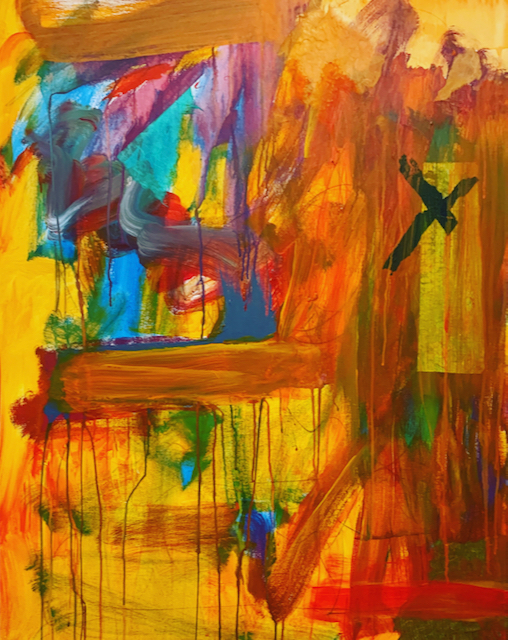
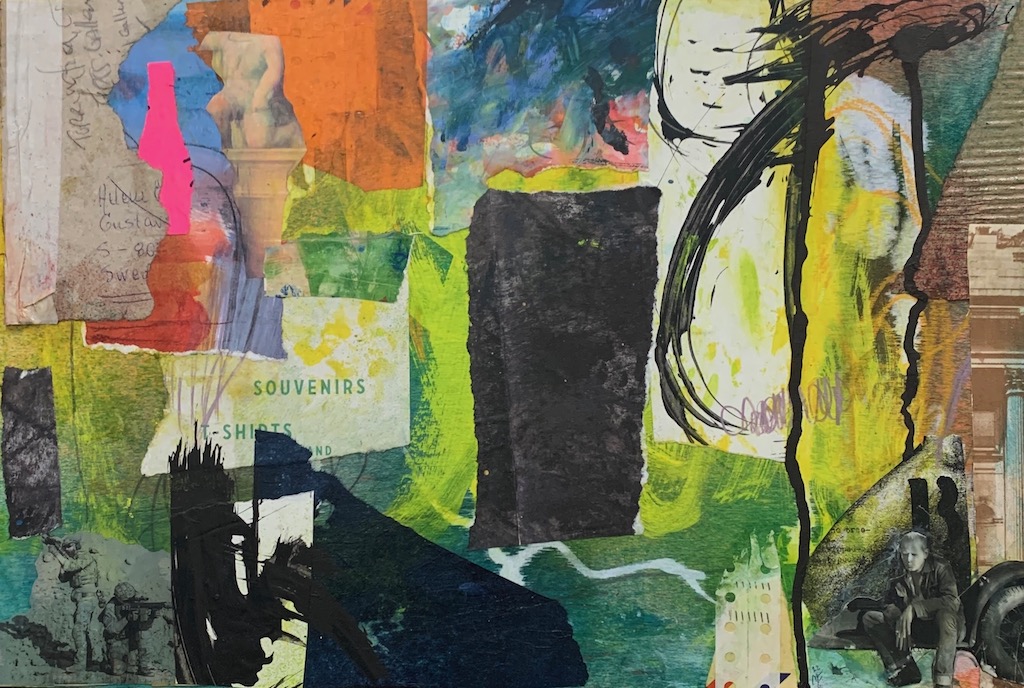
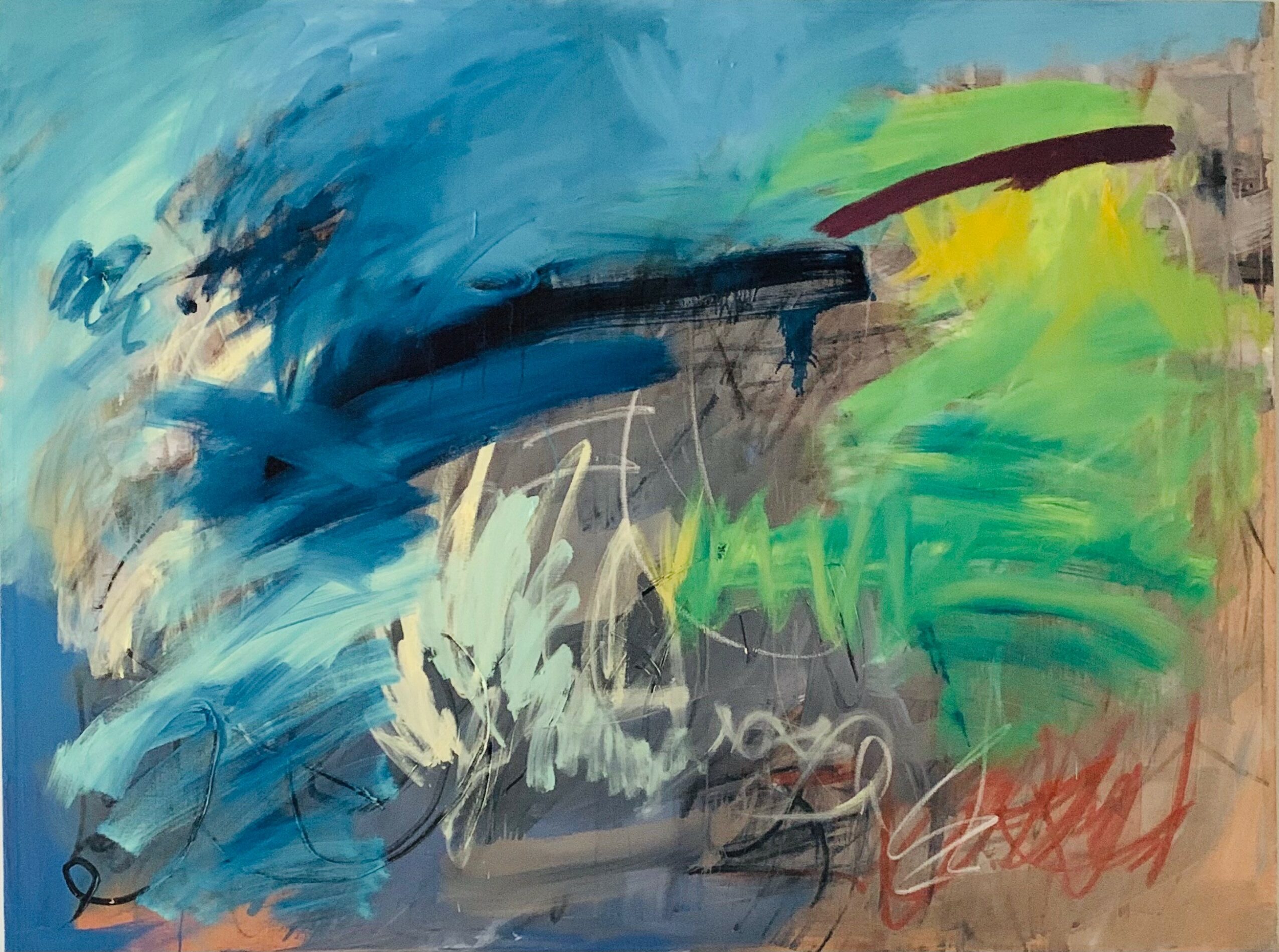
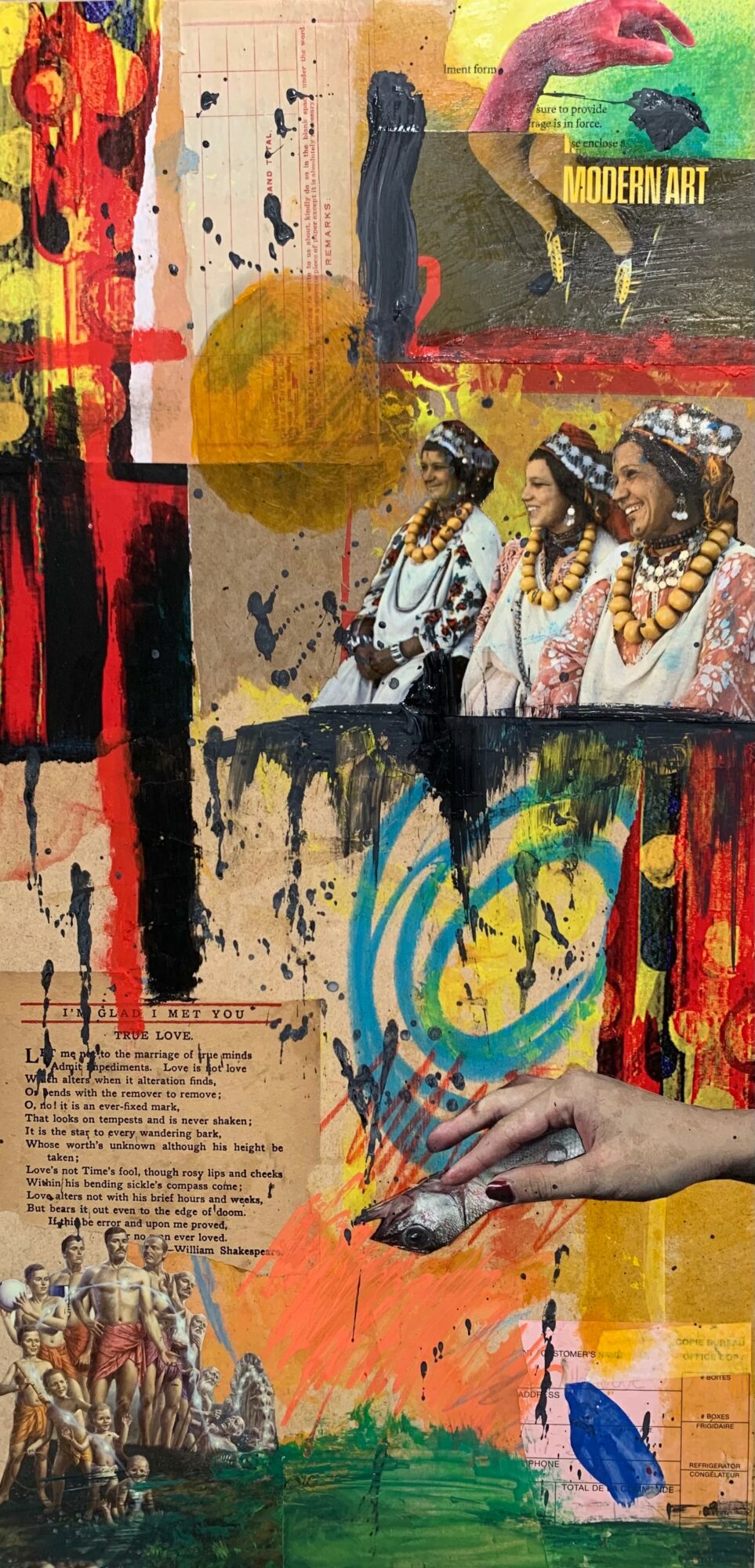
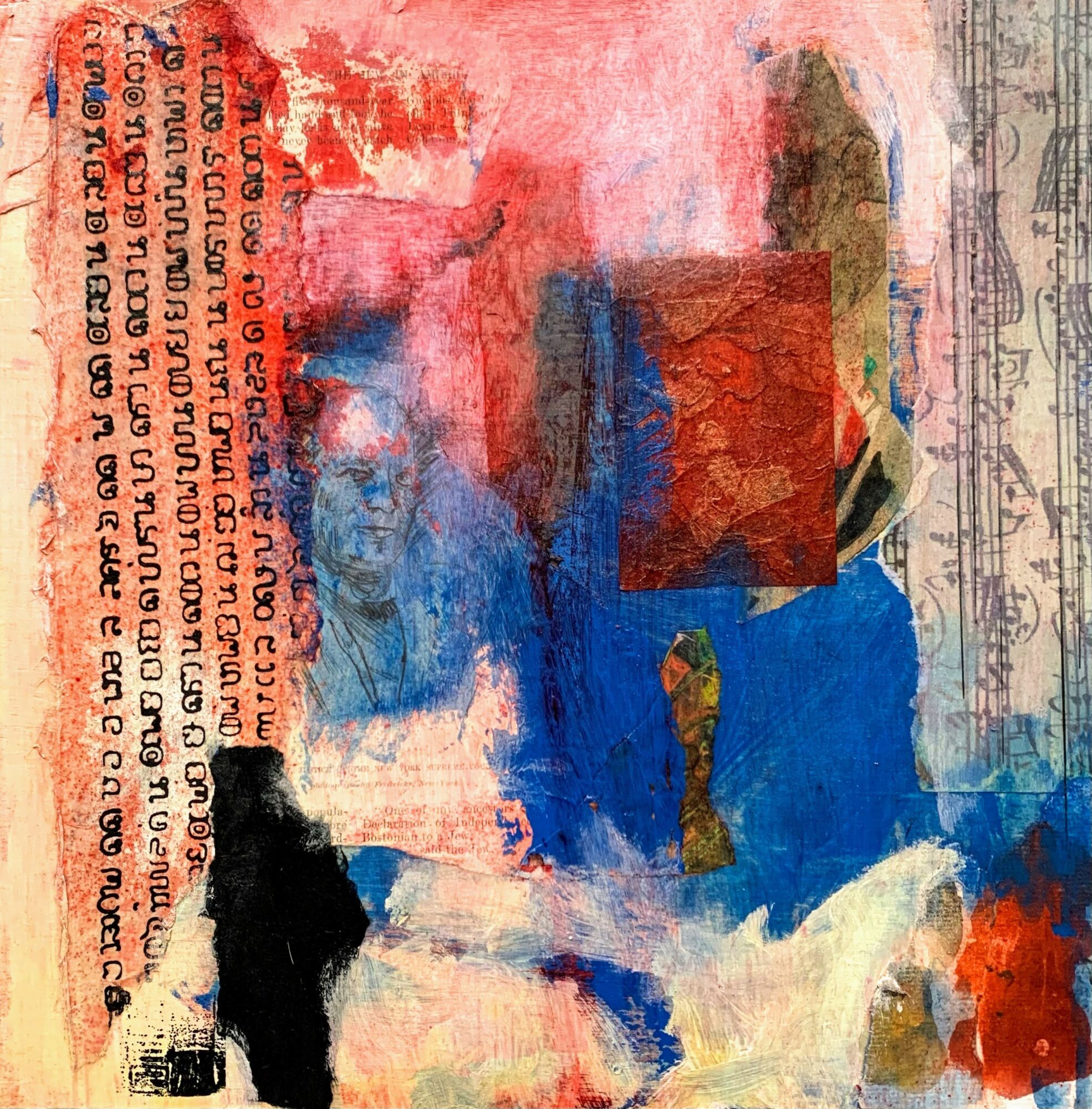
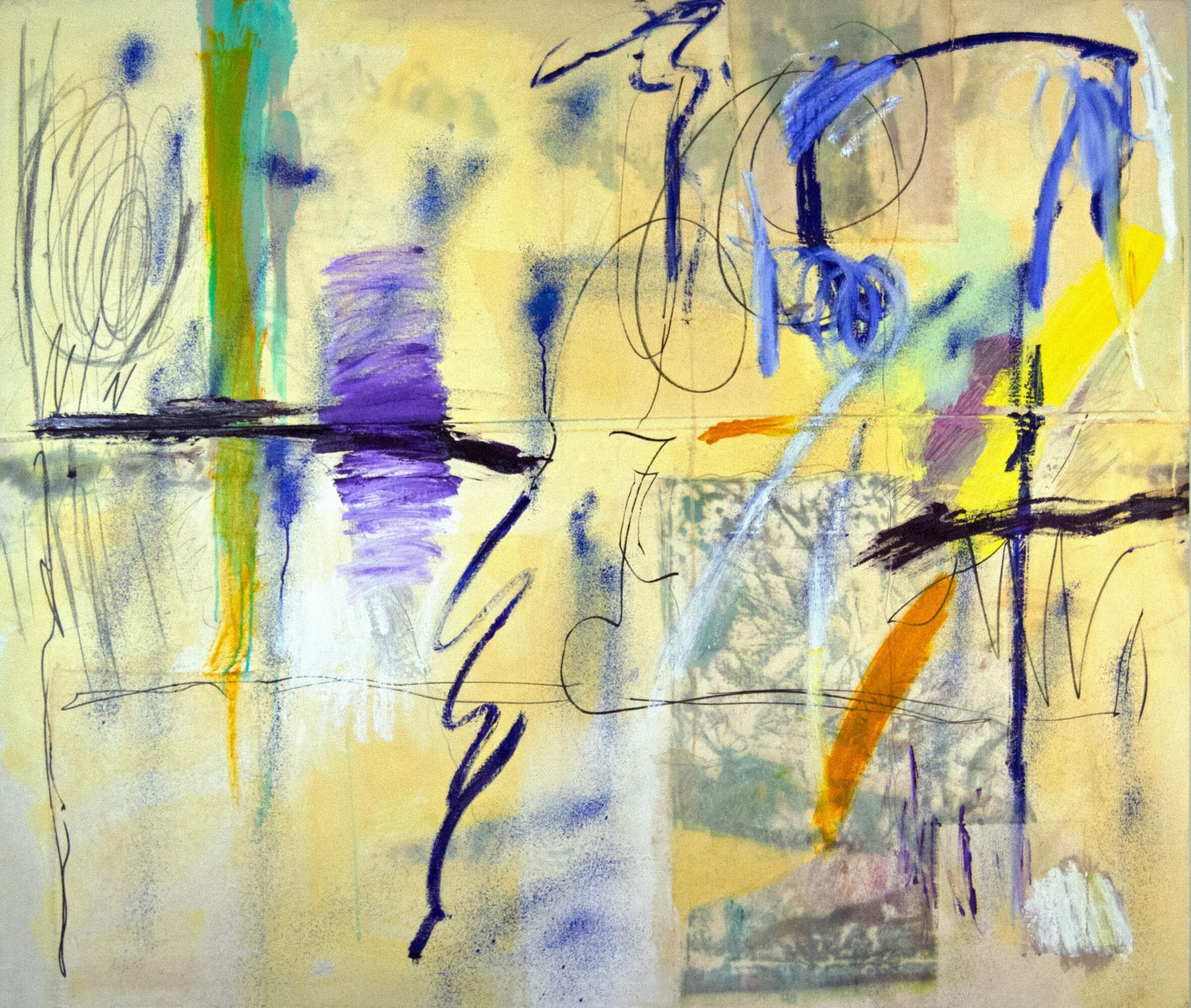
I am a mixed media abstract artist. I make connections in my work by using abstract elements of cut paper, lines, paint/color and other materials that I find along the way. I like to raise questions and pose problems to myself in order to dive deeper into the creative process and fulfill my vision. History is very important to me on many levels. Having spent so much time at The Metropolitan Museum of Art, I was able to sharpen my vision based on the masters of the past and present. The biggest influences on me have been the Abstract Expressionists, Dadaists and Surrealists. I embrace randomness in my work and spontaneity. I like to approach humor and absurdity at times. I believe that it is not the end result that is important, but rather the journey and process of getting there. I am most proud of my ability to collaborate with other artists. The best thing about it is the creation of a third artist. What the two of us do, creates another entity to listen to and respond to in the work. This may be the thing that sets me apart from most other artists. My ability to respond positively to whomever my painting partner happens to be and relate to them on a level of give and take while leaving our egos at the door. There must be an agreement that one artist can change, paint out, or create anything and the other artist can do the same without argument or disapproval. Discussions on what works or does not work in the painting are important at different points in the process. But, nothing is precious and everything that’s done is in service of the painting.
Can you talk to us about how you think about risk?
Growth, both creative and personally, requires stepping out of your comfort zone. If I do not take risks, things get kind of boring for me. I like to experiment. I like to create problems for my self to solve. Whether it’s with color, composition, materials or medium, experimentation is always risky. What if this happens? What if that happens? It doesn’t matter, because I am the creator and I can change anything I want. This is part of the reason I am an abstractionist. I respond to natural things in life. Experience has a huge effect on me and my work. There are so many levels in risk taking. Small risks are as valuable as big risks and can be just as dramatic. They build confidence and become part of the process in moving my art forward. It is sometimes about becoming as opposed to achieving. Vulnerability is an important factor in art making as well. To show that you are human and not a perfectionist is a positive thing in my opinion. Flaws don’t always feel right, but they can be the difference between a good painter and a great painter. Truth is a big part of the journey also. Being truthful to yourself in your process always comes through and gives the viewer a different perspective on existential questions. Being an artist who is influenced by artists who came before me, risk taking is the moment where the influence of the artists I admire falls away and my own vision is allowed to shine and be communicated.
Pricing:
- Would you rather have the money or hang the piece on your wall?
- If you would rather have the money, how much would that be?
- Pricing is a difficult thing to get right. Sometimes it depends on what the market will bare.
Contact Info:
- Website: www.mikelfrank.com
- Instagram: www.instagram.com/mikelfranksart