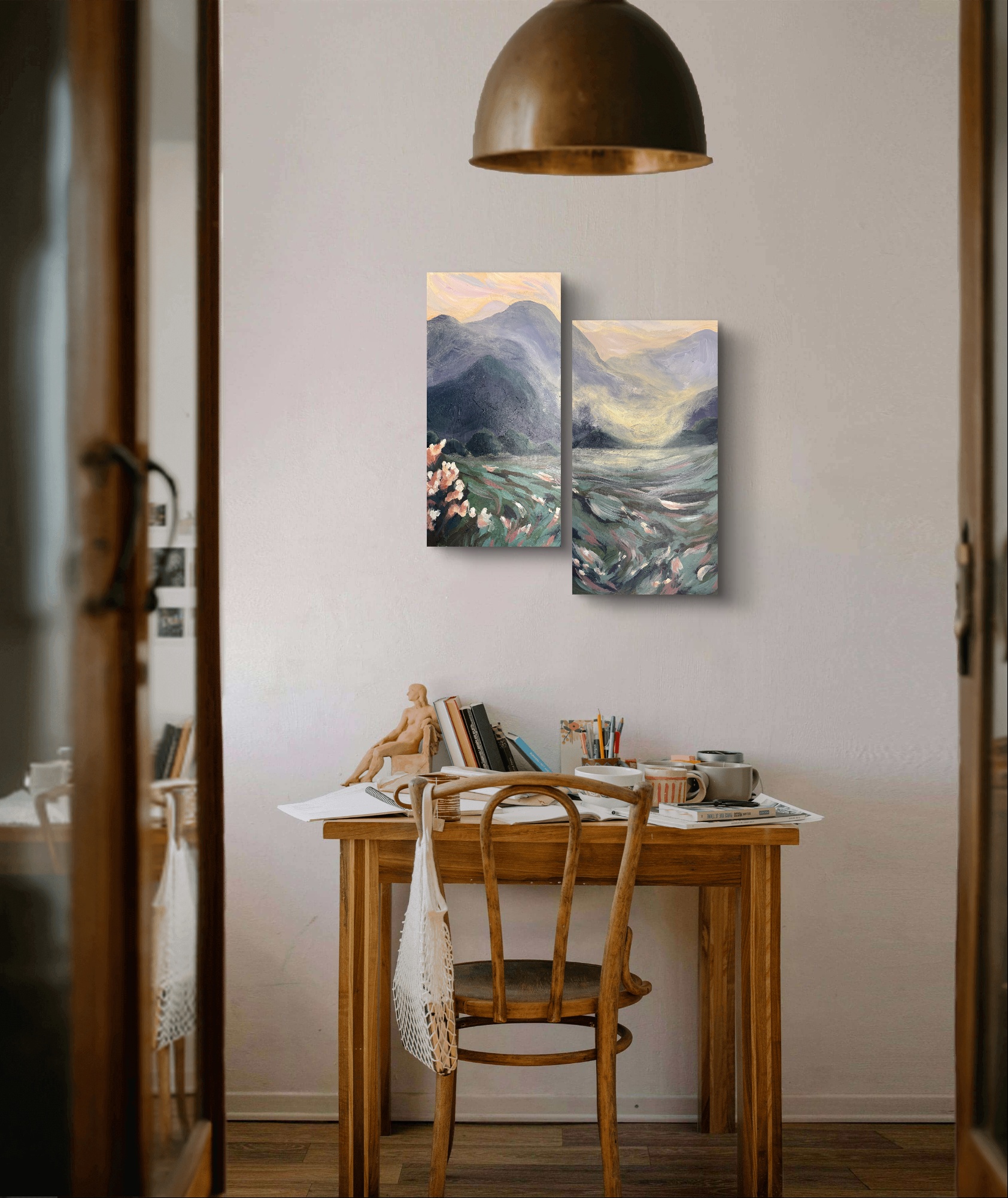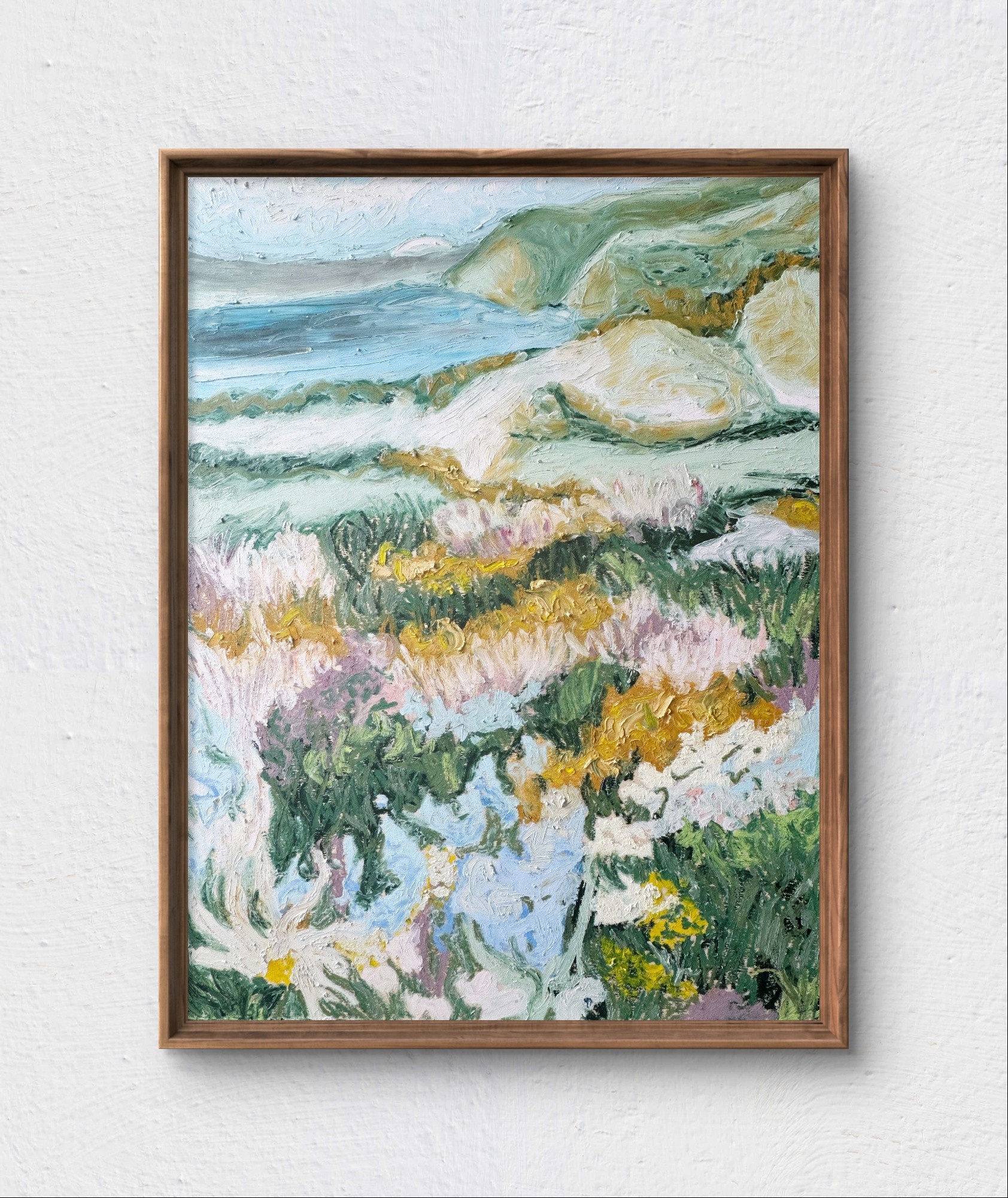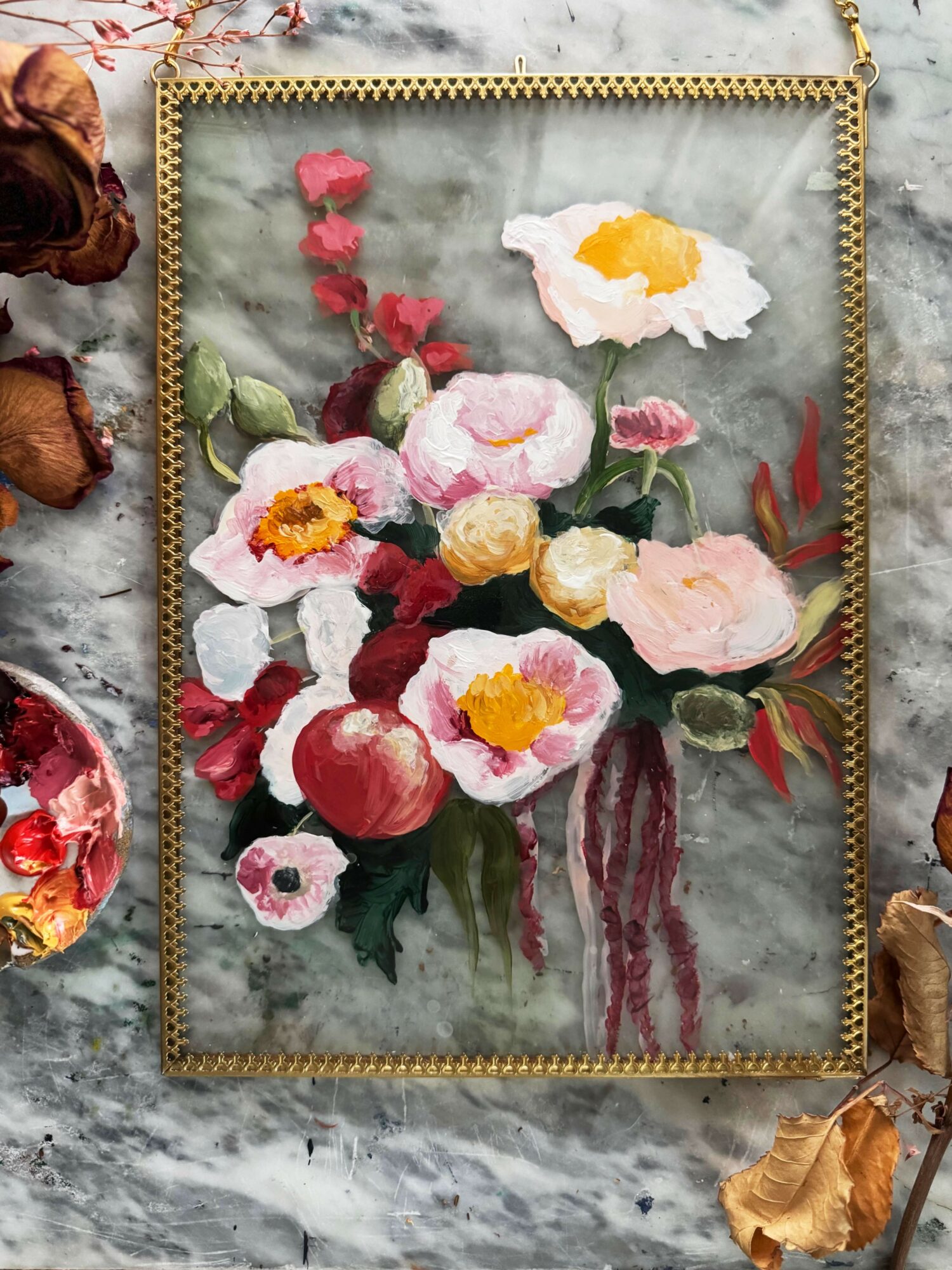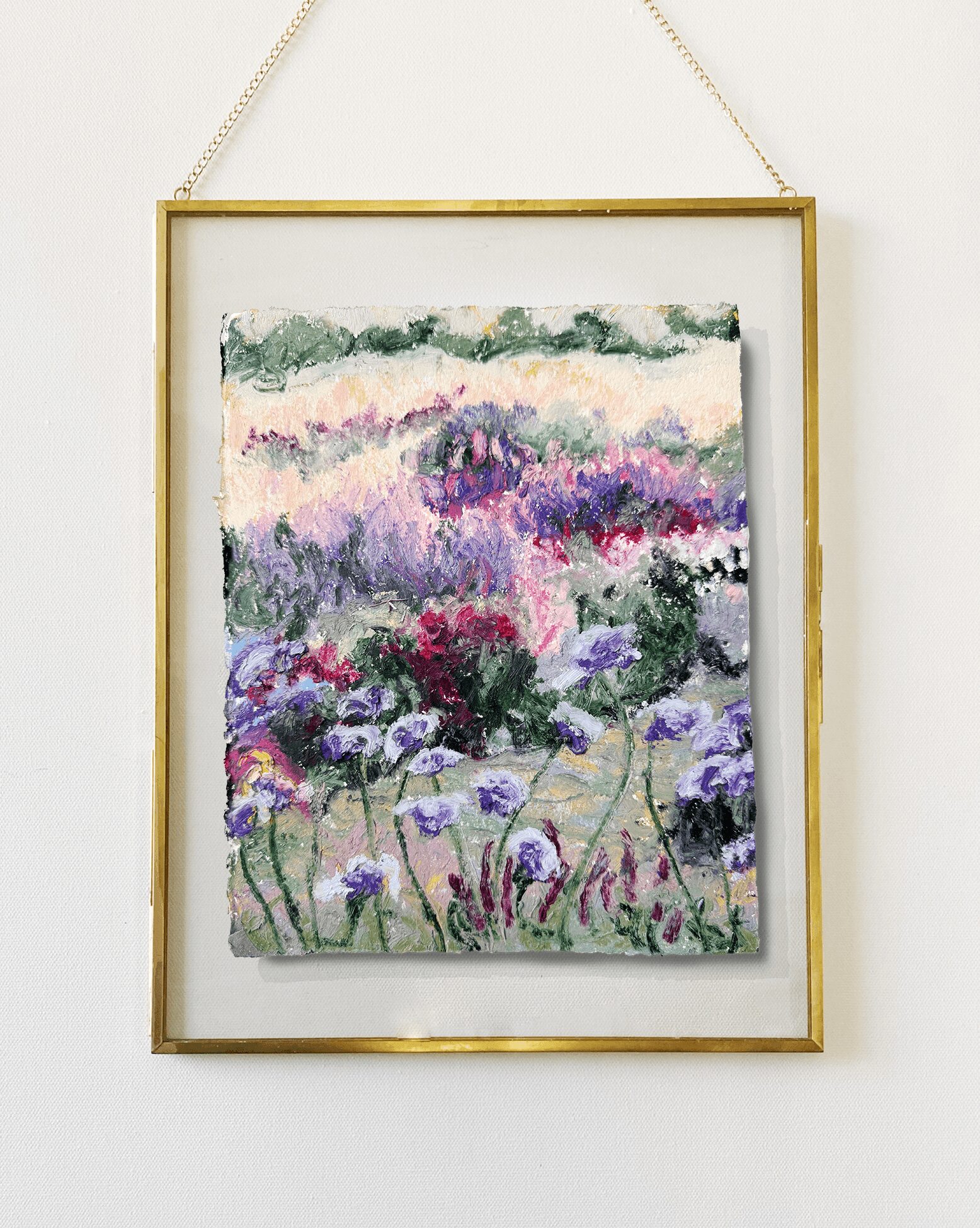



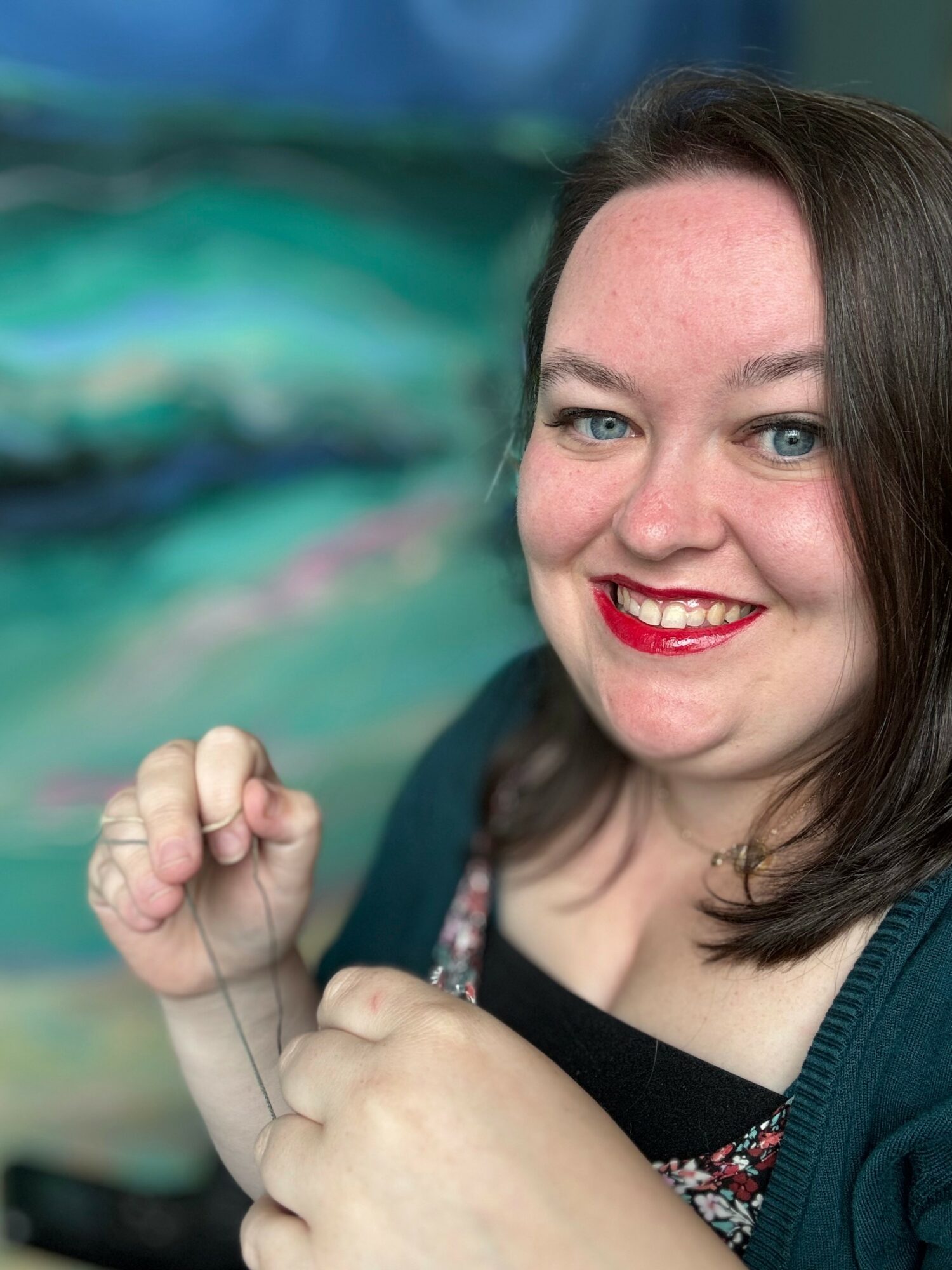
Today we’d like to introduce you to Elizabeth.
Hi Elizabeth, can you start by introducing yourself? We’d love to learn more about how you got to where you are today?
Growing up in Southern Appalachia, I’ve been obsessed with the landscape for as long as I can remember. My parents both moved here from Long Island, NY, and often pointed out the extraordinary beauty of our surroundings and how lucky we were to live in a place like this, so I had this awareness from a young age. Some of my earliest memories involve trying to capture the color of twilight between the trees in my backyard in the foothills with crayons (a challenge!).
I went to Appalachian State University on a full academic scholarship and got my BFA in Studio Art. Not everyone felt this was a good idea for me. I excelled in academics in school, so I know that my choice to pursue art was confusing to many when I could have opted for a more classically lucrative career. But my heart was in beauty. It took some time before I figured out how to articulate this, but from the earliest days of my painting career, I recognized that there is a lack of care in our culture for the spiritual. The post-enlightenment world is so concerned with rationality that our spiritual well-being is ignored or even disdained. People search for ways to sublimate their spiritual needs through meditation, yoga, the occult, and other loosely defined practices, but it all points to the fact that our souls need tending. I wanted to help heal that wound.
Over the last ten years, I’ve built an artistic practice around nourishing the spiritual void in modern life. My landscapes, in particular, are aimed at creating spaces where we can meet our spiritual needs without judgment. My paintings offer slowness, quiet, and softness in a world that is often hurried, loud, and sharp. They tell you that your most essential self is loved exactly as you are.
Would you say it’s been a smooth road, and if not what are some of the biggest challenges you’ve faced along the way?
I don’t know that anyone has a smooth road in life! My biggest obstacle has been working through my chronic health conditions. I was born with a connective tissue disorder called hypermobile Ehlers-Danlos syndrome. Until recently, this was considered to be extremely rare, with a reported incidence of about one person in every 5,000. Now, researchers estimate that the number may be as high as one in 500. Although I exhibited symptoms from infancy, the condition was never flagged because it was believed to be so uncommon. The symptoms can also be difficult to identify as they tend to be nonspecific. For me, it was chronic pain, fatigue, allergies, and infections — things that seemed unrelated at the time. My symptoms became worse throughout childhood. By sixteen, I walked with a permanent limp due to damage in my hip joint, but nothing ever showed on imaging. By twenty-one, I’d had eight hernia repairs, and a doctor finally acknowledged that there was an unusual fragility to my tissue. Even so, it wasn’t until I was twenty-seven that I was officially diagnosed with hEDS.
By that time, my pain and fatigue were extremely debilitating. I have a daughter who was only four at the time, and my husband is a touring concert lighting designer for Luke Combs, so he’s on the road a lot. It was often just me and my little girl at home. I decided to start using mobility aids to allow me to manage my pain and energy levels so that I could care for my child more effectively. This was really hard to do at first. I felt ashamed of my body, and a big part of me was still worried that if I were just “stronger,” or had more willpower, I wouldn’t be sick. Once I saw the difference in my pain and energy levels, though, there was no going back. I eventually began using a power wheelchair, and this absolutely changed my life. Instead of barely making it through the day, I was thriving. Old injuries were actually able to start healing. Instead of spending five to six hours trying to calm my spasming muscles at night, I could actually fall asleep. Today, I use my wheelchair full-time. I call her Thelma!
As you know, we’re big fans of you and your work. For our readers who might not be as familiar what can you tell them about what you do?
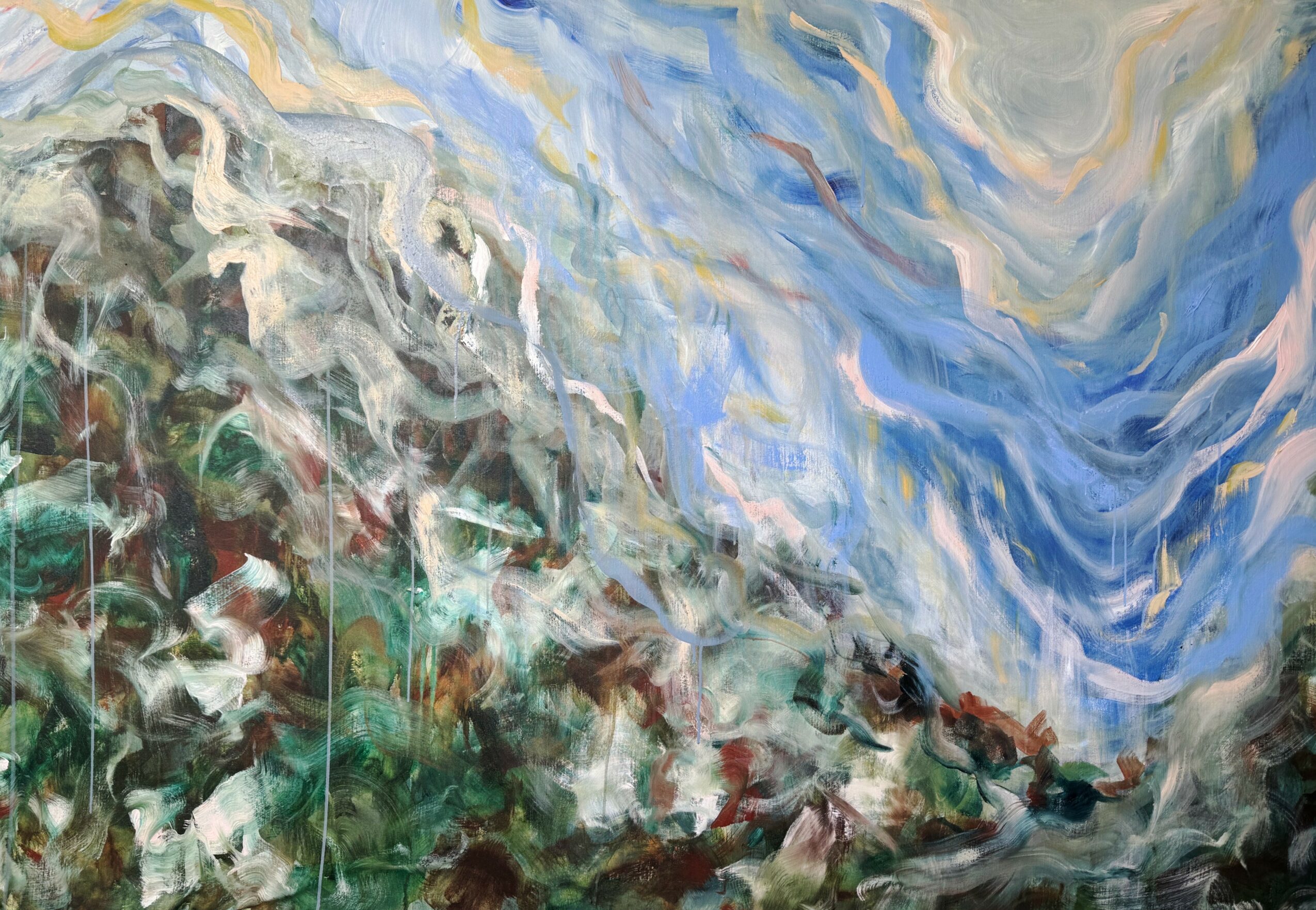
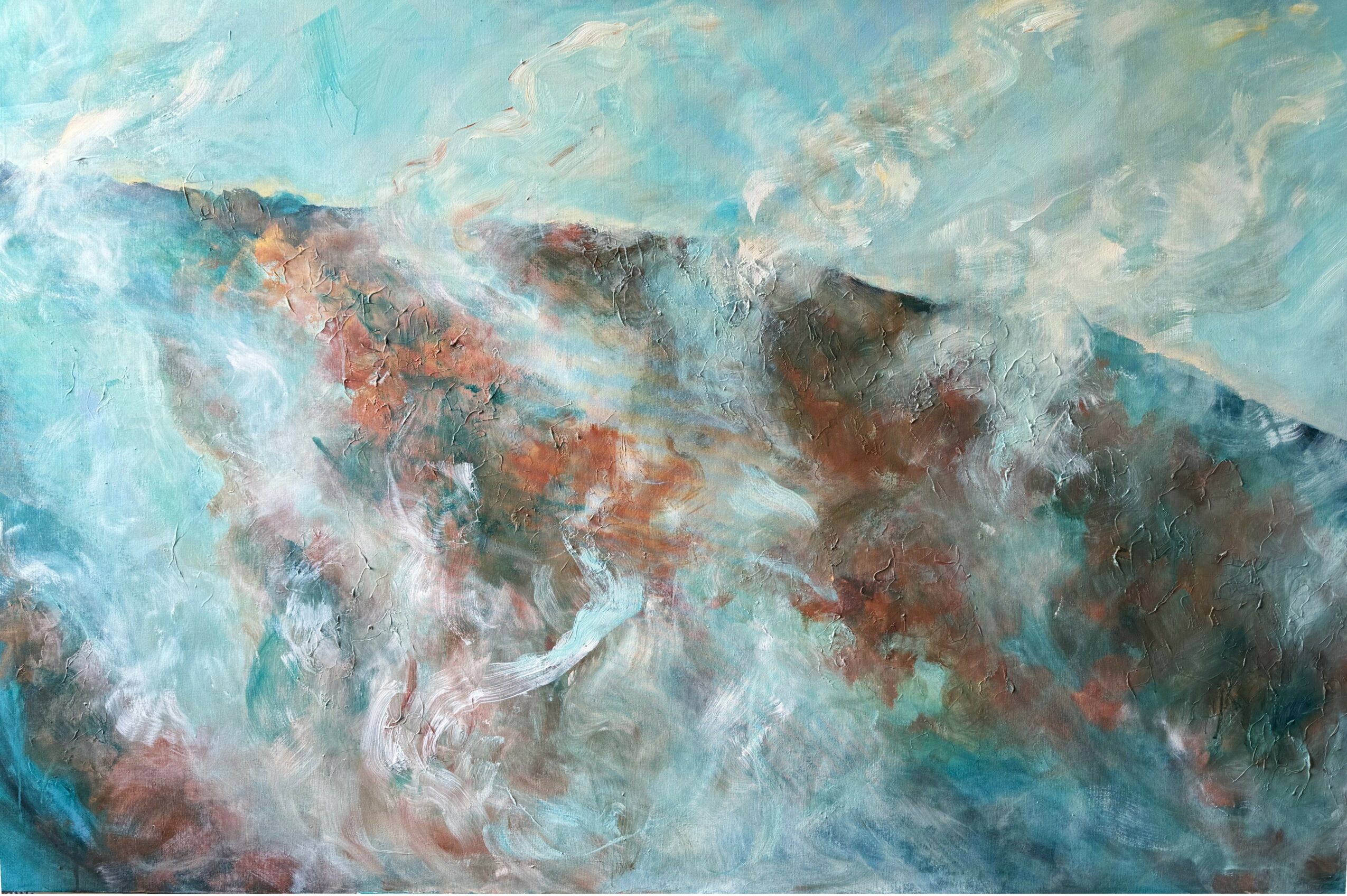
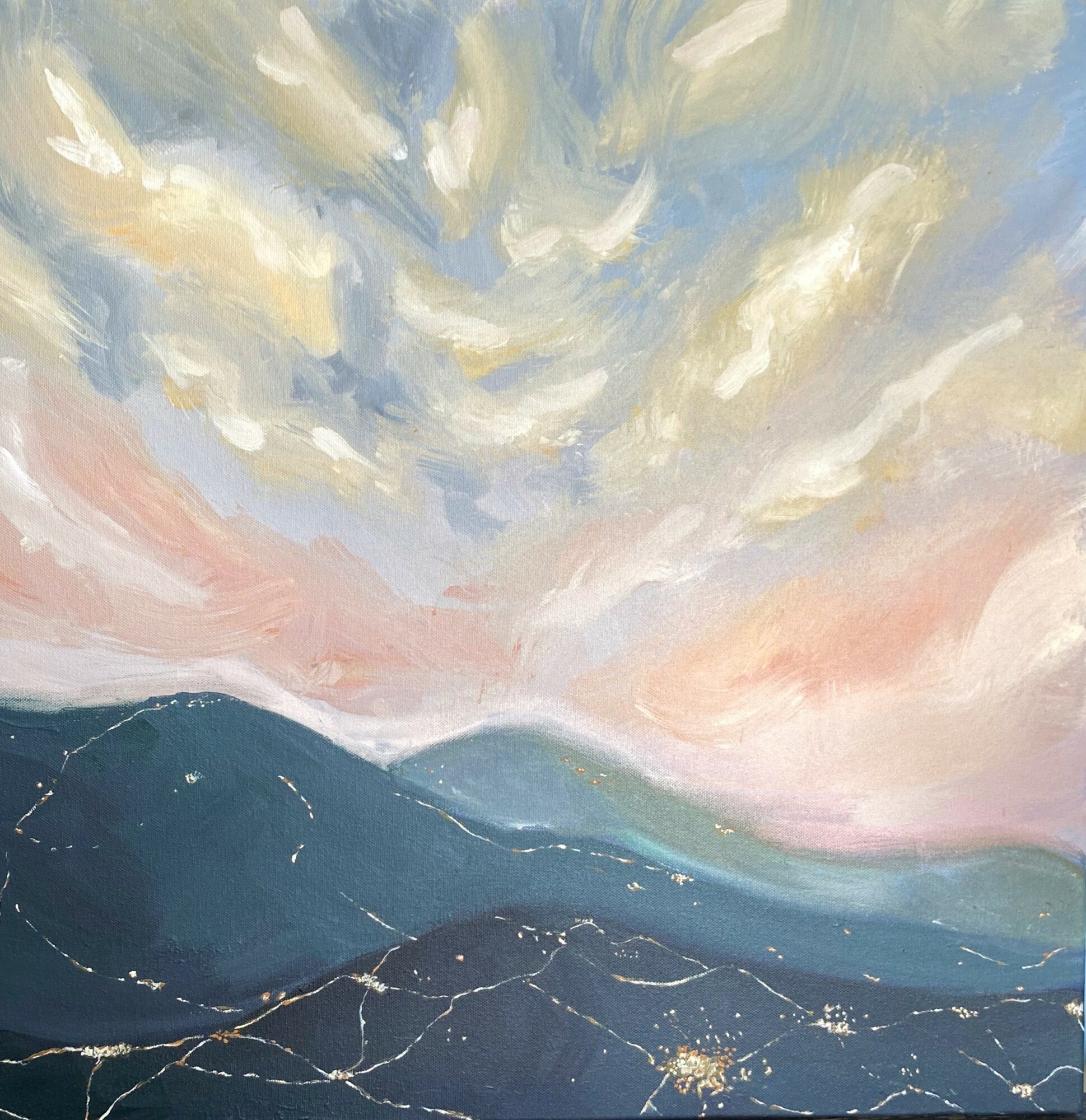
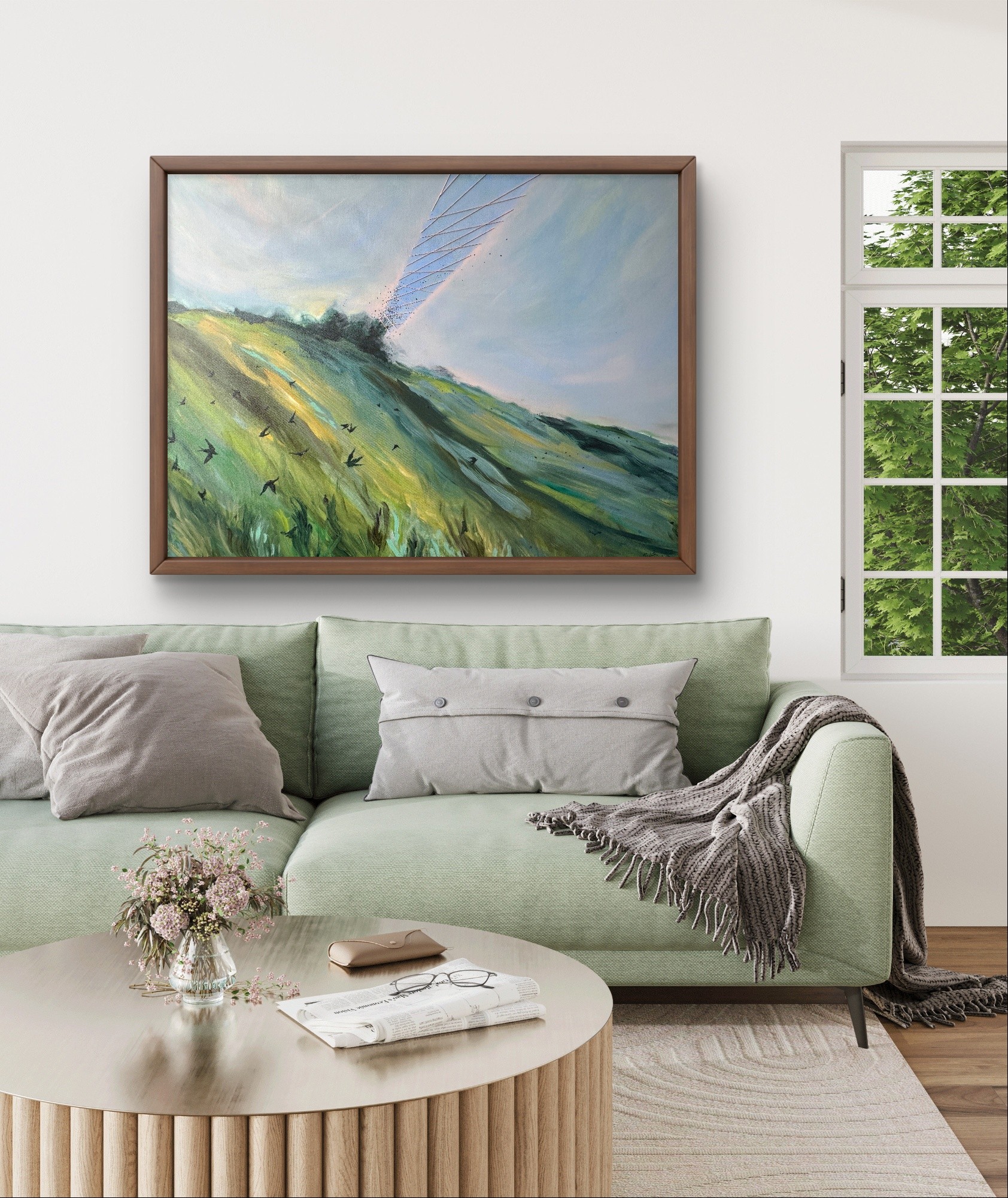
I’m a mixed-media painter, and I make abstract impressionist landscapes and florals that evoke spiritual rest and nourishment in an overscheduled, hyper-rational world. As a Christian, I was raised with the belief that God loves each of us for exactly who we are, and I developed an instinctual belief that the beauty of our environment is proof of that love. In the modern world, most of us, even believers, ignore the spiritual as we go through our hectic days. We don’t pause or acknowledge all the things happening beneath our physical and visual perception. But our bodies and spirits remain aware, even when we fail to acknowledge it. My paintings create imagined spaces where our physical realities meet with that underlying spiritual framework. They invite humans to reconcile this unseen reality and allow healing, rest, and nourishment to take place.
I think living with chronic illness has, in some ways, made me more aware of the spiritual world. It’s forced me to live my life at a slower pace, and to rely on God when my natural tendency is (often unhelpful) hyper-independence. A few years ago, I experienced a call to dive deeper into the theological aspect of my work as an artist. I’m now about a year into a Master of Divinity at Duke University, and I’m very excited to see what changes this process brings to my painting.
Who else deserves credit in your story?
My husband has always been my biggest supporter. With both of us in creative careers, there have certainly been times when it would have been easier for me to choose a different, more predictable path. His work on the Luke Combs tour keeps him on the road a lot (he left yesterday for Europe and won’t return for a month!), while I stay home with our daughter. Even so, he’s been there with me at gallery installations, art fairs, and receptions, cheering me on and doing the heavy lifting. Whenever I’ve expressed doubts about my work, he has always encouraged me. He used to say, “You can only fail if you stop trying.”
I also have to acknowledge Artlifting. They are an art consultancy that works with artists with disabilities and those who have experienced housing insecurity. They found me at an art fair in Charlotte and encouraged me to apply. I was accepted onto their roster in 2023, and I’ve been working with them ever since. They’ve placed my art in places I never could have accessed on my own. I’m extremely grateful for the reach and stability they’ve given me.
Contact Info:
- Website: https://www.elizabethshanahan.com
- Instagram: https://www.instagram.com/elizabeth.shanahan/