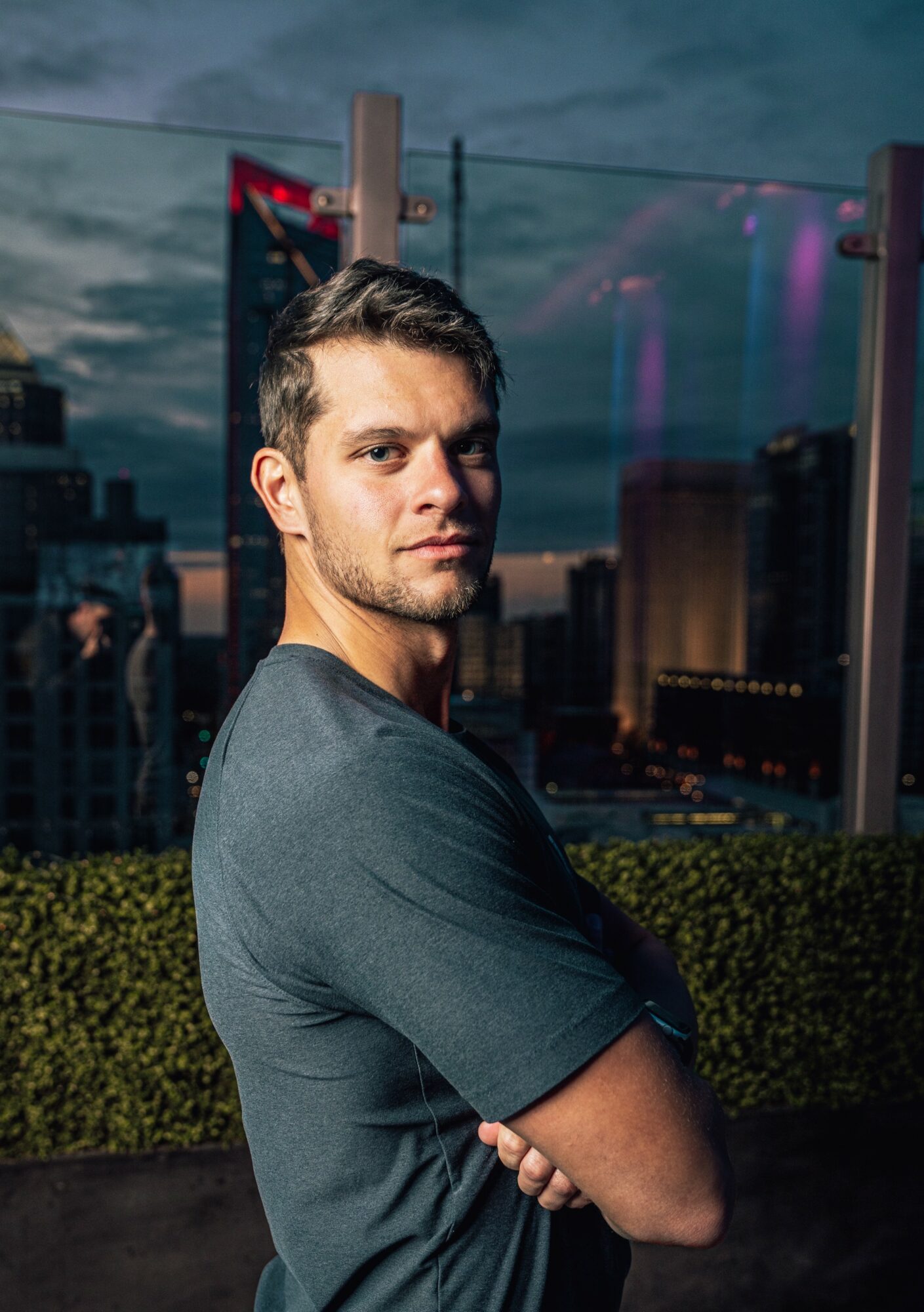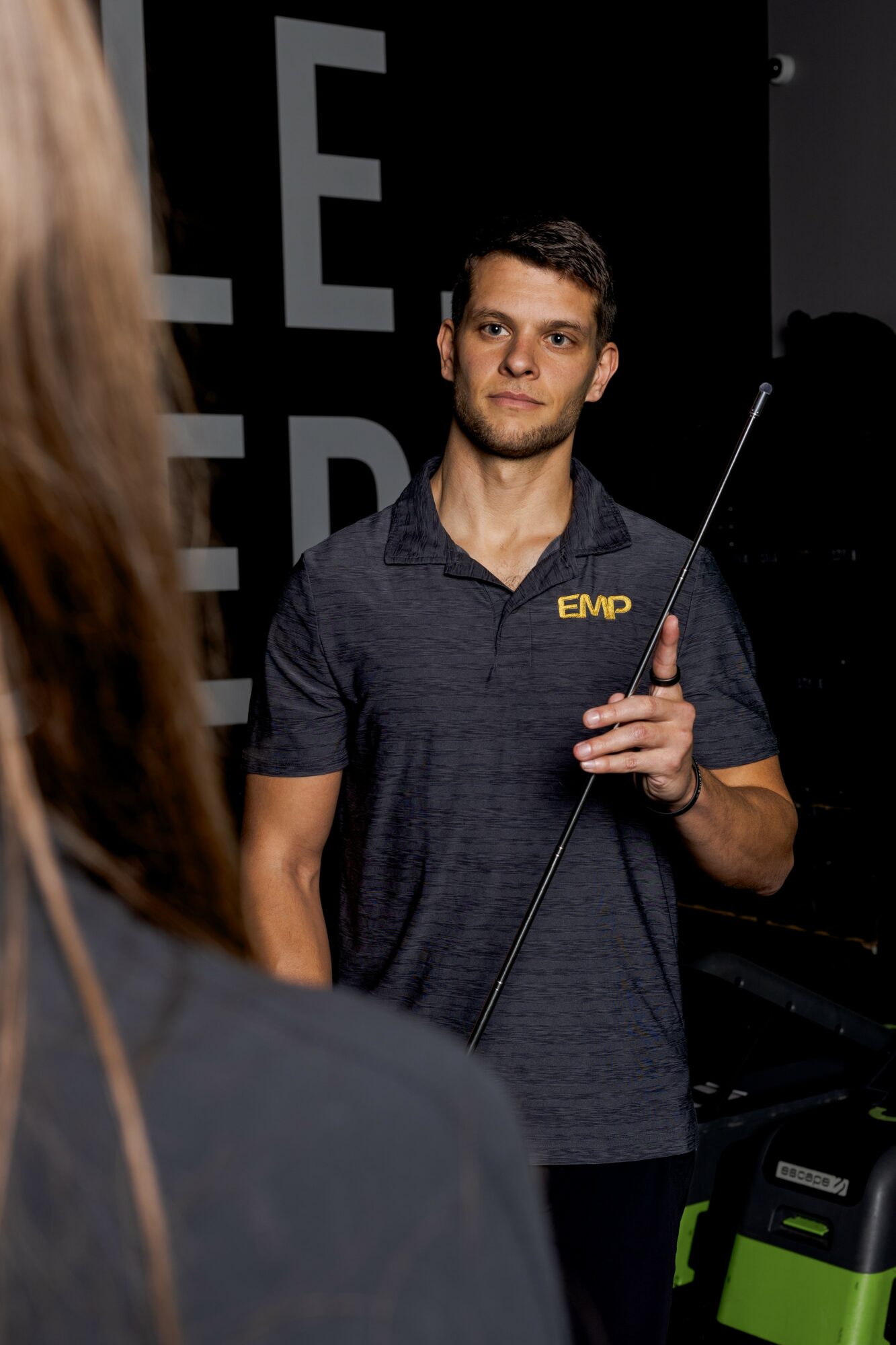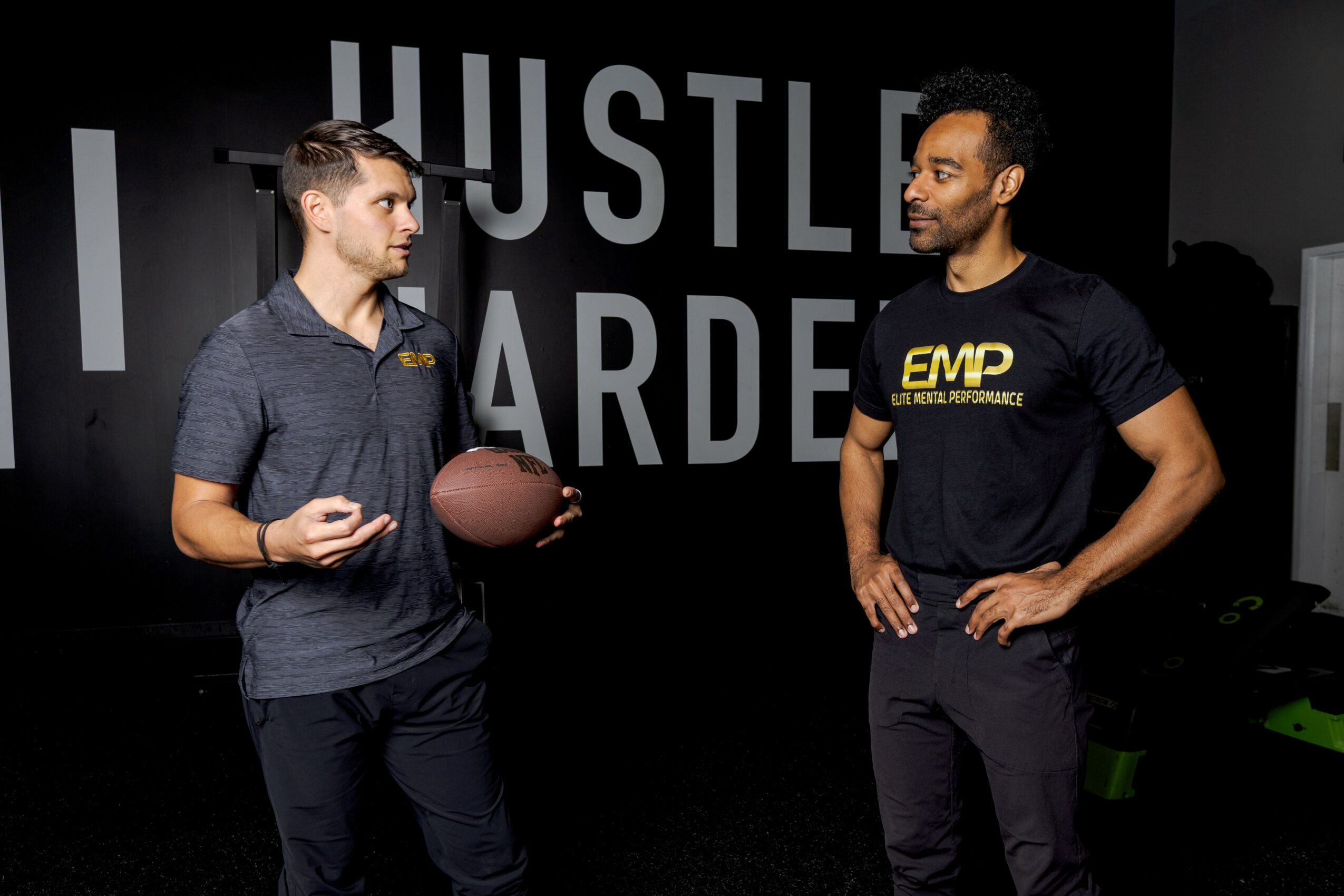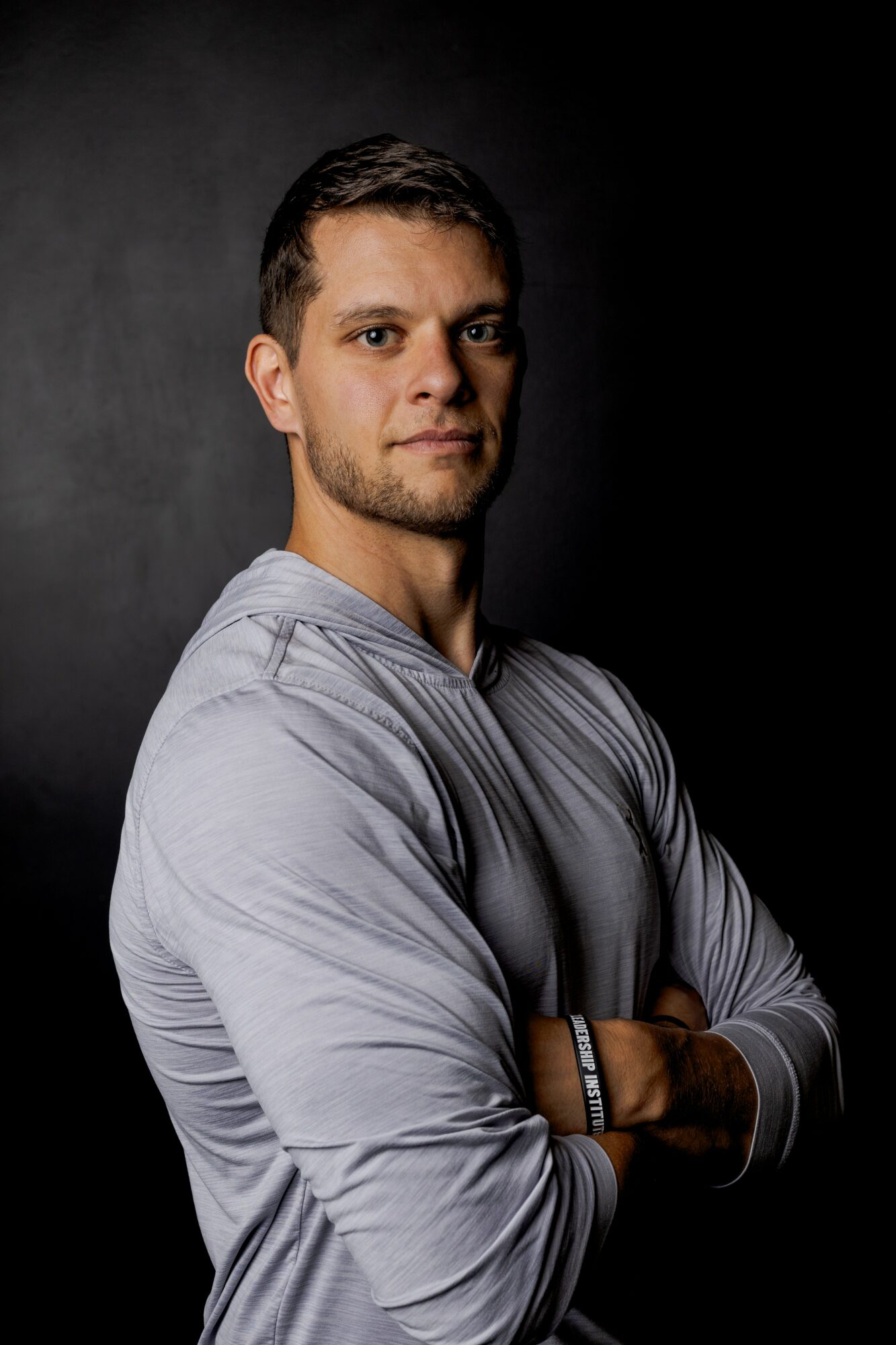





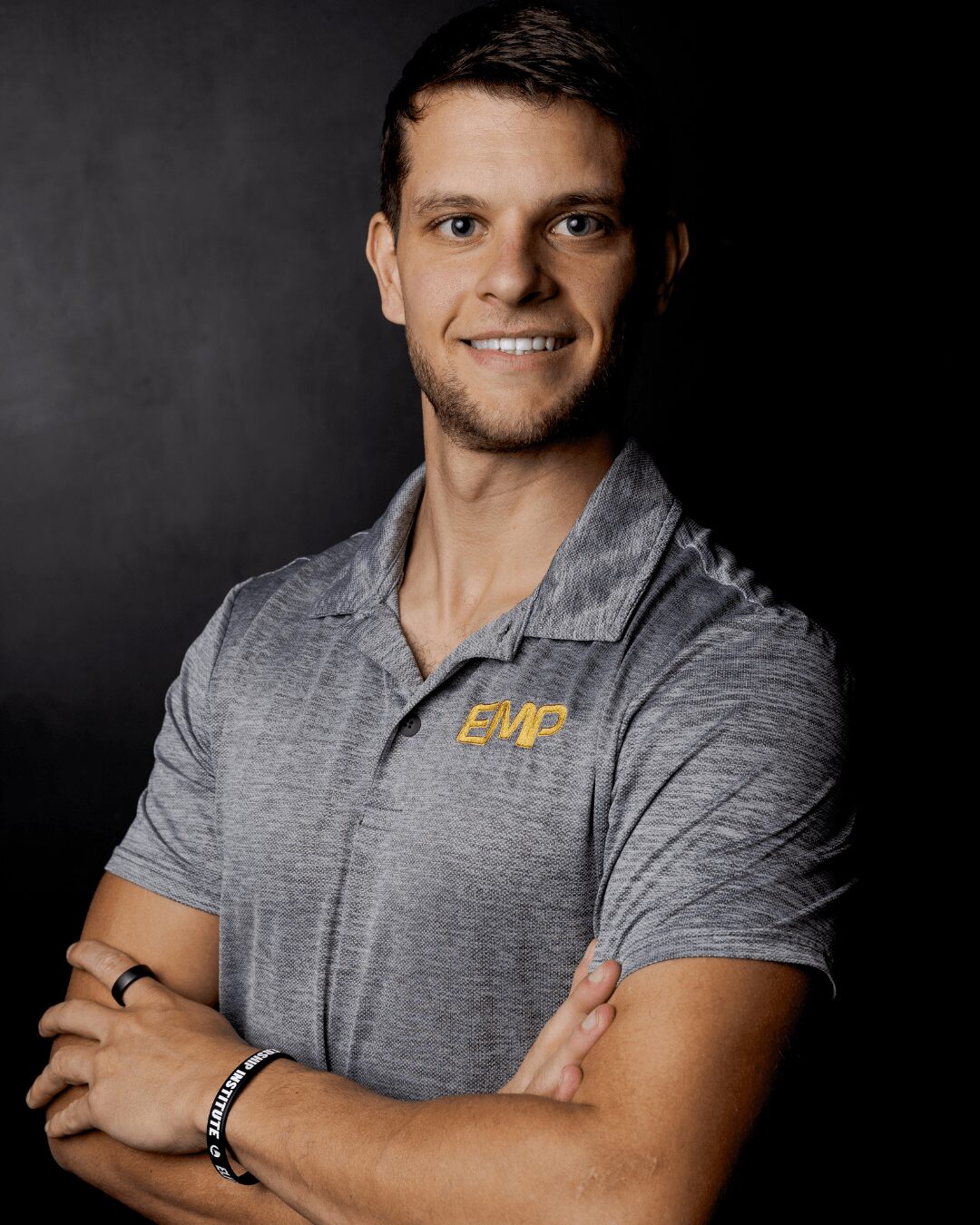
Today we’d like to introduce you to Alex Bolowich.
Hi Alex, so excited to have you with us today. What can you tell us about your story?
I was a goalkeeper in soccer. which naturally comes with a lot of pressure. A striker misses five shots, scores one, and he’s the hero. A keeper makes five saves, lets one in, and that’s the goal people talk about on the ride home. You live and die on consistency back there and for most of my career, I had that.
Then I got to the Division I level at Creighton University, and my game started coming apart in ways I couldn’t explain. I was dropping shots I’d caught cleanly my whole life. Coming off my line a half-second late on crosses. Playing simple passes right to the other team. From the outside it probably looked like a slump. From the inside, it felt like I was in someone else’s body. Like I was physically stuck, rigid, and couldn’t be free. My mind was saying one thing but my body wasn’t following.
I lost the starting spot. Earned it back. Lost it again.
I tried everything anyone suggested. Positive self-talk. Reframing. I sat across from a sports psychologist. None of it stuck, and for a long time I assumed that meant something was wrong with me. That I was “mentally weak.” It took me years to understand the real problem: my nervous system was running on a chronic stress overdrive. Eventually, bottling up the “fight-flight” response lead to an involuntary “freeze” response. Simply put, my mindset, focus, and biomechanics were offline, because my autonomic nervous systems self-preservation responses were online, and no amount of thinking or self-talk can get you out of that.
I retired without ever becoming the player I knew I could be. I don’t hide that anymore. It happened, and it stung for a long time.
What changed everything was soccer coaching. When I started working with youth and college soccer players, I began seeing my own story being represented with some of these players. Talented kids playing tight. Players who dominated in training but not in games. And every single one of them dealing with it alone, quietly, convinced they were “mentally weak” exactly like I had been. The potential was built through years of training. The opportunities were abundant. But the mental game is the bridge that either allows that to come to fruition or doesn’t.
That was the moment I made a career change. I went back to school for a Master’s in Sport and Performance Psychology, then earned my CMPC through the Association for Applied Sport Psychology, and built Elite Mental Performance. Since then I’ve coached more than 550 athletes across a dozen-plus sports — youth players in the ECNL and MLS Next, college athletes, pros in MLS, the NFL, the NBA.
Here’s what I believe, and it’s the thing my playing career taught me the hard way: peak performance is a psychological process disguised as a physical one. From the swing of a bat to competing for a rebound, every movement is a fine-tuned communication pathway from the brain to the muscles in real-time on a millisecond by millimeter level. If there’s unresolved distress in the brain and nervous system, that fine-tuned execution will be altered, leading to performance slumps.
Which is why I’m passionate about the second half of my philosophy: mental training has to be foundational, and it has to start earlier. Not as damage control at nineteen when a kid is already in a hole. As part of development from the beginning, the same way we treat footwork and fitness.
I couldn’t fix my own career. But it turns out that losing the mental game firsthand, and then spending years studying why, made me exactly the coach I needed and never had. Now I get to be that for other athletes. The players I work with are winning again, signing contracts, getting recruited. But honestly, the outcome I care about most is simpler than that: they get to finish their careers with nothing left in the tank and nothing left unsaid. That’s the thing I never got. And the memories of your experience are the real trophy you’re left with the rest of your life.
I’m sure it wasn’t obstacle-free, but would you say the journey has been fairly smooth so far?
Absolutely not. Entrepreneurship feels like jumping off a cliff and trying to build a plane on the way down. However, it has been the most rewarding journey. It forces you to a new level of stress control and regulation. It forces you to levels of creativity you didn’t know you had.
At one-point I had only 1 months rent and expenses left to my name. I exhausted my savings. I sub-leased for 3 months, moved into community housing that fell through on move-in day. Moved into my friends house for 4 days. Then found an old apartment I could afford (hopefully) that smelled like cigarette smoke. All with my dog.
In that year I hardly socialized. My friends would say that I was a ghost. I was forced to figuring out how to get this thing off the ground and moving. My family is not entrepreneurs and kept encouraging me to take a job somewhere. I had to create boundaries with them around what we discuss with my business, because that wasn’t the support I was needing.
Years later after working incredibly hard to get to where I am, I took a calculated risk to invest $10,000 in a social media marketing program that was a major flop.
Dating life was difficult because I wasn’t not in a place where I could devote the time and attention to what many people wanted or needed.
There have been many layers of challenges, but all have been worth it.
Thanks for sharing that. So, maybe next you can tell us a bit more about your business?
Elite Mental Performance is a mental performance coaching practice for competitive athletes. We give athletes the access and training they need to transfer information from the brain to the body to allow for their physical training to fully manifest at it’s peak.
What I Do:
The core of my work is helping athletes regulate their autonomic nervous system. When an athlete is blocked or anxious, the subcortical regions of the brain, the older, survival-wired parts, have flipped into self-preservation mode. The brain has decided the moment is a threat, and no amount of “just relax” or “trust your training” reaches that part of the brain, because it doesn’t speak in words. So we work underneath the words. Through vagal tone stimulation, we teach the nervous system that it’s safe to turn self-preservation mode off, and turn freedom to compete on.
How that happens: brainspotting sessions with me, paired with a personalized mental training plan the athlete runs between sessions, built on bottom-up regulation practices like diaphragmatic breathwork. This isn’t a one-sized fits all approach, but moreso about how the athlete is connected to their body and the level of responsiveness.
Once the nervous system is on board, we build the mental gameplan: performance routines for pre-competition, mid-competition, and post-competition. Each one has a job. Pre-comp gets you into your ideal mental state. Mid-comp keeps you there. And post-competition, the one almost every athlete skips, discharges the stress of competing so it doesn’t carry over, build up, and eventually turn into the very blocks I specialize in breaking.
What I Specialize In:
My specialty is mental blocks, what most people know as the yips, or the twisties, and performance anxiety. Almost every athlete who comes to me thinks they have a confidence problem. That’s what it feels like from the inside. But confidence is just what they feel and understand. Underneath it is the real issue, the anxiousness and the physical stuckness of the block itself. Their body literally won’t do the thing it’s done ten thousand times. You can’t talk your way out of that, and you can’t positive-self-talk your way out of it either. I know, because I tried during my own playing career and it cost me.
What Sets Us Apart:
We don’t just work top-down through “positive thinking” and “growth mindset.” We work bottom-up, through the body and the nervous system, using interventions like brainspotting, vergence and quiet-eye training, diaphragmatic breathwork, and progressive muscle connection. Because a block doesn’t live in the neocortical areas of your brain, it lives in your subcortical regions. And once an athlete gets free of the block, we don’t just shake hands and part ways. That’s when the real opportunity opens up, and I encourage them to keep building with advanced mental skills training so the next challenge doesn’t turn into the next block.
Who I Work With:
Mostly athletes between the ages of 16-22. I am open to all sports but my roots are in soccer, and a lot of my athletes come out of the ECNL, MLS Next, college, and pro ranks, but at this point I’ve worked with over 550 athletes across more than 20 sports, some competing in the NFL, the NBA, and MLS.
What I’m Most Proud Of:
Getting athletes to actually prioritize their mental game. That sounds small, but it might be the hardest part of this entire job. Because here’s the truth: without the mental side, the thousands of hours an athlete has poured into physical training are useless. All of it, the 5 a.m. sessions, the extra reps, the years of sacrifice, none of it shows up if the mind won’t let it. And mental training is a confusing, often frustrating process. It’s not linear. There’s no bench press number that tells you you’re improving. Getting athletes to embrace that process is a difficult feat, and honestly, it’s something I’m constantly working to deliver and communicate better. I don’t think I’ll ever stop refining that part.
What I Want Readers to Know:
Especially the parents and coaches: don’t wait until your athlete is stuck. We would never wait for a hamstring to tear before starting strength work, but that’s exactly how we treat the mind. Start early. Build it into their development from the beginning. That’s when mental training becomes an advantage instead of an emergency, and that’s the future I’m building Elite Mental Performance toward.
We’d love to hear about how you think about risk taking?
If you’re not willing to take risks, you’re going to stay small. I took a major risk by going into entrepreneurship and quitting my full-time job. No business experience, no degree in it, no family history, just going in blind and “winging it.” And it’s the best decision I’ve made.
What you’ll find in most people is when you ask them about the most rewarding part of their lives, it typically is followed by taking a huge risk. Something incredibly rare like becoming a Navy Seal or something more common like becoming a parent. Both are fulfilling journeys as a rule, but come with intense challenge and uncertainty.
There are risks you shouldn’t take like investing your entire savings into one-stock that’s “going to make it big.” There’s a line between taking risks and gambling. But I always believe you should push just outside your comfort zone and go for it.
But be ready, because daring greatly requires failing greatly, and that’s a part of the process.
Contact Info:
- Website: https://www.elitementalperformance.net
- Instagram: https://www.instagram.com/mentalcoachalex
- LinkedIn: https://www.linkedin.com/in/alex-bolowich