





Today we’d like to introduce you to Shannon Madden.
Hi Shannon, thanks for sharing your story with us. To start, maybe you can tell our readers some of your backstories.
I started building guitars in 2016 at Shady Lea Guitars in Rhode Island and built 2 acoustics and 1 electric guitar under the mentorship of master luthiers Dan Collins and Nick Holcomb. (“Luthier” means guitar builder.) I moved to Raleigh in 2018, and at the beginning of 2020, I found myself unemployed. It was then that Dan and Nick encouraged me to start a mobile service in Raleigh doing guitar maintenance and repair. Guitars, basses, and other stringed instruments regularly need “setups,” which is a maintenance service, kind of like an oil change for a guitar—it involves cleaning all the electronics, cleaning and reconditioning the fretboard, tightening the hardware, restringing, and resetting the intonation so every note on the fretboard is in tune. There are so many bands and musicians in this area that there is great demand for setups and repair work. I started Luna Luthier Services in March of 2020, incidentally right when Covid hit. Still, because the work doesn’t require any face-to-face interaction and I can do contactless pickups and deliveries, I wasn’t affected disproportionately by Covid. Even in the pandemic conditions, I have been blessed to work with amazing clients who helped me get the word out about my services to their friends and bandmates, and helped me connect with other musicians in the area. At this point, I have more than 100 clients, and many of them have come back to me multiple times and used me for various instruments and told their friends about me. I’m lucky and grateful for all the support and enthusiasm the community has shown me and how local musicians and bands have helped me get going. My mentor Nick Holcomb has been instrumental in answering any questions I have about challenging jobs, and knowing I have someone trusted and highly skilled with more than a decade of experience building and repairing guitars was invaluable to me in the early days.
We all face challenges, but looking back, would you describe it as a relatively smooth road?
Starting a new service at the beginning of a pandemic was challenging, mainly because I serve musicians—and all their gigs also got canceled at the start of the pandemic. Many of the local musicians I serve work in restaurants, and when restaurants also closed at that time, it was a dire situation for many of the people who would become my clients. Somehow I made it through and have enjoyed more success than I could ever have anticipated throughout 2020 and to date.
Another struggle is that all guitars are slightly different, and the way musicians talk about the problems they are having with their guitars can be nuanced. A lot of the intake process when working with a new client or a new guitar is about developing a shared vocabulary for what is going on with the guitar and listening deeply to what the client is saying so I can address their needs. What one person describes as a “buzz” another person might describe as a “rattle” or a “click,” and because I’m working with instruments that I have never heard before and that may sound different through my amp than they sound through the client’s amp and pedals, a lot of the labor at the front-end is in coming to a shared understanding about the client’s needs and desires. What can make it more complicated is there is a lot of information on the internet about guitar repair, and much of that information is incorrect or in conflict with other information out there, so people will sometimes come to me having googled their issue and bringing a sense of what the problem is that might be informed by what they found online. That itself can be a barrier—if they want me to address one thing because they think that’s the problem, and that’s not actually the problem, we have to have a deeper conversation about what they’re experiencing and what needs to be addressed. For this reason, and because I want to treat the client experience holistically, I focus less on what is the specific part that needs to be addressed than on the client’s needs—what do they like to play, what playability issues are they experiencing, what kind of sound do they go for, and what kind of feel do they like their guitars to have? These questions can teach me more about the client and their instrument and needs than more technical questions, and often help me get to the root of the problem they are experiencing more quickly.
Thanks for sharing that. So, maybe next you can tell us more about your business?
The mission of Luna Luthier Services is to provide high-quality, luthier-grade instrument work in the triangle area and to support inclusion in the music industry however I can. I studied guitar building under luthiers with decades of experience building original instruments. Some guitar technicians approach repair work without the background knowledge of having built multiple instruments from scratch, and I am grateful that I have that experience and can conceptualize repairs in the context of the architecture of the whole instrument. At the same time, many technicians (and the repair industry) have a reputation for taking an attitude of “I know more about your guitar than you do.” And while that may be true on a technical level in some cases, the musician knows more about their guitar, its history and quirks, how they play it, what they value about it, and what they want from the instrument and the repair than the technician does. Honoring that and respecting what clients bring to the table has been important to me from the beginning. No one likes to be talked down to, and as a woman, I think I have an advantage in this space. I believe women and nonbinary folks are more comfortable working with me because they know I won’t condescend to them. I also think men are more comfortable with me for the same reason—a lot of my clients who are men have mentioned that other techs treat them disrespectfully, and they appreciate that I am not like that when we discuss their guitars. Condescending attitudes are exclusionary and unnecessary, and I want clients to feel welcomed and valued—I never want people to feel uncomfortable when they’re working with me.
Additionally, as a woman working in an industry dominated by [white] men, it has been critical for me to give back to the community and do what I can to create opportunities for people of color and women to contribute to the music industry and also be empowered to work on their guitars. In early 2021 someone approached me with several broken guitars and asked if I would be interested in repairing them and giving them away to children of color, LGBTQ+ children, and girls who want to learn to play guitar. That was a fantastic experience, and I was honored to get guitars in the hands of young people from marginalized groups who wanted to learn to play guitar. I have also transitioned from doing fairly straightforward setup and repair work to mentoring others on how to work on guitars, and most of the clients I have worked with within the mentoring space have been women. It has been so enriching for me to train women (and in one case, a preteen girl) to maintain and set up their guitars and help them feel like they understand the instrument on a deeper level, and demystify some of the maintenance aspects of guitar ownership.
Another thing that sets me apart is that I treat this like a passion rather than a business. That helps me be collaborative and supportive of musicians and my colleagues in the industry. When other people have started repair businesses in the area, I have helped them promote their businesses, and I refer people to them when my waitlist is too long. There is more than enough work for everyone. I’m not trying to corner the market, and I don’t see any of this as competing with other people—I want to be a good person, and I want people to trust me. If clients want to work with someone else instead of me, that’s fine! Luna, for me, is about getting connected to the music scene, meeting musicians, and doing what I love, which is engaging with music and guitars. Everything else is secondary.
What has been the most important lesson you’ve learned along your journey?
If you treat people well and are passionate about what you do, everything will fall into place. As I mentioned, guitar repair cultures have a history and a reputation for being exclusionary and condescending. Music has been so important to me throughout my life, and I genuinely love the art of musical expression—all kinds of music. Music, for me, is a spiritual experience. This is an advantage because I’m interested in my clients on a deep level, and I want to know what kind of music they like and play and care about, and I want to see them perform and support their bands. Music and guitar work are not about business for me, it’s my passion, and I believe that is a gift for this kind of work.
Personal integrity and passion for the work show through. All our work should have love in it. When it does, people notice. I’ve never had to hustle to get clients or to drive business, or convince anyone about the quality of my work and capabilities because I’m real, I’m honest, I listen to my clients and pay attention to their priorities, and I don’t try to fake it or pretend to know things I don’t. My clients have done all the work in spreading the word to their friends, and I have been so lucky to have their support. I do this work for fun and because I love it, so in a way, there’s nothing at stake, and I have nothing to lose—and that is freeing. I think that puts me in a good position. People can see that I do this work because I love music, musicians, and local bands. The triangle has such a rich music scene, and so many bands here should be high-profile national acts. Several of my clients play in bands that are making music on par with some of the country’s best-known bands, and I feel lucky and so grateful to know them and be in their orbit. All of the work is in collaboration; it’s not a transaction. Customer loyalty works both ways—my clients are loyal to me, and I am loyal to them, and they know that. I love them! I love their bands, want them to succeed, and care for their instruments as if they were my own. I don’t cut corners, and I don’t do subpar work because helping them play their best is my top priority. It’s such a wonderful feeling when I return a guitar to someone, and they say, “Wow, this plays better than it ever has!”—I get that a lot, and I live for that feeling. It’s such a blessing. When I go to shows and have worked on every instrument on stage, and the musicians are wearing my Luna t-shirts, it makes me feel so lucky and grateful. I can’t believe how lucky I am.
Contact Info:
- Email: [email protected]
- Instagram: https://www.instagram.com/lunaluthier


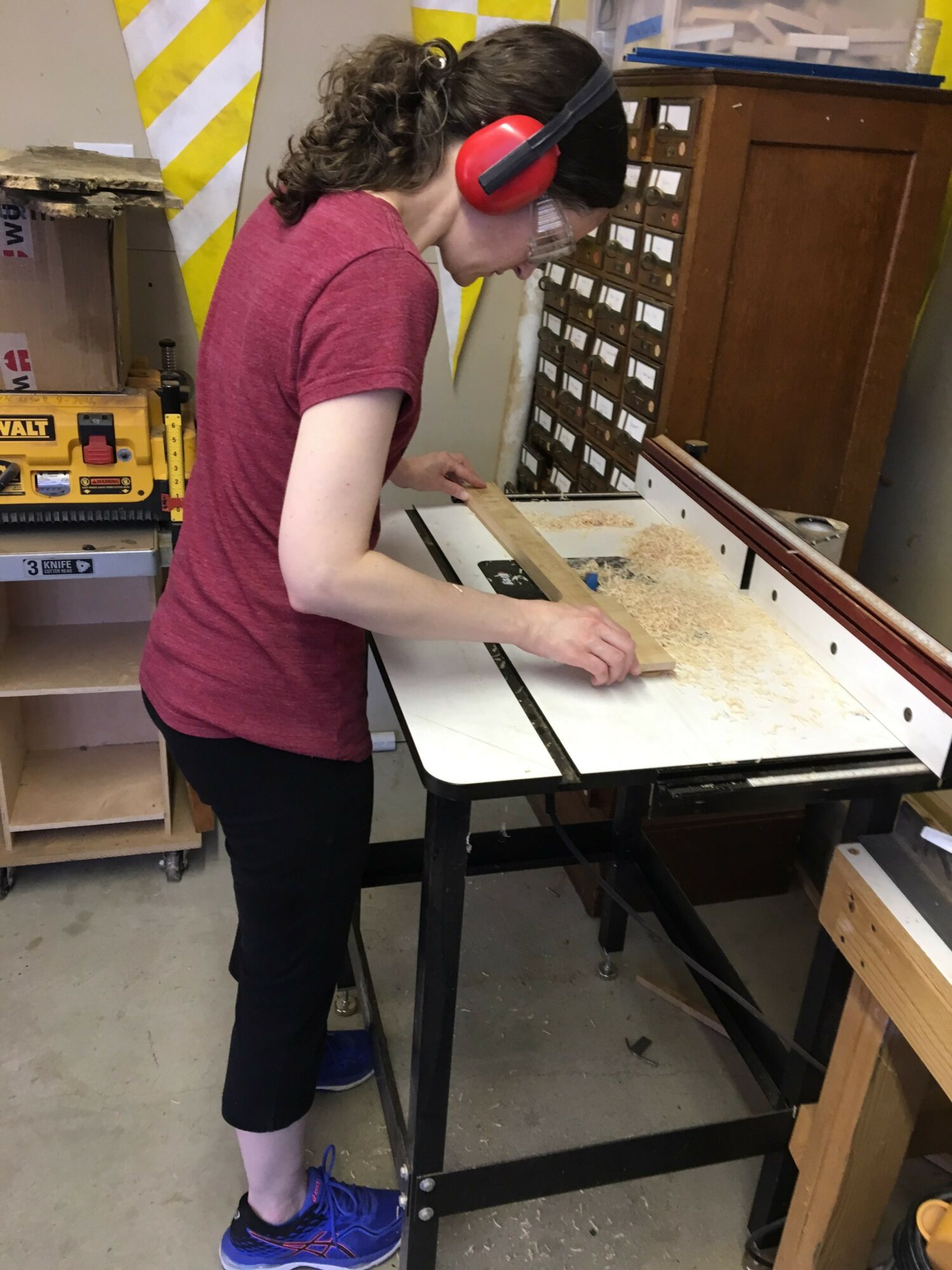
Image Credits
Dan Collins [credit files named Luna1DC and Luna5DC] Jillian Clark [credit for files named Luna 2JC, Luna 3JC, and Luna4JC] Nick Holcomb [credit for file named Luna6NH]