





Today we’d like to introduce you to Katherine De Vos Devine.
Hi Katherine, thanks for sharing your story with us. To start, maybe you can tell our readers some of your backstory.
I grew up in the Ansonia on NYC’s Upper West Side, the baroque apartment building that inspired “Only Murders in the Building.” It really was like living in a small, highly creative town. I woke up to opera singers doing their scales. When I went to see a Broadway show or ballet at Lincoln Center, it was usually to watch a neighbor or friend’s parent perform. Going to an art opening in SoHo was just something you did before dinner. My parents would take me to the Met and let me run loose in the Egyptian wing when I got bored.
My dad worked at Morgan Stanley in mergers and acquisitions (it was the 1980s, very Bret Easton Ellis). My mom was in admissions at NYU’s business school. Very business-oriented household, but their friends were artists. I think my awareness that art is a form of work, not magic that just happens, comes from that balance.
When I was a kid, I had my first entrepreneurial venture: I’d make these little books on the office color copier and wander around the Morgan Stanley halls, convincing MBAs to buy my drawings. So I’ve always been thinking about how art and business intersect.
I went to Duke planning to study political science, but I took my first art history class with Kristine Stiles, and that was it. Hooked after the very first session. She later became my dissertation advisor for my PhD. After finishing my BA, I tried a few different careers: sex educator, working in luxury restaurants, art appraisal program. Then I took a job at a big New York City law firm as a tax paralegal, mostly doing pro bono work for startup nonprofits and private foundations that funded arts institutions. Those clients reminded me why I love working with artists and helping build art communities.
The moment I knew I wanted to combine law and art happened when I visited Tom Wesselmann’s studio (he was a family friend). I thought I’d find him painting a nude. Instead, he was behind a desk, poring over contracts. We talked about how much time the legal side takes, and I asked if he’d rather be making art. That’s when I realized: I could help artists spend more time actually creating.
I went back to Duke for both my PhD in Art History and law school. While I was finishing my dissertation, I became the first Executive Director of Black Mountain College Museum + Arts Center, and then started an arts consultancy. During that time in Asheville, the artists I worked with kept asking me for help with their legal issues. I’d refer them to brilliant colleagues, but they’d always come back saying “they talk too fast” or “I didn’t understand, can you go over this again with me?” That’s when I realized that being trained as an art historian (being able to read artists’ writings, interview artists, understand how they think) gave me an irreplaceable advantage as an IP lawyer. I can talk to creatives in ways most lawyers can’t.
On the first day of law school, I met my husband and future law partner, Robert. We were seated alphabetically (de Vos and Devine), and we work extremely well together with completely complementary skill sets. I’m the big ideas, a people person, great with feelings, and a highly technical IP lawyer. Robert implements ideas (now you get the firm name!), is hyper-focused on perfect contract construction, and excels at complex deals, mergers and acquisitions, patents, and ongoing strategic advice.
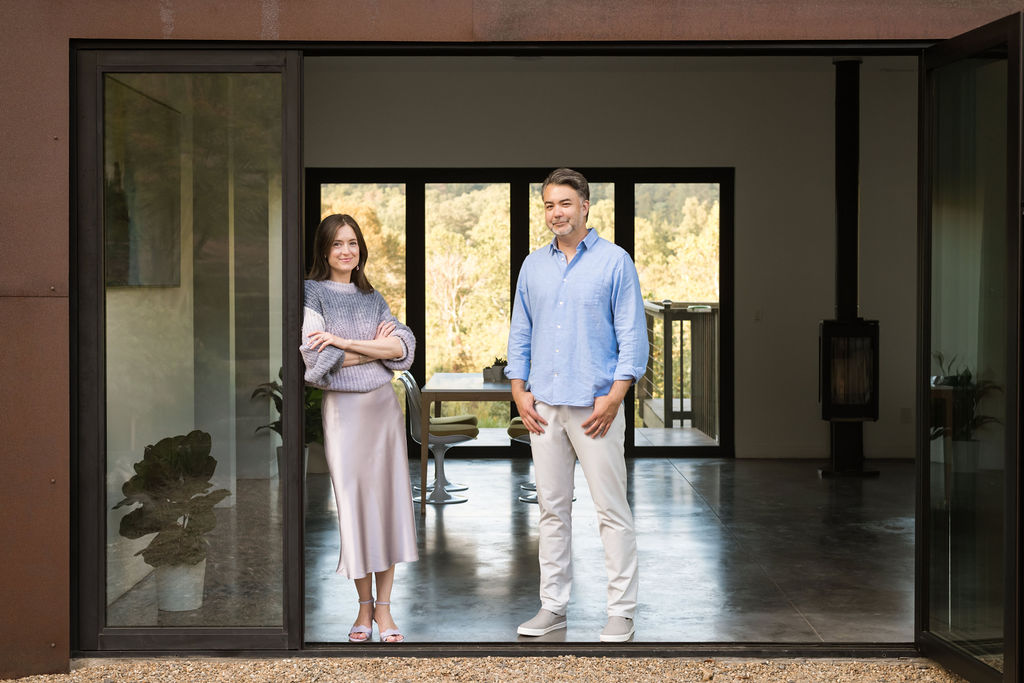
After finishing my PhD and JD, Robert and I founded Implement Legal. Robert grew up in LA, I grew up in NYC, but we chose to build our practice in North Carolina. We love it here. We love the artists here. This is where we want to be. We help our clients implement their big dreams (the dictionary definition of implement is “to carry out, accomplish, fulfill”). That’s what we do.
Alright, so let’s dig a little deeper into the story – has it been an easy path overall and if not, what were the challenges you’ve had to overcome?
Not smooth at all! During law school, I was told “art law” is not a real practice because creatives can’t pay for legal services, that they don’t like working with lawyers, that I was wasting my education. Someone told me that exact thing just last week—right before I went on stage to talk about contracts to an audience full of creatives who had paid to see me!
There are a lot of assumptions about “starving artists” that just aren’t true. Our clients are mid-career and established creatives who take their businesses very seriously. They’re negotiating six-figure deals, managing teams, working with major institutions. They absolutely understand the value of strategic legal advice.
Building a practice that’s different from traditional law firms meant we had to be creative ourselves. The usual path doesn’t work for us. We’re not putting up billboards or finding clients at professional conferences. Our business has been entirely referral-based. We started with a waitlist and it’s all been word of mouth since then. That takes patience and faith that the work will speak for itself.
I also have a lot of empathy for clients who are parents, who take care of elderly parents, who are neurodiverse, or who have health challenges. All of these things affect our ability to create and serve. My advice is born from this empathy—I understand that life circumstances shape how we work, and legal strategy needs to account for that reality.
We’ve been impressed with Implement Legal, but for folks who might not be as familiar, what can you share with them about what you do and what sets you apart from others?
Implement Legal specializes in intellectual property law—copyright, trademark, patent, contracts—for creative professionals and the businesses that work with them. We serve galleries, labels, production companies, museums, makers, writers, coaches, anyone building a creative practice or small business.
What sets us apart is something we call “relational law.” We learned this approach from family law colleagues who practice collaborative divorce. They taught us that when people need ongoing relationships (like divorced parents co-parenting for decades), legal strategy can’t just protect individual rights. It has to preserve the relationship itself.
Creative businesses face the same challenge. Your gallery represents multiple artists whose work overlaps. Your label negotiates with producers who collaborate across your roster. You’re not conducting one-off transactions; you’re operating within an ecosystem where the same people keep intersecting. Traditional IP firms are built for adversarial thinking, but that destroys the very networks creative businesses depend on.
We ask different questions: not just “What are your rights?” but “What relationships do you need to maintain?” We structure agreements that protect everyone’s interests without poisoning future collaborations.
Our signature offering is Continuous Counsel, which is designed for mid-career and established creatives who need a team they can trust. Maybe you’ve gotten by in a really scrappy way, but now the deals are six figures, you’re managing people, and you can’t keep all the details straight. You need serious contracts, ongoing advice, someone on call. We’re your emergency contact for everything legal.
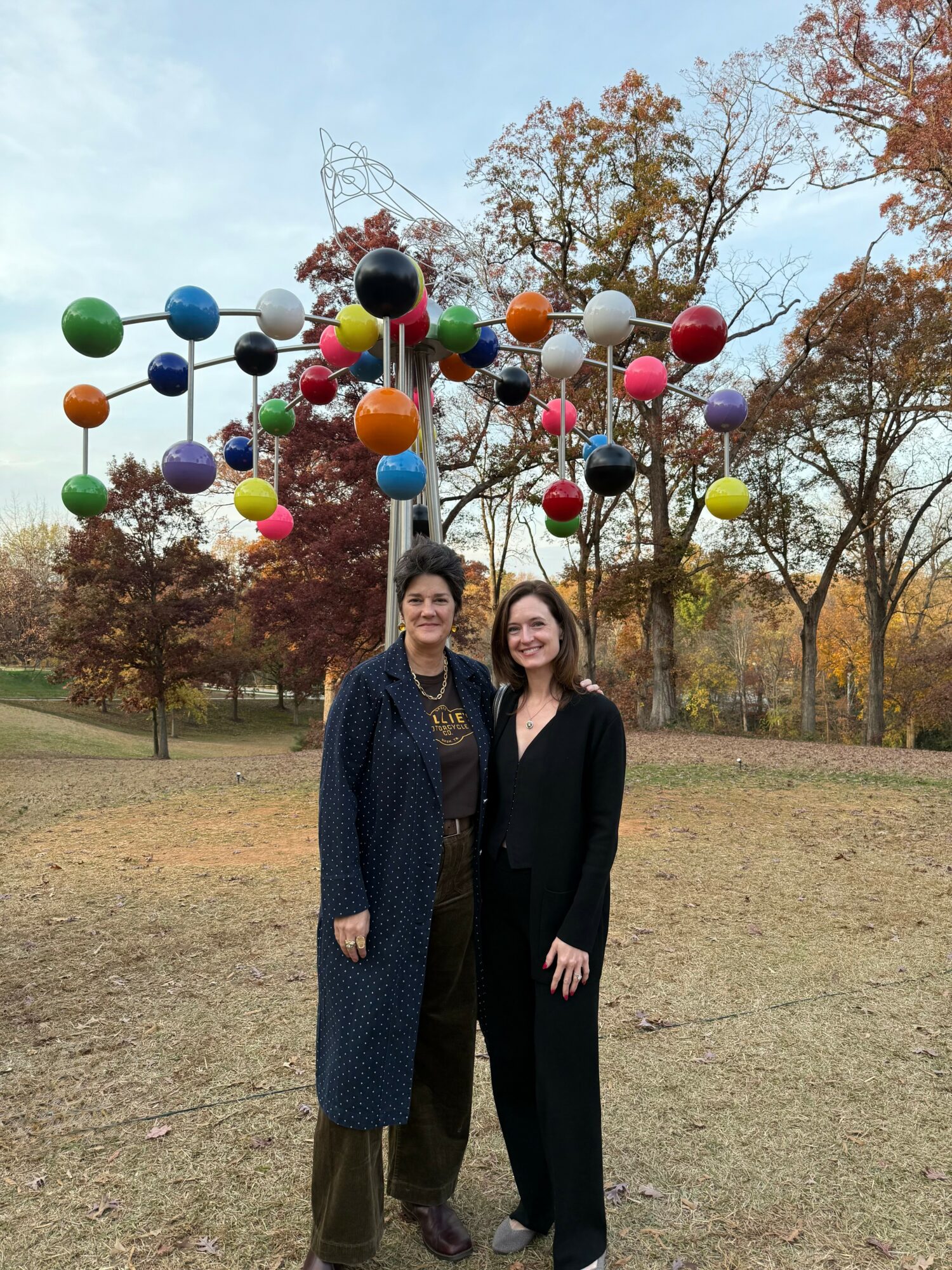
One of my proudest moments was Anne Lemanski’s ribbon cutting at Dix Park for her work “Sophia Fortuna,” which was commissioned by the Raleigh Fine Arts Society. We’ve been working with Anne for years, and seeing her monumental sculpture installed was incredible. Then we ran into family at the event—they were happily surprised to see us! We also loved the sculpture’s fabricator and are now referring him to other clients. Anne is such a world-class talent, and Raleigh is so lucky to have her work. All the interconnections on that project are really emblematic of what Implement Legal was built for. Everyone wins when we preserve the ecosystem.
Are there any important lessons you’ve learned that you can share with us?
The most important lesson was that feelings are data in IP law. You can’t ignore feelings and relationships when you’re doing this work.
My “weird” resume—art historian, tax paralegal, museum director, sex educator, restaurant work, arts appraisal and advisory, college professor, all of it—turned out to be a feature, not a bug. Being specially trained to read artists’ writings and interview artists gave me an irreplaceable advantage. I can speak artists’ language in ways most lawyers can’t. I know how to help people navigate tough conversations about intimate relationships. I understand that protecting your creative work means protecting the relationships that work depends on.
That insight from collaborative divorce—that legal strategy must preserve ecosystems, not just protect individual rights—changed everything for us. Traditional IP law is built for adversarial thinking, but creative professionals need counsel who understand that their gallery, their coaching business, their production company operates within a network of recurring collaborations. You can’t afford attorneys who treat every negotiation like a battle.
In my off time, I read tarot, explore local trails, and do the NYT crossword. Puzzles are how my mind works. I see patterns in nature, relationships, in contracts, in how deals ripple through creative communities. That’s what makes our practice different. We’re not just protecting rights—we’re protecting the magic that creative people bring into the world, and helping them build lives where their art can thrive.
Contact Info:
- Website: https://www.implementlegal.com/
- Instagram: https://www.instagram.com/devosdevine/
- LinkedIn: https://www.linkedin.com/in/katherine-de-vos-devine/
- Other: https://protectyourmagic.substack.com/