



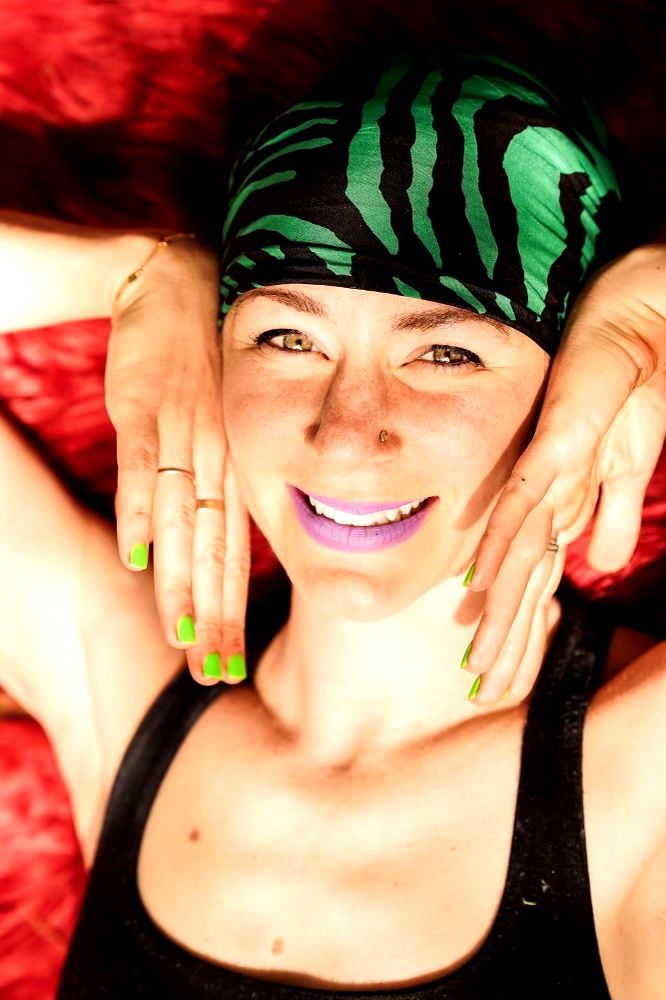
Today we’d like to introduce you to Christine Stevralia.
Hi Christine, thanks for sharing your story with us. To start, maybe you can tell our readers some of your backstory.
I grew up in Pennsylvania. Despite being top of my class, I was ignorant of the outside world. The summer before senior year of high school, I watched the movie Hotel Rwanda. I was 17, and until then, had believed that war was a thing of the past. It blew my mind to think that I had been completely ignorant of war and genocide happening during my lifetime. On our way home from the theater, my friends and I bought hamburgers for the unhoused people on the block. It was like a switch flipped, and suddenly I was possessed by an unquenchable curiosity about other countries and cultures. I wanted to see and feel as much as I could of the international world.
That summer, I also learned about the Peace Corps. Joining the Peace Corps after college became my main goal and ambition.
I attended Tufts University as an undergraduate from 2006-2010, majoring in English and Anthropology with a minor in African Studies. My thesis examined the representation of sex workers in the women’s rights movement in Dakar, Senegal, where I lived for four months.
After graduation I taught English in Guadeloupe, a French Caribbean island, for 7 months. I fell in love with a man named Stephane, who taught me French, empowered me to embrace my sensual side, and catalyzed my sexual awakening.
I returned to the States in May 2011. One month later, in June 2011, I flew out from Philadelphia to Yaounde, Cameroon to begin service as a Peace Corps Volunteer. From 2011-2013, I served as an education volunteer in Mayo Darle, Cameroon. I lived in my own small house attached to my landlord’s compound. My landlord was a traditional leader in the town with three wives and many children. I adopted a Cameroonian street dog, Nomi. Nomi became famous among the village children. When I took him on runs, children emerged from their houses to shout his name. This happened even two miles outside of the city! For women’s day, Nomi performed his tricks on stage (sit, stay, spin, jump). I believe and hope that Nomi helped some people to be less afraid of dogs.
The hardships Americans fear most were actually enjoyable for me. My three-room home was constructed with dirt bricks. As a building material, these bricks self-regulate temperature, retaining coolness during the day and warmth on chilly nights. A town generator provided modest electricity during the evenings. When the power was out, I felt more connected to the earth and to my surroundings. My home contained a latrine that was extremely well designed, so it didn’t smell. For those 2 years I collected all of the water I consumed from the nearby well. This felt incredibly satisfying and grounding. It gave me an embodied appreciation of my water consumption. I bathed with a bucket, heating water on the stove and relishing my warm baths.
Isolation was the most challenging aspect of my Peace Corps experience. Mayo Darle was one of the most remote posts in country. I was 22, and struggled to connect to people in the rural, conservative town where girls were often removed from school upon their first menstruation, married off, and then expected to have many children. I started a club called “Femmes de Demain” and created an anonymous question box for the female students. They shared stories of abortions against their will and wanting to continue their education, but being pulled from school by their parents. Most Peace Corps posts nowadays have electricity, technology, and other volunteers nearby. It took me 8-12 hours to get to the city from my town and to see my fellow volunteers.
The principal of the school where I worked was very corrupt. He stole money from the school. Part of my project was to create a computer lab for the school. We shipped the computers from the States and painted a beautiful mural in the room. The school was responsible for installing the solar panels to power the lab, but the funds disappeared, leaving the students with a room full of computers and no electricity to power them. I was so angry. I asked the principal where the money had gone. He yelled at me. I have never before or after been so enraged. I spat on him, a spray of saliva in his face.
Returning to the US, I moved to New Orleans. I wanted to live in the least conventionally “American” part of the US. At this time, I felt very lost. I had achieved my main ambition of joining the Peace Corps, and I suddenly realized that I had no plan and no idea of what I wanted to do after that.
I made lists and lists of possible careers, but nothing felt right.
I was a huge fan of the show True Blood and wanted to experience working as a waitress, like the main character Sookie. It felt romantic and fun. So I decided to pursue that while I figured out a more long-term career.
Through a mysterious series of events, I ended up working as a cocktail waitress at Deja Vu, a strip club on Bourbon Street. It was the outlet I needed to balance out the previous two years of sexual oppression and gender inequality. In Cameroon, I felt the male gaze upon me all the time but was also urged to be modest and hide my body. It was reminiscent of my Catholic upbringing, where people don’t talk about what goes on behind closed doors. The club was explicit, but at least it was honest. It felt refreshing to be in an environment where sexuality was out in the open.
Because the club was a place to let loose, a place where people indulged in behaviors that might otherwise be considered taboo, everyone there felt freer to be real. Staff, performers, and customers revealed their gritty truths, and I loved this.
After 4 months, I quit waitressing and returned the next evening to compete in and win Amateur Night. I love climbing and am very strong and athletic, so I took to the pole with enthusiasm. I have a flashbulb memory of that night, up high on the spinning pole, pulling the string of my bikini top and letting it fly into the crowd, feeling rebellious and free. I won $500 that night for about 3 minutes of dancing, signed my contract, and went home.
As a dancer, I made an average of $400 a night. I could choose my own hours, working as little or as much as I desired. The crew felt like a family. Working there has a carnival feeling. I felt solidarity and camaraderie with my coworkers. Every night we put on a show. When one made money, we all made money. We supported each other. I saw many different body types, and I saw the beauty in each. I learned that confidence sells. At 4AM, after last call, when the last customers had stopped spending and sat nursing their drinks, my friend Friday would go on stage and yank off her wig to scare them out, so we could all go home.
At that time, I was beginning to experience the onset of PTSD, though I didn’t know it yet.
I was smoking weed every day, and entered into a period of hyper-sexuality, engaging in unsafe sex, dissociating from the danger, and then contracting with fear and anxiety afterward. I did not have health insurance a the time and developed health anxiety. I would fixate on pains in my body and ruminate on worst-case-scenarios.
When I started dating my husband-to-be, I stopped working at the club. This was the summer of 2015, and I was 26. That fall I enrolled in the University of New Orleans Creative Writing Workshop to pursue a Masters of Fine Arts degree in Creative Nonfiction.
As my life calmed down and stabilized, my anxiety symptoms escalated. I did not know at the time that it was anxiety. Things like: heart palpitations, forgetting how to breathe, fear of passing out, extreme fatigue, sudden lower back pain so intense that I could not put on my own socks. A severe rash broke out over the tops of my feet, and I went to Urgent Care. There they diagnosed me with anxiety. The diagnosis helped me to understand what was happening and find a path toward healing.
I was still frantically searching for my purpose and for a career that I would enjoy. I did not feel I could rely on writing for a living. I was working in the International Student Office at UNO, and was very unhappy. Sitting all day under florescent lights staring a screen depressed me. I listened to podcasts constantly as an escape, and on one of them, I heard a woman talking about somatic therapy. I felt a pull, a glimmer, and followed that golden thread. Through my research, I discovered Core Energetics. I applied for the practitioner training at the Seattle School of Bodypsychotherapy. I was accepted. Thus began my own process of healing and the calling to share this transformational work with others.
After the first week of training, my heart exploded with gratitude. Energy flowed through my body from head to toe, and I cried. I felt like a unicorn vomiting rainbows. After so much anguish and indecision, I had finally found a path.
Can you talk to us a bit about the challenges and lessons you’ve learned along the way. Looking back would you say it’s been easy or smooth in retrospect?
Some struggles:
Fear of my own leadership.
Fear of visibility.
Fear of success.
I struggle to claim my own inner authority. I don’t believe that I know more or am any better than anyone else. My clients know more about their bodies than I do. And I harbor a dislike for authority. I refuse to be inauthentic or put on an act of confidence, or a listen-to-me attitude. And yet in that, I also can keep myself small. The truth is that I do have tools, gifts, wisdom, knowledge, and training that can be useful to others.
I can’t force myself out of my fear, so I have to love the parts of me who are scared. Sometimes that means slowing down for them and allowing my life to unfold at a slower pace that I may have like.
Thanks for sharing that. So, maybe next you can tell us a bit more about your work?
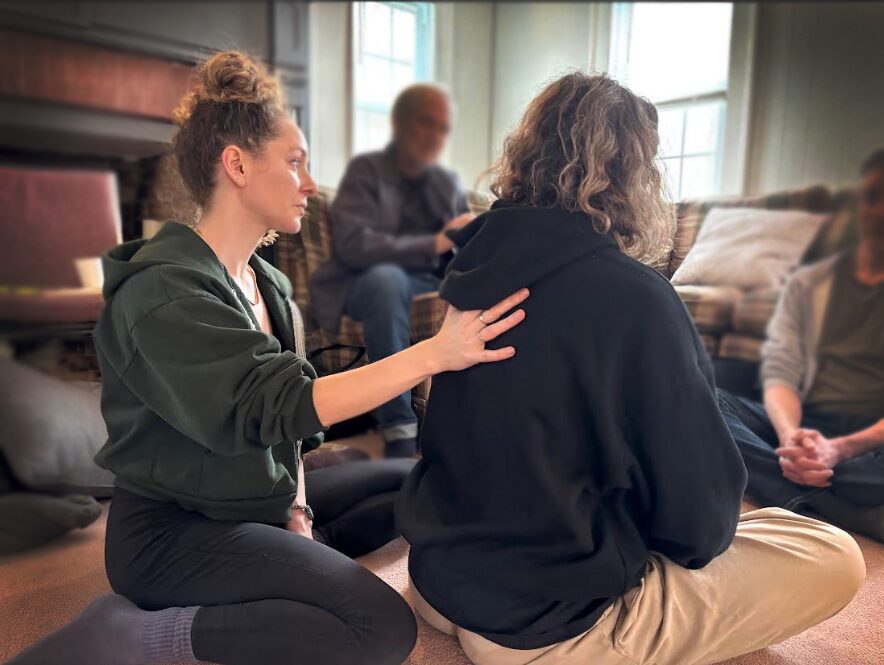
I am a Core Energetics Practitioner and a memoirist.
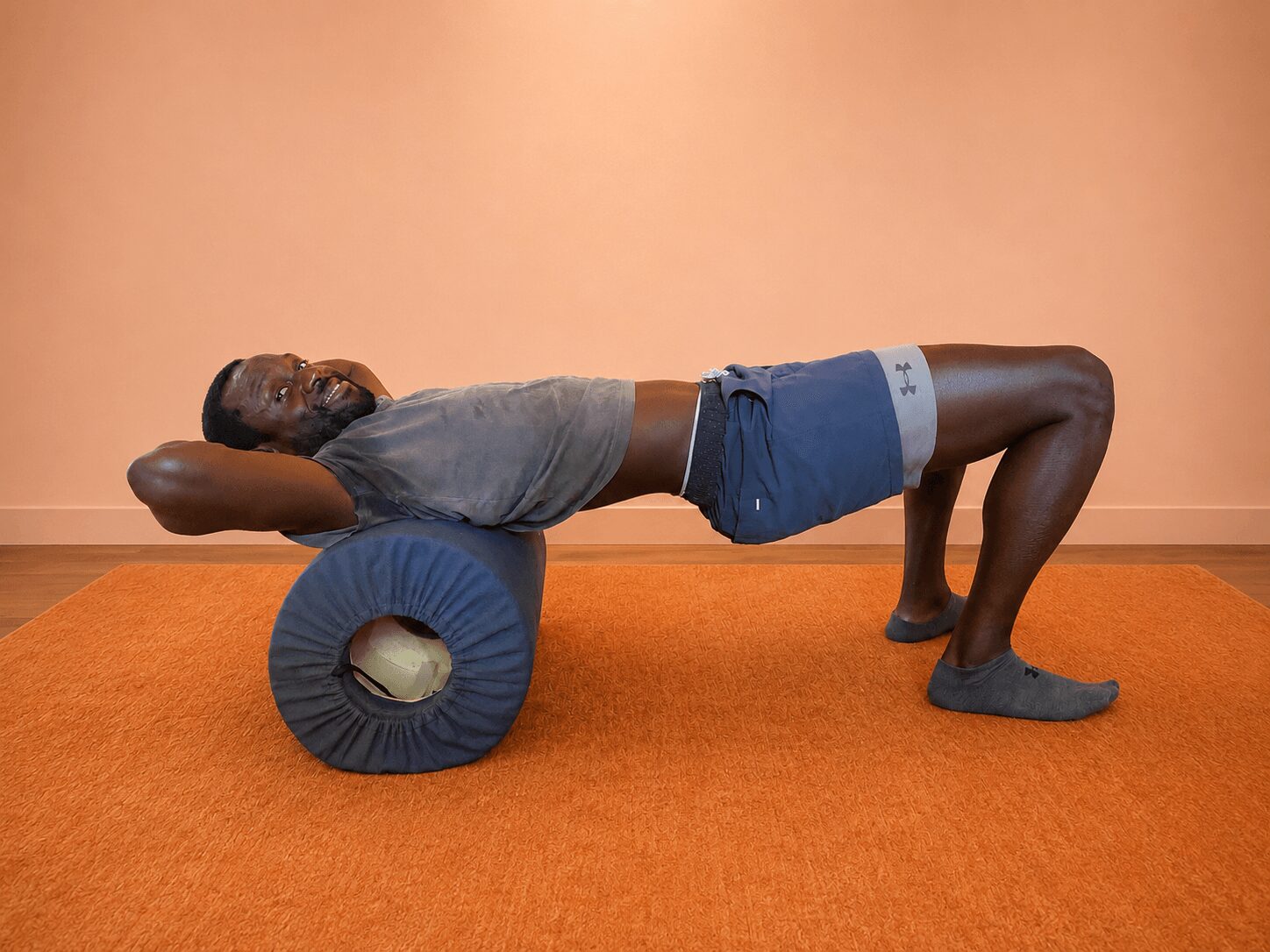
Core invites us to look at the body as a map of our emotions and life patterns. How do we hold back or dissociate from the flow of life? What are the subconscious beliefs we hold in our bodies that keep us stuck in old patterns or prevent us from obtaining what we long for in life?
When we stay identified with our mask—the social persona we use to stay safe—we often create inner tension and anxiety, because the body has to contain what the self is not fully allowing to be expressed, which limits vitality and forward movement.
In Core Energetics, truth is the living pulse of the body when defenses soften and energy is allowed to move freely through feeling, expression, and awareness. It is not just intellectual honesty but a felt alignment with what is real in the moment, where body, emotion, and consciousness stop splitting and begin to move as one coherent expression of life.
I am devoted to truth. Truth is alive, whether it’s good, bad, happy, sad, pretty or ugly. Whether it’s scared or mad, pleasant or painful. The truth of my feelings and experience, whether it does or does not fit who I think I “should” be or who I want to be, is alive. When I sacrifice my truth for the sake of others, I am sacrificing my own life force.
I uplift truth in both my writing and in my work with others. I haven’t stopped being afraid, but I am not longer afraid of being afraid. I enjoy all my feelings, because they all remind me that I am alive.
Recently I received Rolfing inside my mouth. There was a moment when the pain became so intense, and I had to make a choice. I could either contract against the pain and maybe need to stop the session, or I could allow myself to feel it fully, let it run through my body, yell and writhe. It turned me on. I am turned on by life. I am turned on by truth. We all are if we dare to admit it.
I have experience working with:
-health anxiety / OCD
-depression and anxiety
-neuro-spicyness
-boundaries
-sexuality
-queer, gender-queer, and racial allyship
-long-term relationships
-being a human
How do you think about luck?
Hm. I don’t know that I believe in luck. I feel like everything is set up in a way that is designed to maximize our growth. Sometimes this includes unbelievably painful, scary, and infuriating situations. Sometimes it’s a slow plodding through mud. Sometimes we must trudge when we long to run. Being gentle and kind to ourselves yet persistent in facing our truth is how we make our own luck, though it may end up looking different from what we had imagined.
Pricing:
- Individual Sessions $140/hr, sliding scale available
- Partner Work – 12 session package $2,100
- 6 Session Series – $600
Contact Info:
- Website: https://soulshineNC.com
- Other: https://substack.com/@soulshinesomatics