




Today we’d like to introduce you to Darlena Moore.
Hi Darlena, please kick things off for us with an introduction to yourself and your story.
This is a speech I gave at a fundraiser on Saturday night. I think it gives a good idea of the story.
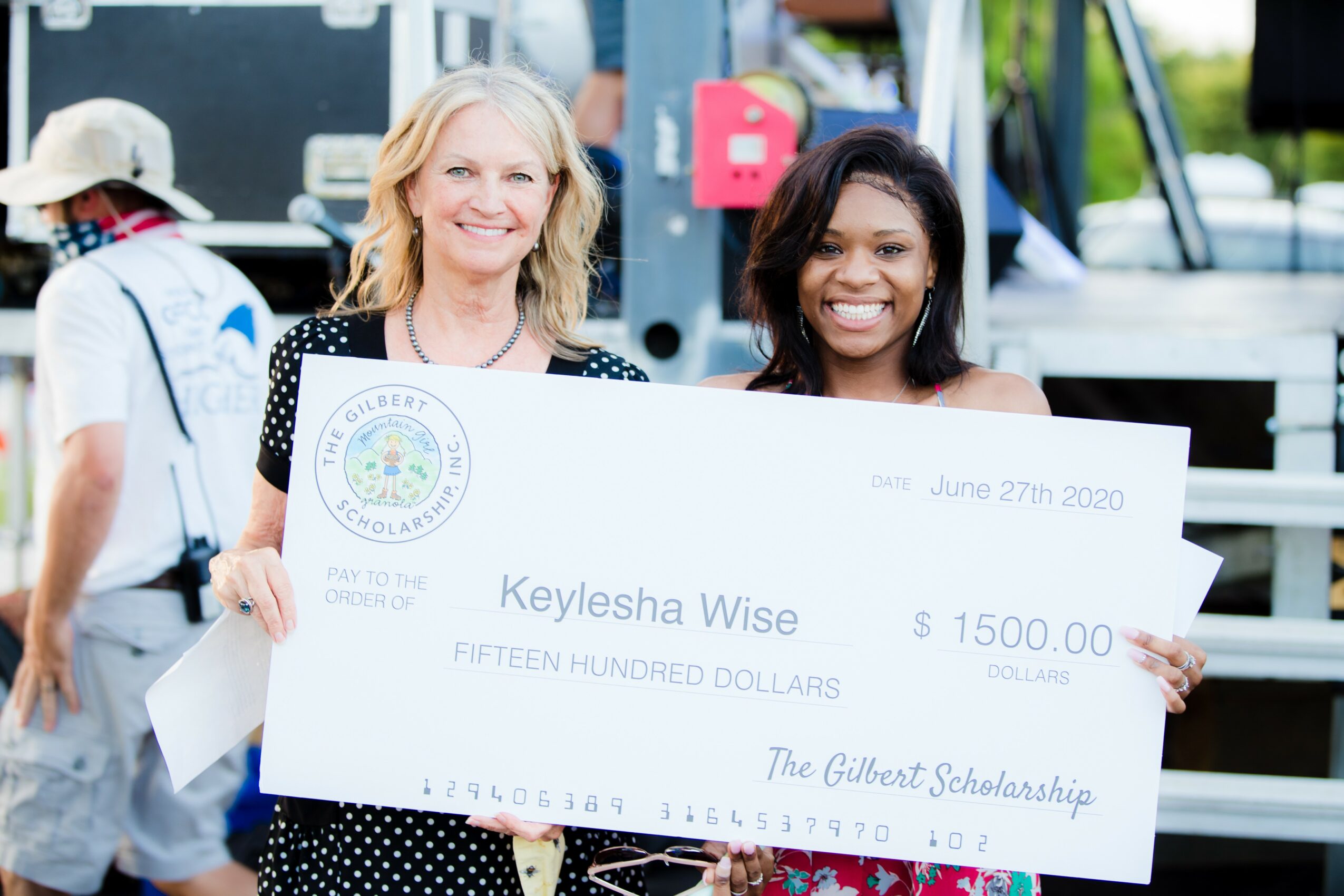
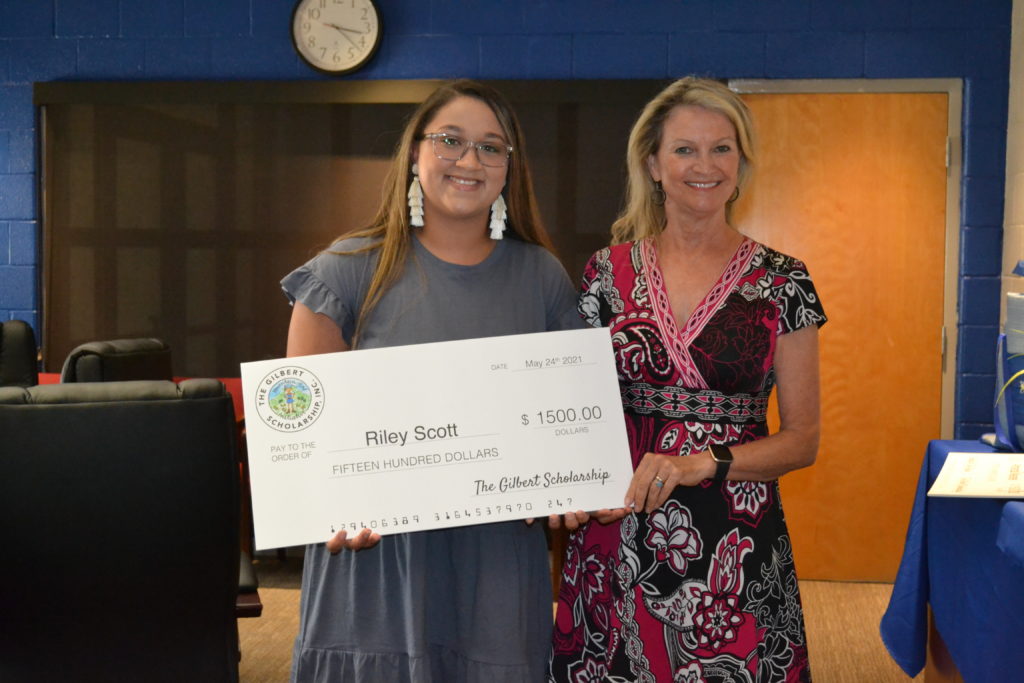
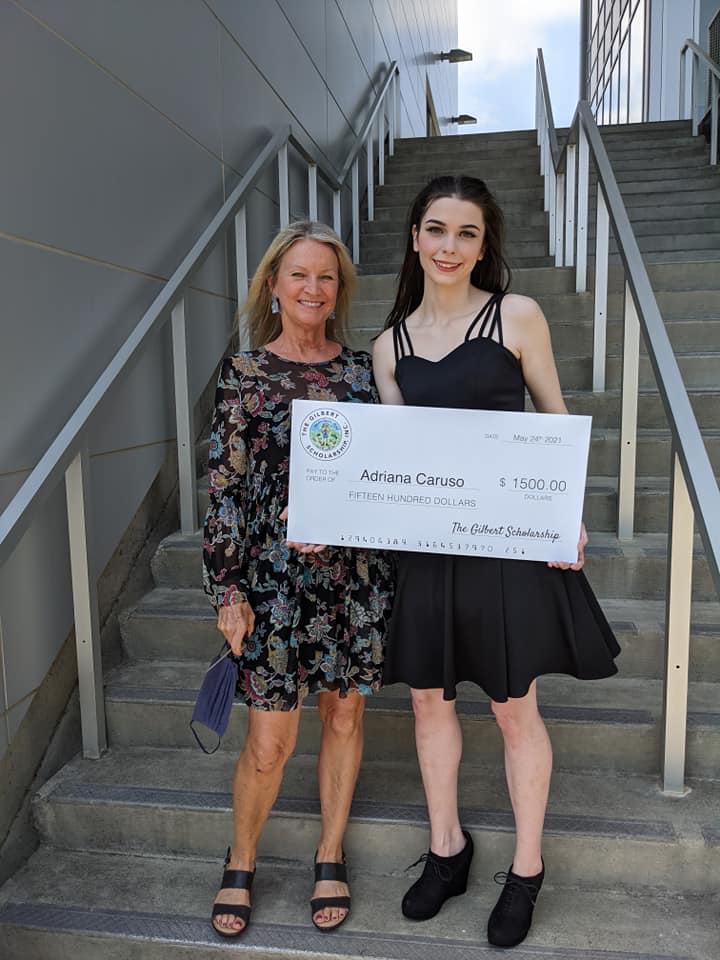
My story, and that of The Gilbert Scholarship, is one of love and belonging. I am the president of this non-profit and we award scholarships for college to youth from the foster care system. I am a child of the foster care system and this charity is named after my own foster parents Dick and Mary Gillbert.
I was born into poverty in Asheville, NC, but I was a happy kid. My single mother had 5 kids and worked at a local parachute factory to put food on the table.
As an 11 year old girl, I loved to sing. I joined the choir at a little church at the end of our long driveway and went to choir practice every day after school. One cold day in March after an afternoon of singing, I ran down that driveway, flung open our front door, ready to see my mom and my siblings. But the house was empty. The only sign of my mother was a jelly jar half-filled with sweet tea that I knew was hers. Finally, a relative came and told me to throw some things together, that my mom was in the hospital in Winston Salem and I’d be staying with my grandmother. I never saw my mom again. She died of leukemia 2 months later at 34 years of age.
My siblings were all split up in the court system and I was placed at my grandmother’s for 4 years, in 2-bedroom house with 10 people. It was a house that included alcoholics, violence, and emotional and physical cruelty. To my grandmother I was just another mouth to feed and she and most of her family seemed to hate having me there.
They told me I was big boned, that I was fat, that I had horse hair, that I would be pregnant at 16. When I made the honor society, they told me I was getting above myself. When I excelled at sports they would come pull me off the field in the middle of a game to come home and cook. When someone said I was pretty, they sneered, “Pretty is as pretty does.” When adult married men in the family acted inappropriately to me, their own wives said I, a 7th grader, was the cause and that I was flirting. When my grandmother had a stroke, they said it was my fault because of the stress of having to keep me. There were beatings with a riding crop for reasons I still don’t understand.
When my grandmother abandoned me in that house an uncle came to pick me up, and when she could see that I was happy living with him, she threatened to call the police.
It was here that I began to summon the strength of my beautiful, young mother who endured that same family, and I knew that that cycle needed to break. I knew this wasn’t the place for me. I didn’t know how I would get out of this house but something inside of me knew.
My uncle brought me back and after a violent encounter between family members I snuck in the bathroom, locked the door and turned on the bathtub faucet without plugging the tub so they would think I was running a bath. I opened the small bathroom window and scrambled out into the frigid March air with nothing but the clothes on my back.
I ran to a friend’s house and her mother hid me in the floorboard of her car and took me to the police station. That’s how I ended up in foster care and how the Gilbert Scholarship began to form.
After several placements I ended up at the home of Dick and Mary Gilbert. They ran a 30-day emergency shelter for kids in foster care with nowhere to go.
In the shelter, kids came and went but I never left. The Gilberts kept me there. They saw something in me that my family didn’t. They saw smart, they saw strength and drive. They saw a future. They saw college.
After high school they helped me look into grants and scholarships and they took me to visit colleges. And now, I’m here, one of the 3% of former foster kids in this country with a college degree.
There are approximately 370,000 kids in foster care in the U.S. right now. When polled, most of them will say they want a college degree, but only 3% will get one. Instead 19,000 will exit the system each year without family or financial support. 30% will experience homelessness, 25% will end up involved in the criminal justice system and 47% will be unemployed.
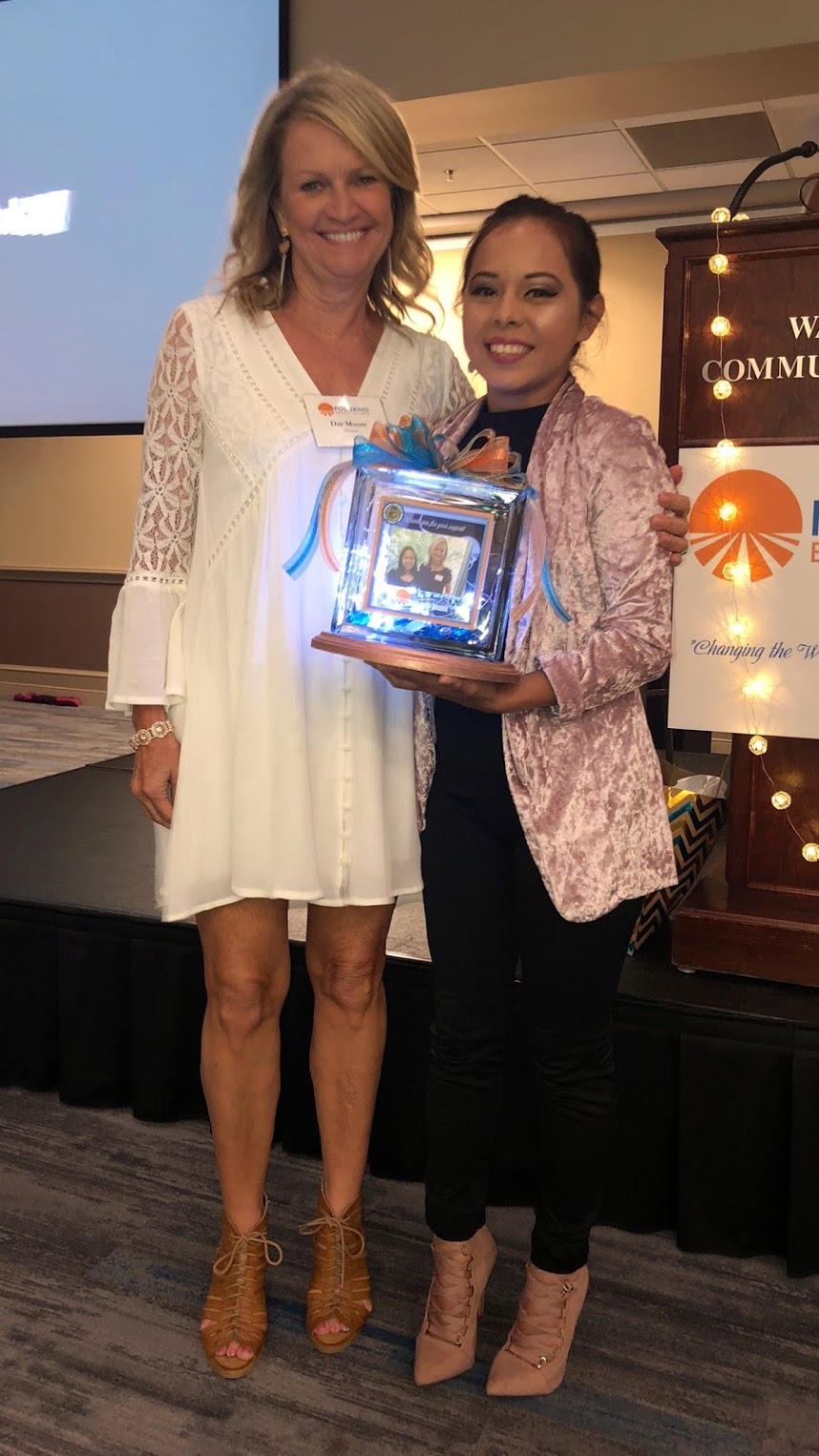
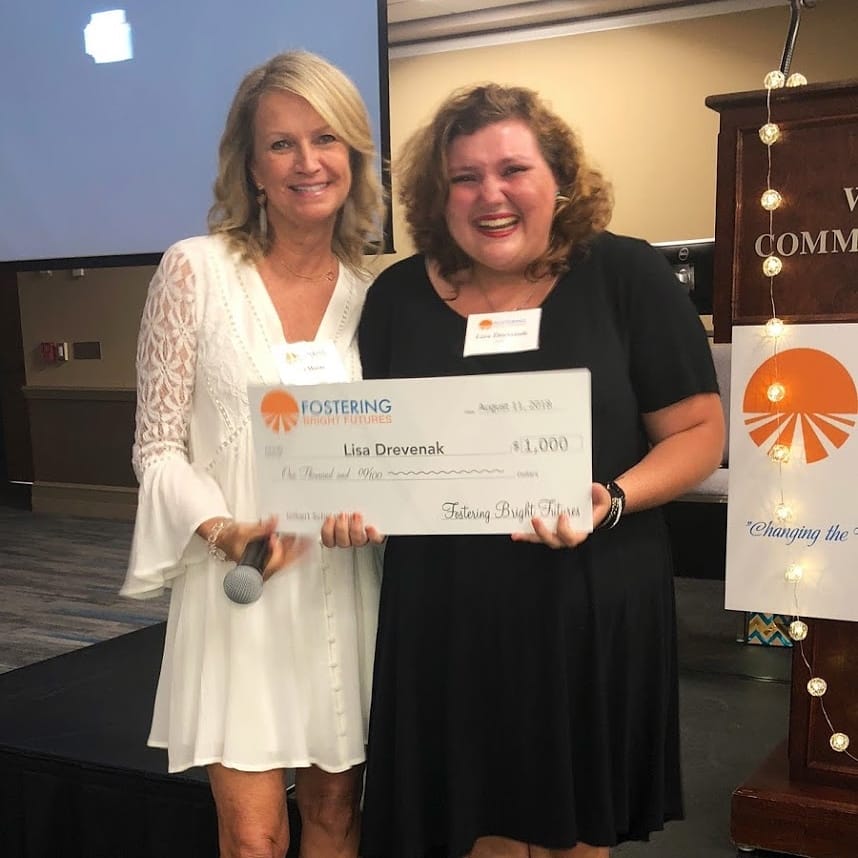
In 2016, I started volunteering for a program at Wake Tech Community College called Fostering Bright Futures. This program helps foster youth with all the barriers that keep them from getting a college degree. That experience awakened something in me and I knew I needed to do more. So I started thinking how could I be a Dick and Mary Gilbert to someone else? How could I help more foster youth jump out that proverbial bathroom window and into a better life?
I thought, hey, people really like my homemade granola, so I started bagging it and selling it, with proceeds going to a scholarship that would honor the Gilberts. That year, I gave my first Gilbert Scholarship to a young man from foster care who now works in banking. My Mountain Girl Granola became a licensed food company with 100% of proceeds supporting college for youth from foster care. I had no idea how to run a food business or a non-profit, but something inside me did.
Fast forward and this year with a very small, all-women, all volunteer, all full time working board, and your support this “Little Engine that Could” charity will award our 100th Gilbert Scholarship!
Our recipients are successful and cannot be underestimated. They are social workers, IT professionals, marine biologists, HR leaders, nurses, psychologists, teachers and artists. They have 2-year, degrees, 4-year degrees, masters degrees and PH Ds. 70 plus percent are either currently enrolled or have graduated.
Did you know that Simone Biles, Steve Jobs, Cher, Tiffany Haddish, John Lennon, Willie Nelson, Rosie Perez, Ice T, Eddie Murphy, Alonzo Mourning, Coco Chanel, Seal and Marilyn Monroe, were all children from foster care? I can promise you that they didn’t achieve that level of success alone. Someone, or a lot of someones, sent a small raft that held them afloat until they got where they were going.
I am not cooking granola anymore. I found that running a food business and a charity got to be too much. But I am still trying to keep up with the growing number of foster youth, who need help with college.
My goal now is to turn this charity into an endowment that will live on in perpetuity and honor the foster parents who made me one of the 3%.
Who will be our 100th Gilbert Scholarship recipient? Maybe it’s another Steve Jobs or Simone Biles. Or maybe it’s just someone who knows that trauma can be a superpower. That they can thrive, not in spite of it, but because of it. Maybe they don’t know how that will happen yet. But something inside them does.
We all face challenges, but looking back would you describe it as a relatively smooth road?
A smooth road running the charity, or a smooth road with my story?
I would say with the charity, Covid was huge because I lost my kitchen for cooking granola in Raleigh. Pullen Memorial Baptist donated their kitchen for me to use, but of course, it was closed and there was nowhere to cook. I relocated here to Wilmington and had to let the granola piece go and find other ways to raise money quickly. We do that by telling the story, grants, and small donors.
Can you tell our readers more about what you do and what you think sets you apart from others?
I left Asheville after college (2 years at Meredith and graduated from UNCA) and started my career in Ohio as a freelance copywriter for F&R Lazarus. I had a career in advertising/marketing and writing. Worked at Village Publishing Companies in Chapel Hill, McKinney and Silver in Raleigh, Kobacker Company (subsidiary of Kodak) in Durham, Mission Hospitals was a large client in Asheville.
I also did non profit work throughout my career. I was a Guardian ad litem for 6 years, did work for The Children’s Home Society of NC, the Buncombe County DSS, all pro bono.
Intermingled some paid positions in there too, at Meals on Wheels, and The Literacy Council.
What do you like best about our city? What do you like least?
I’ve lived in Raleigh 10 years, the moved and came back for 7. Still go back to visit my daughter and to work with Sara Nelson at Wake Tech with the Fostering Bright Futures program. We have given students at Wake Tech students from foster care at least 30 scholarships! I love the young energy of Raleigh, the trails and greenways, the good food. There’s a vibrancy there that is so wonderful, and I love how it can feel like a larger city, but be quaint at the same time. I also love the diversity.
What I like least is the traffic.
Contact Info:
- Website: https://mountaingirlinitiative.com
- Instagram: @gilbertscholarshipinc
- Facebook: https://www.facebook.com/TheGilbertScholarship/