


Today we’d like to introduce you to Natalie Bullock Brown.
Hi Natalie, can you start by introducing yourself? We’d love to learn more about how you got to where you are today.
My undergraduate years in college were a time of discovery. I know I’m not unique in that respect, but how many freshmen enter college as pre-med majors and graduate to go on to become documentary filmmakers? Such is the roller coaster ride that I experienced trying to determine what I wanted to do and be when I “grew up.” Whatever instincts I had that propelled me towards Howard University’s M.F.A. program in Film Production – well, only God and the Universe know how that path was orchestrated for me. And the decision to pursue filmmaking, and that at an HBCU, was one of the best decisions I have ever made in my life, hands down. Eventually, my desire to learn film and move to Hollywood gave way to a desire to use documentary film as a means to amplify what I saw in 1996 as the many untold stories of Black people, even myself. I owe my choice to be a filmmaker to the late great filmmaker Marlon Riggs, whose Tongues Untied blew my mind and opened my eyes to what is possible to achieve with documentary film. Now, nearly 30 years, a marriage, two kids, a career in higher education, and several productions as an associate producer (for Ken Burns’ Jazz series) and producer (for Byron Hurt’s Hazing and the upcoming Lee & Liza’s Family Tree), I am more in love with documentary filmmaking than ever. My passion for the documentary is what compelled me to join with other doc professionals to form the Documentary Accountability Working Group in order to work towards shifting the industry towards more ethical filmmaking practices, which also inform my own filmmaking approach, not only as a producer but as a first-time director as well.
Can you talk to us a bit about the challenges and lessons you’ve learned along the way? Looking back, would you say it’s been easy or smooth in retrospect?
Imposter syndrome is a real thing. And it often develops from the messages we’re exposed to in childhood that cause us to believe we are not worthy of good things or smart enough to succeed. It took me years to believe that I actually deserved to experience all of the good things that were coming my way – opportunities to work on major films, the manifestation of coveted jobs, etc. In retrospect, I think I may have left New York – where I worked on my first documentary film and could have parlayed that experience to keep building my career – because, ultimately, I believed that I would not be successful on my own and needed a partner who could take care of me in order to be deemed worthy of success. As a result, I moved to Raleigh, NC, and stepped away from filmmaking to have children and raise a family. In spite of deeply mourning my decision to leave the seat where documentary filmmaking could have really taken off for me, I took a job teaching at a local college and found that I enjoyed teaching. In fact, working as a college professor allowed me to be present as a mother in ways that I don’t regret, in spite of the sacrifices I made professionally. Eventually, with much encouragement from a favorite mentor, I began to pursue my own filmmaking work again when my children were in middle school, and soon was offered opportunities to do fulfilling production work that reconnected me with my passion for filmmaking. Ironically, the pandemic showed us all that work can be just as productive when done remotely, which offered even more opportunities for me and other Southern doc professionals to work on projects based in other cities. I sometimes wish that I had bet on myself all those years ago when I was first starting out, and invested the time and energy to build my career when I was younger and had more energy. But I wouldn’t trade the time I’ve enjoyed being Mom to two of the most amazing young people I know. And now that they are both about to be safely tucked away in college, my time to flourish as a filmmaker is around the corner. Better late than never. 🙂
As you know, we’re big fans of you and your work. For our readers who might not be as familiar, what can you tell them about what you do?
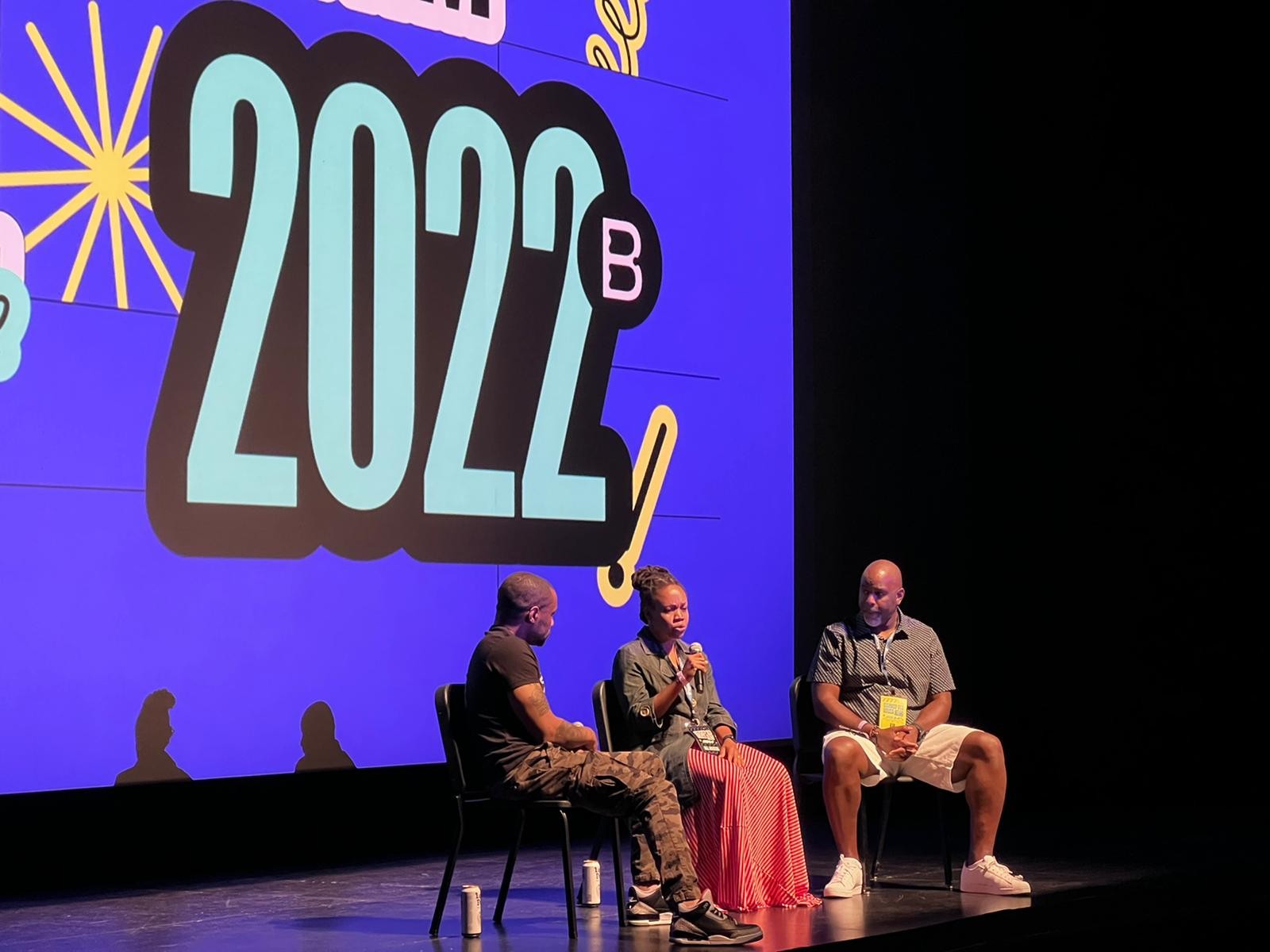
I’m a documentary filmmaker best known right now for my work as a founding member of the Documentary Accountability Working Group (DAWG), a collective of professors, filmmakers, funders, and impact producers who have worked together to develop a framework for ethical and accountable nonfiction filmmaking. I got started in documentary filmmaking as a graduate film student at Howard University when I encountered the work of the late filmmaker Marlon Riggs. Upon graduation, I moved to New York and worked with filmmaker Ken Burns as an associate producer on his 10-part PBS series Jazz. I just finished work as a producer on filmmaker Byron Hurt’s documentary film Hazing and as the producer for his NOVA film Lee and Liza’s Family Tree. But I am also a full-time Assistant Teaching Professor of courses in Africana Studies and Women’s Gender and Sexuality Studies. I’m very proud of the contributions I’m making to the documentary field as a part of DAWG, but also how that work is informing how I show up as a documentary film producer and as a professor. But I think I’m most proud of ultimately not giving up on my dream of being a documentary filmmaker, even after leaving New York to move to Raleigh just as my documentary film career was beginning, even after producing the lights of my life – my children; and even though my full-time work in higher education has made it extremely challenging to pursue documentary filmmaking. In spite of all of the detours and obstacles, I’ve been blessed with opportunities to create a presence for myself in documentary filmmaking. In that way, perhaps what sets me apart is that in spite of all of my experience, I am an emerging director planning and fundraising for my first directorial debut.
If you had to, what characteristic of yours would you give the most credit to?
I think the quality or characteristic that has been most important to my success has been my unwillingness to give up in the moments when I’ve literally been rejected, dismissed, held back or doubted. Even when I doubt myself, I manage to pick myself up and keep moving forward. Ultimately, I have learned to believe in myself, even when others do not believe in me.
Contact Info:
- Website: www.nataliebullockbrown.com
- Instagram: https://www.instagram.com/natalieracquelbb2/
- Facebook: https://www.facebook.com/nataliebb2/
- Linkedin: https://www.linkedin.com/in/natalie-b-4782906/
- Twitter: https://twitter.com/nataliebb2