




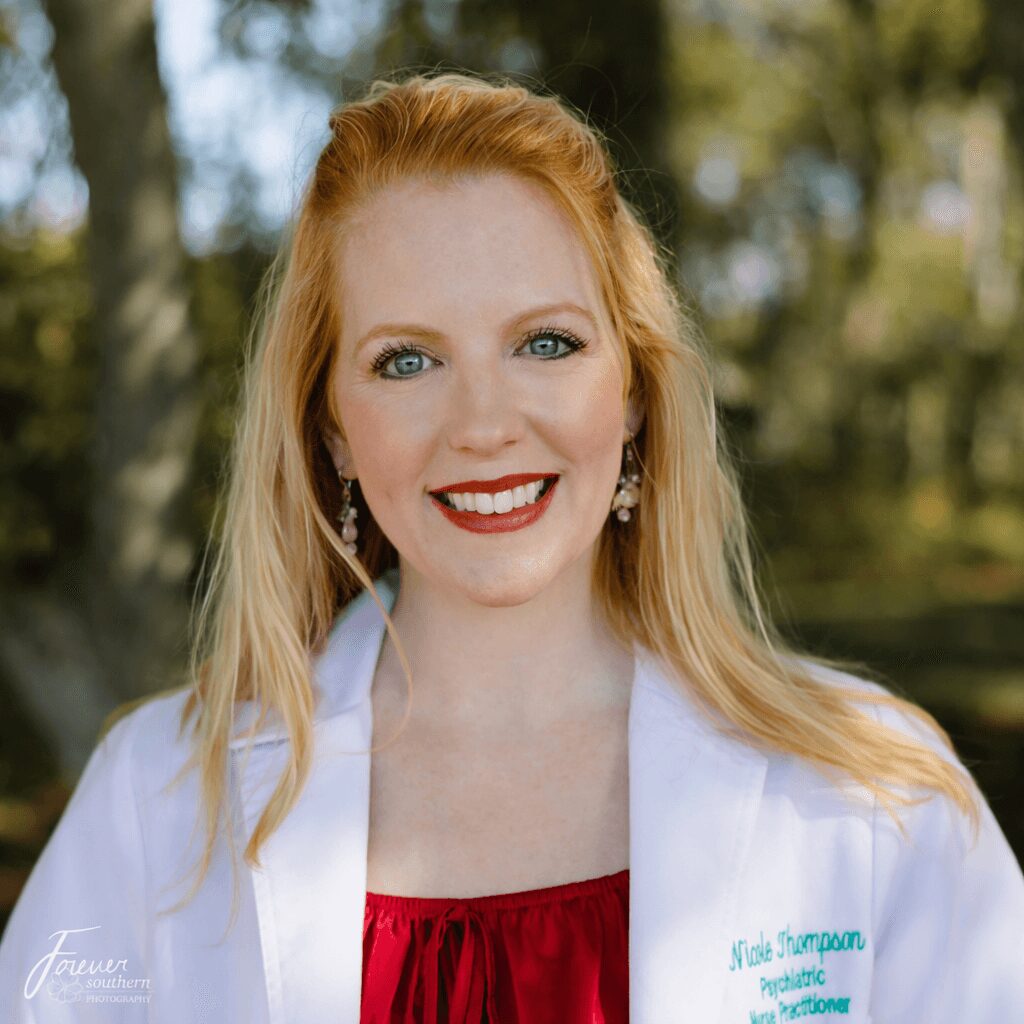
Today we’d like to introduce you to Nicole Thompson.
Hi Nicole, so excited to have you on the platform. So before we get into questions about your work-life, maybe you can bring our readers up to speed on your story and how you got to where you are today?
As a little girl growing up in the White Mountains of New Hampshire, I was always thinking about how to help others. I vividly remember being around nine years old when I wrote a letter to the editor of our local newspaper, asking them to draw attention to the homeless population in our community. Winters there are cold and unforgiving, and I couldn’t wrap my mind around how anyone could survive freezing nights without food or warmth. Even then, I felt a pull toward advocacy, compassion, and service.
That early sense of responsibility stayed with me and ultimately led me to pursue a Bachelor’s degree in Psychology, followed by a Master’s in Clinical Social Work. I graduated in 2005—right as gas prices climbed to what felt like an outrageous $3.00 per gallon and the economy tightened. Like many new graduates at the time, I took a position where opportunity existed rather than where comfort lived: with the Massachusetts Department of Social Services.
That job became the foundation of my entire career. I learned far more than child protective services alone. I learned the court system, medical systems, educational systems, and—most importantly—how profoundly limited resources are for individuals struggling with mental illness and addiction. I was fortunate to have a strong supervisor and incredible colleagues who taught me what textbooks never could.
Life then took me in a new direction when I met my husband, who was active-duty military. Over the years, I worked in outpatient clinics, hospitals, the Department of Defense, and the VA across the country. Those experiences gave me a broad and honest view of our mental health system—and its gaps. One gap stood out clearly: access to psychiatric care. I saw it most painfully while working with active-duty service members who redeployed while still sitting on waitlists for mental health services.
A close friend once looked at me and said, “You should go to nursing school and become a nurse practitioner. Go for it.” Thanks to my social work background, she believed I could bridge the clinical and human sides of care. I took her advice seriously—so seriously that I enrolled in nursing pre-requisites the very next week.
I’ll admit, patience has never been my strongest virtue, so the idea of four more years of school felt overwhelming. That’s when I found an accelerated BSN program. After graduating, I knew I needed real-world nursing experience and, because I love a challenge, I accepted a position in the Surgical ICU. That ICU experience changed me.
Patient after patient was admitted following overdoses. Many coworkers viewed these cases with frustration or resignation, often saying, “They’ll be back.” But I saw something different. I saw trauma. I saw pain. I saw people who deserved dignity even in their lowest moments. I remember thinking: if we, as healthcare providers, can’t show empathy to someone waking up from an overdose, how can we expect them to believe in themselves? Maybe sobriety wouldn’t happen that day—or even that year—but I wanted patients to know that when they were ready, someone would still be there.
That realization confirmed what my heart already knew: I was meant to be a Psychiatric Mental Health Nurse Practitioner.
As I moved through my PMHNP training and early roles, I became increasingly aware of how patients—and staff—were treated. I often found myself thinking, I would do this differently. Eventually, I realized that to truly change the experience of care, I needed to be in a position to make the decisions.
When I told my husband I wanted to open a clinic, I initially thought he didn’t believe I was serious. The next day, he said, “We have a lot of work to do if you’re going to open a clinic.” That’s when Southern Mentality was born.
We opened our mental health clinic in Charlotte, North Carolina, slowly in 2024. I left my position at a local clinic within four months. We expected slow, steady growth—but what happened instead felt nothing short of a blessing. Within three months, we hired our first office assistant, followed by a second just five months later. Soon after, we hired our first therapist. Today, less than two years in, Southern Mentality employs three therapists and two additional nurse practitioners and provides psychiatric and counseling services to patients across North Carolina.
Before expanding, I made one thing non-negotiable: we would treat our employees better than they had ever been treated before. Because how we care for those who care for others matters just as much.
Southern Mentality exists because I believe mental healthcare should be compassionate, accessible, and human. Every step of my journey—from that nine-year-old girl writing letters, to the ICU nurse holding space for patients no one else wanted to see—led me here. And I’m just getting started.
I’m sure it wasn’t obstacle-free, but would you say the journey has been fairly smooth so far?
One of the greatest challenges from the very beginning was actually growing faster than we anticipated. In the first three months, I was simultaneously answering phones, seeing patients, and trying to carve out time to interview and train office staff. At the same time, I quickly realized that many of our systems needed to be revamped to support efficient and sustainable business operations. Wearing every hat at once was exhausting, but it also showed me exactly where support was needed.
Hiring our first office assistant was a turning point. Having dedicated office staff allowed me to shift my focus back to clinical care and higher-level business decisions, which ultimately helped the practice function more effectively and grow responsibly.
Another major challenge was meeting patient demand before I was able to hire additional providers. There were months when I saw patients from 7 a.m. to 7 p.m., all while raising a family. Balancing the responsibility of caring for patients with being present at home required constant adjustment and intention. While it was incredibly demanding, those early sacrifices laid the foundation for the team-based, patient-centered clinic we have today.
Appreciate you sharing that. What else should we know about what you do?
Southern Mentality is a full-service mental health clinic based in Charlotte, North Carolina, providing psychiatric and counseling services to patients across the state. We treat individuals across the lifespan—from children as young as three years old through older adulthood. Our clinic’s name and slogan, “Southern Mentality: Where Mental Health Meets Southern Hospitality,” were chosen intentionally. I wanted patients to feel welcomed, accepted, and at home from the very first interaction—because healing begins with feeling safe and understood.
Before earning my Psychiatric Mental Health Nurse Practitioner degree, I practiced for many years as a Licensed Clinical Social Worker. During that time, I worked in hospitals, outpatient clinics, prisons, and with the Department of Defense and the VA. Those experiences shaped the way I practice today and gave me extensive training in trauma—both military and childhood trauma—as well as military families, anxiety, depression, bipolar disorder, substance use disorders, gender dysphoria and gender transitions, and children with chronic medical conditions and disabilities.
When I think about what I’m known for, my patients often tell me they refer others to Southern Mentality because they trust that I will understand and genuinely help. It is an incredible honor when someone allows you into their life, and an even greater privilege to witness patients heal, grow, and reach their potential—especially when they initially didn’t believe in themselves. Those moments never get old.
What I am most proud of, however, is our team. Southern Mentality would not be what it is without our exceptional front- and back-office staff, therapists, additional medication providers, and lab technicians. From the moment a patient reaches out—whether through a referral or an initial inquiry—there is a thoughtful, coordinated process involving intake support, insurance verification, lab testing, appointment reminders, and ongoing communication. I love hearing patients refer to our office staff by their first names, because it tells me a genuine connection has been made. That connection—from start to finish—is what this work is truly about.
What sets me apart from others in the field is the combination of my social work foundation and my personal life experiences. My years as a clinical social worker deeply influence how I approach care today; I use that knowledge every single day. Equally grounding, is my role as a wife and mother. My husband and I have three daughters—ages 15, 13, and 9—and each of them has faced significant medical challenges.
Our middle daughter was born profoundly deaf and learned to hear through cochlear implants; she also has high-functioning autism. Our youngest daughter underwent three brain surgeries within a year and a half beginning at age four due to a congenital defect. Our oldest daughter has an immunodeficiency requiring monthly infusions and was recently diagnosed with severe narcolepsy after more than a year of searching for answers. As a parent, I know what it feels like to not be heard, to advocate relentlessly, and to spend endless days and nights caring for a child when you know something isn’t right.
I want my patients to know that while our struggles may look different, I understand what it means to face challenges, to fight for answers, and to advocate for yourself and your family. One of the most important lessons I share with patients is that it is okay—and necessary—to ask questions and speak up. Southern Mentality was built on that belief, and it continues to guide everything we do.
We all have a different way of looking at and defining success. How do you define success?
Success means different things to different people. To me, success is being able to help patients reach their greatest potential and truly improve their quality of life. Watching someone grow, heal, and begin to believe in themselves again is the most meaningful measure of accomplishment I know.
Success is also deeply personal. It’s about showing our daughters what it means to live with humility, intention, and purpose—while appreciating and caring for others along the way. If I can make a positive impact in my patients’ lives and model those values at home, I consider that true success.
Pricing:
- Southern Mentality is committed to making high-quality mental health care accessible across North Carolina. We accept most major insurance plans in North Carolina for both psychiatric and counseling services. If your insurance is not currently listed on our website, we encourage you to reach out—we are happy to attempt credentialing with your specific plan whenever possible. Self-pay options are available for those without insurance or who prefer private pay. Most importantly, we are here and ready to help, no matter what you may be struggling with. It is an honor to support and serve our patients, and we are dedicated to meeting you with compassion, understanding, and respect.
Contact Info:
- Website: https://www.southernmentalitync.com
- Facebook: https://facebook.com/southernmentalitync
- Twitter: https://twitter.com/smentalitync
- Youtube: https://www.youtube.com/channel/UC5Wzf1fakISPfZb8FFXjd8Q