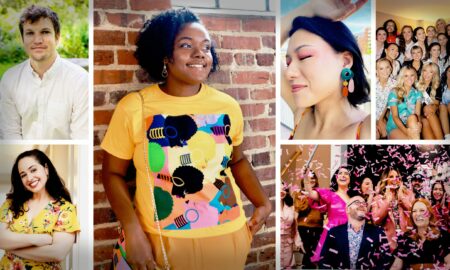





Today we’d like to introduce you to Tiffany Baker.
Hi Tiffany, so excited to have you on the platform. So before we get into questions about your work life, how can you bring our readers up to speed on your story and how you got to where you are today?
Initially, I grew up in a traditional African American family, having a two-parent household in a small town in eastern NC, Rocky Mount, NC. I initially thought I wanted to go to school to be in the medical field. I have always wanted to help others to the best of my ability. Growing up, my parents made sure that I was active in the community by participating in Girl Scouts from the age of 7 until I graduated high school at 17. I also was raised in a Christian household, where church meant a lot. I actively participated in the youth choir, youth usher board, and various community outreach programs that our local church offered. I also volunteered at the local hospital one year over the summer and actively engaged in my community’s step-teams from elementary school until I graduated high school in 210. I grew up having both of my parents in the household and seeing them support families in need, whether it was helping out the homeless, feeding and providing shelter to children and families, having after-school support, helping adults locate and sustain employment, etc. My parents instilled in me the desire to actively help others. I always knew that I had a passion for helping others, just due to it being challenging yet rewarding at the same time. I initially took classes in high school that allowed me to graduate with my high school diploma and my Certified Nursing Assistant License in my state. I was able to take some nursing classes but realized that doing bedside manner was not what I envisioned for myself long-term. I then changed my college major to psychology with a minor in criminal justice. The more I learned about health and how the brain worked overall, the more intrigued I became about mental health and its impacts on minority communities. However, my life changed drastically at the end of 2013 because I lost my grandmother as she battled cancer for over a decade, and my mother due to Guillain Barre Syndrome in early 2014. While in the senior year of my undergraduate career and going through a terrible breakup with a partner I had been dating since high school.
I experienced my battle with trauma, depression, anxiety, grief, and ongoing negative self-esteem issues from 2012 – 2015. I could then work on myself by attending church, seeing a therapist, and slowly working through all I had experienced. Coming from my background, it is not customary to receive mental health treatment or prioritize your mental health within the black community. I could engage and identify supporters who helped me greatly while coping with the losses of people who were very close and important to me. I went on to attend graduate school, where I decided to get my Master of Social Work degree. This degree allowed me to gain experience helping implement and build a residential facility on our college campus for foster children aging out of the system, ages 18-22. I was also able to march in the protest in Charlotte, NC, in 2016 after the various killings of African Americans continued to increase – which exposed me to more community advocacy. In Charlotte, my work consisted of helping the homeless population, mainly women and children, seek assistance and services. I also was able to experience working on a research project in my MSW program, which allowed me to gain insight and awareness of the social services system in NC.
I relocated to the Raleigh-Durham area in 2018 after graduating, obtaining a social worker associate license, and struggling to locate a job in the social work field in Charlotte, NC. I worked in various settings, such as community mental health (going into children’s homes and having family therapy). School-based mental health (serving a small, rural town in eastern NC close to my hometown and where I grew up); working in two psychiatric hospitals working with both adults and teenagers with severe and persistent mental health and substance abuse issues; as well as working for mental health agencies in outpatient work. This also allowed me to relocate closer to family, which I enjoyed. With all my experience, some considered me a risk taker, while others viewed me as eager and career-oriented. All in all – both were true. I learned how to talk to people as if they were human and understand that my experience was privileged in some ways in my childhood; compared to the various clientele I served. I also challenged myself to be flexible and reach a point where I put others well before myself. I learned that God is amazing, but everyone struggles with small stressors and struggles, so there is also nothing wrong with prioritizing God and our own mental and physical health together to improve our overall well-being as individuals.
Ultimately, I love what I do now, working for myself full-time in private practice since February 2022. I primarily see clients virtually as a mental health therapist – but I will see people in person if needed. I’ve grown to learn my strengths and work for myself, having full autonomy as being the most successful.
Would you say it’s been a smooth road, and what are some of the biggest challenges you’ve faced along the way?
As mentioned earlier, I have had my fair share of negative experiences with trauma, grief, loss, anxiety, and depression, which has led me to become the woman I am today. Working in the mental health field as well, throughout the middle of COVID-19, and navigating the entrepreneur world has been challenging. I feel that being in the healthcare profession, whether a doctor, nurse, dentist, therapist, etc., has been a struggle due to the increased need currently, physical and mental health-wise. All while being able to show up for clients and show up for our significant others, families, and friends while also preventing burnout at work. All workers, especially therapists all over the country, are having difficulties managing the high demand for mental health support, making it so immensely important that we, as therapists, also manage our physical and mental health as well as self-care and boundary-setting well.
We’ve been impressed with Baker Therapy & Consulting Services, but for folks who might not be as familiar, what can you share with them about what you do and what sets you apart from others?
I am the owner and clinician at Baker Therapy & Consulting Services. I provide mental health therapy to clients in NC. Either virtually or in person, those experiencing challenges with racial issues, social issues, life transitions, individuals who may be questioning their identity, focusing and concentration issues, difficulties regulating their emotions, always having negative thoughts about themselves, and trauma. I also work with clients identifying as BIPOC (black, indigenous, people of color), LGBTQIA+, or neurodivergent difficulties (having ADHD or suspecting that they may have ADHD).
I am a trauma-informed and trained clinician in Eye Movement Desensitization and Reprocessing (EMDR). I love helping others and working with people to help them identify their voice, combat their trauma and thoroughly move forward from these previous traumatic experiences. I practice from a strengths-based approach while utilizing more of a gestalt approach because I am more direct, transparent, honest, and authentic with my clients. This means that I assist clients in identifying any negative thoughts, incidents, or uncomfortable and unsettling memories that may be connected to a series of automatic negative thoughts we often have as humans. I try to incorporate a sensitive, calm, and realistic approach to processing and understanding traumatic experiences and how they impact our brains.
My goal is to remain supportive and honest. And relatable to my clients throughout their journey of healing from the inside out.
Is there a quality that you most attribute to your success?
Ensuring that you, as the therapist, keep your mental and physical health issues in check and in good condition is extremely important. Any good therapist must ensure they are culturally competent. As it relates to the specific specialties’ that they advertise & practice (i.e., trauma, grief, anxiety, etc.), clients that they see (i.e., women, children, members of the LGBTQIA+ community, BIPOC community, etc.), their values & beliefs about those issues. Good therapists should also challenge themselves by continuing to want to learn and grow more in the field. The field of social work and mental health is constantly changing. So being able to remain up-to-date and knowledgeable about various laws in your state, issues with populations specific to the clients that you work with, and adequately relying on truthful and self-aware yourself.
Pricing:
- $100 per individual session
- $150 per couples session
- Limited sliding scale slots available as well.
Contact Info:
- Website: https://www.bakertherapyandconsultingservices.org/
- Instagram: https://www.instagram.com/bakertherapyandconsultingsvcs/?igshid=MWI4MTIyMDE%3D