



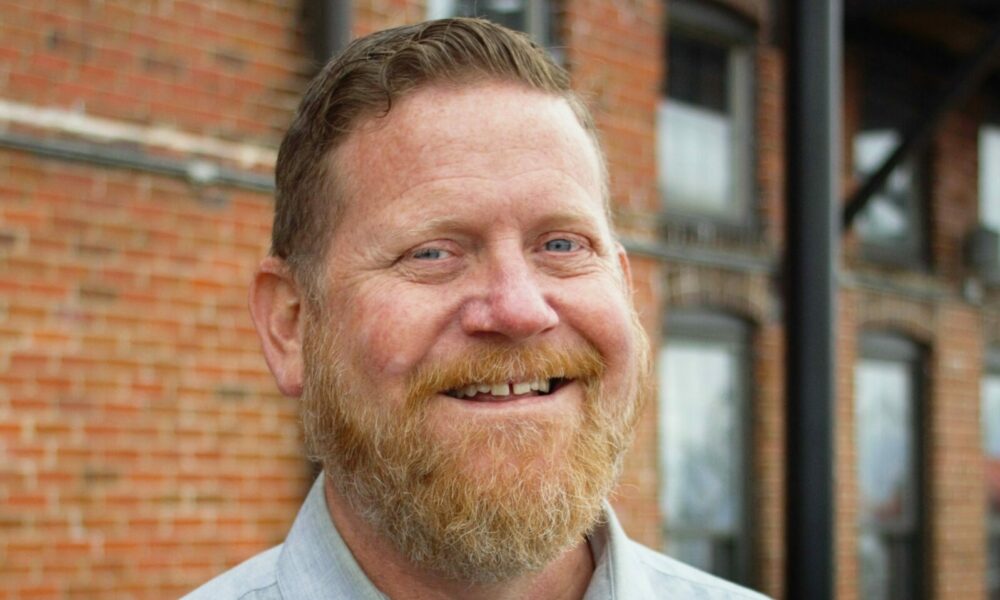
Today we’d like to introduce you to Erik Hemingway.
Hi Erik, we’re thrilled to have a chance to learn your story today. So, before we get into specifics, maybe you can briefly walk us through how you got to where you are today.
The story behind Nomad Capital began with my wife Rachel and I back in 2006. I built a self-storage facility in Arizona and sold commercial property to launch our family into a new season of long-term traveling. So, as a family of seven, we began our first adventure and moved to Costa Rica, where I had the opportunity to build homes.
Then, in 2008, we decided to buy a 37′ catamaran in Greece and move our whole family onto the boat! The passive income from the self-storage facility allowed us to do this traveling. We had planned to live on the boat for one year, but three months into staying on the boat, Rachel became pregnant. She said, “People have babies all over the world!” so we continued on our journey and had our sixth baby in Israel.
We began to see our funds depleting, so we decided to head west. We crossed the Mediterranean, sailed down the coast of Africa, and crossed the Atlantic. Eight people, a 37′ boat, and 18 days on the water.
This experience is the foundation of Nomad Capital and inspired the vision for our future. Everyone doesn’t need to live on a sailboat to be a Nomad, but we want to encourage and help others live a Nomadic lifestyle however they choose!
I’m sure it wasn’t obstacle-free, but would you say the journey has been fairly smooth so far?
I think a lot of people think that the sailboat experience and the adventure was really glamorous, and there were parts of it that were really cool, but there were certainly challenges. It’s just a difficult way to live, especially with kids; we were in tight quarters, doing laundry in buckets, taking the dinghy to shore to get groceries then back on the dinghy to the sailboat. We had eight people living out of an apartment-style fridge and had only a two-burner stove. We had to figure out visas, and on top of that, we had to figure out how to sail because we didn’t know how to sail. So that was definitely challenging, but it really taught us how to work together; we had to work through a lot of personality conflicts within our family and be quicker to forgive each other when things went wrong because there just wasn’t the space to go be by yourself.
Coming back to the US after being out of the US for almost five years was really challenging for me personally because it felt like the end of a dream; it was hard to get back into “normal life,” and that was very frustrating. I didn’t have a clear direction for what was next for me career-wise. I explored starting several different companies printed business cards, and then figured out it was a dead end. I ended up getting back into construction because that’s what I knew, but I had to start from scratch with basically no capital to do anything, so I was working for other people. Then finally, we got some remodeling projects for people and were actually able to buy our own fix and flip. By then, my son, Levi, was helping me so we would renovate a house, sell it, and repeat, partnering with an investor to get a little bit more scale, and then we finally fell into a groove in 2016 when we got back into self-storage.
Levi and I kept finding great-looking projects but kept hitting the ceiling with how much we could do with our own capital. That’s what really led to starting Nomad Capital so we could partner with investors and put their money to work. We were finding the projects and using their capital, which opened the chapter to how Nomad Capital started. The challenges aren’t over, everything we do has its obstacles, and I think that’s really where the growth is. I love learning new things and syndication was something we knew nothing about, but we figured it out. I’m sure there’s going to be more challenges on the horizon, and I’m excited to see what those are and excited to figure them out.
Alright, so let’s switch gears a bit and talk business. What should we know about your work?
At first glance it doesn’t seem like an artistic or creative outlet, construction, and self-storage; nothing sounds more boring than those two things to most people and “real artists,” but a few years ago I realized that this business is really a creative outlet. The fact that we see old buildings and really picture what could be done to repurpose them take the best elements out of what’s there and turn it into something new. I think that it is creative even though it isn’t art in the traditional sense but an art form for us because we do get to think creatively and problem-solve, I think that’s probably something that all artists deal with. I’m proud of the fact that that’s part of our expertise.
Have you learned any interesting or important lessons due to the COVID-19 crisis?
We did not anticipate the COVID crisis going as deep or lasting as long as it did. It was hugely impactful on the importance of having a strong team. We were a pretty small and nimble team during COVID. We were all committed to just getting through it and working together despite everything being turned upside down for everyone. We were able to pare down what was most important and work our way through it. We were working on a large renovation during 2020 and even into 2021. We actually launched Nomad Capital in 2021. So, I think, in a way, COVID really helped us get clarity on which direction we wanted to go and helped us focus, kind of take pause and reassess where we wanted to go. It also didn’t hurt that storage performed really well during COVID, with so many people moving to the southeast, particularly North Carolina.
Contact Info:
- Website: nomadcapital.us
- Instagram: https://www.instagram.com/nomadcapital.us/
- Facebook: https://www.facebook.com/nomadcapitalllc
- Youtube: https://www.youtube.com/@NomadCapital