


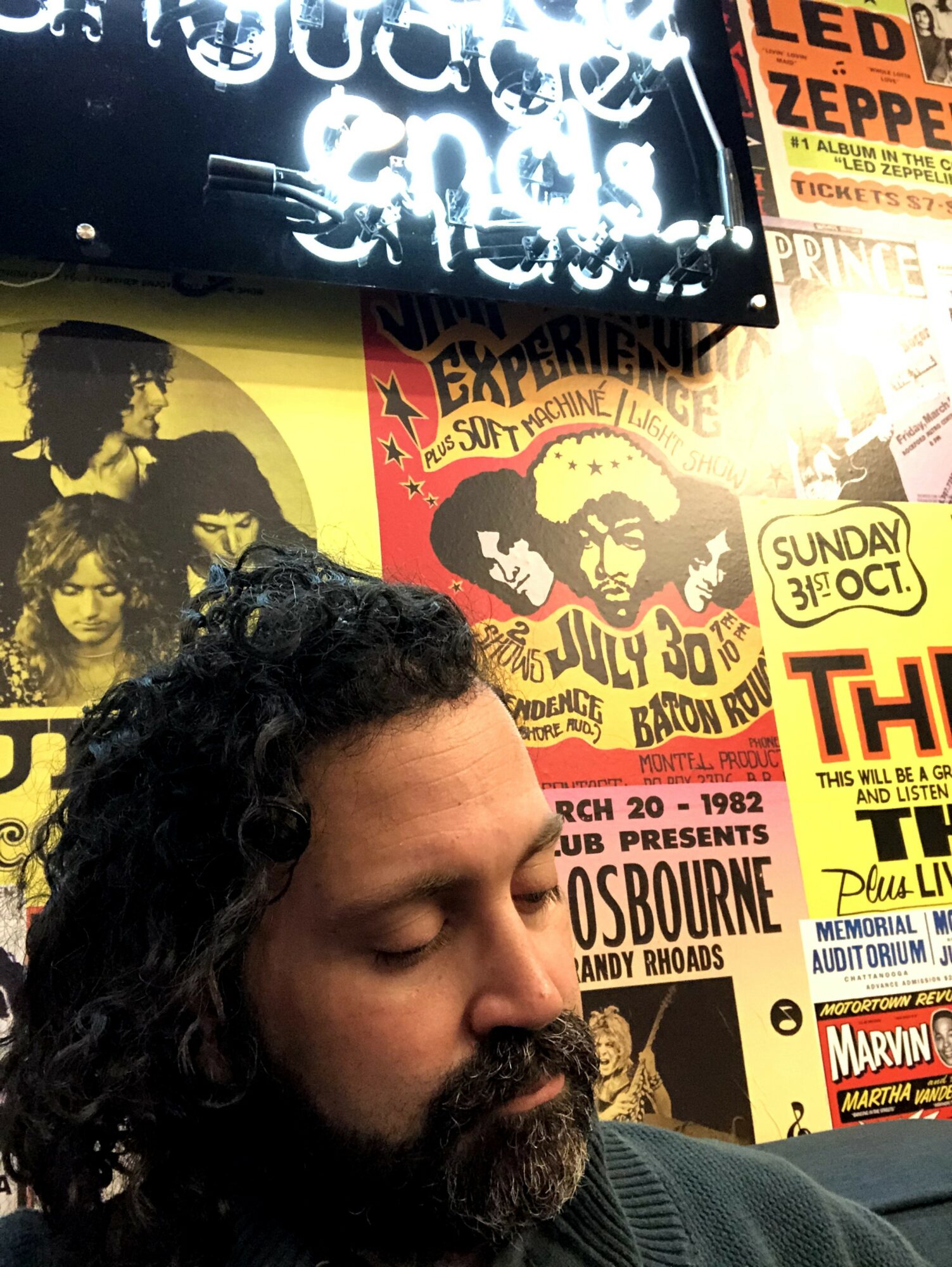
Today we’d like to introduce you to Miguel Adrover.
Hi Miguel, so excited to have you on the platform. So before we get into questions about your work-life, maybe you can bring our readers up to speed on your story and how you got to where you are today?
Chapter I: Educator
I was born into a working class, tight-knit family; raised between Trujillo Alto and Carolina, Puerto Rico. I attended Elementary, Middle and High at a Catholic School near the SJ area — a town of money, aspirations, politics and power. By 1998, I graduated HS and moved from Trujillo Alto to Humacao, a small college-town to the southeast end of the island, where a UPR branch (Universidad de Puerto Rico) had a Marine Biology program. I moved from Humacao back to Trujillo in 2001; the year I met my wife, around early September.
From 2001 to 2009 I was a ‘Gallito’ –a rooster, the Big Campus mascot. The Río Piedras Campus is home to La Facultad Eugenio María de Hostos, where I studied Education in Biology –Bachelor’s, ‘06– and Curriculum design at a post graduate level –Master’s 2010.
My first teaching job was in San Juan in a private, Catholic school, where I taught Environmental Sciences (Seniors), and Middle School Life and Physical Sciences (6-8). From 2007–2010, I discovered MS challenges, while finding myself talking to the kids about Large Hadron Colliders and Michael Jackson’s death due to abuse and medical malpractice. Screens were starting to be a more common occurrence in the classroom. During this time I saw, for the first time ever, a kid take a picture with a smartphone of the chalk-written lesson notes. Smart Kid — it was the Krebs Cycle. I showed my ES Seniors films that they were excited about: Idiocracy and An Inconvenient Truth. I became the Science Club Moderator, an opportunity I used as a platform to discuss pseudoscience, ethics, and philosophy. This embryonic, bitter-sweet experience ended in 2010, the year of my first classroom teaching hiatus.
By 2012, I was missing the classroom and had enough emotional stamina to try again at a bilingual school in San Juan, PR. AP Bio and 10th grade Biology — my first experience actually teaching what I went to school for. My work here was built upon my graduate school studies, and my previous experience teaching. Biology at the AP level was more about biotech and the source code for life. We talked a lot about DNA. The AP Bio kids enjoyed Gattaca; they had a chance to work with tools –both biochemical and mechanical– that made CRISPRcas9 possible. I expanded the Club’s topics to include STEAM considerations and questions about the colonial experience and Science. We talked about Henrietta Lacks and Cornelius P. Rhoads.
Then came 2017, the year that blew away the last ephemeral 1st world vibes on the island. Irma, followed by cat 4 –almost 5– María: both storms intensified in ways that Cassandra-like scientists have been predicting for decades. Almost 5,000 dead, local government mismanagement, and ridicule and disdain from Washington and the federal government.
A María-spurred diaspora emerged, and my wife, our dog, and I became part of this nation in transit. My spouse got a job at a hotel in Montauk. We landed in Springs, NY, a small village nestled between Montauk and East Hampton, close to where I worked as a Science Olympiad Coach and paraprofessional, one-to-one aide; shadowing ELL and special needs kids. Here I learned a lot about public schools in the US: how demographics change in less than a decade, how much zip codes impact the quality of education, that in some schools the Civil War is still taught as a state rights war. After almost 3 years in LI –beautiful, yes, but cold, expensive– we had to move, not without having visited Jackson Pollock’s studio, Walt Whitman’s home, and seeing bald eagles play with butterflies at the beach.
Once the LI adventure was done, we moved to Charlotte, North Carolina; weeks before the global pandemic blew up. During this time I taught and tutored online: Cosmology, Spanish, Philosophy, History, AP Biology, Teacher Certification Exam, Academic Coaching. Once it was safer to venture out, I started working as a volunteer for a non-profit that supports recent arrivals and refugees, la gente latina, people from Africa, Asia, and Europe. My role was as a facilitator for ELL, providing support for schoolwork, reading, and enrichment.
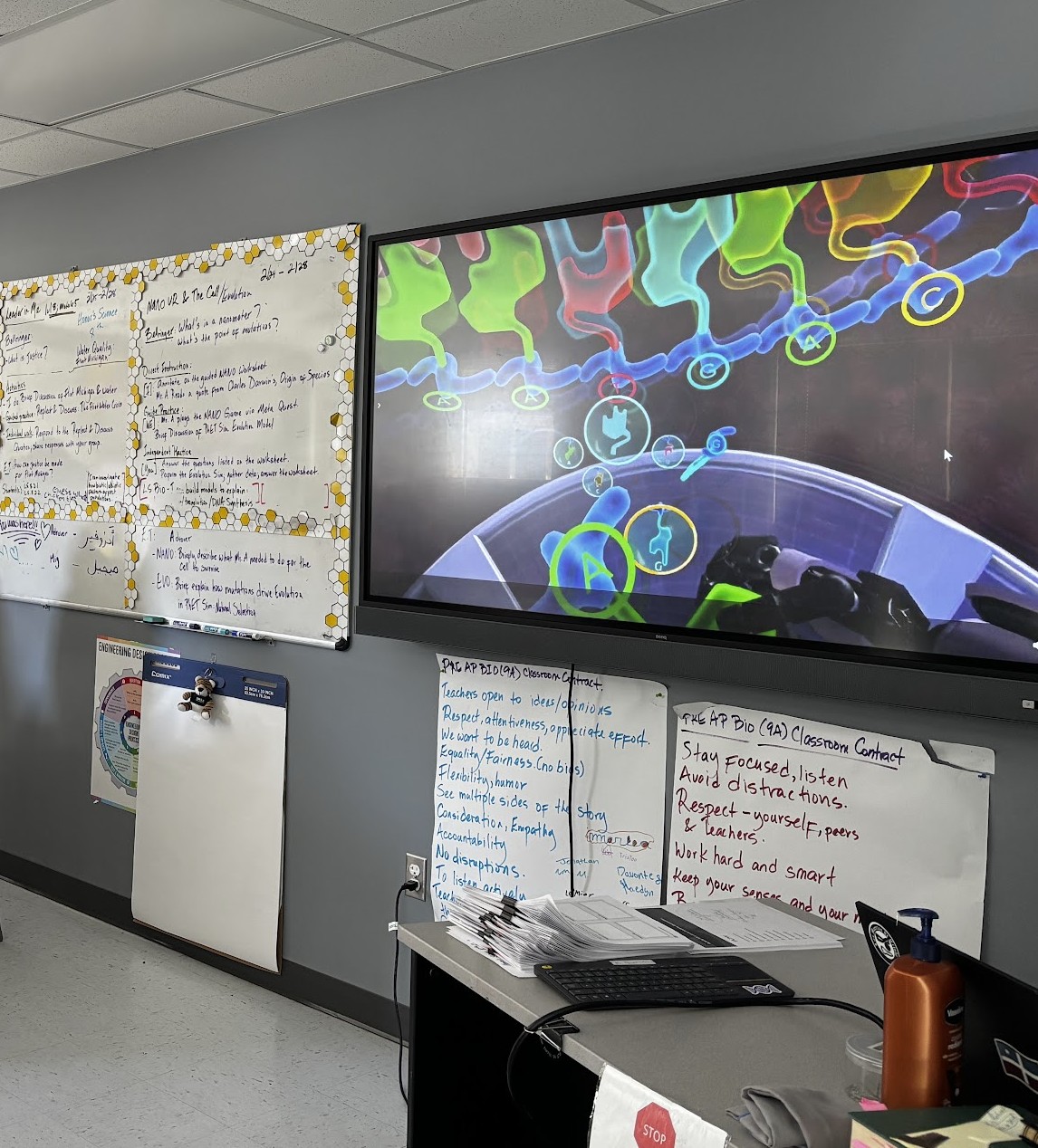
Early 2022 was the year that I resumed my career as a classroom teacher. From 2022–2025, I taught at a Charter School in CLT, NC. My focus was on AP Biology, Science Olympiad, and Science Department Chair. The incipient terror of screens in the classroom became a normalized daily struggle. Post-No Child Left Behind circumstances and the North American zeitgeist revealed to me that the classroom was no longer the place where I could workshop my craft and creativity.
After a rocky 20-year teaching career –facing home grown colonial woes and the stateside imperial core– I came to understand that my skills and US school culture do not mesh well, especially when data harvesting and self-flattering district reports trump actual learning. In other words, teaching started to feel like a sport, not an art form, where stats and data points are the sole performance indicators. My work in education had to move beyond the student-parent-admin triad. I’ve pivoted to Instructional Experience Design, inquiring and researching about the future of education in a post-literate Anthropocene. My focus is the intersection of Biology, Literature, and Tech, and how to engage with Humanities and Science in a meaningful way.
Chapter II: Writer
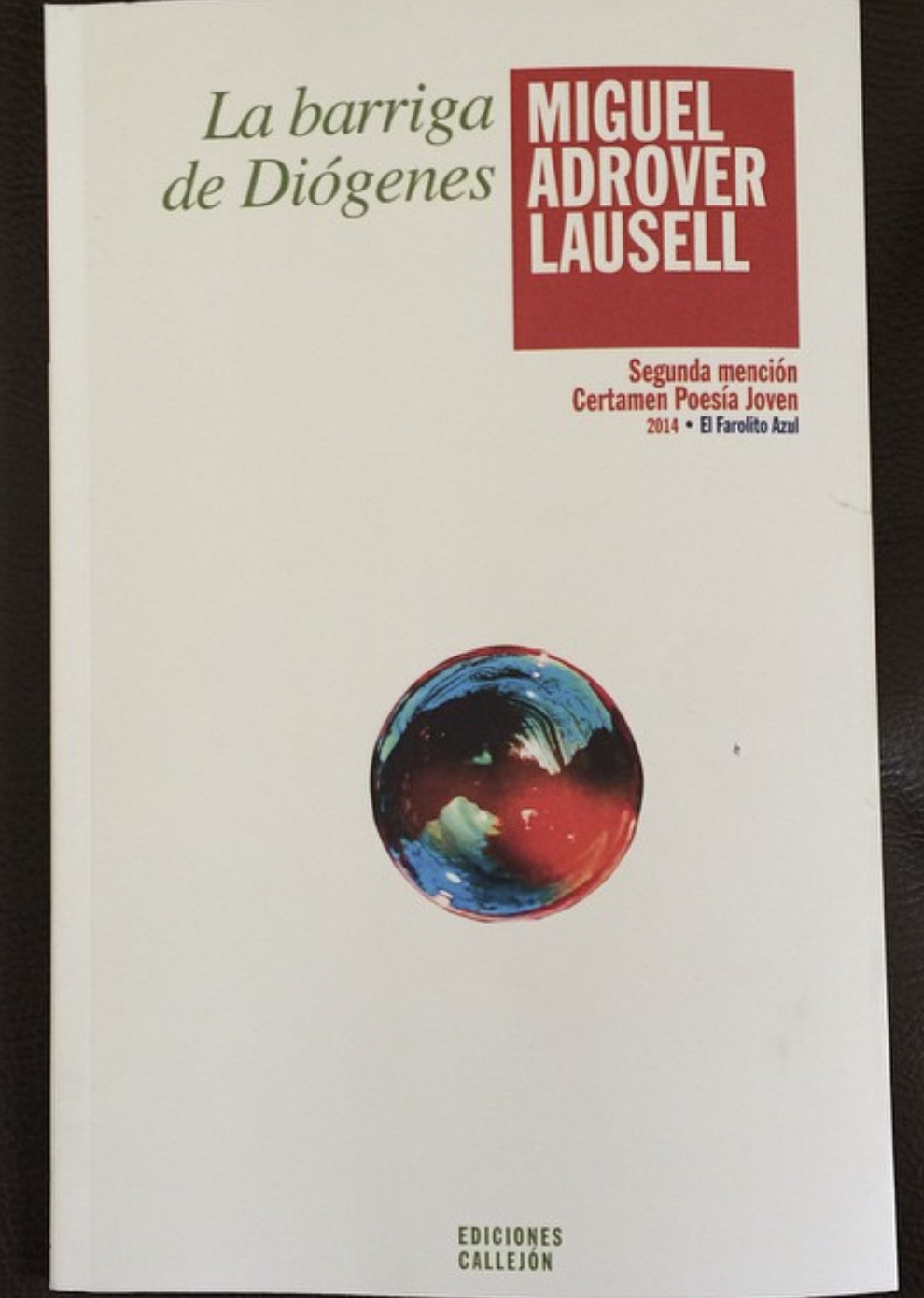
Although working class and jíbaro coded, I love sci fi, punk, jazz, hip hop, and salsa. Friendships and post 9/11 anxieties woke a deep hunger in me for books and words –their cadences, meanings, and effects. During that first 2-year hiatus I started to blog my clumsy verses and purple prose. I had the audacity to publish my words as poesía. By 2014, Editorial Callejón published my first book, La barriga de Diógenes, as an award for Certamen El Farolito. My exposure to poetry was the boombox, hip hop. Julia de Burgos and Manuel Ramos Otero came later, with age. This book was an embryo with potential, both the baby and the bath water were kept.
I kept feeding my blogs with reviews and collaborations –pieces about films, books, music, theater, glocal (global + local) politics– with other zines and websites. We talked about zombies, the Arab Spring, Björk’s Biophilia, and the indie music + art scenes in PR. These collaborations led to Revista Cruce, published by UMET (Universidad Metropolitana): poems and essays about art, science, multimedia, colonialism, capitalism, and sci-fi. My work with these publications was sporadic, running through the 2010s up to the pre-pandemic period.
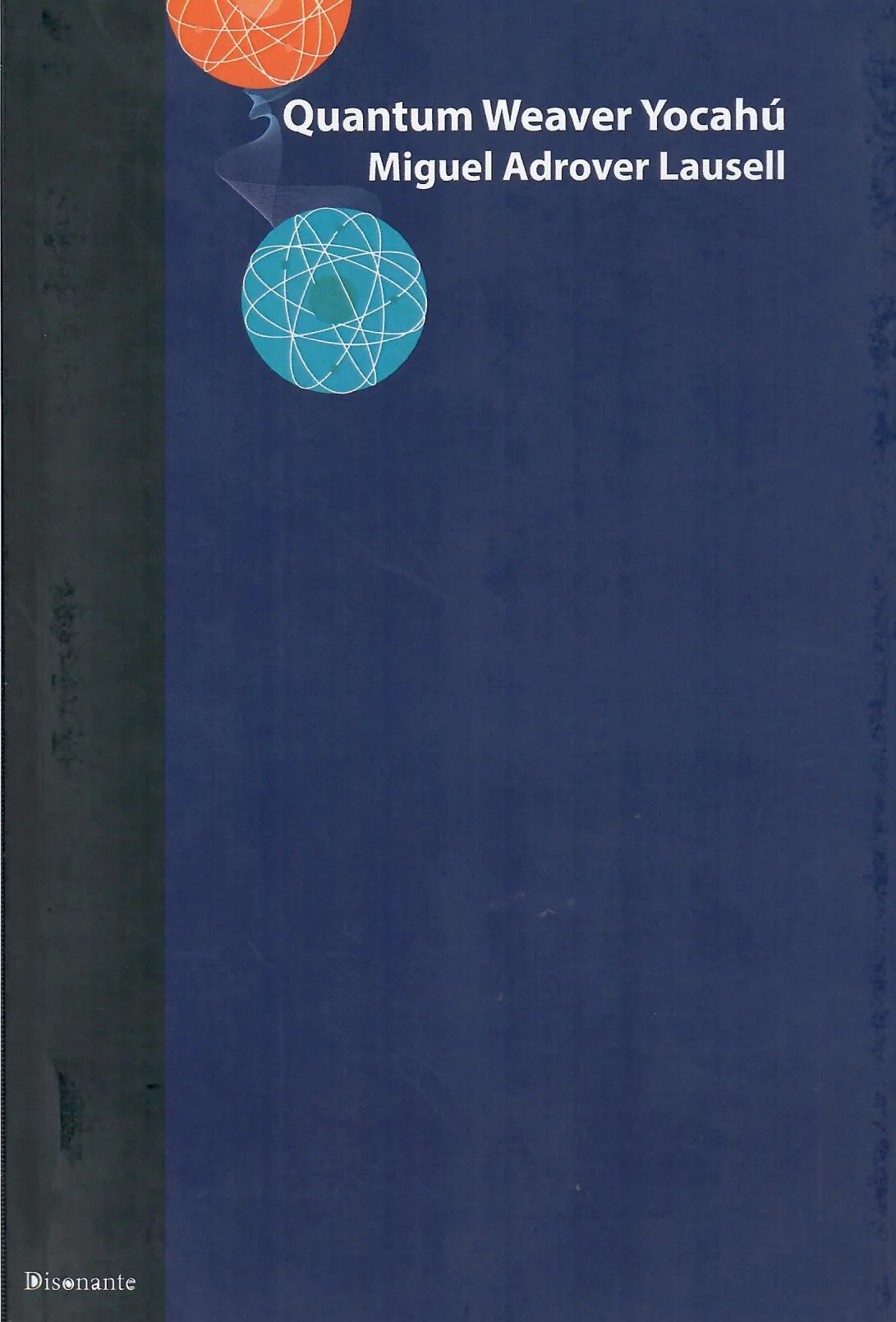
The second poetry book’s title is Quantum Weaver Yocahú, published by Editorial Disonante during the winter of 2015. The sci-fi/poetry effort earned me an Honorable Mention from the Puerto Rican PEN International Centre. Writer Guillermo Rebollo-Gil later described it as the first book of its kind published in Puerto Rico. QWY is a space ship escaping; the book weaves snapshots from the lives of its crew. Some buzz emerged from it: interviews, reviews, invitations; I cautiously allowed myself to feel a pinch of pride.
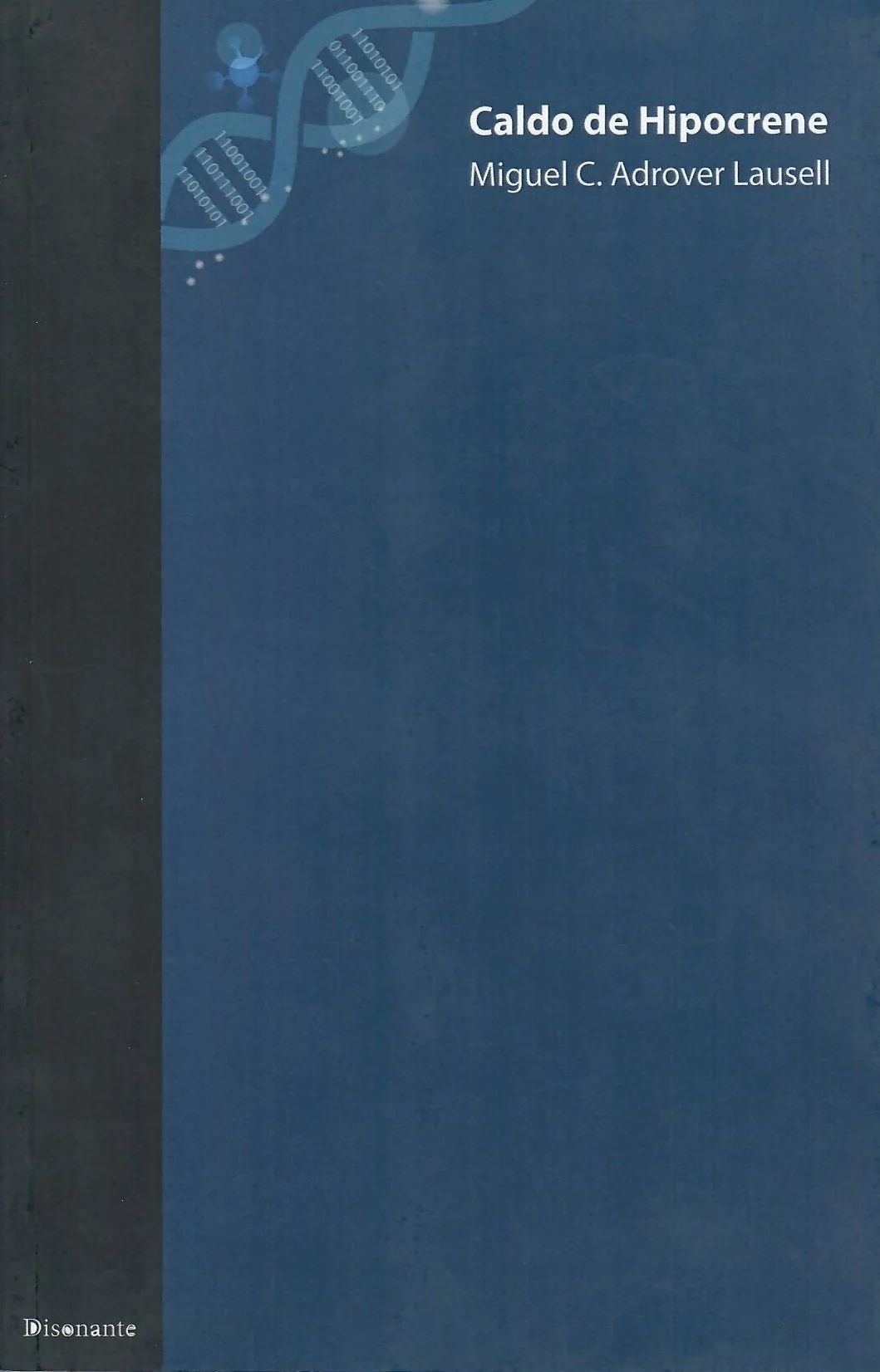
I reiterated the sci-fi/poetry gamble during a pre-María drought that tore through the social fabric, changing routines, forcing islanders to adjust to having water 2 to 3 times a week for a few hours, saving as much as possible, living at the edge of collapse. The title of this book is Caldo de Hipocrene, also published by Editorial Disonante, in the summer of 2017. Guillermo Rebollo-Gil received this book as a companion text during Hurricane María. The book had been written two years before the storm. A few months later after the book’s publication, we moved to Long Island, New York.
The years as a writer in LI have little to do with publication. I’ve always had a few moleskines with some content that never saw the light of day. But once blogging, zine contributions, and book publishing dried up, these notebooks increased in number and themes: an English translation of QWY, poems about math and proteins and my family, lamentations, The East Hampton Library, Bad Bunny, formal experiments, and content decantations.
These notebooks traveled with me from Springs, New York to Charlotte, North Carolina. I became part of another massive movement of people looking for better circumstances. No one was prepared for another zeitgeist defining moment nineteen years after 9/11. The –at the time fresh– María wound and diasporic events, compounded with a global pandemic and political strife, led me to start a Medium account. The work that began as translation from EN to SP in LI, continued as essays and poems in English in this space.
One of these English, Medium-pandemic pieces evolved into a text that I called a short story. It appeared in Ed. Gnomo’s Fricción Cuántica: Antología de Ciencia Ficción desde Puerto Rico y su diáspora with the title: Kerygma1511.peerre (or The Gospel According to Puertorricana Collectors). A year later, in 2023, I was invited again by Gnomo. This time I collaborated with two essays –about gaming, aesthetics, and politics– in the anthology Hadouken! Antología de literatura boricua videolúdica. The next year, in 2024, some of my Long Island writings saw the light of day –again, thanks to Gnomo– in Bioversa: antología de poesía científica puertorriqueña. Two pieces appeared in this anthology: Elogio a la mitocondria and Poema a la proteína — about memory, survival, and entropy.
Now –in 2026, after María, Covid, the threat of climate change, war, biotech, AI, and greed; after trauma-laced audacities– the short story with poetry in its DNA is a bigger text: a verse-stained sci-fi novella. The book is unpublished, titled The Guasábara* Codex — not too long, about 10,000 words, bilingual: eight words in English for one word in Spanish.
*War in Arawak.
Chapter III: The Business, Publications, Portfolio, and Contact
This text includes the word ‘pivot’ to account for a transition from the classroom to Instructional Design. Pivot also means that I’m freelancing–
Curriculum Design: pricing depends on the project
Subject Matter Expert: services on DOK/Standard alignment; item authoring; AI literacy: $50 p/h
Remote Tutoring: High School Bio, AP Biology: $50 p/h
The following links will take you to where to find my books and collaborations:
Poetry:
– La barriga de Diógenes (Editorial Callejón, 2014):
Amazon: https://www.amazon.com/Barriga-Diogenes-Miguel-Androver-Lausell/dp/1615051651
Librería Laberinto: LA BARRIGA DE DIÓGENES – Miguel Adrover Lausell
– Quantum Weaver Yocahú (Editorial Disonante, 2014):
Librería Norberto González: https://libreriang.com/index.php?product_id=47524&route=product%2Fproduct
Biblioservices:
Biblio Services. Quantum Weaver Yocahú (LOD)
Librería Laberinto: https://librerialaberintopr.com/products/quantum-waver-yocahu-miguel-adrover-lausell?pr_prod_strat=e5_desc&pr_rec_id=6894f3ea9&pr_rec_pid=7996942090475&pr_ref_pid=7997495967979&pr_seq=uniform
– Caldo de Hipocrene (Editorial Disonante, 2017):
Librería Laberinto:
CALDO DE HIPOCRENE – Miguel C. Adrover Lausell – Libreria Laberinto
Biblioservices:
Biblio Services. Caldo de Hipocrene (LOD)
Anthologies — poetry, essays, short story collabs:
– Fricción Cuántica (Editorial Gnomo, 2022):
Amazon: https://a.co/d/0gzrBUkm
– Hadouken! (Editorial Gnomo, 2024):
Amazon: https://a.co/d/02eFZe35
– Bioversa (Editorial Gnomo, 2025):
Amazon: https://a.co/d/00gwRyK6
For more more information about Instructional Design credentials and examples, visit my portfolio at
https://sites.google.com/view/migueladroverlausell/home
Feel free to contact me for any questions about my work, possible collaborations, and opportunities:
Email:
Medium: Miguel Adrover
Instagram: Miguel C. Adrover (@oniricvonnegut) • Instagram photos and videos
Threads: https://www.threads.com/@oniricvonnegut
Would you say it’s been a smooth road, and if not what are some of the biggest challenges you’ve faced along the way?
Not smooth at all, no; my Hero’s Journey is textured, convoluted, filled with burned bridges. The clearest break was 2017 — Hurricane María hit Puerto Rico while I was already ten years into a teaching career shaped by home grown colonial woes and, later, the stateside imperial core. My wife, our dog, and I became part of the María-spurred diaspora. We landed in Springs, NY, where I went from teaching AP Biology to working as a paraprofessional, a one-to-one aide — a real professional downgrade I didn’t talk about much at the time.
Somewhere between the classroom and the data reports, I understood that my skills and US school culture do not mesh well, especially when data harvesting and self-flattering district reports trump actual learning. Teaching started to feel like a sport, not an art form, where stats and data points are the sole performance indicators. That realization eventually pushed me out of the classroom entirely.
On the writing side, the struggle was quieter and lasted longer: five years, 2017 to 2022, where I published nothing. I never stopped writing — moleskines multiplied, I translated my own work, but publishing itself had started to feel like exposure, not accomplishment. Getting back into print with Puerto Rican science fiction anthologies in 2022 was its own small act of audacity, the same audacity it always took to write in Puerto Rican Spanish without a UPR pedigree behind my name.
These struggles mentioned here are external, related to society;
but I’ve also fought mental health and auto-immune dragons: Crohn’s disease, anxiety, depression, and glaucoma.
Alright, so let’s switch gears a bit and talk business. What should we know about your work?
I write and design at the intersection of Biology, Literature, and Tech. My poetry uses Science as its own language; my instructional design treats learning as something political, never neutral.
My published work is poetry and sci-fi, mostly. It started with reviews and collaborations, pieces about films, books, music, theater, glocal (global + local) politics, with other zines and websites. I collaborated with PR Indie for several years, and those collaborations led to Revista Cruce, from UMET: poems and essays about art, science, multimedia, colonialism, capitalism, scifi. That work with zines and websites was sporadic, running through the 2010s up to the pre-pandemic period.
Three solo collections followed: La barriga de Diógenes (2014, (2014, Second Honorable Mention, Certamen El Farolito Azul), Quantum Weaver Yocahú (2015, Honorable Mention from the Puerto Rican PEN International Centre), and Caldo de Hipocrene (2017). Then three years of contributions with Editorial Gnomo: Fricción Cuántica (2022), Hadouken! (2023), and Bioversa (2024), where poems like “Elogio a la mitocondria” and “Poema a la proteína” connect cellular biology to memory and survival. Right now I’m finishing an unpublished novella, The Guasábara Codex: a verse-stained sci-fi text, about 10,000 words, bilingual, eight words in English for one word in Spanish.
On the education side: twenty years in the classroom, AP Biology, Science Olympiad, Science Department Chair. In 2025 I pivoted into Learning Experience Design. Grounded in that recent training and in AI Literacy in education, I built The Immigration Case: Jeremith’s Dilemma, a 34-slide branching scenario that teaches genetics and bioinformatics through a Garífuna teenager seeking asylum.
What holds this together is that none of it happens in separate lanes. The same person writing about mitochondria in a poem is the one building a biology unit around a refugee’s DNA test.
If there’s a single thread through the corpus, it’s that it never let me choose just one identity to lead with. Writing, teaching, and designing, all at once, built slowly, in two languages.
We’d love to hear about how you think about risk taking?
The biggest risk was always writing at all. It felt like an atrevimiento –an audacity– to write in Puerto Rican Spanish without a UPR (Universidad de Puerto Rico) pedigree, without the academic credentials authorizing that voice on the island. I published anyway. Quantum Weaver Yocahú was a sci-fi and poetry gamble in a country where that genre barely existed. It earned an Honorable Mention from the Puerto Rican PEN International Centre, but the risk was real before the recognition came.
Leaving the classroom, twice, was another kind of risk. First in 2010, then for good after 2025, after twenty years of teaching. This risk meant a re-mix of who I’ve been, carving new paths with new skills…at 46.
There was also a five-year period, 2017 to 2022, when I barely published. I kept writing, the notebooks kept multiplying, but putting the work out again after that silence felt riskier than the silence itself. Getting back into print with Puerto Rican science fiction anthologies in 2022 took its own kind of nerve.
I don’t think of myself as a natural risk-taker. What seems like risk is just me living my life; like my poetry, what seems experimental about it is just me writing according to my circumstances.
Pricing:
- Curriculum Design: $60-85/hr
- Subject Matter Expert (SME): Bio/Science/Spanish: $50-70/hr
- Combined SME + ID projects: rate scales above individual rates
- DOK/Standards Alignment/Item Authoring: rate on request
Contact Info:
- Website: https://sites.google.com/view/migueladroverlausell/home
- Instagram: https://www.instagram.com/oniricvonnegut/
- Facebook: https://www.facebook.com/miguel.a.lausell
- LinkedIn: https://www.linkedin.com/in/madroverlausell/
- Twitter: https://x.com/adrover
- Soundcloud: https://soundcloud.com/oniricvonnegut
- Other: https://adroverlausell.medium.com/